


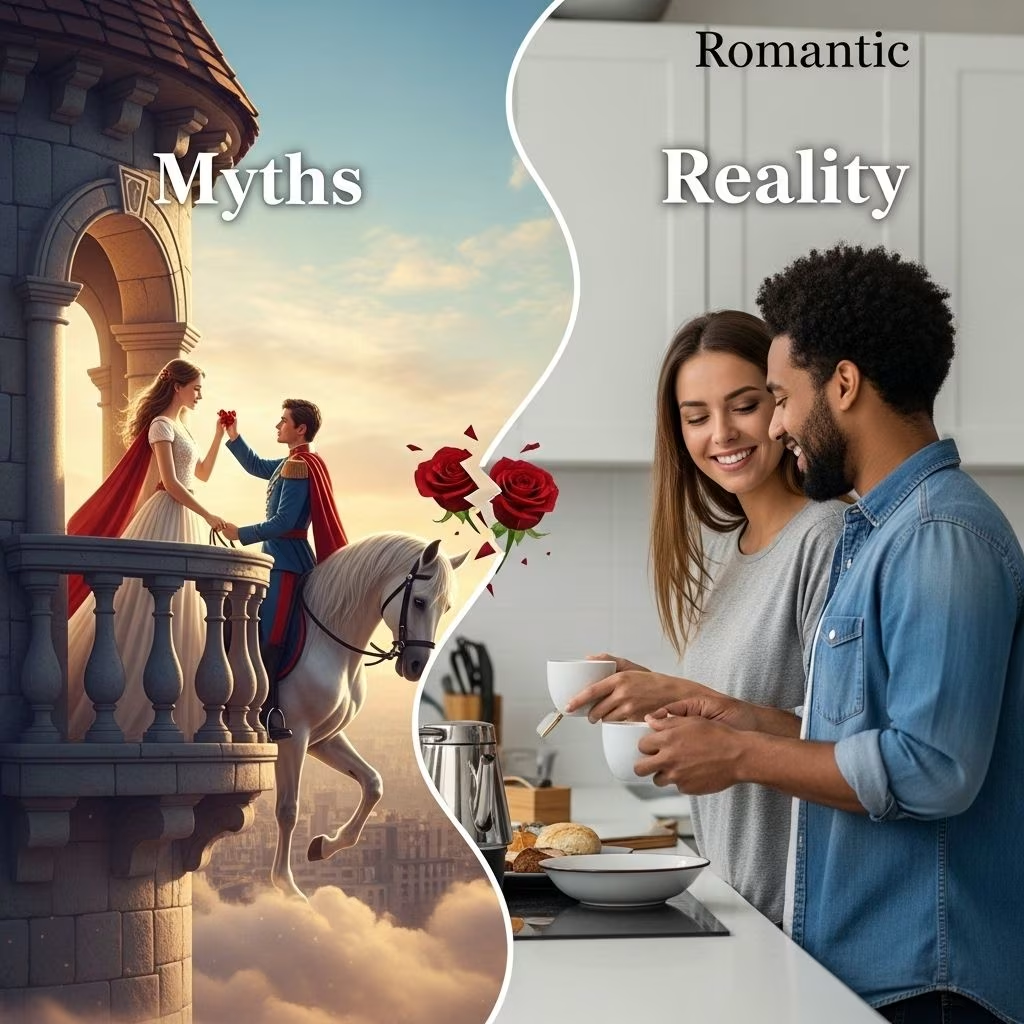
Growing up, many of us harbor idealized notions about what relationships should look like. These expectations are shaped by movies, books, and the stories we tell ourselves about love. However, the gap between expectation and reality can be significant, and understanding this difference is crucial for building healthy, sustainable partnerships.
The journey from teenage crushes to mature relationships teaches us that love is far more complex than simply finding someone who likes us back. While mutual attraction forms the foundation, lasting relationships require commitment, understanding, and realistic expectations about what partnership truly means.
The Foundation of Relationship Misconceptions
During adolescence, the desire for romantic connection often stems from wanting validation and reciprocated feelings rather than genuine partnership. This fundamental misunderstanding sets the stage for unrealistic expectations that can follow us into adulthood. Many people enter relationships believing that mutual affection is sufficient, only to discover that successful partnerships demand much more.
The reality is that relationships are built on multiple pillars: communication, trust, respect, shared values, and emotional maturity. While the initial spark of attraction brings two people together, it’s the daily effort and intentional choices that sustain the connection over time. Understanding this distinction helps separate romantic fantasy from the rewarding work of building something real.
Myth One: Seeking Epic Love Stories
Popular culture bombards us with narratives of dramatic, often tragic love stories. From classic literature to modern cinema, we’re taught to admire relationships defined by obstacles, pain, and dramatic reconciliations. These stories suggest that the most meaningful love requires suffering, that passion and pain are inseparable companions.
The reality presents a different picture. While your relationship might indeed become legendary, it doesn’t need to be filled with drama to be meaningful. Love isn’t discovered like treasure; it’s actively created through consistent effort and mutual investment. The misconception that passion requires pain leads many people to mistake toxicity for intensity.
Healthy relationships can be deeply passionate without being tumultuous. Stability and consistency don’t equate to boredom—they provide the secure foundation that allows genuine intimacy to flourish. The most fulfilling partnerships are those where both people feel safe enough to be vulnerable, supported enough to grow, and respected enough to maintain their individuality.
Myth Two: Relationships Create Happiness
One of the most damaging myths suggests that finding the right person will fill an internal void. People often enter relationships feeling incomplete, bored, or unfulfilled, expecting a partner to magically solve these feelings. This expectation places an impossible burden on the relationship before it even begins.
The truth is that relationships are vehicles for sharing happiness, not creating it. Lasting contentment comes from within—from cultivating inner peace, pursuing passions, and developing a healthy relationship with yourself. When you’re happy independently, you make relationship decisions from a place of desire rather than need.
Relying on another person to be your source of happiness creates unhealthy dependency and sets unrealistic expectations. Your partner cannot be responsible for your emotional well-being; that’s an unfair position that often leads to resentment on both sides. When you bring your own happiness to a relationship, you’re choosing partnership because you want to enhance an already fulfilling life, not because you’re trying to escape an empty one.
Myth Three: Merging Into ‘We’
Many people believe that successful relationships require complete fusion—that two individuals should become one unit, always together, sharing everything, and essentially losing their separate identities. This misconception suggests that true love means never wanting time apart or maintaining separate interests.
In reality, healthy relationships require two complete individuals. The relationship itself is a singular entity, but it’s created and maintained by two people with distinct identities, interests, and social circles. When couples lose themselves in the relationship, they risk creating an unstable structure that lacks the very diversity that made it attractive in the first place.
Maintaining your individuality isn’t selfish—it’s essential. Each partner brings unique perspectives, experiences, and qualities to the relationship. These differences create richness and depth. When you preserve your individual identity while also nurturing the partnership, you ensure that both you and the relationship can continue growing and evolving.
Myth Four: Perfection and Permanence
There’s a comforting fantasy that once you establish relationship parameters—defining what you are, setting boundaries, and creating shared expectations—nothing will ever go seriously wrong. This myth suggests that clear communication creates an impenetrable shield against problems.
The reality acknowledges that mistakes are inevitable. Relationships aren’t promises that nothing will go wrong; they’re commitments to work through problems when they arise. Your partner might hide their true opinion about your cooking to spare your feelings. You might get irrationally irritated about trivial habits. These are the small, human moments that define real relationships.
More significantly, sometimes mistakes cause real hurt. People make poor decisions that impact their partners. The measure of a relationship isn’t the absence of problems but rather how both people respond when difficulties arise. A strong relationship is characterized by the willingness to repair damage, offer genuine apologies, extend forgiveness, and work together toward resolution.
Myth Five: Changing for Love
Popular narratives often romanticize the idea of changing yourself for someone you love. This myth suggests that if you truly care about someone, you’ll modify your personality, abandon your goals, or reshape your life to accommodate their needs and desires. It frames compromise as self-erasure.
Authentic relationships honor who you fundamentally are. While healthy relationships involve growth and compromise, there’s a crucial distinction between evolving together and sacrificing your core self. Change motivated by fear of loss or inadequacy creates resentment and inauthenticity.
The right person will appreciate who you are while encouraging you to become the best version of yourself. They won’t demand that you abandon your dreams or fundamentally alter your personality. Mutual respect means accepting each other’s differences and finding ways to support individual growth while building something together.
The Reality of Healthy Relationships
Understanding what relationships actually require helps set realistic expectations. Successful partnerships are built on several key principles that often contradict romantic myths but lead to genuine fulfillment.
Communication is paramount. Not the grand, dramatic declarations of movie romances, but the daily, sometimes mundane conversations about feelings, needs, boundaries, and expectations. Healthy couples talk about everything—from household responsibilities to long-term dreams—with honesty and respect.
Trust must be earned and maintained. It’s built through consistency, reliability, and integrity. When partners demonstrate through actions that they can be counted on, trust deepens naturally. This trust creates the psychological safety necessary for true intimacy.
Respect forms the foundation. This means valuing your partner’s thoughts, feelings, time, and autonomy. It means recognizing them as a complete person separate from you, with their own needs and boundaries that deserve consideration.
Building Something Real
Creating a healthy relationship requires intentionality and effort from both partners. Unlike the passive discovery suggested by romantic myths, real relationships are actively constructed through conscious choices and continuous work.
This begins with self-awareness. Understanding your own patterns, triggers, needs, and communication style enables you to show up authentically and navigate conflicts constructively. When both partners commit to self-reflection and personal growth, the relationship benefits exponentially.
Conflict resolution skills are essential but rarely portrayed in romantic media. Disagreements are normal and inevitable; what matters is how couples handle them. Healthy conflict involves listening to understand rather than to respond, taking responsibility for mistakes, and working collaboratively toward solutions that honor both people’s needs.
Successful couples also maintain emotional independence while creating interdependence. They support each other without becoming enmeshed. They encourage individual pursuits while prioritizing quality time together. This balance prevents the suffocation that can occur when two people lose themselves in the relationship.
The Role of Compatibility and Timing
Not every relationship that starts with mutual attraction will succeed, and that’s not a failure—it’s reality. Sometimes people are genuinely incompatible despite caring for each other. Sometimes timing is wrong. Sometimes two good people simply don’t work well together.
Recognizing when a relationship isn’t working requires honesty and courage. Staying in an unfulfilling partnership because you believe you should be able to make it work, or because you’ve invested time and energy, ultimately serves no one. Healthy relationships enhance your life; they don’t require constant struggle to maintain.
Compatibility matters more than chemistry. While initial attraction is important, long-term success depends on shared values, compatible life goals, complementary communication styles, and similar relationship expectations. These practical considerations might seem less romantic than passionate declarations, but they determine whether a relationship can thrive over years and decades.
Redefining Relationship Success
Moving beyond myths requires redefining what successful relationships look like. Success isn’t dramatic passion or constant euphoria. It’s not being together every moment or never experiencing conflict. Success is two people choosing each other repeatedly, working through difficulties, growing together, and building a life that satisfies both of them.
Successful relationships allow both partners to feel seen, valued, and supported. They create space for individual growth while fostering connection. They balance independence and intimacy, freedom and commitment, stability and excitement.
Perhaps most importantly, healthy relationships are built on realistic expectations. Accepting that your partner is human, that love requires work, that problems will arise, and that passion evolves over time creates the foundation for lasting satisfaction. When you release fairy tale expectations, you make room for something more authentic and ultimately more fulfilling.
Moving Forward with Clarity
Understanding the gap between romantic myths and relationship reality empowers you to make better choices. It helps you recognize unhealthy patterns, set appropriate boundaries, and invest in partnerships with genuine potential.
This doesn’t mean abandoning romance or passion. It means building these elements on a foundation of honesty, respect, and realistic expectations. It means choosing partners who enhance your already-fulfilling life rather than completing it. It means doing the work required to maintain love rather than expecting it to sustain itself through magic.
The most rewarding relationships combine passion with stability, romance with reality, and individual identity with partnership. They honor both people fully while creating something greater than either could achieve alone. This is the reality that surpasses any myth—a love that’s built rather than found, earned rather than simply felt, and sustained through choice rather than fate.
Frequently Asked Questions
Q: What’s the most common misconception about relationships?
A: The most common misconception is that finding the right person will automatically make you happy. In reality, happiness must come from within first, and relationships are for sharing that happiness, not creating it.
Q: Is it healthy to lose yourself in a relationship?
A: No, maintaining your individual identity is essential for a healthy relationship. While compromise is important, you should never sacrifice your core self or fundamental values for a partner.
Q: How can you tell if relationship expectations are realistic?
A: Realistic expectations acknowledge that both partners are imperfect humans who will make mistakes. They focus on how couples handle problems rather than expecting a conflict-free relationship.
Q: Should relationships be effortless if you’ve found the right person?
A: No, all healthy relationships require consistent effort, communication, and intentional choices. The difference is that with the right person, this work feels worthwhile rather than exhausting.
Q: What matters more in a long-term relationship: chemistry or compatibility?
A: While initial chemistry is important, long-term compatibility matters more for sustained relationship success. This includes shared values, compatible life goals, and similar communication styles.
References
- https://www.elitedaily.com/dating/idea-relationships-wrong/776010
- https://drdanielleforshee.com/elite-daily-when-one-person-is-more-in-love-than-the-other-heres-what-happens/
- https://smudailycampus.com/1019368/opinion/lesson-learned-magazines-do-not-serve-as-accurate-sources-for-relationship-advice/
- https://www.elitedaily.com/dating/long-term-relationship-not-boring/1591405
- https://www.elitedaily.com/dating/bad-boy-not-as-bad-as-you-think/1544466
- https://www.elitedaily.com/dating/femme-lesbian-misconception-myth-dating/1987140
- https://agapematch.com/elite-daily-press-second-date/
- https://www.elitedaily.com/dating/a-message-to-all-the-single-ladies-theres-nothing-wrong-with-you


