


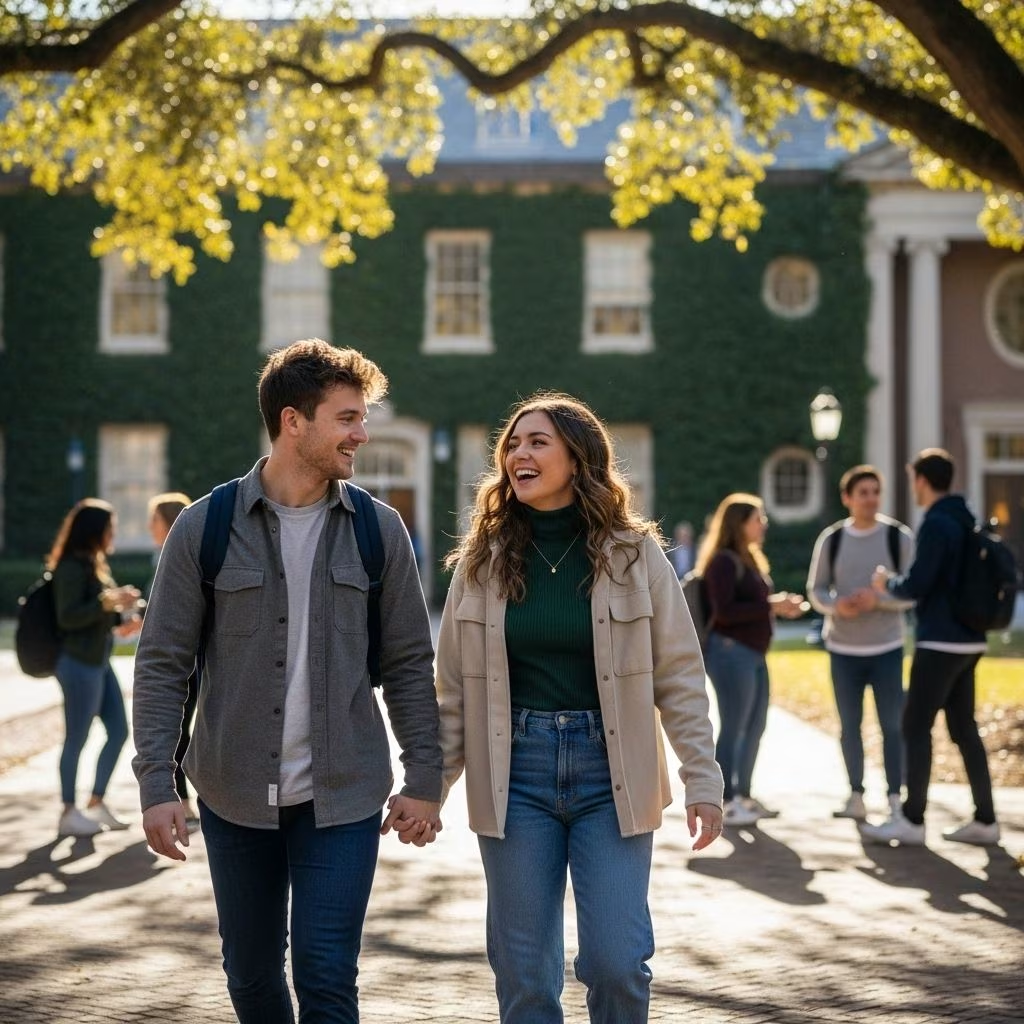
Why I Love Being in an Open Relationship in College
When you first hear the phrase open relationship in college, the term can sound like a contradiction. Aren’t most college relationships either casual hook-ups or struggles towards serious commitment? Yet for me, embracing an open relationship during my university years was one of the best decisions I could have made. In this article, I’ll share what it’s actually like, the lessons I’ve learned, the challenges and rewards, and offer advice for anyone considering this unconventional but fulfilling path.
Defining What an Open Relationship Really Is
Let’s start by clarifying the terms, because there is often confusion and stigma around non-monogamous relationships. An open relationship is a consensual agreement between partners that allows for emotional or physical intimacy outside the primary relationship. It’s different from cheating since the defining characteristic is mutual, informed consent. For us, it wasn’t about replacing each other but about respecting each other’s freedom, desires, and growth.
- Open relationship: Primary partnership with permission for outside sexual or romantic experiences.
- Polyamory: Potentially multiple committed relationships, often with emotional depth, and everyone’s aware and consents.
- Monogamy: One exclusive partnership, sexually and romantically.
It’s worth noting that not all open relationships are exactly the same. Some have more defined boundaries than others. The essential element is honesty and communication.
Why Choose an Open Relationship?
Many people assume that open relationships are just about sex or a ‘fear of commitment,’ but that couldn’t be further from the truth for us. College is a time for self-discovery, intense personal growth, and, yes, plenty of opportunities to meet new people. Traditional monogamy can feel limiting, especially for those who want to fully engage with all the new experiences campus life provides.
- Personal Growth: You learn a lot about yourself—what you value, your boundaries, your insecurities, and your emotional needs.
- Freedom & Exploration: An open relationship offers space to explore your desires and connections with others without the burden of secrecy or guilt.
- Honesty: Everything is on the table. Open relationships demand direct communication about needs, boundaries, and feelings.
- Strengthened Trust: Ironically, knowing that your partner is seeing others (with your knowledge and blessing) can foster a deeper sense of trust.
For us, the motivations went beyond physical exploration—it was about embracing the full spectrum of connection and experience.
The Rules: Setting Boundaries That Work (And Stick)
Clear boundaries are the backbone of a successful open relationship. College dating scenes can be chaotic, so setting mutually agreed parameters helped us stay grounded. We didn’t follow someone else’s rulebook; we built our own through a series of honest, sometimes uncomfortable, conversations. Some examples included:
- Always being honest about new connections—no surprises, no secrets.
- Discussing potential partners before anything happened, when possible.
- Prioritizing sexual safety and health—condom use, regular testing, and checking in about risks.
- Never bringing new partners into our shared living space to maintain a sense of home.
- Making sure our time together still felt special and prioritized, not lost among other commitments.
Were there mistakes? Absolutely. But each misstep led us to revisit and refine our rules, and the process gave us a deeper understanding of each other.
Common Misconceptions (and the Real Truth)
- Myth: Open relationships must mean you don’t love your primary partner.
- Fact: For us, the ability to freely choose each other every day—despite other connections—made our love more intentional and resilient.
- Myth: It’s all about sex.
- Fact: Sex can be a part, but often it’s about emotional growth, autonomy, or simply having varied social experiences, not just physical encounters.
- Myth: Open relationships are inherently unstable or lead to heartbreak.
- Fact: All relationships carry risk. Open relationships have their own unique challenges, but also powerful tools for addressing them—chiefly, communication.
The Emotional Landscape: Jealousy, Insecurity, and Self-Discovery
Jealousy was one of the hardest hurdles to overcome. It’s a human emotion, after all, and college life can amplify insecurities about attractiveness or value. Rather than running from jealousy, we leaned into it. We talked, sometimes for hours, about why a new connection made us feel threatened or anxious. Often, the answer wasn’t about the other person at all, but about our own wounds or beliefs.
What I learned was this:
- Jealousy is normal, but it’s manageable with self-reflection and open communication.
- Talking about fears without blame helps them lose their power.
- Having other partners didn’t diminish our bond—it forced us to choose each other, intentionally, over and over.
Lessons Learned: What Surprised Me Most
There were plenty of moments I didn’t expect. Here’s what stood out:
- I didn’t realize how much confidence I’d gain. Knowing that someone chooses to be with you—when they don’t have to—does wonders for your self-esteem.
- Healthy boundaries can change over time. What we found comfortable at the start sometimes shifted as we grew. Checking in regularly made all the difference.
- Not everyone understood or accepted our choice. Some friends questioned our commitment. Others felt threatened or judged our relationship, so we learned to keep some details private.
- I became a better communicator—about everything. It wasn’t just about logistics of dating others; it was learning how to talk about needs and feelings honestly.
Dealing with Social Judgment and Stigma
Open relationships still carry plenty of stigma, especially on a college campus where gossip can spread quickly. In the beginning, the scrutiny was intense. People gossiped or assumed we were only in it for casual sex. Others seemed almost disappointed that our relationship was working, as if they expected (or wanted) it to implode and prove them right.
How did we cope?
- Strong internal validation: We stopped caring so much about external opinions and focused on what worked for us.
- Selective disclosure: We shared details only with those who were genuinely supportive or interested, not with people likely to judge unfairly.
- A sense of humor: College is too short to take yourself too seriously every day.
Potential Pitfalls: When an Open Relationship Isn’t Right
- If your motivation is to “fix” a broken relationship, opening things up probably won’t help. Address underlying issues first.
- Lack of honest communication spells trouble. Without it, jealousy and resentment can brew, unspoken.
- If one partner feels coerced or pushed into non-monogamy, resentment and hurt are almost inevitable.
- Not every college student is in a place to handle the emotional labor open relationships demand.
It’s okay if an open relationship isn’t the right fit. For some, monogamy feels safer and more natural, and that’s valid too.
How We Made Our Open Relationship Work
| Success Factor | How We Implemented It |
|---|---|
| Honest Communication | Weekly check-ins, clear about new connections, no secrets or blindsides. |
| Safety & Sexual Health | STD/STI screening schedules, always using protection, sharing information promptly. |
| Emotional Boundaries | Regularly discussing how we feel, adjusting rules as needs change. |
| Prioritizing Us | Always setting aside “date nights” and intentional time together, even during busy semesters. |
| Mutual Respect | Celebrating each other’s new connections instead of competing or resenting. |
Best Advice for Anyone Considering an Open Relationship in College
- Talk openly from day one—don’t assume anything is “implied.” Be clear about what you’re comfortable with (and what you’re not).
- Don’t treat an open relationship as a quick fix for existing problems. Solid foundations matter even more when more people are involved.
- Accept that feelings will change. Check in with your partner regularly and allow room for renegotiating your agreements.
- Prioritize self-care. Knowing your boundaries isn’t just kind, it’s necessary for managing the rollercoaster of college and non-traditional relationships.
- Remember why you’re doing this—make sure it’s out of mutual desire for growth, not avoidance of commitment or intimacy.
College Life and Open Relationships: What Makes the Combination Unique
Being a student brings special challenges and opportunities. On the one hand, you’re surrounded by a huge pool of new people, constant academic stress, and a culture encouraging exploration. On the other hand, time management and sensitivity to new relationship structures matter—a lot. What worked for us:
- Strategically separating academic goals from social circles—making sure relationship drama didn’t interfere with finals week or group projects.
- Prioritizing communication skills not just in romance, but in friendships too—dealing with jealousy or judgment from others constructively.
- Balancing college’s constant newness with the security of our relationship.
Personal Reflections: How an Open Relationship Changed Me
Looking back, embracing open non-monogamy in college wasn’t just about relationships—it was a crash course in self-awareness, empathy, and courage. I learned more about honest communication, managing my emotions, and accepting vulnerability than I could have imagined. Most importantly, I discovered that love doesn’t have to look one way, and that sometimes the unconventional path leads to the most growth.
I wouldn’t trade my experience. Whether you’re considering opening your relationship or just trying to understand a friend’s choices, what matters most is leading with respect, openness, and compassion.
Frequently Asked Questions (FAQs)
Q: Are open relationships only about sex?
A: No. Open relationships can include emotional, romantic, or sexual connections outside the primary partnership, but each couple defines their own boundaries.
Q: How do you handle jealousy?
A: By talking openly about your feelings, addressing insecurities at their root, and prioritizing honest communication—it’s a process, not a quick fix.
Q: Is it hard to find support for an open relationship in college?
A: Sometimes. There’s still stigma and misunderstanding, but with the growth of campus diversity, more people than you think are open-minded or have similar experiences.
Q: What are the risks of being in an open relationship?
A: Like any relationship, there are risks—mostly around miscommunication, boundary crossing, or unmet expectations. With care and communication, many issues can be managed, but emotional challenges and occasional misunderstandings will happen.
Q: Can an open relationship become monogamous later?
A: Absolutely. Relationship structures can shift as partners’ needs change—what matters most is that decisions are mutual, informed, and freely chosen.
Final Thoughts
Ultimately, an open relationship during college taught me more than I expected about honesty, trust, and self-worth. It’s not always easy, and it’s certainly not for everyone, but for those willing to approach it with maturity, empathy, and courage, it can be incredibly rewarding.
References
- https://www.elitedaily.com/entertainment/bachelor-open-relationships-ariel-frenkel-zach-shallcross
- https://www.elitedaily.com/p/is-open-relationship-right-for-you-here-are-5-reasons-you-might-consider-one-8832851
- https://www.elitedaily.com/p/theres-a-difference-between-open-relationship-polyamory-heres-what-it-is-8814939
- https://www.elitedaily.com/dating/sex/open-relationships
- https://www.elitedaily.com/p/if-your-partner-wants-open-relationship-you-dont-heres-what-to-do-8830188
- https://www.elitedaily.com/p/i-tried-open-relationship-this-is-what-i-learned-7554414
- https://www.elitedaily.com/dating/open-relationship-love-it/1099456
- https://www.elitedaily.com/dating/ethical-non-monogamy-open-relationships-meaning-how-they-work


