


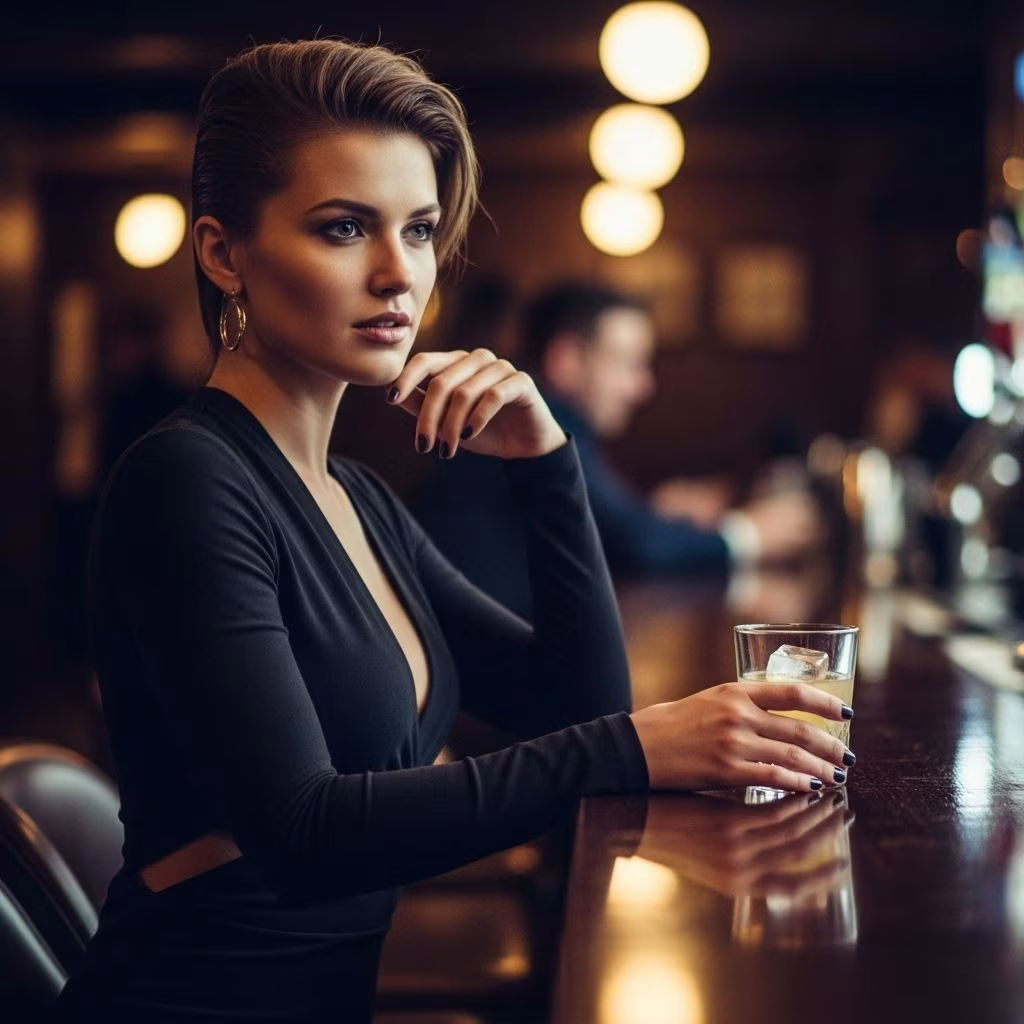
The Rise Of The ‘F*ckgirl’: Challenging The Double Standard
The term ‘f*ckboy’ has dominated modern dating lingo, painting a vivid portrait of the emotionally unavailable male player. But as gender dynamics shift and women claim their own agency in relationships, a counterpart has emerged—the ‘f*ckgirl’. She’s unapologetic, guarded, and equally adept at playing the dating game. In a world where women are increasingly encouraged to own their choices, the f*ckgirl challenges not only her lovers but also society’s long-held double standards about romance and power.
What Exactly Is A ‘F*ckgirl’?
The label ‘f*ckgirl’ isn’t simply a female version of a f*ckboy. While the core behaviors may overlap—emotional detachment, flakiness, and a penchant for noncommittal fun—the motivations and cultural implications differ. Where a f*ckboy is often criticized for his manipulations, a f*ckgirl’s emergence reflects women’s right to play by the same rules once reserved for men.
- Definition: A woman who engages in romantic or sexual relationships with little intention of committing, often prioritizing her own desires and maintaining emotional distance.
- Core Behaviors:
- Flirting with multiple people simultaneously
- Ghosting or breadcrumbing (giving just enough attention to keep someone hooked)
- Keeping options open and refusing to label relationships
- Pursuing situationships over traditional relationships
- Being upfront about intentions, or, at times, intentionally vague
The F*ckgirl vs. The F*ckboy: A Closer Comparison
| Feature | F*ckgirl | F*ckboy |
|---|---|---|
| Intentions | Seeks personal freedom; often transparent, sometimes playful in ambiguity | Often obscures true intentions, promises commitment without delivering |
| Emotional Distance | Prioritizes self; avoids vulnerability | Emotionally unavailable; avoids deep connection |
| Communication | Ghosts or breadcrumbs without guilt; may make it clear there’s no label | Strings along via mixed signals, empty promises |
| Social Perception | Faces judgment, but also respect for embracing agency | Stereotyped as a player; often criticized |
| Motivation | Enjoyment, revenge, independence, sometimes cynicism | Ego, validation, conquest |
Why Are F*ckgirls On The Rise?
The f*ckgirl isn’t born out of nowhere. Her existence reflects evolving gender roles, a reaction to the pitfalls of modern dating, and a growing refusal among women to accept double standards. Several cultural and psychological factors fuel her rise:
- Changing Gender Norms: With more women delaying marriage and prioritizing careers, traditional scripts around dating, romance, and sex are being rewritten.
- Self-Protection: Many f*ckgirls have been hurt before. In a dating world awash with f*ckboys, they may play the game first to avoid being played.
- Revenge and Power: For some, embodying the f*ckgirl role is a form of payback—taking control in a space where men have historically held the upper hand.
- Enjoyment and Experimentation: Some simply enjoy variety and personal autonomy, engaging honestly in no-strings-attached fun.
Inside The Mind Of A F*ckgirl: Real Stories
To truly understand f*ckgirls, it’s essential to hear from women who’ve embraced the label, whether for a night or a season. Here are real-life vignettes that reveal motivation, strategy, and, occasionally, a dose of guilt or self-awareness:
- The Master of Multitasking: In college, Alyssa dated three guys in different grades at once, ensuring they wouldn’t run into each other. It was a carefully orchestrated balancing act.
- The Selfless Sidekick: Marnie hooked up with a guy she wasn’t interested in, then dropped him at her friend’s house, knowing her friend wanted him more. There were no strings, no remorse.
- The Ghost After The Roast: Jenna invited a guy over, read his love-struck texts to friends for laughs after he left his phone behind, then never spoke to him again—even after he came to get his phone.
- Calculated Encounters: Some planned dates solely to learn someone’s name, or bailed mid-hookup when interest disappeared, as Allie did after discovering her date wasn’t as impressive as anticipated.
- Using, Not Losing: Zoe got a sympathetic acquaintance to pay for her cab fare, then left to rendezvous with the guy she really wanted.
- Shutting Down The Hopeless Romantic: Annie slept with a guy largely to end his over-the-top declarations of love, not out of any desire for connection.
Root Causes: Why Some Women Embrace The ‘Player’ Identity
What drives someone to become a f*ckgirl? While each journey is personal, common themes recur throughout their stories:
- Prior Heartbreak: Having been hurt by a f*ckboy or an unfaithful partner, some women decide to flip the script, ensuring they’ll never be the one left behind again.
- Experimentation & Self-Discovery: Especially in college years or early adulthood, experimentation is normalized. For some, temporarily being a f*ckgirl helps define what they don’t want.
- Cynicism About Love: Witnessing failed relationships and divorces, some conclude that commitment is overrated or untrustworthy—at least for now.
- Peer Influence: Seeing friends behave similarly, or comparing notes, can nudge someone into adopting riskier relationship behaviors.
- Sense Of Liberation: For others, it’s not about pain but pleasure—the autonomy, thrill, and freedom of noncommittal encounters.
Consequences: For Her, For Him, For Society
The rise of the f*ckgirl archetype creates ripple effects. While mainstream culture is still wrestling with whether to judge or celebrate her, a few consequences are clear:
- Changing Relationship Norms: The expectation that women must be passive, nurturing, and commitment-oriented no longer holds in every dating scenario. Equality means embracing both the right to commit and the right not to.
- Confusion and Mismatched Expectations: As gender roles blur, both sides may misread intentions, leading to disappointment and miscommunication.
- Empowerment Versus Isolation: While some relish the control, others may find genuine intimacy harder to access the longer they stay in ‘player’ mode.
- Reflection In Pop Culture: TV, music, and social media increasingly reflect and normalize the f*ckgirl, creating a feedback loop that continues to reshape social mores.
How To Spot A F*ckgirl: Red Flags & Signs
- Communicates frequently but inconsistently—lots of flirty memes, little substance.
- Avoids defining the relationship, even after several months.
- Disappears for days or weeks, then returns with minimal explanation.
- Makes plans at the last minute, reschedules often with casual ease.
- Rarely opens up emotionally, keeping conversations light or surface-level.
- Mentions exes or other flings offhand, making it clear you’re not the only one on the radar.
Can A F*ckgirl Change? Is There Redemption?
Just as not every f*ckboy is doomed to a lifetime of non-commitment, not every f*ckgirl will stay a player forever. Sometimes circumstances—new relationships, personal growth, or simply outgrowing the thrill—lead even the most committed non-committer to change course.
- Some realize the emotional cost of never getting close, and gradually open up to deeper connection.
- Others meet a partner they respect enough to want to change, or simply mature into a new phase of their lives.
Advice For Navigating Modern Dating With F*ckgirls
- Know Yourself: Be honest about your own intentions and boundaries. Don’t expect emotional depth from someone who’s clearly not offering it.
- Communicate Directly: If you sense mixed signals, ask for clarity. It’s better to know where you stand than to guess.
- Protect Your Heart: If you know you want more than casual fun, don’t put yourself in a position to be repeatedly disappointed.
- Embrace Your Own Agency: There’s no shame in wanting no-strings-attached fun, but don’t settle for less (or more) than what you truly want.
- Don’t Shame—Understand: The f*ckgirl isn’t a villain; she’s a mirror of a changing dating world. Judge less, understand more.
Frequently Asked Questions About F*ckgirls
Q: Are f*ckgirls just women who act like f*ckboys?
A: Not exactly. While both may avoid commitment and play the field, f*ckgirls often emerge as a response to the prevalence of f*ckboys and shifting gender norms. Their motivations may include self-protection, experimentation, or simple enjoyment—not just manipulation for its own sake.
Q: Is being a f*ckgirl empowering, or does it lead to loneliness?
A: For some, embracing the f*ckgirl persona is a path to confidence and self-definition. For others, it can become hollow or lonely over time, especially if they want something deeper. Ultimately, it depends on individual values and desires.
Q: Do f*ckgirls ever regret their choices?
A: Like anyone, some reflect on past behavior with regret, while others see it as a necessary phase of personal growth. The key is honesty—with oneself and with partners.
Q: How can you tell if someone is a f*ckgirl?
A: Look for inconsistent communication, a resistance to commitment, multiple romantic interests discussed openly or implied, and overall emotional guardedness.
Final Thoughts: The Evolution Of Dating
The rise of the f*ckgirl is more than just a label—it’s a challenge to the status quo, an assertion of female agency, and a byproduct of the complexities of contemporary dating. Whether she’s celebrated, criticized, or something in between, understanding the f*ckgirl means understanding the future of romance itself.


