


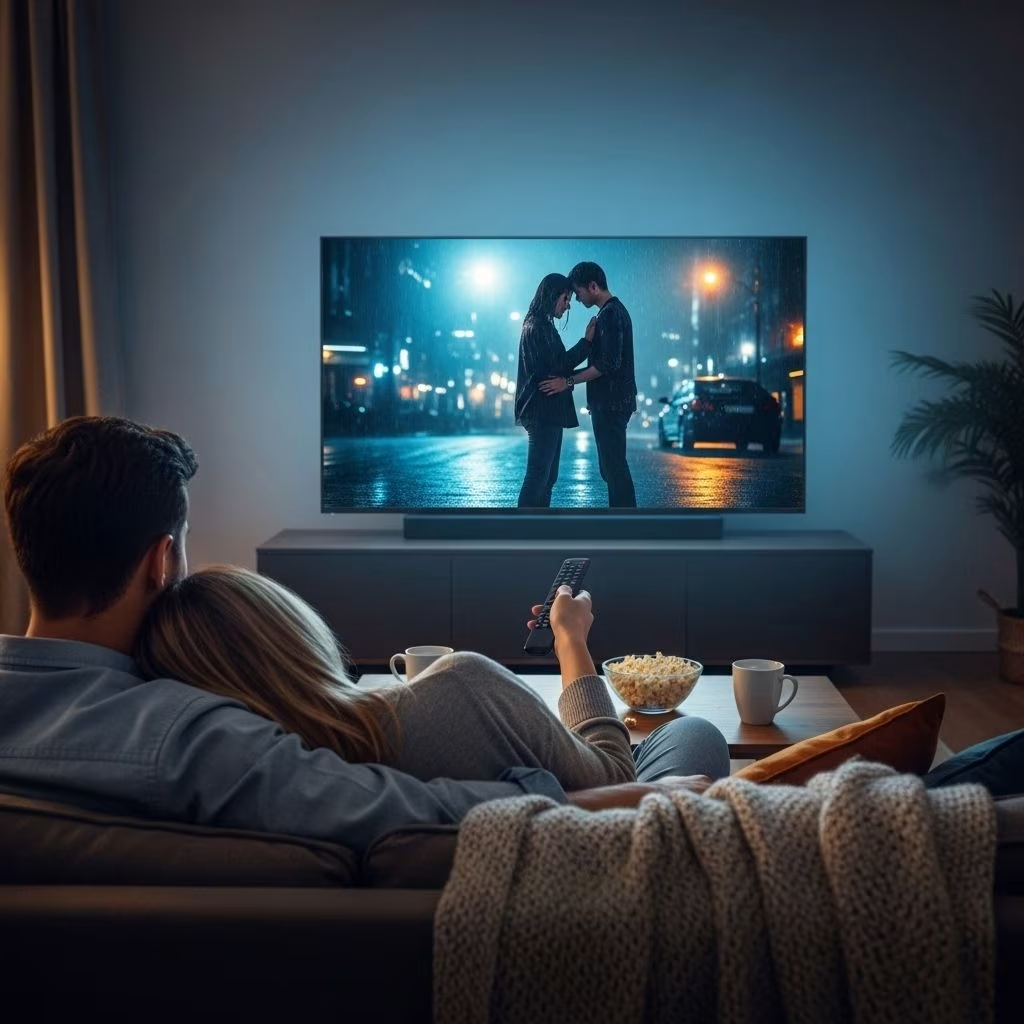
Why We Fall Harder For Couples On TV Than In Our Own Relationships
Watching romantic relationships unfold on television has become a near-universal experience in the age of streaming, with passionate audiences eagerly following the ups and downs of their favorite on-screen pairs. As binge-watching becomes more ingrained in our day-to-day routines, a curious phenomenon has emerged: We often find ourselves becoming more invested in TV couples than in our own love lives. But what is it about these fictional romances that captivates us so completely? This article explores the psychological and emotional reasons behind our fascination, offering insight into why the relationships we watch can feel even more real, compelling, or moving than those we live.
TV Love in the Age of Streaming: A Unique Obsession
Unlike previous generations who waited week-by-week for plotlines to unfold, today’s viewers can consume entire seasons—or even long-running series—in the span of a weekend. Streaming platforms like Netflix allow us to witness every argument, reconciliation, and romantic gesture without pause. The result is a deep, sometimes overwhelming attachment to couples who exist entirely within the world of fiction. Binge-watching has transformed our consumption of romance, making it possible to experience the emotional highs and lows of a relationship in a single sitting.
- Instant gratification: No waiting for new episodes; emotional payoffs come quickly.
- Complete narratives: Relationships appear in their entirety, from hesitant beginnings to dramatic conclusions.
- Escapism: TV couples offer a fantasy—it’s love as written, not as lived.
4 Reasons We Fall In Love With TV Couples So Easily
While there are countless reasons to adore TV couples, there are four particularly compelling factors that lead us to become so deeply attached to them. Read on to discover why the allure of fictional relationships is so powerful—and why we may need to remind ourselves of the difference between on-screen love and reality.
1. We Can Watch the Relationship Unfold in a Matter of Hours
Real relationships take time—days, months, sometimes years spent getting to know one another. For most people, love is a gradual process, built on shared experiences and sustained effort. Watching a relationship develop on television, however, compresses this process into just a few hours. With the click of a button, we can immerse ourselves in the emotional journey of couples like Ross and Rachel, Chuck and Blair, or Elena and Damon—all without investing more than an evening or two.
- Time compression: We experience the most intense moments of a relationship one after the other, keeping viewers in a constant state of emotional engagement.
- Selective experience: The mundane aspects are often skipped, focusing only on the drama and romance.
- No real-life risk: Being invested in fictional love doesn’t put our own hearts on the line.
2. We Are on the Outside Looking In
One of the most alluring aspects of fictional couples is our ability to observe their relationships as outsiders. We watch every argument, reconciliation, and heartbreak without being impacted by the consequences. This external perspective allows us to pick and choose qualities we admire, ignoring (or forgiving) the flaws that would be difficult to overlook in real life.
- Distance from reality: We’re not actually participating, so we’re safe from hurt or disappointment.
- Idealization: We can focus on the romantic highlights and downplay or ignore the toxic elements.
- Selectivity: We root for our favorite characters, often giving them the benefit of the doubt that we might not extend to real partners.
For example, despite how turbulent or even toxic a dynamic may be (think Chuck and Blair from Gossip Girl), audiences are quick to forgive and yearn for a happy ending, while in personal relationships such issues might be deal breakers.
3. We Get to See Both Sides of the Story
Television and film are, at their core, all about storytelling. The medium grants viewers access to both sides of a couple’s struggles, providing insight into motivations, insecurities, and desires. Watching a breakup between two beloved characters, we empathize with both parties, understanding their pain and the sacrifices each has made. This bird’s-eye view is rarely available in real life, where personal bias and emotional investment cloud judgment.
- Omniscient perspective: We know the secrets, backstories, and motivations that drive each character’s actions.
- Emotional depth: We connect more meaningfully because we see both the vulnerability and strength in each partner.
- Empathy for all: Audiences can grieve losses or celebrate reunions from both points of view—something hard to achieve in one’s own relationships.
For instance, following the romantic trials of Elena and Damon on The Vampire Diaries, viewers experience the full spectrum of both characters’ emotions during their separations and reunions, fostering a form of dual empathy that’s almost impossible off-screen.
4. We Know Both Backstories
Perhaps the greatest advantage of fictional relationships is our knowledge of each character’s full history. We know why one has trust issues, or why another resists commitment—because we’ve seen their past heartbreaks or family traumas unfold in flashbacks or anecdotes. In real relationships, we can’t peer inside someone’s mind or reflect on every formative experience. Our understanding is inevitably partial.
- Full context: Every emotional wound, triumph, or secret is revealed for our understanding.
- Storytelling mastery: Writers design narratives where backstories perfectly explain current behaviors, making every romantic arc satisfying.
- No real mystery: Unlike real life, there are few unknowns about why a character acts as they do.
Take Bones and Booth from Bones—their guarded hearts and emotional scars are made explicit, helping us see how they fit together as a couple. In our own lives, however, true understanding unfolds only through time and vulnerability, a process fraught with uncertainty.
What TV Romance Teaches (And What It Can’t Replace)
TV couples can teach us a great deal: about the power of vulnerability, the importance of communication, and the red flags that can’t be ignored. Many viewers take inspiration from their favorite fictional duos, compiling lists of qualities and dynamics they hope to find in real-life partners. However, it’s essential to remember that these relationships are scripted and idealized—constructed by writers for maximum emotional effect.
- Lessons in love: Sometimes, art inspires better connection and understanding in our own lives.
- Caution against comparison: Scripted dialogue and perfectly-timed confessions rarely play out the same in reality.
- Entertainment vs. expectation: The drama that makes for compelling TV often signals unhealthy patterns in real relationships.
The Fantasy of Fictional Couples: A Double-Edged Sword
At the end of the day, it’s critical to remember that fictional couples are, in fact, fictional. Every longing gaze and heartbreak is carefully constructed; every grand gesture has been written, revised, and rehearsed. Our investment is real, but the romance is a fantasy—one that can, if we’re not careful, skew our expectations for love off-screen.
Common TV Couples We Love (and Why)
| Couple | Show | Why Audiences Love Them |
|---|---|---|
| Ross & Rachel | Friends | Iconic “will-they-won’t-they,” dramatic reunions, emotional nostalgia |
| Chuck & Blair | Gossip Girl | Chemistry, drama, overcoming obstacles, deep backstories |
| Meredith & Derek | Grey’s Anatomy | Tragedy and resilience, professional challenges, magical moments |
| Elena & Damon | The Vampire Diaries | Epic passion, supernatural stakes, relatable heartbreak |
| Bones & Booth | Bones | Complex character growth, mutual respect, eventual trust |
Frequently Asked Questions (FAQs)
Q: Why do I feel more attached to TV couples than real couples?
A: TV couples offer emotional gratification through neatly resolved storylines, intense drama, and total access to both characters’ thoughts and motivations, making it easier to empathize and invest with little personal risk.
Q: Can falling for fictional couples affect real-life relationships?
A: Yes, if expectations become unrealistic; it’s important to distinguish scripted romance from authentic, sometimes messy, real-life dynamics.
Q: What positive lessons can we take from TV relationships?
A: TV couples can model vulnerability, communication, and perseverance in relationships—qualities worth seeking in real life.
Q: Is it unhealthy to be this invested in fictional relationships?
A: It only becomes problematic if it detracts from personal relationships or creates dissatisfaction with reality; for most, it’s a source of inspiration and harmless escapism.
Key Takeaways for TV Lovers and Romantics Alike
- TV couples are deliberately written to maximize emotional resonance, compressing years of relationship growth into binge-able narratives.
- The omniscient view lets us empathize with both characters far more deeply than is usually possible in real life.
- Knowing characters’ full backstories makes their actions and love stories more compelling, but also sets unrealistic standards.
- While we can learn from these fictional relationships, real love requires patience, compromise, and a willingness to embrace imperfection.
In the end, as much as we swoon for on-screen romance, real fulfillment often comes from our own stories—messy, unpredictable, but authentically ours.


