


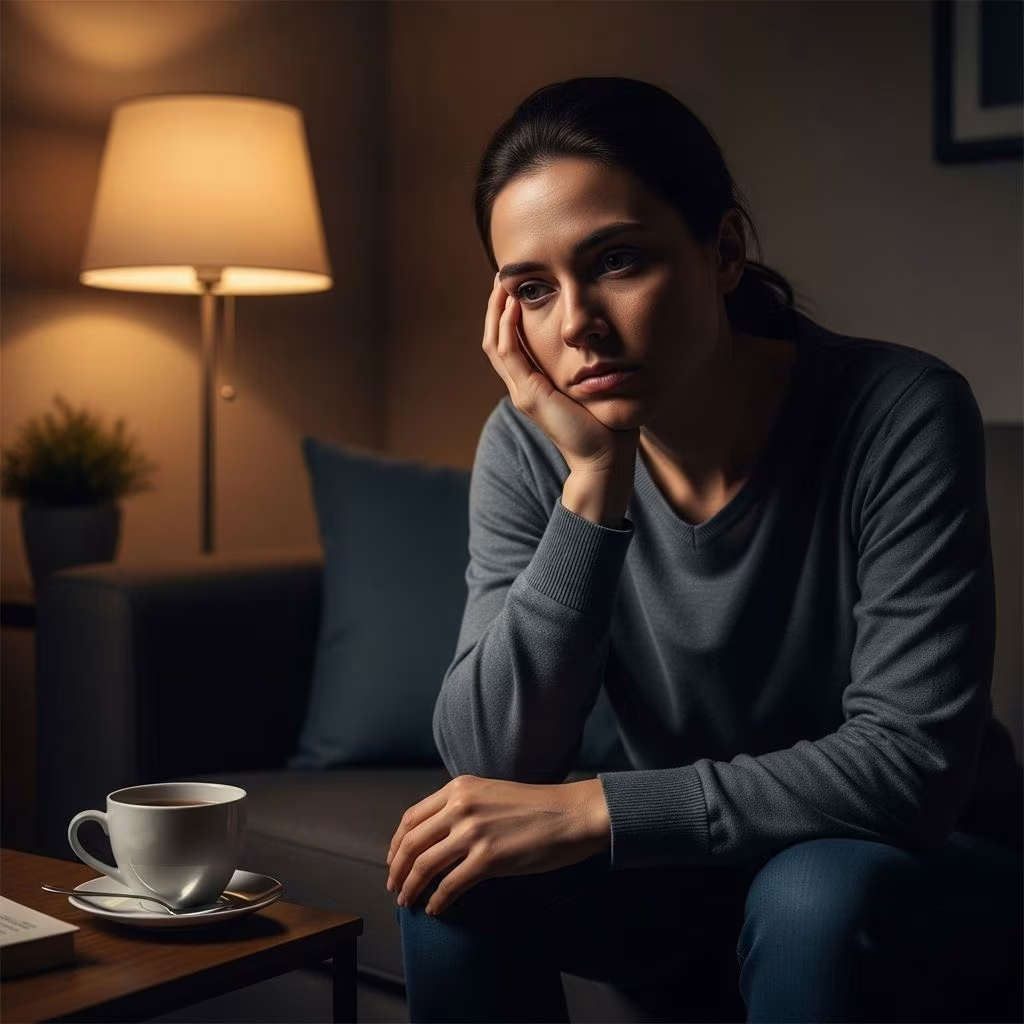
Why I’m Done With Having Casual Relationships
Casual relationships promised thrill, novelty, and zero-commitment freedom—at least in theory. For a long period, the idea of keeping things “low pressure” sounded like the perfect way to enjoy connection without the risk of heartbreak. But after experiencing every phase of the casual dating cycle—from heady beginnings to muddled endings—one truth became unavoidable: the supposed ease comes with costs often larger than expected. Here’s a brutally honest look at why casual relationships have become more draining than liberating, and why I’ve chosen to leave them behind.
What Are Casual Relationships, Really?
Casual relationships refer to romantic or sexual partnerships that lack clear commitment and long-term expectations. They’re typically defined as “taking it slow” with mutual understanding that exclusivity, emotional investment, and future promises are not part of the plan.
- No explicit commitment or labels
- Low (or undefined) emotional expectations
- Often involve physical intimacy
- Could include dating, hookups, or “situationships”
While the allure lies in their supposed simplicity, the blurred contours of these arrangements create confusion, mixed feelings, and vulnerabilities that aren’t always obvious from the start.
The Illusion of Simplicity
At first glance, casual relationships seem to offer ease and minimal emotional risk. The early days can be intoxicating: you enjoy each other’s company, there’s excitement without pressure, and boundaries appear clear—or so you think. But simplicity is an illusion. Beneath the surface, the uncertainty often morphs into confusion and emotional exhaustion.
Why Casual Relationships Feel So Appealing
- Freedom: No need to explain yourself or plan a future together.
- Novelty: Every interaction feels spontaneous and fresh.
- Less vulnerability: Belief that lower stakes means lower risk of getting hurt.
But, ironically, keeping things casual often breeds hidden rules, unspoken expectations, and ambiguous feelings. Very rarely can both people sustain truly casual energy for long periods[10].
The Reality: Messy Emotions and Blurry Boundaries
The cracks in the “casual” façade start to show as time goes on. Either you—or your partner—begin to want more. Even with mutual agreements at the outset, emotional dynamics are never static.
The 7 Phases of a Casual Relationship
Most casual relationships follow a pattern. Recognizing these stages can help explain why they so often lead to emotional turmoil.
- Initial Attraction: Everything feels light, carefree, and interesting. You’re excited about the novelty.
- No-Strings Fun: You both prioritize fun and avoid serious discussions or commitments. No one is asking “what are we?” yet.
- Increased Time Together: You begin seeing each other more often. Emotional intimacy can inadvertently grow, even without intent.
- Confusion: Feelings start to blur. Jealousy might arise. You wonder if the casual arrangement is still working for you, and whether the other person feels the same.
- The “DTR” Moment: One person wants to define the relationship (DTR), prompting an internal tug-of-war. Is it time to make things official, or pull away?
- Choosing a Path: You both either continue casually, move to exclusivity, or end things entirely. Mixed desires usually lead to the relationship fizzling out or emotional hurt if feelings aren’t mutual.
- Reflection: One or both parties reflect on whether this dynamic was satisfying or just emotionally draining.
Why Boundaries Suffer
Boundaries in casual relationships are notoriously difficult to define and enforce. The absence of clear expectations means both parties interpret “casual” differently—often leading to misunderstandings about exclusivity, time, and emotional investment.
- Unspoken jealousy or insecurity builds when the casual partner spends time with other people.
- Ambiguity leads to “gray areas”—like texting daily or seeking support during hard times. Is it friendship, romance, or something else?
- People mask their true feelings to avoid coming across as needy or “too intense” for the arrangement.
Emotional Toll: More Draining Than Expected
The most unexpected outcome of casual relationships is the emotional labor they require. It’s common to believe that minimizing seriousness means minimizing vulnerability, but the reverse often happens. The effort to maintain a “chill” persona pushes down real needs, causing anxiety and self-doubt[10].
Common Emotional Consequences
- Unmet needs: Even those who claim to want nothing serious may find themselves wishing for deeper affirmation, emotional stability, and care.
- Confused self-worth: When someone you’re connecting with isn’t committed, it’s easy to start questioning your attractiveness or significance.
- Suppressed honesty: Fear of changing the arrangement often prevents genuine expression, so feelings go unspoken and unresolved.
- Feeling replaceable: The idea that your partner is “shopping around” can foster low self-esteem and competition you never wanted.
- Emotional exhaustion: Keeping things light takes effort, especially if you’re fighting natural desires for closeness or exclusivity.
Draining Dynamics: A Table
| Expectation | Casual Reality | Emotional Effect |
|---|---|---|
| Fun, no-strings | Unclear rules, shifting dynamics | Confusion, anxiety |
| No pressure | Unspoken expectations emerge | Jealousy, second-guessing |
| Freedom | Uncertainty about where you stand | Low confidence, insecurity |
When Intentions Diverge
One of the most vexing aspects of casual relationships is what happens when one person develops stronger feelings than the other. Honest discussion may lead to:
- Mutual decision to end or redefine the relationship
- Continued ambiguity (“let’s just see where this goes”)
- Silent endurance, where one person quietly hopes things will become more serious
The outcome is often a slow unraveling, with each encounter feeling less rewarding and more emotionally risky. In the most honest cases, agreements can be renegotiated—or both people walk away. But more often, enduring confusion and emotional labor extends until someone makes a definitive choice.
Situationships and the Fear of Missing Out
Modern dating has normalized situationships—vague dynamics lacking labels and clarity—which pretend to be a middle ground between being single and being official. For many, this is a way to sidestep vulnerability and maintain options. However, the lack of definition can lead to:
- Persistent anxieties about the future
- Comparisons with people in committed relationships
- Difficulty investing emotionally, even in other areas of life
- Feeling as though you’re always waiting for more, without any guarantee it will come
Ultimately, situationships often breed more questioning (“Is this it? Should I want more?”) than satisfaction.
The Social Pressures of Casual Dating Culture
In many social circles—especially among younger adults—casual dating is almost seen as a rite of passage. The message is that commitment is outdated or “clingy,” while emotional detachment is a sign of maturity. Yet, behind closed doors, many admit they’re left feeling lonelier, less confident, or less valued than they’d hoped.
- Peer pressure to “stay chill” even when you want something more
- Internal conflict between your authentic needs and external expectations
- Increased risk of emotional exhaustion and burnout
When being “low-maintenance” is prized above all else, the cost is often your own emotional wellbeing.
Knowing When You’ve Outgrown Casual
The decision to leave behind casual relationships is rarely prompted by a single event. More often, it’s the accumulation of subtle realizations:
- You crave deeper intimacy and mutual support
- You’re tired of interpreting mixed signals and downplaying your own needs
- Your mental and emotional energy feels drained, rather than restored, after seeing someone casually
- You no longer find casual encounters exciting, just unfulfilling
For some, a “failed” casual relationship can be the final push needed to seek something intentional and reciprocal.
Choosing Intention Over Ambiguity
Shifting away from casual relationships is as much about self-respect as it is about what you desire from a partner. Intentional relationships offer:
- Clarity: Both parties know where they stand, reducing anxiety and confusion
- Mutual investment: Emotional energy is spent building rather than guarding against disappointment
- Space for growth: Both people can express wants, needs, and dreams without fear of “ruining” things
- Deeper intimacy: Greater willingness to be vulnerable and seen for who you are
While intentional relationships can be risky in their own way, they’re also more likely to be fulfilling, supportive, and transformative.
Redefining Success in Love and Dating
Culture pushes the narrative that success in dating means being emotionally unattached and endlessly available. But, real strength lies in expressing what you want—whether that’s commitment, exclusivity, or honest companionship. Saying goodbye to casual relationships isn’t a failure; it’s a decision to prioritize your own emotional health and happiness.
Practical Lessons Learned
- Communicate your boundaries clearly, early, and often
- Check in with yourself regularly about what you want
- Don’t be afraid to walk away from arrangements that leave you drained
- Seek partners who reciprocate your emotional investment
- Recognize that changing your mind is not weak—it’s growth
Frequently Asked Questions (FAQs)
Q: Can casual relationships work long-term?
A: Sometimes, but only if both people maintain clear, honest communication about their expectations. In most cases, either feelings change or needs evolve, making the casual arrangement stale or unsatisfying.
Q: Why do people choose casual relationships?
A: Many choose casual relationships for freedom, exploration, or convenience when they don’t feel ready for commitment. Others are navigating busy lives or recovering from previous heartbreak. However, these reasons sometimes mask a discomfort with vulnerability.
Q: What’s the main risk in casual relationships?
A: The biggest risk is misaligned expectations—when one person wants more than the other, leading to emotional pain and confusion. Additionally, suppressed honesty can result in prolonged dissatisfaction.
Q: How do I know if I’m ready for something more serious?
A: If you find yourself craving emotional depth, feeling unsatisfied by casual encounters, or regularly questioning your own worth or needs, you may be ready to seek a more intentional relationship.
Q: Is it okay to not want to date casually?
A: Absolutely. There’s nothing wrong with preferring committed, defined relationships. Your preferences are valid, and seeking what fulfills you is a strength—not a weakness.
Conclusion
Choosing to leave behind casual relationships is not about rejecting fun or freedom—it’s about honoring your emotional needs. Ambiguous dynamics can work for some, but for many, genuine fulfillment comes with clarity, mutual respect, and intentional connection. As dating culture evolves, may we all give ourselves permission to define love and relationships on our own terms, and to say “enough” when clarity feels more valuable than novelty.
References
- https://www.elitedaily.com/p/do-casual-relationships-work-heres-what-experts-say-to-keep-in-mind-17011447
- https://www.elitedaily.com/dating/casual-dating-rules
- https://www.elitedaily.com/dating/what-is-a-casual-relationship
- https://www.elitedaily.com/p/7-brutally-honest-phases-of-casual-relationships-because-everyone-has-them-9199712
- https://www.elitedaily.com/dating/what-does-a-casual-relationship-mean/2063168
- https://www.elitedaily.com/p/the-psychology-behind-casual-dating-according-to-science-17019645
- https://www.elitedaily.com/p/if-you-hate-casual-dating-heres-why-experts-say-its-ok-17011565
- https://www.elitedaily.com/dating/hookup-culture-non-relationship-generation-getting-nowhere/664654
- https://www.elitedaily.com/p/9-women-who-prefer-casual-relationships-explain-why-thats-the-right-choice-for-them-9847212
- https://www.elitedaily.com/dating/casual-hookups-draining-emotional-energy-relationships/847596


