


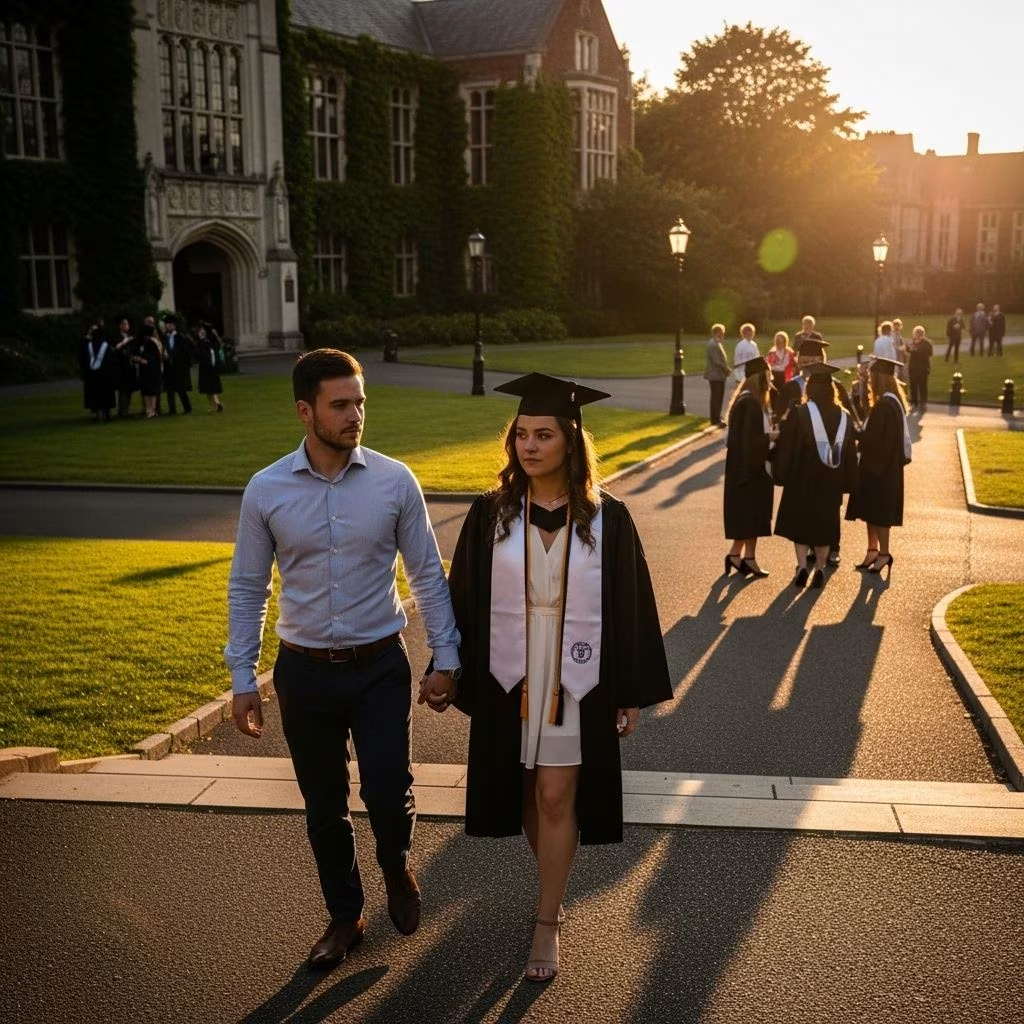
Why Most College Relationships Don’t Survive Beyond Graduation
On college campuses, romance can seem picture-perfect. Many couples imagine they’ll be the exception and make it together long after graduation. But despite good intentions and memorable years together, most college relationships come to an end when real adult life begins. This article explores the underlying reasons, emotional realities, and key lessons from these poignant breakups, drawing insight from real experiences.
The Illusion of the “Perfect” College Relationship
From the outside, a long-term college couple often appears destined for forever. Friends and family may think engagement is just around the corner, and the relationship gets held up as proof that you can find ‘the one’ even while juggling finals, parties, and growth spurts. But much of this surface-level perfection is built within the unique shelter of college life.
- Environment offers comfort: Shared social circles, campus events, and a predictable academic schedule foster togetherness.
- Outside approval can increase pressure: Parental and peer expectations may cause you to overlook emerging incompatibilities.
- The relationship feels “right” simply because it’s in context—yet few couples imagine how fragile that context can be.
Common Reasons College Romances End
Many factors contribute to why so many promising campus relationships dissolve soon after graduation. The following sections detail some of the most prominent reasons, supported by real experiences.
1. Diverging Ideas of the Future
One of the earliest warning signs in a lasting romance is the slow realization of fundamentally different life goals. In college, daily routines and priorities are largely synchronized. Afterward, decisions about careers, locations, and family can expose deep differences:
- Conflicting aspirations: One partner might crave stability—white-picket fences and suburbia—while the other dreams of adventure or nontraditional living.
- Changing plans: What began as “we’ll figure it out” starts feeling like “we’re moving in opposite directions.”
- No compromise in sight: This divide often grows insurmountable as graduation and real world pressures loom.
For example, one partner may be driven by career and financial goals, envisioning a settled life, while the other craves travel, unpredictability, or prioritizes personal growth before settling down. The inability to align these visions, even out of love, is a leading cause for separation.
2. The Need for Personal Growth
College is a time of profound change, but growth doesn’t stop at graduation. Many relationships struggle when one or both individuals realize there’s still so much of life—and themselves—they want to experience firsthand.
- Desire for independence: You may want to experience life solo, take risks, or discover new sides of yourself without the constraints of your college relationship.
- FOMO (Fear Of Missing Out): Long-term monogamy early on can feel restrictive. The urge to explore other relationships, social scenarios, or simply “live youth” before making lifelong commitments is strong.
- Unequal rates of maturing: When one partner grows or craves change at a different pace, resentment or frustration can occur.
Suddenly, the role of “perfect partner” clashes with a deeper need to discover who you are outside of that dynamic.
3. Family Expectations and Acceptance
Family can be a powerful force—sometimes strengthening a couple, but just as often revealing uncomfortable truths. Even with supportive gestures or shared vacations, subtle feelings of not fitting in can linger. These differences can grow sharper over time:
- Cultural or socioeconomic divides: Feeling like an outsider at family gatherings can grow into a meaningful issue.
- Unspoken judgments: The partner’s family may be pleasant but never fully accepting; this adds hidden pressure on both individuals.
- Future consequences: If you already feel out of place, it’s likely to only worsen with marriage, children, and larger family events.
Over time, the sense of not fitting into a partner’s long-term life—despite best efforts—can drive couples apart.
4. The “College Bubble” Effect
College life forms a natural bubble, cushioning couples from adult realities:
- Sheltered routines: Living steps away from each other, schedules dictated by classes and exams, shared social calendars—it all insulates couples from the stress and unpredictability of the real world.
- Limited exposure: Few truly difficult life decisions are made in college; most stressors are academic or social, not existential or financial.
- No real-world testing: Unless you experience hardships—long distance, major personal setbacks, or big decisions—it’s difficult to know how a relationship will fare outside the bubble.
Once separation becomes necessary due to jobs or graduate school, the relationship faces its toughest challenge—with few being able to adapt.
Lessons Learned from College Breakups
Though painful, the end of a college relationship provides crucial life lessons that influence future relationships in positive ways. These are some of the key takeaways noted by many who go through this rite of passage:
- It’s okay to outgrow someone: Growth, change, and changing needs are not only permissible but inevitable as you discover more about yourself.
- Compatibility isn’t just about love: Shared values, life goals, and emotional maturity play a larger role in long-term success than romance alone.
- Ending things isn’t failure: Having the courage to recognize when a chapter has closed—despite social pressure—and prioritizing your own future is an important act of self-respect.
- You still gain positive memories and skills: Even a relationship that doesn’t last offers experiences, emotional intelligence, and lessons about what you want in the future.
The Emotional Realities of Breaking Up
Making the decision to end a relationship, especially one that appears “perfect” to the outside world, is never easy. It often brings a mix of relief, sadness, nostalgia, and hope. Some realities to expect:
- Friends and family may not understand your reasons, fueling guilt or doubt.
- You may feel simultaneously free and lonely—grieving not just the person, but also the imagined future together.
- With time, the pain subsides, and the gains become clearer: readiness for new experiences, deeper self-knowledge, and confidence to make hard decisions.
How to Move Forward: Advice for Navigating the Transition
If you find yourself at the crossroads of a college breakup, these strategies can help you navigate the emotions and come out stronger:
- Embrace Change: Accept that growth requires letting go. The college relationship is just one chapter, not your whole story.
- Stay honest with yourself: Don’t let nostalgia override reality. Remind yourself why the relationship ended and reaffirm your long-term needs.
- Establish new goals: Focus on your ambitions, travel, or projects—independently. This brings excitement about your own capabilities.
- Maintain social ties: Lean on friends and communities for support. Explore new circles outside your ex’s groups to reinforce your independence.
- Reflect and forgive: Let yourself grieve, but avoid resentment—toward your ex or yourself. Growth comes from compassion for both parties.
Table: College Relationship Challenges vs. Adult Relationship Realities
| College Relationship Challenge | Adult Relationship Reality |
|---|---|
| Coordinating class schedules | Coordinating work, possibly in distant cities or time zones |
| Overlapping social circles | Diverging friendships and family obligations |
| Living blocks apart | Potential long-distance or separate living arrangements |
| Decisions mainly about vacations or electives | Major choices: careers, finances, home ownership, starting a family |
| Support from campus resources | Greater independence and fewer safety nets |
Frequently Asked Questions (FAQs)
Q: Can college relationships survive after graduation?
While some do, most don’t last because partners often develop new goals and diverge as they embrace adult responsibilities. Growth, distance, and lifestyle changes play a major role in challenging these relationships.
Q: What are the main warning signs a college romance won’t last?
Warning signs include diverging life goals, unresolved personal growth aspirations, persistent feelings of not fitting in with a partner’s family, and avoiding discussions about life after college.
Q: Is it a failure if my college relationship ends?
Not at all. Relationships are learning experiences, and ending one that’s no longer right for you is a sign of maturity. It isn’t a failure—it’s a transition.
Q: How can I know whether to end a college relationship or try to make it work?
Consider whether you and your partner can genuinely envision—and work toward—a shared life beyond graduation. Honest communication, mutual respect for each other’s goals, and willingness to compromise are crucial. If these are lacking or your visions are incompatible, it may be time to part ways.
Q: What can I do to heal after a breakup with my college sweetheart?
Give yourself time to grieve, reflect on the positive memories and lessons, stay involved in new activities, nurture friendships, and seek professional support if needed. Focusing on personal growth will ease the transition.
Key Takeaways
- Most college relationships end for good reasons: they reveal crucial truths about who you are and what you need in life and love.
- Growth is the real goal: College relationships often help catalyze self-awareness and readiness for future, more compatible partnerships.
- Don’t fear the end: Every ending offers a new beginning, with lessons and confidence that will enhance whatever comes next.
In the end, it’s not the loss of a college romance that defines you—it’s what you learn, how you grow, and the life you bravely shape in its wake.
References
- https://www.elitedaily.com/dating/college-relationship-ended/1140427
- https://www.elitedaily.com/dating/college-relationship-wont-last/1487891
- https://hellodrjoy.com/publications/
- https://bigthink.com/series/the-big-think-interview/richard-reeves-masculinity-crisis/
- https://paulkrugman.substack.com/p/talking-ai-with-martin-wolf


