


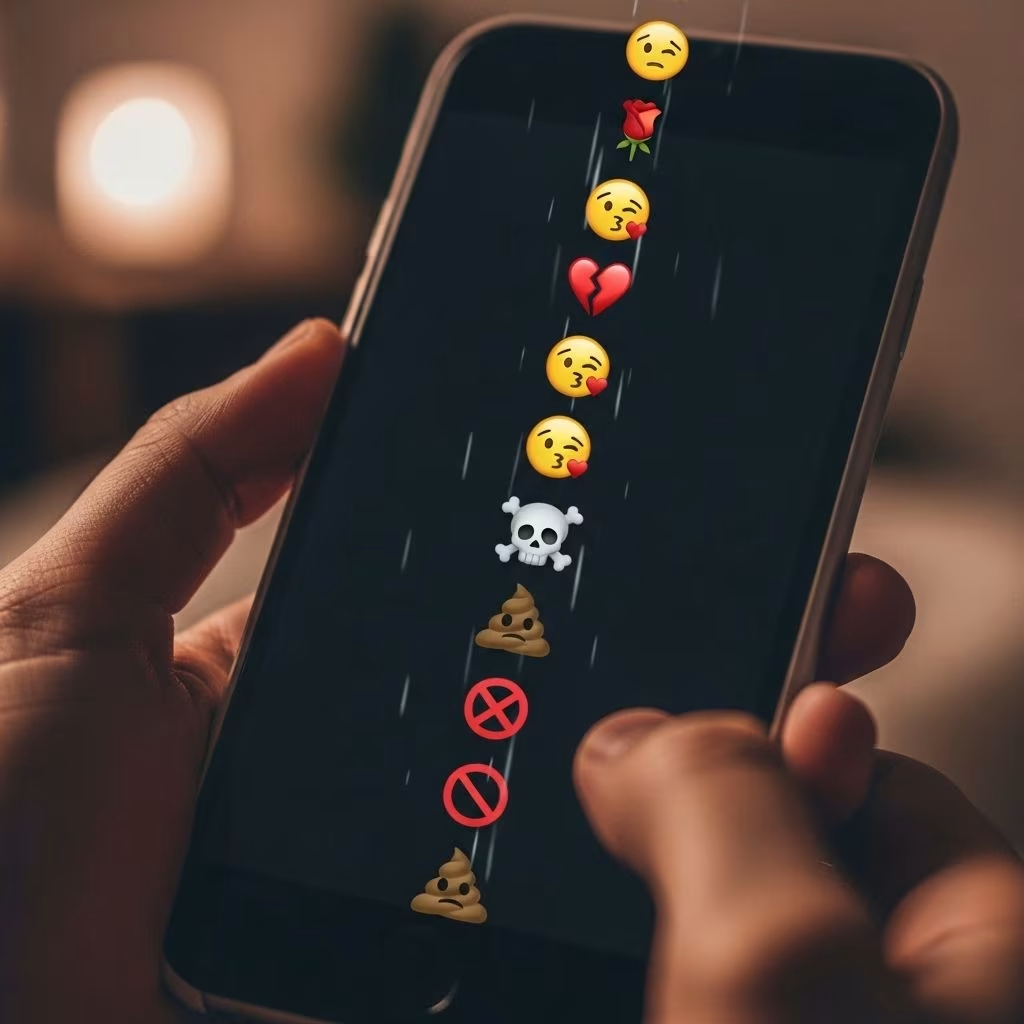
If You Use Too Many Emojis With Your SO, It Might End Your Relationship
Communication in romantic relationships has evolved rapidly with the rise of smartphones and social media. Emojis, the colorful graphics that punctuate digital conversations, often stand in for words, emotions, and nuance. But is this innocent shorthand quietly sabotaging your connection—and possibly leading to the end of your relationship?
The Modern Romance: Love in the Time of Emojis
Today’s couples face challenges unique to the era of digital communication. Time zones, busy schedules, and constant distractions make texting the default method for staying connected. But digital intimacy is different from in-person conversations. When separated by screens, partners sometimes rely on emojis to express themselves—especially in moments of frustration, disappointment, or ambiguity.
- Emojis provide instant emotional cues—a smiling face, a heart, or a frown—and can substitute for difficult conversations.
- Overuse of emojis during arguments or serious talks may undermine the emotional authenticity of the exchange.
- Digital shorthand often misrepresents feelings, leading to confusion or distance.
Imagine trying to resolve a tense disagreement via text, only to receive a sad face emoji instead of an apology or genuine engagement. Rather than bridging gaps, emojis may widen the emotional distance.
Why Do We Use Emojis Instead of Words?
With written communication, the pressure to “say the right thing” is intense. Emojis emerge as easy replacements for words, especially during moments of vulnerability or anxiety. When a relationship hits a rough patch, partners may reach for emojis to soften blows, convey remorse, or sidestep difficult admissions.
| Emoji Use | Purpose | Potential Pitfall |
|---|---|---|
| Heart-eyed emoji | Flirtation, affection | May feel impersonal or superficial if overused |
| Sad face emoji | Express regret, sadness | Can come off as insincere in serious situations |
| Laughing emoji | Diffuse tension, lighten mood | May undermine seriousness or empathy |
Emojis vs. Words: The Fight for Authentic Communication
The main problem arises when emojis replace meaningful words in crucial moments. When your partner sends only a graphic in response to heartfelt concerns, the conversation loses depth and meaning. Particularly in moments of argument or emotional disclosure, relying on emojis prevents actual problem-solving and can trivialize the issues at hand.
- Emojis cannot fully represent complex emotions or remorse.
- They often act as placeholders for real communication, leaving partners dissatisfied.
- Sending emojis may be perceived as avoiding responsibility or genuine feelings.
Studies have shown that, while emojis can increase emotional connection in light-hearted chats, they are harmful when used to address deeper issues, causing partners to feel unseen or misunderstood.
Gender Differences in Emoji Use: Are Men More Likely to Emoji-Fight?
Research and personal experience suggest that men may use emojis differently than women. While women may use emojis naturally to add warmth or playfulness, men sometimes send a string of graphics when seeking attention or flirting, especially after communication has cooled off. For instance, when a guy resorts to only sending emojis after a disagreement, it can signal an unwillingness to address the problem sincerely.
- Men often send repeated emojis if a partner stops responding, as a way to regain attention.
- Women may perceive this as unappealing or emotionally evasive.
- The lack of verbal engagement can frustrate partners seeking real conversation.
Receiving a heart-eyed emoji after posting a picture online may feel less flattering than an explicit compliment. Words like “You look beautiful” have more emotional impact than a digital graphic—reinforcing the idea that words matter most.
The Risks: How Emoji Overuse Can Push You Apart
Using emojis as a primary means of communication can erode the foundations of intimacy. When couples fall back on emojis instead of expressing themselves honestly, important emotions get lost in translation. Rather than rebuilding trust or closeness, they end up driving a wedge between each other.
- Important conversations diluted—Complex feelings reduced to trivial symbols.
- Emotional avoidance—Using emojis to dodge difficult admissions or apologies.
- Lack of accountability—Sending graphics instead of meaningful words is seen as a refusal to engage.
The long-term result? Relationships can end not with a dramatic confrontation, but a slow drift into misunderstanding and emotional detachment.
When Emojis Help: The Upside
Of course, emojis aren’t all bad. When used sparingly and thoughtfully, they can reinforce positive feelings, add playfulness to conversations, and clarify the emotional tone of a message. In lighthearted moments, emojis are powerful tools for sparking joy, cheering up a partner, or sharing excitement.
- Emojis can depict happiness or flirtation more vividly than text alone.
- They add visual flair to digital conversations, making messages stand out.
- For couples separated by distance, they can supplement intimacy (but should not replace words).
Researchers at the University of Texas at Austin found that emojis can help couples feel closer and happier when used appropriately in everyday texts. The key is moderation and context.
Finding Balance: The Art of Using Emojis in Relationships
So how can couples strike the right balance between emoji use and meaningful conversation? The secret lies in context and intent. Use emojis to enhance communication, not to replace it. Reserve them for jokes, light topics, or sweet exchanges. When discussing feelings, concerns, or relationship issues, prioritize words and verbal honesty.
- Limit emoji use during arguments, apologies, or emotional disclosures.
- Use words to express appreciations, compliments, or deep emotions.
- If in doubt, ask your partner how emojis make them feel—open dialogue is essential.
Consider the difference:
- “I’m sorry for hurting you.” vs. 😞
- “I miss you.” vs. 🥺
- “You’re beautiful and I’m lucky to know you.” vs. 😍
Words win when it matters most.
When To Worry: Signs Emoji Use Is Hurting Your Relationship
- Important discussions always end with emojis instead of real answers.
- Your partner sends strings of emojis after a fight—never an actual apology.
- Emojis seem to replace intimacy, affection, or emotional engagement.
- You feel misunderstood, frustrated, or emotionally distant after digital exchanges.
If you recognize these patterns, consider addressing them openly. Let your partner know that words matter to you, and that you need more than graphics to feel close.
Frequently Asked Questions (FAQs)
Q: Are emojis bad for relationships?
A: Emojis are not inherently bad, but overuse—especially during emotional or serious conversations—can undermine communication, leading to misunderstandings or detachment.
Q: Can emojis help couples feel closer?
A: Yes, studies show that thoughtful emoji use in positive contexts strengthens emotional connection, but emojis should supplement—not replace—meaningful verbal expression.
Q: Do men and women use emojis differently?
A: Personal observations and some research suggest men use emojis more when chasing attention or flirting, while women employ them for warmth or playfulness.
Q: Why do people rely on emojis when texting their partner?
A: Emojis are an easy shortcut to express emotion, soften difficult exchanges, or avoid challenging words—sometimes at the expense of real intimacy.
Q: How can I get my partner to use words instead of emojis?
A: Ask directly for more verbal communication, especially during important discussions. Explain why words matter to you and encourage honest conversations.
Key Takeaways: Emoji Use in Relationships
- Emojis have a place in romance—but should never replace meaningful words during serious moments.
- Arguments, apologies, and emotional disclosures demand verbal honesty.
- Misuse of emojis can drive partners apart, causing misunderstandings and emotional distance.
- Balance digital expression with genuine communication for a thriving relationship.
Expert Advice: Save Your Relationship by Choosing Words Over Emojis
If you feel your relationship faltering, reevaluate how you communicate digitally. Words have weight, nuance, and depth—qualities emojis cannot replicate. Challenge yourself and your partner to express feelings openly, honestly, and with sensitivity. The healthiest relationships are built on transparency, empathy, and real conversation.
This article is inspired by relationship insights and personal stories on digital communication, exploring the impact of emojis on modern romance.
References
- https://www.elitedaily.com/dating/emojis-so-end-your-relationship/1573496
- https://www.austintherapyemdr.com/blog/feature-emoji-communication
- https://www.elitedaily.com/dating/treat-love-like-game-youll-one-ends-alone/1492883
- https://www.scarymommy.com/gtf-daily-text-happy-relationship
- https://engoo.com/app/daily-news/article/emojis-can-help-couples-feel-closer-study-finds/IYwGXFyrEfC3s88kp0Ylmw
- https://tawkify.com/blog/compatibility/physical-signs-youre-in-love-tawkify-matchmaker-dating-tips-advice


