


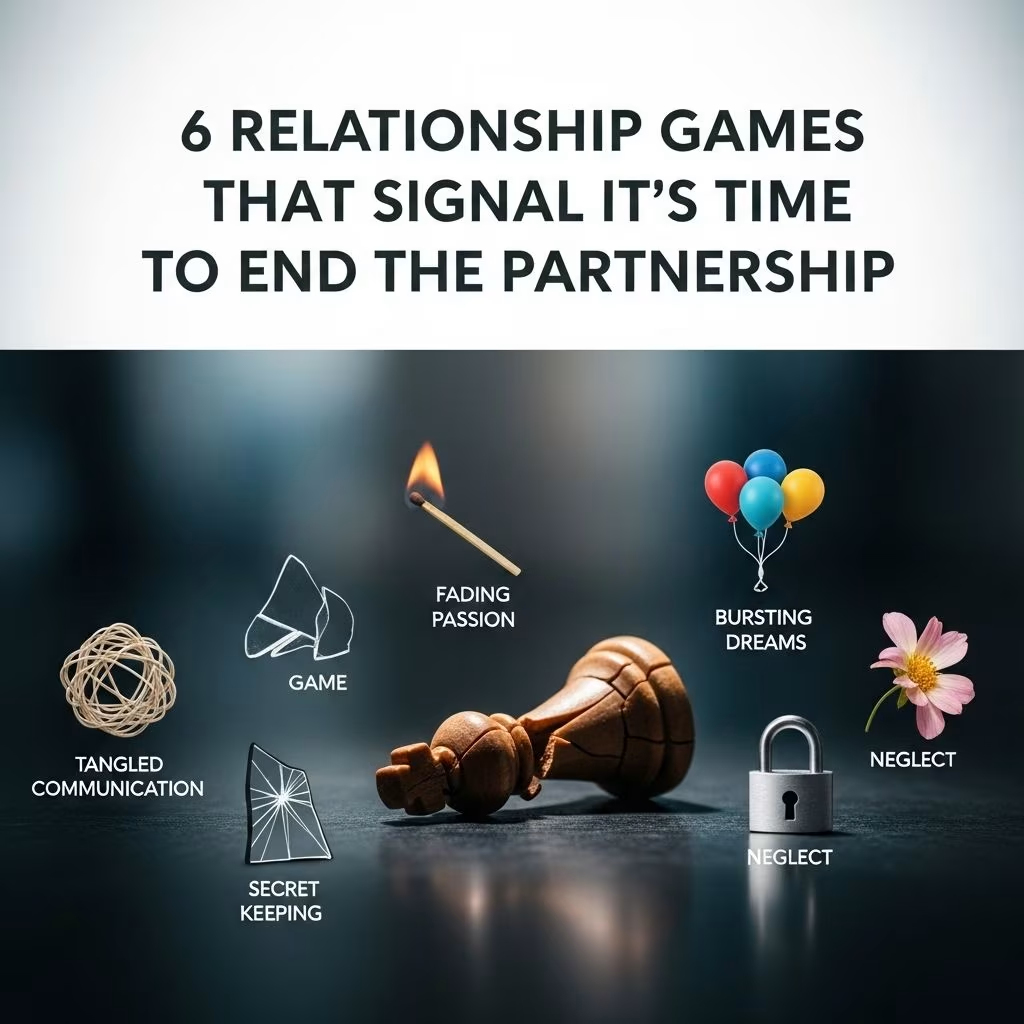
Relationship Games: When Fun Turns Toxic
There’s playful banter, and then there’s manipulation masked as fun. All relationships have their ups and downs, and sometimes, both partners engage in lighthearted teasing or little rituals. But when “playing games” in your relationship replaces honest communication, it’s a sign that things have taken a turn for the toxic. Certain games—subtle or blatant—can seriously damage intimacy, trust, and mutual respect. They’re not about shared joy; they’re about power, control, and often, one person coming out on top at the expense of the other. If your partner regularly shifts from playful to manipulative, it’s important to recognize the warning signs for what they are—clear signals that you’re in an unhealthy dynamic.
The Psychology Behind Relationship Games
Games in relationships are often rooted in insecurity, fear of vulnerability, or a desire for power. People who struggle with direct communication might use these tactics to avoid confronting real issues or expressing their needs honestly. Insecure partners may also use mind games as a way to feel in control, ensuring they’re not the one left vulnerable or hurt. The result is a shift from partnership to competition, with both parties losing the foundation of trust that healthy relationships are built upon.
The 6 Most Toxic Relationship Games—And When to End It
1. Making You Jealous on Purpose
Jealousy is a natural emotion, but intentionally provoking it is a manipulation tactic. When your partner flirts openly with others, brags about their appeal, or keeps “friendships” with exes or other admirers just to get a reaction from you, they’re putting their ego before your feelings. This behavior is particularly damaging because:
- It undermines trust and breeds insecurity.
- It creates unnecessary drama and distraction from real issues.
- It signals your partner prioritizes validation from others over your relationship.
If your SO repeatedly seeks attention outside your relationship to keep you on edge, it’s time to consider whether they value you or just want to keep you guessing.
2. Playing Hard to Get
In the early stages of dating, a little mystery can be part of the fun. However, once committed, consistent “hard to get” behavior—like ignoring your messages for hours, avoiding plans, or being unpredictably aloof—becomes painful, not playful. When your partner leaves you wondering about their feelings or whereabouts, they’re prioritizing control over connection. Key red flags include:
- Repeatedly claiming to be “too busy” to reply, with no prior notice.
- Making you guess their intentions or interest.
- Refusing to plan ahead or commit to quality time.
A lack of clarity and reliability in a relationship is exhausting and damaging. If your SO refuses to open up or make time for you, it’s a sign of emotional unavailability.
3. Sending You on a Guilt Trip
Everyone makes mistakes. But in a healthy relationship, both partners should acknowledge mistakes, apologize when needed, and move forward. If your partner constantly brings up past errors, keeps score of your failures, and uses them to manipulate you emotionally, they’re engaging in guilt-tripping. This toxic habit leads to:
- A sense of walking on eggshells, afraid to make any mistake.
- Diminished self-esteem, as you internalize blame for every problem.
- Emotional exhaustion from never feeling “good enough.”
If your SO remembers your missteps vividly but ignores your efforts and achievements, it’s a clear sign the dynamic is unhealthy. Relationships should be about forgiveness and growth, not punishment and shame.
4. Turning the Blame on You
Arguments happen, but in a healthy relationship, both partners take responsibility for their actions. If your partner consistently turns every issue around so you end up apologizing for being upset—that’s deflection. This blame-shifting game undermines honest communication and prevents real resolution. Symptoms of this pattern include:
- Your feelings are dismissed or minimized.
- Every conversation about problems turns into your fault.
- You feel guilty for expressing concerns.
If your partner can’t own their mistakes and always makes you the “problem,” you’ll never resolve conflicts constructively. This game keeps you trapped in a cycle of self-doubt and frustration.
5. Avoids Communicating Directly
Healthy relationships thrive on open, honest communication. When your partner avoids difficult conversations, resorts to passive-aggressive comments, or refuses to address issues head-on, they’re playing the avoidance game. This can look like:
- Stopping conversations abruptly when they get uncomfortable.
- Talking about you behind your back instead of to your face.
- Using silence or withdrawal as a weapon.
When you can’t discuss problems openly, resentment grows. If your SO repeatedly dodges real communication, it’s impossible to build a foundation of intimacy and trust.
6. Compares You Repeatedly to Others
If your partner keeps comparing you to their ex, their friends, or even strangers—especially in ways that make you feel inferior—it’s a deeply unhealthy dynamic. This comparison game is rooted in dissatisfaction and a desire to manipulate you into changing. The impact includes:
- Feeling judged and never “enough.”
- Pressure to conform to someone else’s ideal.
- Loss of self-worth as you chase external validation.
If your SO can’t appreciate you for who you are, and instead holds you up to impossible standards, it’s a sign they don’t truly respect you.
How These Games Affect Your Emotional Well-Being
Consistent exposure to these games can have serious consequences for your mental and emotional health. You might start to second-guess your instincts, suppress your needs, or even believe you’re the source of all relationship problems. Toxic games create an environment where you’re always “losing”—leading to anxiety, depression, and eroded self-esteem.
Signs It’s Time to End the Relationship
Recognizing the games is only the first step. If you notice that these patterns are ingrained, repetitive, and show no sign of changing—despite your efforts to communicate—it’s time to seriously reconsider the partnership. Here are clear signs it’s time to walk away:
- You feel more anxious, insecure, or diminished than happy.
- You’re always apologizing, even when you’re not at fault.
- Your SO refuses to acknowledge or change harmful behavior.
- You find yourself making excuses for their actions to friends and family.
- You’ve stopped being your authentic self to avoid conflict.
What Healthy Communication Looks Like
In a healthy relationship, problems are faced together—not deflected, denied, or turned into weapons. Partners express their feelings directly, listen empathetically, and work toward solutions. There’s mutual respect, vulnerability, and a commitment to growth. Arguments are temporary—they’re not mined for ammunition later.
Frequently Asked Questions
Q: Can games ever be playful and harmless in a relationship?
A: Yes, light teasing or inside jokes can be fun as long as both partners feel respected and included. The difference is intent—if the “game” is about control, manipulation, or keeping your partner insecure, it’s harmful.
Q: How can I tell if I’m playing games in my relationship?
A: Reflect on your motives. Are you withholding information to “win” an argument? Are you intentionally vague to keep your partner guessing? If you’re being dishonest or manipulative—even subconsciously—it’s worth addressing.
Q: Can a relationship recover after a pattern of toxic games?
A: With honest communication, self-awareness, and professional help, some relationships can heal. But both partners need to commit to change. If one refuses to acknowledge the problem, it’s unlikely to improve.
Q: Why do people play games in relationships?
A: Often, it’s about insecurity, fear of vulnerability, or a desire for control. Some people never learned healthy communication skills and resort to manipulation as a substitute.
Q: When should I seek outside help?
A: If you’ve tried talking to your partner, but the patterns persist or escalate—especially if you’re feeling depressed, anxious, or hopeless—consider reaching out to a therapist or counselor for support.
Conclusion
Playing games in a relationship isn’t just immature—it’s emotionally damaging. Whether it’s jealousy, avoidance, blame-shifting, or endless criticism, these dynamics erode trust and intimacy. Recognizing these patterns is the first step to reclaiming your self-respect and emotional health. Remember, you deserve a partnership built on honesty, empathy, and mutual growth—not a contest you’re doomed to lose. If your relationship feels more like a battlefield than a safe haven, it’s time to reconsider—and possibly, to end it.
References
- https://www.elitedaily.com/dating/plays-6-games-time-end-relationship/1580009
- https://www.elitedaily.com/p/what-is-long-gaming-this-dating-technique-is-about-keeping-your-crush-around-for-years-8693375
- https://www.nature.com/articles/s41598-025-19284-0
- https://www.brightsideofthesun.com/suns-analysis/90357/devin-booker-offensive-balance-analysis-inside-out-connection-passing-bigs-2025-season
- https://timesofindia.indiatimes.com/sports/nhl/news/fing-weird-scheduling-fans-blast-nhls-new-season-schedule-after-league-skips-friday-games-and-overloads-saturday/articleshow/124492062.cms
- https://www.morningstar.com/news/business-wire/20251010276534/world-champion-garry-kasparov-wins-clutch-chess-the-legends-during-grand-reopening-of-saint-louis-chess-club


