


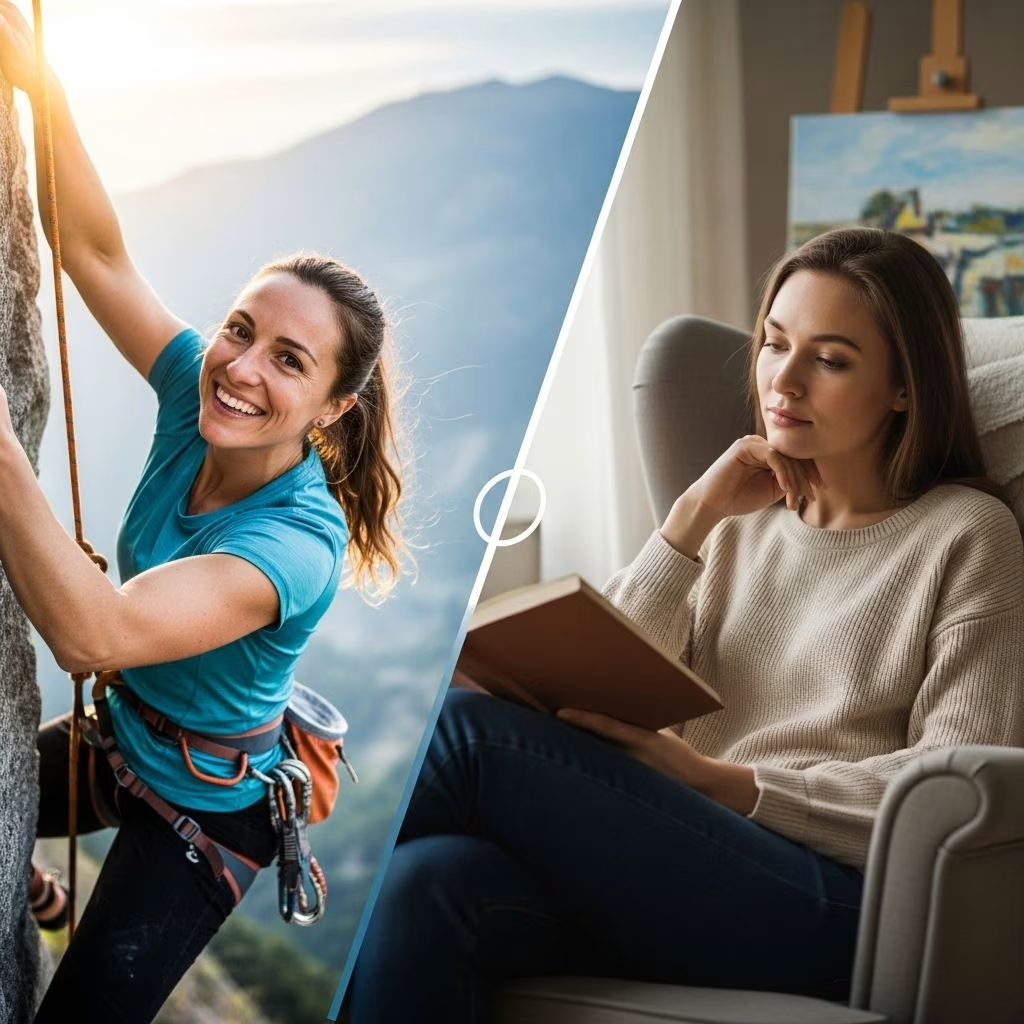
Do Opposites Really Attract? 13 Women Explain Their Opposite Relationships
Do opposites attract? The age-old question gets real answers as thirteen women open up about their experiences being in relationships with partners undeniably different from themselves. These stories, expert insights, and scientific perspectives lay out how and why we’re drawn to our polar opposites—and what it takes for these relationships to succeed.
Why Are We Drawn to Our Opposites?
- It Feels New and Mysterious: Many people find themselves attracted to personalities and perspectives that are unfamiliar, offering excitement and a sense of discovery.
“Having a replica of ourselves can quickly become a bore. There’s no expansion, and certainly no surprises.” - Opposites Offer Qualities We Admire: Often, the traits we find most attractive in a partner are ones we subconsciously wish we possessed. Outgoing people may seek the comfort and insight of introverts, and vice versa.
- They Create Relationship Balance: Opposites can counter our own weaknesses. A high-energy, anxious individual may be soothed by a calm, steady partner, creating harmony instead of amplifying anxiety.
- They Keep Life Exciting: Different viewpoints and ways of responding to situations add unpredictable and thrilling variety to the relationship.
13 Women Share How Their Opposite Relationships Work
The heart of this article is the lived experiences of thirteen women who’ve navigated the highs and lows of loving someone fundamentally different. Their stories shed light on why and how these relationships flourish or falter:
- Emma (The Planner vs. The Spontaneous Partner): While she craves structure and routine, her partner lives for spontaneity. Emma admits, “His impulsiveness sometimes terrifies me, but it forces me out of my comfort zone and makes life more vivid than I ever imagined.” Still, compromise is key: “If I need a quiet weekend, he’s learned not to book surprise trips. We’ve found balance by alternating who leads the plans.”
- Sophia (Extrovert vs. Introvert): Sophia thrives in a bustling social crowd, while her boyfriend prefers quiet evenings at home. “At first, I worried he’d never want to come to parties with me,” she shares, “but he actually helps me slow down and appreciate our private time. I get him out of his shell sometimes, and he’s helped me realize it’s okay to stay in.”
- Natalie (Free Spirit vs. Traditionalist): Natalie’s unconventional lifestyle clashed with her partner’s love for order and predictability. “We learned to respect each other’s values without trying to change them. Now, his stability feels like an anchor for me, and I challenge him to think outside the box.”
- Rachel (Logic vs. Emotion): Rachel is analytical and methodical, while her girlfriend leads with her intuition and emotions. “I used to get frustrated by how she reacts from her heart rather than her head, but now, we realize each perspective is valuable in solving problems together.”
- Claire (Risk-Taker vs. Cautious): “He dives headfirst into any challenge; I overanalyze every step,” Claire explains. “I admire his bravery and he appreciates my thoughtfulness. We push each other to grow.”
- Maya (Clean Freak vs. Messy): “At first, his messy habits drove me crazy,” Maya writes, “but I’ve become less uptight over time. He’s learned the importance of keeping things tidy. We meet halfway now.”
- Olivia (Saver vs. Spender): “I’m careful with money, but he treats life like it’s a celebration,” Olivia says. “We never fight about finances because we talk openly about our goals, and occasionally splurge together.”
- Lily (Optimist vs. Realist): “His practicality grounds me,” Lily observes, “while my optimism lifts us when things are heavy. The blend is our secret weapon.”
- Julie (Traditional Gender Roles vs. Non-Traditional): “We challenge each other’s beliefs. Instead of fighting, we learn. It’s not always easy, but it’s never boring,” Julie admits.
- Hannah (Foodie vs. Picky Eater): “I dragged him to every new restaurant; he only liked plain food. Now, he’ll try anything once—and says I’ve changed his taste buds forever.”
- Samantha (Workaholic vs. Laid-Back): “I push for goals, he makes me relax. We take turns motivating and unwinding each other,” Samantha shares.
- Isabella (Wild Night Owl vs. Early Bird): “We had to negotiate our schedules to spend meaningful time together. Now, he sometimes stays up late for me, and I wake up early for him.”
- Jessica (Adventurer vs. Homebody): “He encourages me to hike mountains, and I teach him the joy of a cozy movie night. We alternate our adventures.”
How Opposites Complement and Challenge Each Other
Underlying these stories are common themes about how relationships between opposites work:
- Pushing Each Other from Comfort Zones: Many partners described how their differences forced them to grow, become more open-minded, and try new experiences they’d never choose alone.
- Resisting Competition: Instead of competing, couples focus on learning from one another. This fosters appreciation and admiration rather than rivalry.
- Strengthening Opinions—Or Changing Them: Engaging with an opposite encourages debate, reflection, and sometimes, a change in perspective.
- Promoting Personal Development: Opposite relationships serve as mirrors, highlighting traits within us we may repress or admire, ultimately leading to self-improvement.
Expert Insights & Scientific Perspectives
- Excitement & Novelty: Dating someone different brings unpredictability and excitement, making life together more vivid and less monotonous.
- Qualities We Seek: Experts agree we’re attracted to traits we admire but lack, seeking partnership with those able to express qualities we suppress in ourselves.
- Balance and Chemistry: Balance is central; partners with complementary strengths and weaknesses form harmonious pairs, whereas too much similarity can lead to boredom or friction.
- Biological Underpinning: Scientific studies show genetic dissimilarity (like major histocompatibility complexes) increases attraction and successful pairing, suggesting our biology pushes us toward diversity.
- Risk of Extremes: If the difference between partners is too vast, it may risk disconnect. Experts recommend partners be ‘different enough to be exciting, yet familiar enough to be grounding’.
- Communication Is Crucial: Opposite couples must prioritize honest, open communication and compromise—more so than similar couples—to navigate friction and differing values.
Common Challenges in Opposite Relationships
- Conflict from Contrasting Styles: Opposites often clash over minor decisions—how to spend weekends, manage money, decorate their home, or express affection.
- Misunderstandings: Communication breakdowns occur more frequently, requiring patience and deliberate effort to understand the other’s perspective.
- Finding Middle Ground: Partners learn to negotiate, compromise, and blend traditions, hobbies, and preferences.
- Risk of Polarization: If differences aren’t managed respectfully, partners may drift apart, feeling misunderstood or unappreciated.
Benefits of Dating Your Opposite
- Expanding Horizons: Opposite partners expose each other to new ideas, cultures, and experiences, enriching their lives together.
- Improved Self-Awareness: Relationships with opposites challenge existing beliefs, promoting personal growth and a more open-minded worldview.
- Greater Balance: Complementary strengths help couples weather stress and adversity, with each partner supporting where the other may struggle.
- Lasting Interest: The unpredictable nature of opposite relationships keeps things fresh; partners are less likely to become complacent or bored.
- Mutual Admiration: Partners frequently inspire admiration, fostering a deeper emotional connection.
Table: Similar vs. Opposite Personality Relationships
| Aspect | Similar Partners | Opposite Partners |
|---|---|---|
| Excitement | May become predictable and routine | Remains dynamic and unexpected |
| Conflict Frequency | Potentially less, but may lack depth | More likely, but can drive growth |
| Personal Growth | Limited by shared habits | Expanded by new experiences |
| Longevity | Risk of stagnation | May last if differences are respected |
| Relationship Balance | May lack complementary support | Each partner fills the other’s gaps |
FAQs: Do Opposites Really Attract?
Q: Are relationships between opposites more likely to succeed?
A: Studies and expert opinions suggest that couples with some differences tend to last longer, as variety maintains interest and balance. However, too many differences can cause disconnect. Compromise is crucial.
Q: What are common challenges in opposite relationships?
A: Communication breakdowns, misunderstandings, disagreements over lifestyle choices, and risk of polarization are common. Success relies on mutual respect and open dialogue.
Q: Why do people feel attracted to traits they lack?
A: Psychologists say we admire and desire traits that we don’t possess, seeking partners who complete us or challenge us to grow.
Q: Can opposite relationships help me become a better person?
A: Yes. Partners introduce fresh perspectives, new habits, and expanded horizons, often triggering personal growth and increased self-awareness.
Q: Is it possible for relationships between similar personalities to succeed?
A: Absolutely. Compatible values, effective communication, and shared goals are equally important. Some couples thrive on similarity—variety isn’t the only key to lasting love.
Advice For Navigating Relationships with Your Opposite
- Prioritize Communication: Make open dialogue and honest expression a daily habit.
- Celebrate Differences: See them as strengths, not weaknesses.
- Compromise with Respect: Find balance by negotiating differing needs and wants.
- Establish Shared Core Values: Agree on big-picture philosophical beliefs and life goals.
- Embrace Growth: Encourage each other to explore unfamiliar interests and habits.
- Maintain Boundaries: Respect each other’s comfort zones and don’t push too hard.
Final Thoughts
Relationships between opposites hold immense potential. While they come with unique challenges, the rewards can be profound—richer personal growth, greater excitement, and a deeper understanding of love’s complexity. Perhaps we’re drawn to our opposites to discover ourselves anew. As the women who shared their stories reveal, difference isn’t a barrier—it’s an invitation to adventure.
References
- https://www.elitedaily.com/p/do-opposites-really-attract-what-the-experts-say-may-surprise-you-10932492
- https://scienceleadership.org/media/open/42492
- https://www.yourtango.com/love/scientific-reason-fall-in-love-with-polar-opposite
- https://www.elitedaily.com/dating/attract-8-reasons-date-polar-opposite/918218
- https://www.makenewfriendspodcast.com/ep-18-do-opposites-attract/
- https://berkeleybeacon.com/love-column-as-bieber-said-were-just-friends-what-are-you-saying/
- https://www.youtube.com/watch?v=mXpmxGWuA-k
- https://agapematch.com/elite-daily-press-second-date/


