


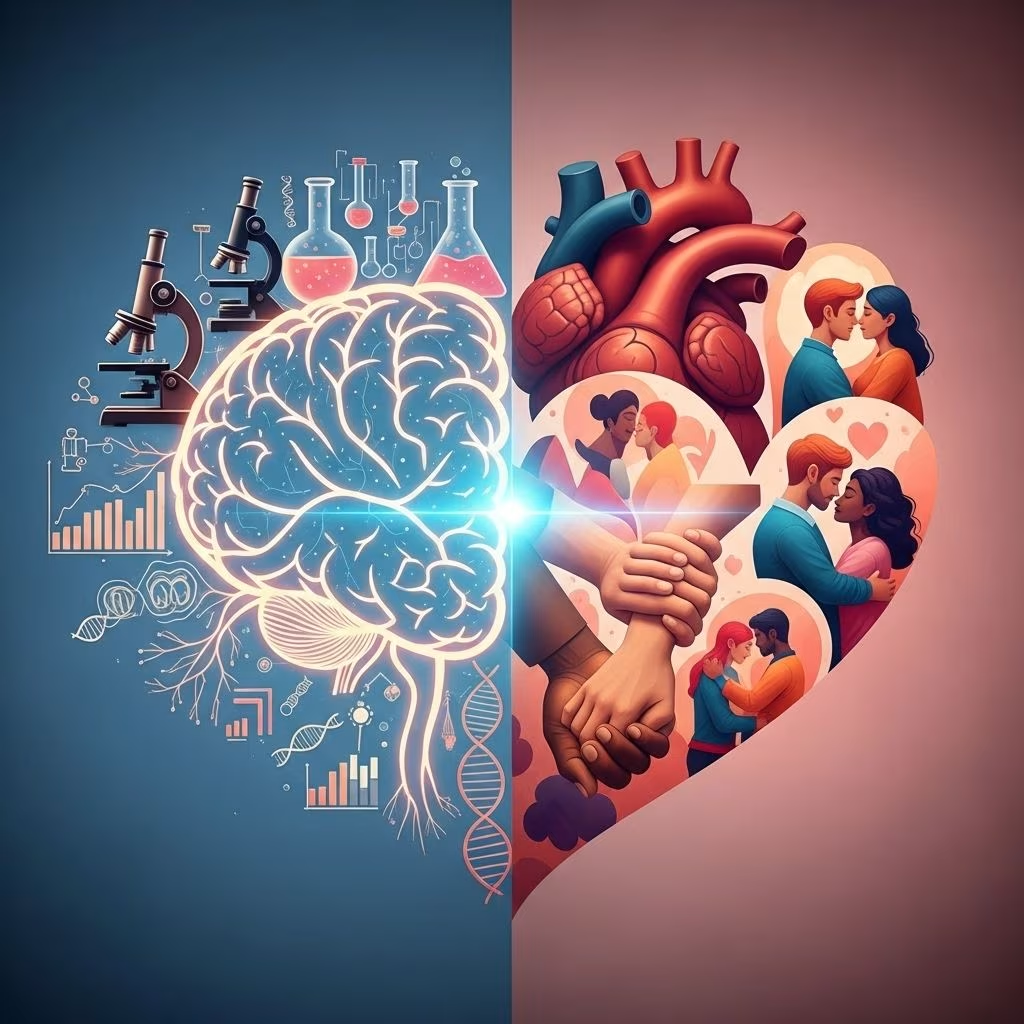
Every year brings a new wave of research that illuminates how we experience love, connection, intimacy, and the search for partnership. In 2018, scientists across psychology, sociology, and health sciences published revealing studies that challenge our assumptions and highlight the key drivers of sexual well-being, relationship health, and dating behaviors. Whether single, coupled, or somewhere in between, these discoveries offer practical wisdom for understanding yourself and your relationships. Let’s explore the most profound findings from 2018 and see how science reshaped the landscape of modern love.
Talking About Sex With Friends Boosts Sexual Well-being
Open dialogue is often advocated as a foundation for healthy relationships, but 2018 research emphasized that discussions about sex—especially among friends—can be particularly powerful for women.
- Women who spoke openly about their sex lives with supportive female friends reported higher overall sexual well-being.
- These conversations were linked to greater willingness to advocate for changes in the bedroom and to initiate health-related discussions with partners, such as conversations about STD testing.
- The benefits were amplified when friends offered positive feedback or practical advice rather than judgment.
Key takeaway: nurturing honest, encouraging conversations with trusted friends can empower women to improve both their sexual health and satisfaction.
On-Again, Off-Again Relationships Are Bad for Your Mental Health
The cyclical nature of breaking up and making up may be romanticized in media, but science confirmed these relationships can have real consequences for emotional well-being.
- Studies in 2018 linked on-again, off-again relationships with a notably higher risk of depression and anxiety symptoms.
- The uncertainty and unpredictability inherent to these dynamics were harmful for both heterosexual and same-sex couples.
- Researchers found that the more often a couple cycled through breakups and reconciliations, the worse the outcomes for mental health.
Takeaway: While everyone makes different choices in love, science suggests that stability—more than drama—is essential for psychological resilience in relationships.
Your Job Affects Your Dating App Success
What you do for a living can influence your desirability on dating platforms. Detailed 2018 analysis of dating app profiles revealed patterns in which professions receive the most interest.
| For Women | For Men |
|---|---|
| Nurse | Interior Designer |
| Dentist | Pilot |
| Photographer | Physician’s Assistant |
- A woman’s desirability increased if she worked in nursing, dentistry, or creative fields like photography.
- Men in creative design, aviation, or assisting in medical professions drew more right swipes.
- These patterns suggest social perceptions of caregiving, adventure, and creativity shape whom users find attractive, at least in initial digital interactions.
Single People Outspend Couples on Dating
Modern dating can be expensive, and 2018 research clarified just how much more singles shell out compared to those in committed relationships.
- On average, single people spend significantly more on dating-related activities, from dinners out to travel for romantic getaways.
- Those in stable relationships invest less in the pursuit, but may reallocate spending to shared long-term experiences or household needs.
- Economic factors often influence how singles approach dating, sometimes leading to less frequent or more selective social outings.
Implication: The cost of searching for love is not just emotional—it’s financial too, and may play a role in relationship decision-making.
Porn Use Can Decrease Relationship Satisfaction—For Men
The role of pornography in contemporary relationships continues to be hotly debated. In 2018, a significant study found:
- Frequent porn viewing was associated with lower relationship satisfaction among men.
- No comparable negative impact was consistently found for women.
- Researchers debate whether the issue is porn itself or unrealistic expectations and secrecy around its use.
- Couples who openly discussed boundaries about adult content, set shared expectations, and maintained trust often buffered against negative effects.
Recommendation: If differences in media habits create friction, honest communication may help maintain intimacy and avoid misunderstandings.
Your Mother’s Romantic History Could Predict Your Own
Perhaps one of the most surprising findings of 2018 came from a large-scale study examining generational patterns in romantic behavior.
- The number of romantic partners a person has tends to mirror their mother’s number of partners, even if the offspring did not witness most of those relationships.
- Genetic influences are possible, but researchers suggest that relationship skills and attitudes passed from mothers to children play a pivotal role.
- Notably, similar effects were not found for fathers.
This discovery suggests that the way we approach love and attachment may be shaped by observation and learned behaviors more than by explicit guidance or genetic factors alone.
Having Sex for the Right Reasons Matters
It’s often assumed that frequency equals satisfaction in romantic relationships, but new research from 2018 challenges that notion by focusing on sexual motives.
- Motivation shapes both sexual and relationship satisfaction.
- Positive outcomes are linked to having sex out of mutual desire, intimacy, and emotional connection.
- Negative motives—such as attempting to avoid conflict, alleviate insecurity, or fill emotional voids—correlate with worse sexual satisfaction and relationship distress.
- Frequency alone is not predictive of happiness: the quality of motivation outweighs how often couples are intimate.
Insight: Consider why you initiate intimacy. Authentic connection and shared pleasure are the best predictors of a fulfilling love life.
Too Much Sex? It’s About Motive, Not Just Quantity
Can you have too much sex? According to relationship therapists and 2018 scientific analysis, the answer hinges on the reasons behind sexual activity.
- Pursuing sex to avoid emotional issues or distract from relationship problems may signal an underlying disconnect between partners.
- Sex can even become a mechanism to chase emotional highs, similar to how some people use substances to manage stress.
- Therapists stress that genuine intimacy, not quantity of sex, predicts both individual and couple satisfaction.
- A strong correlation has been established: relationship satisfaction is three times more closely tied to sexual satisfaction than to sexual frequency.
Bottom line: Focus on why you connect, not simply how often.
Frequently Asked Questions (FAQs)
How can talking about sex with friends benefit me?
Discussing sex openly with supportive friends can increase sexual knowledge, comfort with intimacy, and confidence to address sexual health matters with partners. Such conversations foster a culture of openness, reduce stigma, and empower individuals to advocate for fulfilling and safe relationships.
Are on-and-off relationships always harmful?
While every relationship is unique, research consistently demonstrates that the repeated cycle of breaking up and reconciling increases uncertainty and risk for depression or anxiety. Couples are encouraged to seek stability and communicate underlying issues rather than relying on breakups as a means of resolving conflict.
Is it bad to watch porn if I’m in a relationship?
Watching pornography is a personal choice; issues often arise when it’s secretive or substitutes for real connection. For men, frequent porn use has been associated with lower relationship satisfaction, but open discussion and agreed-upon boundaries with a partner can alleviate negative impacts.
Does having more sex create a stronger relationship?
While regular intimacy is healthy, relationship satisfaction is much more dependent on mutual motivation and emotional connection than solely on frequency. Quality of sexual interaction reliably outweighs quantity in supporting relationship happiness.
Can my upbringing really shape my dating life?
Evidence from 2018 demonstrates a strong link between the romantic patterns of mothers and their children, suggesting that attitudes and skills related to relationships are often learned or modeled rather than simply inherited.
Key 2018 Sex & Relationship Science at a Glance
- Open friendships about sexuality empower women to advocate for themselves.
- On-again, off-again dating increases mental health risks.
- Occupations impact digital dating dynamics.
- Singles spend more money seeking romance than couples.
- Porn’s effects differ by gender and context—communication is critical.
- Maternal influence shapes adult relationship patterns.
- Sexual motivation outweighs frequency for satisfaction.
- Too much sex may mask relationship problems if done for unhealthy reasons.
How to Use These Insights in Your Own Life
The takeaway from a year’s worth of scientific revelations? Self-reflection, open communication, and an honest look at your motives are the most powerful tools for building a fulfilling love life. Whether investing more in friendships, re-evaluating your relationship routines, or choosing to pursue intimacy for the right reasons, personalization is key. Science can guide, but your lived experience completes the picture.
References
- https://www.elitedaily.com/p/heres-everything-science-discovered-about-sex-relationships-in-2018-15568667
- https://podcasts.apple.com/us/podcast/the-science-of-sex/id1291429350
- https://www.elitedaily.com/p/how-often-should-you-have-sex-a-couples-therapist-recommends-at-least-once-a-month-8564677
- https://drdanielleforshee.com/articles-press/
- https://www.dulcineapitagora.com/press/
- https://www.kylebenson.net/5-relationship-books-change-love/
- https://drdanielleforshee.com/health-line-12-tips-sexologists-share-for-reigniting-better-midlife-sex/
- https://clarissasilva.com/media-inquiries/


