


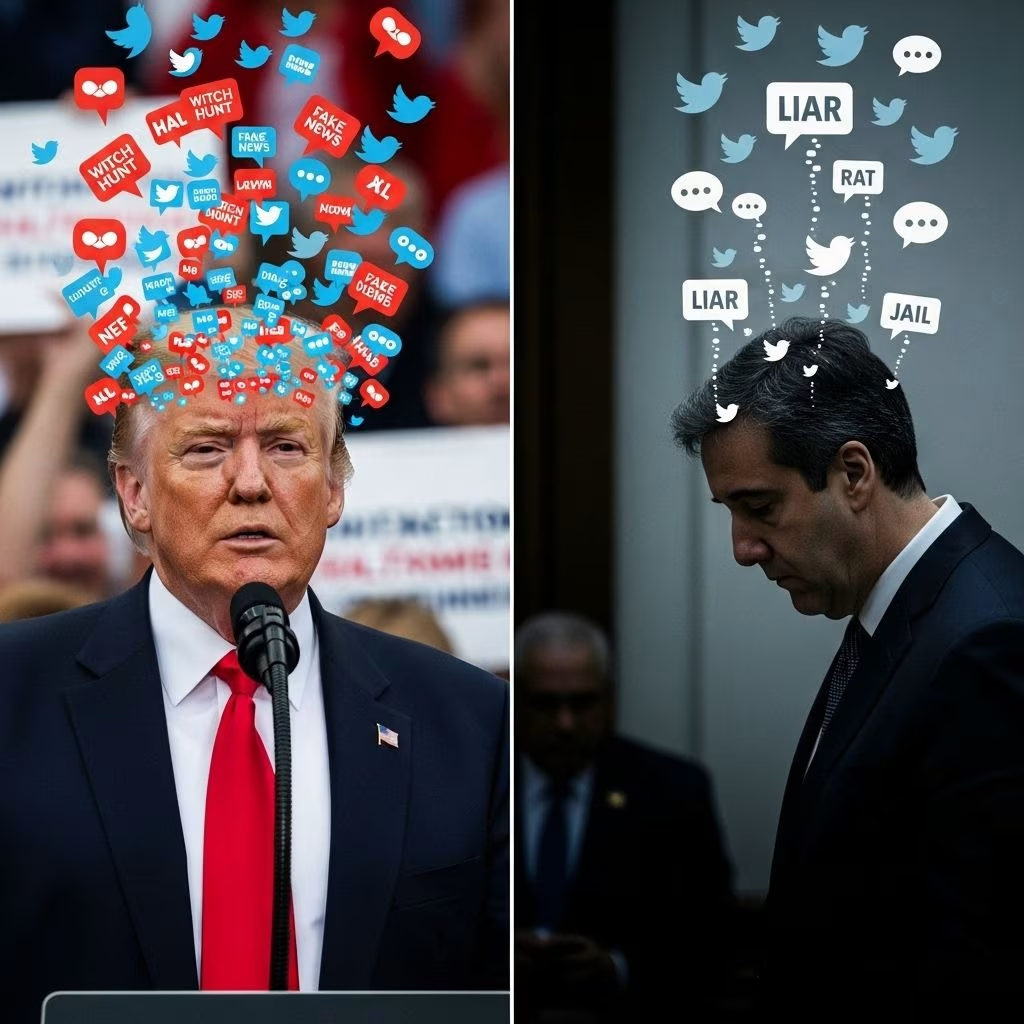
How Donald Trump’s Tweets About Michael Cohen Evolved in 2018
In 2018, the public witnessed an extraordinary political and personal unraveling, played out in real time on Twitter, between President Donald Trump and his longtime personal attorney, Michael Cohen. The sequence of Trump’s tweets not only tracked—but often shaped—the news cycle, offering insight into how their relationship changed rapidly that year. This article explores the chronology and tone of Trump’s postings, their shifting dynamics, and the broader implications for his presidency and legal standing.
The Context: Trump, Cohen, and the 2018 Storm
Before 2018, Michael Cohen was well known as Trump’s fiercely loyal “fixer”—a man who claimed he would “take a bullet” for the president. As investigations into Russian election interference and hush-money payments to women who alleged affairs with Trump intensified, Cohen shifted into the crosshairs of federal prosecutors. Trump’s tweets became a public ledger documenting his disintegrating loyalty toward Cohen, especially after Cohen’s offices were raided and he ultimately pleaded guilty to several charges, including campaign finance violations.
- Early 2018: Trump’s tweets referenced Cohen with gratitude and friendship. He praised Cohen’s work and dismissed allegations of wrongdoing as “fake news.”
- Spring–Summer 2018: After federal investigations ramped up, reports emerged of Cohen considering cooperation with authorities. Trump’s tweets started to shift—becoming more distant, combative, and laced with denials of close connections.
- August 2018: The relationship seemingly hit rock bottom when Cohen pleaded guilty and implicated Trump. Trump’s tweets minimized Cohen’s role, lashed out at his credibility, and attempted to delegitimize his statements under oath.
Cohen the Loyalist: Early 2018 Tweets
In the beginning of 2018, Donald Trump’s tweets referencing Michael Cohen were infrequent and typically positive. They reflected longstanding trust:
- Trump occasionally thanked Cohen for his loyalty and service, describing media accounts critical of Cohen as “phony.”
- Any allegations about hush-money payments were brushed off as fabricated stories or partisan attacks.
This tone was consistent with Cohen’s public persona at the time—a trusted inner-circle aide who vigorously defended the president.
Example Tweet Patterns (Early 2018)
- Praising Cohen’s loyalty or professionalism.
- Labeling negative stories about Cohen as “fake news.”
- Dismissing all legal controversies as “witch hunts.”
The Cracks Begin to Show: The FBI Raid and Shifting Loyalty
The tone began to shift dramatically after an April 2018 FBI raid on Cohen’s home, office, and hotel room. News outlets reported that Cohen was under investigation for campaign finance violations and possible bank and tax fraud.
- Trump’s tweets expressed “sympathy” for Cohen but started to distance himself, emphasizing that the legal troubles were Cohen’s alone.
- Trump publicly insisted he had no knowledge of any illegal activities Cohen might have undertaken.
- The president also began to downplay Cohen’s role in the Trump Organization, calling him “one of many lawyers.”
General Tone Shift
- The language on Twitter moved from defensive and personal to more corporate and detached.
- Rather than defending Cohen as a loyal friend, Trump started framing him as a peripheral figure.
Post-Raid, Trump Deflects and Minimizes Cohen’s Importance
Throughout the spring and summer, as speculation mounted that Cohen might cooperate with federal investigators, Trump went on the offensive in his public communications.
- He insisted Cohen was just “one of many lawyers who represented me” and not integral to his business or campaign efforts.
- Trump conveyed that any legal missteps Cohen might have made were personal, not related to the Trump campaign or himself.
- He tweeted that Cohen was only involved “on a tiny, tiny fraction” of Trump’s legal affairs.
These efforts were clearly designed to blunt the impact of potential damaging revelations and protect the president’s own legal standing.
Quotes Demonstrating Distance
| Timeframe | Summary of Tweet Tone or Content |
|---|---|
| Early 2018 | Praise and camaraderie; “loyalty” emphasized |
| April–June 2018 | “Sad” about Cohen’s troubles; insists problems are not about him |
| July–August 2018 | Cohen minimized as “one of many” attorneys; credibility questioned |
Cohen Flips: Trump Retaliates With Attacks
On August 21, 2018, Michael Cohen pleaded guilty to eight federal crimes, including tax evasion and campaign finance violations related to payments made to Stormy Daniels and Karen McDougal. Critically, he indicated under oath that he had done so “at the direction of… the candidate,” directly implicating Trump.
Within hours, Trump’s tone became openly hostile:
- He labeled Cohen a “liar” in multiple tweets, challenging his credibility and painting him as untrustworthy.
- Trump suggested that Cohen’s plea deal and statements were attempts to “get a deal” by lying about the president, similar to strategies used by “rats” or informants.
- He called attention to his belief that campaign finance violations were “not a crime,” further discrediting Cohen’s testimony.
Damning Tweets and Contrast
- The shift from praise to outright attacks on Cohen was one of the most abrupt and severe of any Trump relationship fallout played out on Twitter.
- Tweets during this period not only attacked Cohen but also attempted to discredit the American justice system, framing the investigation as a partisan “witch hunt.”
The Wider Impact of Trump’s Twitter Tactics
Donald Trump’s use of Twitter as a public relations and damage-control mechanism was central to his presidency. In the case of Michael Cohen, these patterns had several notable consequences:
- Influencing the Media Narrative: Reporters and commentators dissected Trump’s tweets in real time, with coverage often shaped by the shifting messages coming directly from the president’s account. The sudden public break with Cohen heightened drama and speculation.
- Legal Ramifications: Trump’s attempts to minimize Cohen’s importance and discredit him may have been aimed at undermining Cohen’s value as a witness in ongoing investigations.
- Public Perception of Loyalty: The tweets underscored that Trump’s public loyalty was contingent on utility and personal loyalty, rather than long-term bonds.
Key Takeaways From the Twitter Chronology
- Trump’s public support is subject to rapid reversal, especially when legal or personal risk is involved.
- His communication strategy repeatedly uses social media to pre-empt, respond to, and shape major news events.
- The collapse of Trump and Cohen’s relationship was delivered in real time to millions, setting a precedent for how political alliances and betrayals may play out on public platforms in the future.
The Final Break: August 2018 and Beyond
By the end of August 2018, Trump’s tweets made it clear: Michael Cohen, once a “friend,” was now painted as a “bad lawyer,” a liar, and a turncoat. This public rhetoric paralleled the private and legal collapse of their previous relationship:
- Trump repeatedly denied any personal wrongdoing, and described himself as a victim of a Democratic “witch hunt.”
- He personalized attacks, bringing in Cohen’s family and legal troubles.
- He asserted that Cohen acted independently and his crimes had nothing to do with Trump or the campaign, a claim later disputed by court documents and Cohen’s own admissions in court.
Trump’s formerly expansive praise was replaced by legal minimization as reports revealed the extent of Cohen’s cooperation with prosecutors. The transformation from “best friends” to antagonistic adversaries was one of the most visible public reversals in Trump’s presidency.
Trump’s Patterns and the Political Implications
The evolution of Trump’s tweets about Michael Cohen exemplifies a broader pattern during his administration—those close to the president who run afoul of legal, ethical, or loyalty expectations often face rapid and public betrayal.
- Highly transactional relationships: The speed and severity with which Trump distanced himself from Cohen illustrated how political survival and image management trump long-held alliances.
- Media manipulation: The use of Twitter as a micro-broadcast tool allowed Trump to bypass traditional media, framing the day’s narrative with his own emphasis and rhythm.
- Normalization of aggressive rhetoric: Trump’s insults and attacks on Cohen, even in the face of severe legal stakes, normalized the use of demeaning language against former allies turned critics.
Frequently Asked Questions (FAQs)
Q: What prompted the change in Trump’s tweets about Cohen?
A: The 2018 federal investigation into Cohen—including the FBI raid and his guilty plea—shifted the dynamic. As Cohen appeared ready to cooperate with prosecutors, Trump’s tweets moved from support to active discrediting and attacks.
Q: How did Trump characterize Cohen at different points in 2018?
A: Early in 2018, Trump depicted Cohen as loyal and trustworthy. Following the legal fallout, Trump began dismissing Cohen’s importance, and later called him dishonest and untrustworthy after the guilty plea.
Q: Did Trump’s tweeting strategy affect public or legal perspectives?
A: Yes. Observers and the media closely analyzed Trump’s public pronouncements for clues about his strategy and state of mind. His attempts to delegitimize Cohen’s claims appeared intended to sway both jurors and the wider public.
Conclusion
The story of Donald Trump’s tweets about Michael Cohen throughout 2018 is a vivid, real-time illustration of how political allegiances can dissolve publicly, especially under legal or personal strain. Trump’s shifting tone from praise to vilification encapsulated both the nature of their relationship and the broader tumult of his administration’s approach to loyalty, crisis management, and public messaging. In the Twitter age, every fallout is not only a private matter, but also an event broadcast algorithmically to the world—and few examples are as stark as the Trump-Cohen break of 2018.


