


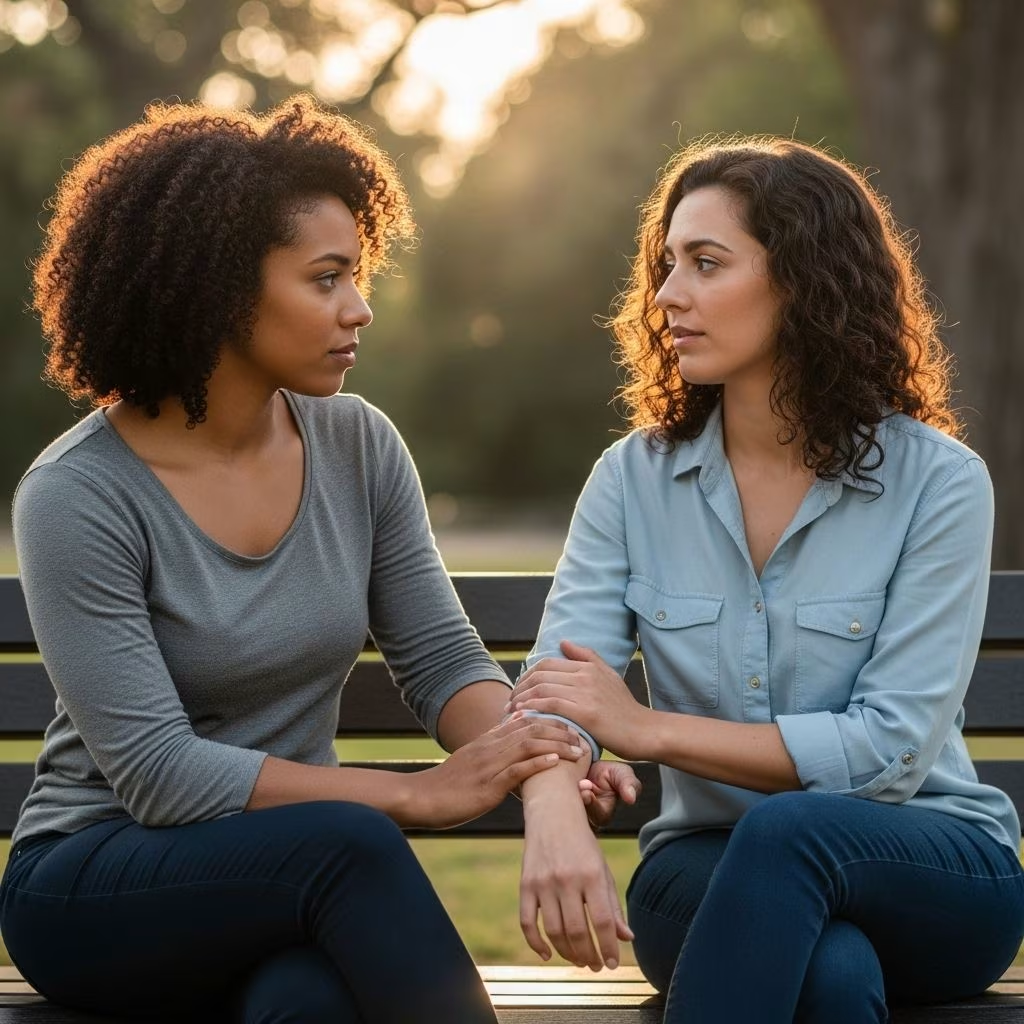
Befriending the Other Woman: A Journey Through Betrayal, Empathy, and Healing
Discovering a partner’s infidelity is a devastating experience. The aftermath is often filled with heartbreak, anger, and confusion. But what happens when, instead of maintaining animosity, you choose to meet and ultimately befriend the woman your ex cheated on you with? The story that unfolds is one of vulnerability, hard truths, and ultimately, the unexpected power of connection and healing.
Contents
- The Revelation of Infidelity
- The Impulse to Reach Out
- First Contact: Initial Emotions and Expectations
- The Meeting: Facing the Other Woman
- Sharing Stories and Finding Common Ground
- Redefining the Narrative: From Rivals to Allies
- Reflections on Our Experiences
- Healing Beyond Betrayal
- Key Takeaways
- Frequently Asked Questions
The Revelation of Infidelity
When the truth about infidelity emerges, it mostly arrives with a rush of confusion and pain. The signs may be subtle or overt, but the end result is a shattering of trust within the relationship. Disbelief quickly morphs into rage or numbness. Processing this new reality is a tumultuous journey for anyone who’s been betrayed.
Yet, after the initial shock, a persistent curiosity often grows. Who was the other woman? What did she know? Was she complicit, or a victim too? These unsettling questions become difficult to ignore, and in some cases, propel a person to seek answers directly from the source: the other woman herself.
The Impulse to Reach Out
In the aftermath, most advice—whether from friends, family, or even therapists—endorses either cutting ties altogether or focusing purely on personal healing. Reaching out to the person your partner cheated with is seen as taboo and fraught with risk.
So why do some feel compelled to make contact? Frequently, it’s a search for closure or a need for information their ex refuses to provide. Sometimes it’s about reclaiming agency or simply to humanize a vilified figure in the narrative of betrayal.
- Seeking answers no one else will give.
- Getting an alternative perspective on the relationship and breakup.
- Testing the boundaries of empathy and forgiveness.
- Curiosity about the other woman’s motivations, experiences, and feelings.
First Contact: Initial Emotions and Expectations
The moment of initiating contact brings a cocktail of anticipation, anxiety, and doubt. Should you reach out via social media, call, or send an email? What if she rejects the overture, or worse—responds with hostility? There’s also the risk of opening old wounds or discovering new, painful truths.
But for many, the urge to connect outweighs the fear, if only to gain a clearer understanding of the past and regain control of the narrative.
When initial messages are exchanged, they often contain apologies (“Sorry to reach out—I know this is weird”), questions (“Did you know about me?”), and sometimes even accusations. The conversation can veer between tense and awkward, but sometimes—against expectations—an unlikely empathy unfolds.
The Meeting: Facing the Other Woman
Arranging to meet the person who was involved with your partner during your relationship can feel surreal. There’s worry about whether the encounter will devolve into blame or tears. The social stigma and fear of judgment loom large.
But what’s often overlooked is that meeting the other woman is as nerve-wracking for her as it is for you. Both parties arrive with emotional baggage, uncertainty, and vulnerability. Contrary to the combative scenes often depicted in movies and TV, many such meetings quickly reveal that both women were misled and hurt by the same person.
- Shared nervousness and the fear of confrontation.
- Curiosity about each other’s side of the story.
- Relief in discovering honesty and respect on both sides.
In the best-case scenario, the meeting fosters mutual understanding and validation, rather than conflict.
Sharing Stories and Finding Common Ground
One of the most cathartic aspects is the opportunity to share stories. Comparing timelines, hearing her version of events, or learning she, too, may have been deceived brings a sense of solidarity. This process helps untangle the half-truths and deflections provided by the ex-partner.
Both women can find commonality in the betrayal they’ve experienced, sometimes expressing disbelief about “his” duplicity, laugh over similar red flags, or bond over heartbreak.
- Realizing you both were lied to or manipulated.
- Learning the ex often told inconsistent stories to maintain his dual lives.
- Feeling validated in your own experiences of confusion and mistrust.
- Recognizing shared emotional wounds and hopes for closure.
Redefining the Narrative: From Rivals to Allies
Pop culture often depicts the ‘other woman’ as an enemy—a foe to be resented or blamed. Yet, after honest conversation, a new and surprising narrative emerges: instead of rivals, both women may recognize they’re co-survivors of the same emotional battle.
| Traditional Narrative | Redefined Narrative |
|---|---|
| Rivals for affection | Allies in healing |
| Blame and competition | Empathy and understanding |
| Isolation | Shared experience |
| Suspicion | Trust and validation |
This shift doesn’t trivialize the hurt, but instead reflects a powerful form of growth. Allowing space for forgiveness and understanding opens the possibility that both women can reclaim their narratives—independent of the ex’s actions.
Reflections on Our Experiences
After befriending the other woman, deep reflection often follows. Some of the most common realizations include:
- The blame doesn’t solely rest with either woman; rather, both were treated poorly by the same partner.
- The power of honest conversation and vulnerability can be transformative.
- Healing can happen not only individually, but also in partnership with those who’ve shared your struggle.
- There is immense strength in empathy and human connection, even when it comes from unexpected places.
Sometimes a bond forms that outlasts the original relationship. Other times, the conversation is a single, meaningful encounter. Either way, both women often gain closure and renewed self-respect.
Healing Beyond Betrayal
While not everyone who’s been betrayed is inclined—or able—to meet the other woman, for those who do, the experience can be unexpectedly healing. By seeing first-hand that she, too, suffered, the emotional wound begins to close.
True healing is rarely linear or easy. It involves pain, forgiveness, and, often, self-forgiveness. Befriending the other woman can be a radical act of reclaiming your power and refusing to let an ex’s choices define your identity or future relationships.
- Learning that neither of you is to blame for being deceived.
- Gaining new insights and perspective that promote self-compassion.
- Finding reassurance that betrayal does not define your worth or ability to trust again.
- Discovering the possibility of empathy even in difficult circumstances.
Key Takeaways
- Meeting the other woman after infidelity is unconventional, but can be profoundly healing.
- Facing uncomfortable truths empowers both parties to rewrite the narrative and move forward.
- Empathy and mutual respect, even in the aftermath of betrayal, can transform pain into growth.
- Closure may come not just from separateness, but from connection and understanding.
Frequently Asked Questions (FAQs)
Q: Is it healthy to reach out to the other woman after being cheated on?
A: While it may not be for everyone, for some, connecting with the other woman provides closure, validation, and even healing. Professional guidance is recommended if you’re unsure whether it’s the right step for your situation.
Q: How do I approach the other woman without hostility?
A: Approach with honesty and openness, express your intentions clearly, and avoid accusations. Remember, she may be just as hurt or misled as you are.
Q: Can befriending the other woman help with healing?
A: Many people find sharing experiences with someone who understands the specific type of betrayal leads to unexpected mutual support and emotional growth.
Q: Could this kind of friendship replace traditional support systems like friends or therapy?
A: While it can be supportive, it’s usually best seen as a supplement, not a replacement, for your existing support network or professional help.
Q: Is it common to remain friends with the other woman long term?
A: Every situation is unique; some connections last, while others are brief but meaningful. The key is maintaining personal boundaries and prioritizing your own healing.
Additional Resources
- Therapy and Counseling: For deeper healing and navigating the emotional complexities.
- Support Groups: Online and offline communities for those recovering from betrayal.
- Books on Healing After Infidelity: For further reading and guidance.
Final Thoughts
Choosing to befriend the other woman is not easy, nor is it the right path for everyone. But for those who undertake this journey, it can lead to unexpected understanding, personal closure, and sometimes, a rare and honest friendship. Ultimately, it’s a testament to the possibility of healing and growth, even in the face of deep betrayal.
References
- https://theprivatetherapyclinic.co.uk/blog/friends-with-an-ex/
- https://womenwantingwomen.com/2023/02/5-red-flags-when-the-woman-you-love-is-best-friends-with-an-ex/
- https://thiswomanknows.com/friends-other-woman-forgiveness/
- https://www.businessinsider.com/ex-boyfriend-became-friends-other-woman-2024-7
- https://www.iheart.com/podcast/1119-whine-down-with-jana-kram-29262403/episode/befriending-the-other-woman-269244963/
- https://www.elitedaily.com/p/i-befriended-the-other-woman-my-ex-dated-during-our-relationship-heres-what-happened-15864540


