


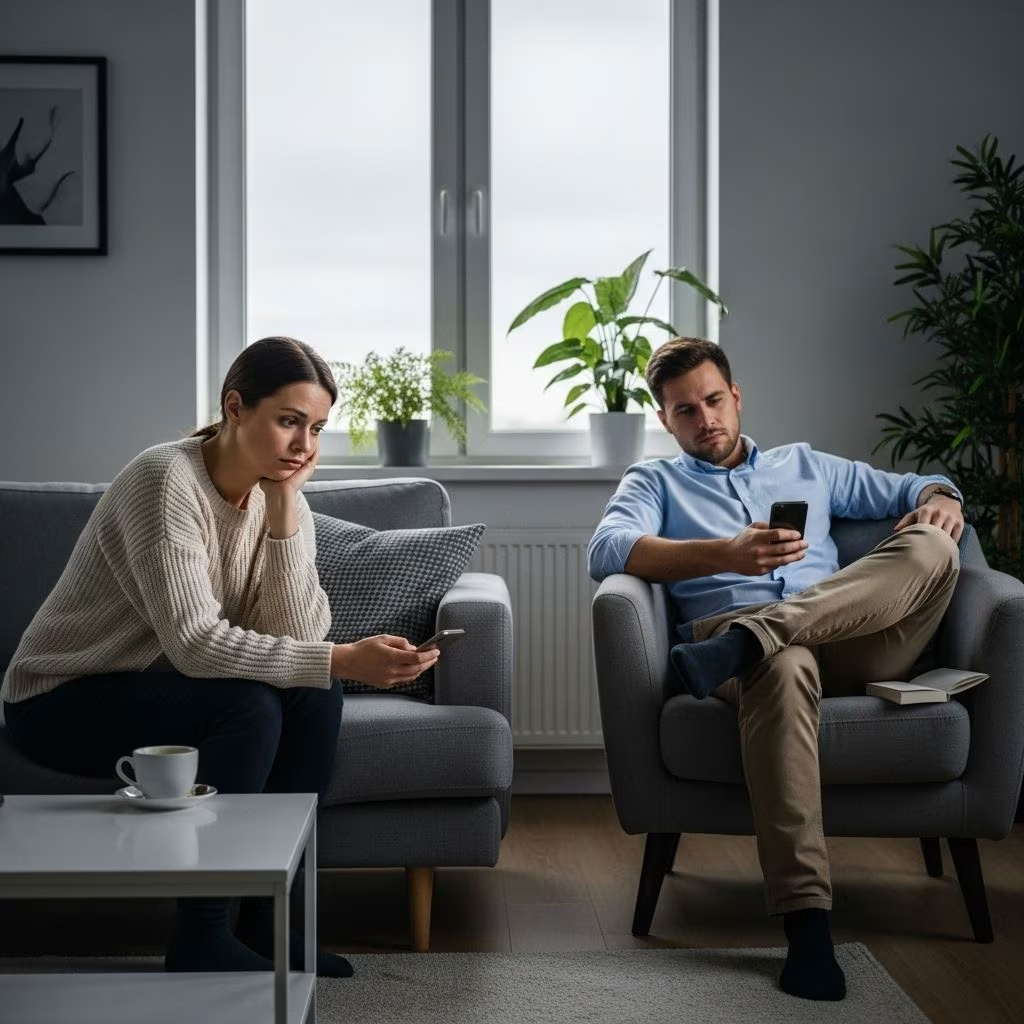
It’s only natural to desire companionship and intimacy, but sometimes, the longing to be part of a couple can become more important than the person you’re actually with. Knowing the difference isn’t always easy. People often find themselves more attached to the idea of the relationship than to their partner themselves, sometimes without even realizing it. Being able to recognize the subtle signs can help you build healthier connections—and ensure both you and your partner are truly fulfilled.
Why It’s Important to Know Where Your Heart Truly Lies
Before diving into the telltale signs, it’s worth reflecting on the psychology of modern relationships. Experts note that human beings are wired for connection—it’s intrinsic to our survival and sense of belonging. Social pressures and the cultural emphasis on “couplehood” only magnify these instincts, sometimes pushing us into partnerships for the sake of not being alone rather than genuine affection or compatibility.
Connell Barrett, executive dating coach and founder of Dating Transformation, points out: “It’s not uncommon to be more into the relationship itself than into the person you’re dating. This happens because we all have a deep need for romantic connection. It’s wired into us. When that need for connection is not being met, you can feel that loneliness, and you might settle for someone you’re not that into because being in a relationship fills that need and staves off feeling lonely.”
Going through the motions without real passion short-changes both people. If you want lasting fulfillment and intimacy, it’s worth asking yourself whether you’re invested in your partner—not just the relationship status.
1. You Feel More Excited About Couples’ Outings than About Alone Time
Quality one-on-one time is a fundamental cornerstone of healthy partnerships. If you catch yourself looking forward to double dates, group activities, or couple-centric events—but feeling less enthusiasm for intimate, solo evenings—it might be time to consider why.
- Preference for Social Validation: Excitement for events where your status as a couple is on display may reveal a desire for external approval rather than deepened intimacy.
- Discomfort with True Intimacy: A lack of enthusiasm for private, unstructured time together could hint at disconnection or an underlying lack of interest in your partner as an individual.
Susan Winter, relationship expert and love coach, explains: “Everything is designed for two, or more. From cars to vacation packages, hotel room fees to dining establishments—the single person is the ‘left over’ that must be (somehow) accommodated.”
The pressure only intensifies if you’re the last single person in your friend group, and wanting to fit in can nudge you towards prioritizing coupled activities. However, true closeness involves a genuine desire for your partner’s company—regardless of the social setting.
Questions to Ask Yourself
- Do I enjoy spending quiet time alone with my partner?
- Am I content just being together without the presence of others?
- Or does being seen as part of a couple bring me more satisfaction than the time spent together itself?
2. You Show Off Your Partner for Approval
It’s normal—and affirming—to be proud of your partner and want to introduce them to important people in your life. But there’s a subtle difference between genuine pride and using your relationship as proof of your own worth.
- Seeking Social Proof: If the primary reason you introduce your partner in public or on social media is to demonstrate that you’re coupled, you may be prioritizing external validation over personal connection.
- Approval from Others: Wanting your friends and family to like your partner is healthy. But if your happiness depends more on others’ approval than your own feelings, this could signal misplaced priorities.
As Barrett notes: “If you want to see your significant other mainly when you’re with friends and family, you’re likely ‘showing off’ that you have someone in order to get approval from others. It’s not about love. It’s about social proof.”
Instead of focusing on appearances, aim for mutual respect and authentic enjoyment of each other’s company.
Common Behaviors That May Indicate This Sign
- Frequently posting about your relationship on social media for the sake of image.
- Inviting your partner to events purely so you won’t “look single.”
- Comparing your relationship to others as a measure of status.
3. You Stay to Avoid Being Single—Not for Your Partner
At the end of the day, the most telling question you can ask yourself is: “If we broke up today, what would I miss more—my partner, or just being in a relationship?”
- For Fear of Loneliness: Many people remain in unsatisfying relationships simply to avoid feeling alone or socially outcast.
- Social Conformity: The world often feels structured for couples; being single can feel like being left out—not just from shared experiences but from societal acceptance itself.
Winter observes: “Being on one’s own is frightening to most individuals. They feel cut off from society and the uniformity of the ‘couples world.’ No one wants to be the outcast.”
There’s no shame in wanting companionship. But if your connection to your partner is fueled more by comfort or fear of loneliness than by appreciation of who they are, it’s worth reconsidering your motivations. In the long run, both you and your partner deserve to feel truly chosen.
How to Differentiate Between Genuine Attachment and Fear
- Ask yourself: What would my daily life be like if I was single?
- Would I feel a sense of relief or disappointment?
- Am I staying because I feel incomplete without someone, or because I genuinely cherish my partner?
4. The Relationship Feels More About Image Than Reality
It’s easy to get swept up in the “look” or idea of what a relationship should be, rather than cultivating authentic compatibility and mutual care. If much of your energy is spent projecting romance, harmony, or happiness rather than experiencing those feelings, your priorities may need recalibration.
| Relationship Driven by Image | Relationship Driven by Connection |
|---|---|
| Frequent posts and public displays for validation | Private gestures, genuine conversation, and affection |
| Anxiety about others’ perceptions | Contentment regardless of external opinions |
| Measuring worth by relationship status | Deriving meaning from experiences shared together |
If maintaining the image feels exhausting or more important than nurturing sincere connection, your relationship may be more about what it represents than what it truly is.
Why Do We Sometimes Prioritize the Relationship Over Our Partner?
The tendency to value relationships in the abstract over real connection is driven by deep human needs and reinforced by culture:
- Desire for Belonging: Feeling part of a couple offers social security and fits in with group norms.
- Fear of Exclusion: Remaining single can be stigmatized, leading people to avoid it even at the expense of personal happiness.
- External Validation: The social value assigned to relationships—by friends, family, and media—can make the idea of being coupled feel more important than the underlying bond.
But healthy relationships are built on genuine affection, compatibility, and mutual respect—not just on titles or appearances.
Expert Advice: What to Do If You Recognize These Signs
If you realize you’re more in love with the idea of being in a relationship than the person you’re with, relationship experts suggest taking a compassionate, honest look at your feelings before making decisions.
- Self-Reflection: Set aside some quiet time to journal or talk openly (with yourself or a trusted confidant) about your motivations, fears, and true desires.
- Open Communication: Share your feelings with your partner. Honest dialogue, though tough, can reveal whether your connection can deepen or if it’s best to part ways.
- Reconnect With Yourself: Spend time doing things that fulfill you personally—outside the relationship. Developing a strong sense of self can illuminate what you actually want from a partnership.
- Seek Professional Input: A therapist or relationship coach can offer clarity and guide you in understanding patterns and needs.
Ways to Build Relationships Based on True Connection
- Prioritize Shared Values and Interests: Engage in conversations and experiences that allow you to see and appreciate each other’s individuality.
- Practice Vulnerability: Allow yourself (and your partner) to be authentic and imperfect; intimacy grows from openness, not just proximity.
- Balance Partnership with Independence: Encourage healthy boundaries and time apart as well as togetherness.
- Question Social Pressures: Notice when decisions are influenced more by the desire to fit in or meet external expectations than by your own happiness.
Frequently Asked Questions (FAQs)
How can I tell if I’m more invested in the relationship itself than in my partner?
Observe whether your excitement centers on the status and benefits of coupledom—such as social outings, shared living arrangements, or the comfort of not being single—more than on your partner’s personality, quirks, or conversation. If the thought of being alone provokes more anxiety than the idea of losing your particular partner, it’s a strong sign.
Is it wrong to want social approval or to enjoy being part of a couple?
Desiring validation and the perks of being coupled is normal to some extent. The key is balance—ensuring that your motivation is primarily rooted in authentic connection rather than just meeting social expectations or avoiding loneliness.
Should I break up if I realize my motives aren’t about my partner?
Not necessarily. The discovery is an invitation for honest self-reflection and discussion. Sometimes changing your focus and building deeper intimacy can transform the relationship; in other cases, it may mean it’s time to move on.
How can we shift our relationship to be more genuine?
Prioritize honest conversation, cultivate mutual interests, and be willing to examine social pressures. Reframe your intentions toward understanding, appreciating, and loving your partner as an individual.
Key Takeaways for Building Meaningful Partnerships
- Recognize when your attachment is to the relationship, not the person.
- Examine motivations behind your choices and behaviors.
- Embrace vulnerability, openness, and mutual respect as foundations of healthy relationships.
- Courageously seek authenticity—even if it means questioning or changing your current partnership.
Ultimately, love flourishes when both partners feel valued and chosen for who they are—not just for the roles they fill or the status they provide. Trust yourself to seek, and to offer, that deeper level of connection.
References
- https://www.elitedaily.com/p/4-signs-you-care-more-about-having-a-relationship-than-about-your-partner-17009250
- https://www.elitedaily.com/p/5-signs-your-partner-is-in-love-with-you-but-doesnt-love-you-fully-12158453
- https://www.elitedaily.com/p/how-do-you-know-you-love-someone-more-than-they-love-you-2896562
- https://www.elitedaily.com/dating/when-you-love-someone-more-than-they-love-you
- https://www.elitedaily.com/dating/signs-of-a-healthy-relationship/2059942
- https://www.elitedaily.com/dating/signs-working-hard-relationship/1804693
- https://damonahoffman.com/tag/toxic-relationships/


