


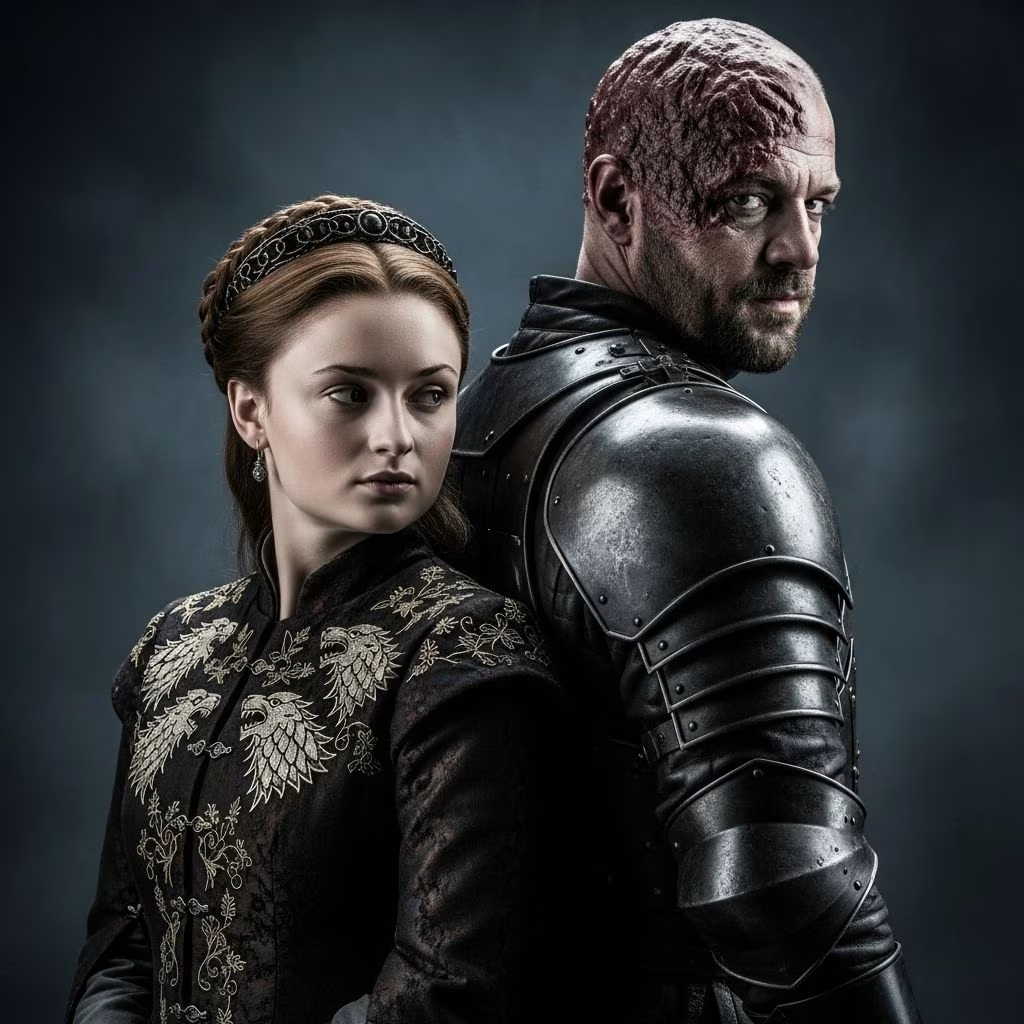
We Need To Talk About Sansa Stark & Sandor Clegane’s Relationship
Game of Thrones brims with iconic duos, but few partnerships are as unexpectedly poignant and enduring as the one between Sansa Stark and Sandor Clegane, better known as The Hound. Though their screen time together is limited, their connection—recurring, subtle, and steeped in pain and survival—remains one of the series’ most compelling threads.
The Unlikely Origins: First Encounters in King’s Landing
Sansa and The Hound’s story began under the shadow of King’s Landing—a court brimming with cruelty. The Hound served as Joffrey Baratheon’s bodyguard, ever present during Sansa’s betrothal and the king’s sadistic manipulation. Though he was in Joffrey’s service, The Hound bore silent witness to the prince’s torment of Sansa, enduring a rigid loyalty to his role, yet visibly uncomfortable at the suffering he was forced to observe.
- He stood by during Sansa’s public humiliations, from the beatings to the chilling display of her father Ned Stark’s head.
- Despite his position, The Hound showed moments of discomfort and rare empathy, such as when he draped his cloak over Sansa after she was publicly stripped and beaten—a small act of dignity in an otherwise cruel world.
- Perhaps most memorably, he intervened at Sansa’s darkest moment by saving her from a gang of rapists. Sansa, then still a frightened teenager and a victim of others’ choices, found an unlikely protector in Sandor Clegane.
Their interactions were rarely tender, yet The Hound’s actions showed a complex mix of cynicism, protectiveness, and recognition of Sansa’s suffering.
Powerless Protector: The Hound and His Moral Ambiguity
The Hound’s loyalties were always to himself, yet he was drawn to Sansa—a figure emblematic of innocence and nobility. Their contrasts were stark: she, the paradigm of courtly grace; he, scarred (literally and figuratively), a living reminder of Westeros’ violence. Despite this, The Hound intervened during Sansa’s moments of peril, yet often couched his concern in gruffness or derision.
The infamous scene where The Hound offers Sansa an escape from King’s Landing stands out. He suggests she flee with him when he abandons the Kingsguard, a moment charged with uncertainty and the possibility of a new path. Sansa, clinging to the illusion of safety within the capital, declines. Both would soon learn how dangerous that choice would prove.
- This pivotal missed connection would haunt both their storylines—The Hound, left to wander and fight his way through Westeros; Sansa, caught in a spiral of manipulation, violence, and attempted survival.
Chemistry Reignited: The Powerful Reunion at Winterfell
Years (and endless suffering) later, Sansa and The Hound reunite at Winterfell in Season 8. Both have changed profoundly—the little bird is now a hardened, strategic leader; the cynical Hound carries both literal and emotional scars. Their brief interaction in Season 8, Episode 4, becomes a highlight of the final season, despite its brevity.
During a post-battle celebration, Sansa approaches The Hound as he sidesteps a woman’s advances. Their exchange is filled with history and subtext.
- Sansa observes, “She could’ve made you happy for a little while.”
- The Hound, deflective as ever, admits only one thing could make him happy, though he remains evasive about what that is.
- The tension is palpable as he references the fact that Sansa once couldn’t bear to look at him, while she coolly replies that, after what she’s seen from Littlefinger and Ramsey, there’s nothing frightening left in his scarred face.
- When he brings up her traumatic past, Sansa claims agency by stressing that Ramsey’s fate was deserved—and given by her own hand.
- In a moment heavy with catharsis, The Hound remarks, “You’ve changed, little bird.” He suggests her pain could have been avoided had she gone with him. Sansa, with newfound steel, counters, “Without Littlefinger and Ramsey and the rest, I would’ve stayed a little bird all my life.”
It is a parting both wistful and respectful: The Hound sees the strength Sansa forged from suffering, and she acknowledges that only through hell did she find her wings.
Mutual Transformation: From Victim to Survivor, Beast to Confidant
| Character | Beginning of Series | At Winterfell Reunion |
|---|---|---|
| Sansa Stark | Naïve, idealistic, dreaming of chivalry and fairy tales | Wiser, pragmatic, wielding real political power and resilience |
| The Hound | Violent enforcer, masking pain behind brutality, loyal to survival | Still gruff but more self-aware, displaying moments of empathy and regret |
Their journeys—filled with loss, maturity, and self-discovery—reflect each other’s growth. Sansa transcends her innocence, becoming a true leader. The Hound, once monstrous in Sansa’s eyes, becomes a figure of unexpected comfort and truth.
How the Relationship Evolved Off-Screen
Their separation for much of the middle seasons only intensified the resonance of their reunion. During those years, Sansa suffered under Littlefinger and Ramsey, facing trauma and rebuilding herself from within. The Hound, for his part, found an unlikely travel companion in Arya Stark, further evolving his perspective as he grappled with questions of violence, loyalty, and honor.
- Sansa’s journey took her across the Vale, Winterfell, and Bolton-controlled North, culminating in her revenge against Ramsey and pivotal role in the Battle of the Bastards.
- The Hound’s travels with Arya led him to moments of redemption, challenging his earlier “might makes right” philosophy.
Ultimately, both characters arrived at Winterfell remade by their trials, finding mutual recognition in one another’s transformations.
Why Sansa & The Hound’s Bond Resonates
Their connection is one of mutual recognition and respect. Unlike many other relationships in Game of Thrones, theirs is not romanticized or sexualized, but instead built on rare understanding. The tragedy Sansa endures is never trivialized by The Hound; he is among the few who see through her mask and acknowledge her suffering. Likewise, Sansa treats The Hound with a dignity lacking in most of Westeros.
- For viewers, their relationship stands out as one of emotional depth—two trauma survivors briefly finding solace in an otherwise merciless landscape.
- Their finale interaction illustrates how one can transcend victimhood and become an agent in their own story, all while remaining vulnerable to the connections that shaped them.
How Their Bond Defied Stereotypes
Sansa and The Hound’s dynamic flies in the face of conventional storytelling. He is not the typical savior; she does not simply “tame” the beast. Instead, each pushes the other to question their view of the world:
- The Hound challenges Sansa’s idealism, exposing the truth beneath knighthood and courtly virtues.
- Sansa, in turn, prompts The Hound to reflect on his cynicism, serving as a rare source of honesty and acceptance for him.
The terms they use for each other—little bird and “The Hound”—are at once mocking, endearing, and ultimately elevating. They signify a recognition of each other’s true selves, stripped of pretense.
The “Little Bird” Motif: Identity, Growth, and Agency
Throughout their encounters, The Hound repeatedly calls Sansa “little bird”—a motif heavy with meaning. Early on, it signaled her fragility and naiveté; by the final season, it became a term of hard-won respect. Sansa ultimately owns her transformation, implying that the experiences that broke her innocence also forged her wisdom and leadership.
- For Sansa, surviving cruelty did not mean losing herself but rather discarding her illusions to become something more formidable.
- The Hound’s unique way of addressing her set their relationship apart, marked by candor even in times of crisis.
The Meaning and Lasting Impact of Their Relationship
What makes this relationship so striking is its refusal to offer tidy closure or satisfy traditional romantic arcs. Instead, it presents:
- An alliance built not on politics, but on empathy and hard-earned understanding.
- Two wounded souls who, for a few fleeting moments, become each other’s mirror and support.
- A profound reminder that kindness and connection can emerge from even the darkest corners of Westeros.
Frequently Asked Questions (FAQs)
Q: Was there romantic interest between Sansa and The Hound?
A: The series implies complicated feelings—some viewers interpret Sansa’s responses to The Hound as containing hints of affection, but the show avoids explicit romance. Their bond centers on mutual respect and hard-won understanding rather than conventional love.
Q: Why did The Hound help Sansa despite his rough persona?
A: The Hound is drawn to Sansa’s innocence and recognizes the cruelty she endures. His gruff exterior belies a complex sense of compassion, making him a rare figure of protection even when he claims to scorn virtue.
Q: What did The Hound mean when he called Sansa “little bird”?
A: Originally a term reflecting Sansa’s naiveté, “little bird” eventually became a sign of respect. The evolution of the nickname tracks Sansa’s transformation from fearful girl to savvy, self-possessed leader.
Q: How did their final interaction change their relationship?
A: Their final meeting in Winterfell is one of mutual recognition—The Hound acknowledges Sansa’s change, while Sansa affirms her growth and agency. Both leave the scene respecting each other’s journey.
Q: Why is their relationship considered one of the show’s best?
A: Despite (or because of) its subtlety, Sansa and The Hound’s dynamic is memorable for its authenticity and depth. It stands out as an uncommon depiction of healing and connection in the violent world of Westeros.
References
- https://www.elitedaily.com/p/sansa-the-hounds-relationship-on-game-of-thrones-is-honestly-one-of-the-shows-best-17302828
- https://pawntoplayer.wordpress.com/2020/11/19/whats-in-a-name-naming-as-a-technique-in-sansa-and-sandors-relationship-arc/
- https://asoiaf.westeros.org/index.php?%2Ftopic%2F87290-is-indeed-sansas-infatuation-with-the-hound-mutual%2F
- https://www.imdb.com/news/ni64586074/


