


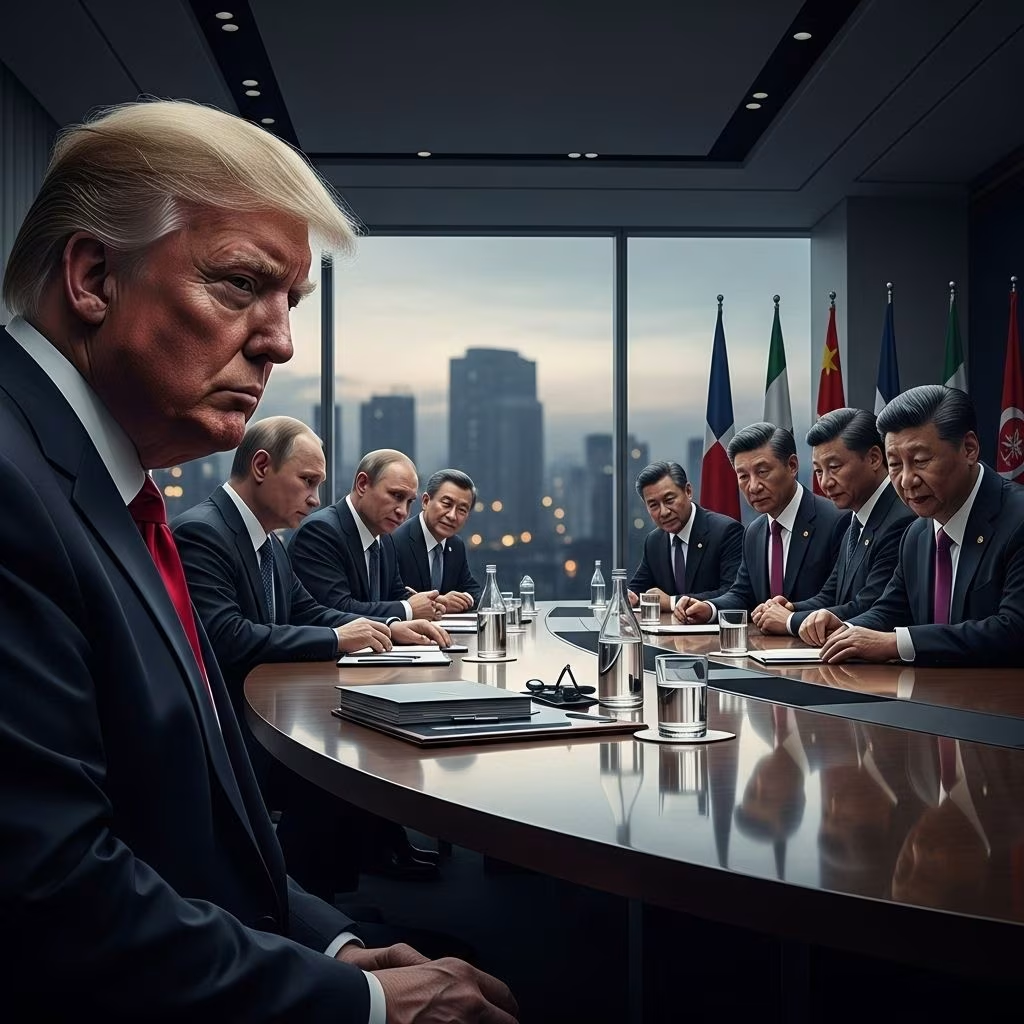
Trump’s Comments on His Relationship with Dictators at the G20 Summit
Former President Donald Trump’s relationship with authoritarian leaders has long been a subject of scrutiny and debate, but his remarks at the G20 Summit amplified these discussions to new heights. During a press conference at the summit, Trump openly discussed his rapport with several world leaders often labeled as dictators. The comments were met with sharp reactions both domestically and internationally, raising foundational questions about America’s global stance, its democratic values, and the future direction of U.S. foreign policy.
The G20 Summit Setting and Trump’s Unscripted Remarks
The G20 Summit, a meeting of leaders from the world’s most significant economies, provided the platform where Trump made his widely discussed comments. When asked about his relationships with authoritarian figures, including Russia’s Vladimir Putin, China’s Xi Jinping, and North Korea’s Kim Jong Un, Trump responded candidly, referencing both his personal rapport and his approach to global leadership. He remarked, for example, that, “I get along very well with President Xi,” and went on to state that having good relationships with leaders—even those deemed dictators—was “an asset and not a liability.”
Trump’s message implied that diplomacy with strongmen could yield beneficial outcomes for the United States, even suggesting he’d “love” to host leaders like Putin and Xi at upcoming summits, such as the then-proposed Miami G20 event.
Historical Context: Trump’s Admiration for Strongmen
Trump’s affinity for authoritarian leaders is not a new phenomenon. Throughout his presidency and post-term political activities, he has consistently praised leaders such as Viktor Orban (Hungary), Kim Jong Un (North Korea), and even made favorable comments about Xi Jinping (China). This admiration has often run counter to the traditional US foreign policy posture, which has typically favored alliances with democracies and a strong stance against autocratic regimes.
Notably, Trump’s statements frequently involved controversial praise: he referred to Kim Jong Un as “very talented,” commended Xi Jinping’s ability to control his country “with an iron fist,” and praised Viktor Orban for his firm grip on power. Such rhetoric, rare among his predecessors, marked a significant shift in the diplomatic tone of the United States and drew intense criticism from both Republican and Democratic lawmakers.
Critiques from Domestic and International Observers
The public reaction to Trump’s comments was immediate and fierce. Critics, including past presidents, opposition leaders, and foreign policy experts, argued that Trump’s approach offered dangerous legitimacy to authoritarianism at a time when democracy faced global threats. Many pointed out that by legitimizing such leaders, America risked undermining its own values and sending mixed messages to allies and adversaries alike.
Biden’s campaign, for example, issued a statement condemning Trump’s remarks, arguing that he was “parroting the words of authoritarians and undermining American democracy.” Political commentator circles and civil rights leaders suggested that repeated public admiration for dictators not only apologizes for repressive regimes but may also embolden anti-democratic tendencies at home and abroad.
The Strongman Complex: Understanding Trump’s Approach
A deeper look at Trump’s documented statements reveals a pattern many analysts call the ‘strongman complex’. Trump has frequently associated strength with singular, unchecked authority, often contrasting this with what he portrays as bureaucratic and inefficient democratic processes in the US. He has openly expressed a preference for aides and advisers who echo his worldview, citing the loyalty seen in authoritarian governments as a model for effective governance.
Trump’s own advisers and former staff have expressed alarm over his admiration for the power and loyalty that strongmen command. Some have gone on record to warn that such attitudes may pose a danger to America’s constitutional traditions, especially if attempts are made to remake government institutions in the image of autocratic regimes.
Implications for American Democracy and Global Leadership
The controversy triggered by Trump’s remarks at the G20 speaks to a larger debate about America’s role on the world stage. Traditionally, the US has presented itself as a champion of democracy and human rights, using its influence to pressure autocratic regimes towards reform. Trump’s lauding of strongmen, however, calls into question whether such a role will be maintained if leaders eschew those principles in favor of transactional diplomacy.
- Legitimizing Authoritarian Regimes: Critics argue that when the US president praises dictators, it confers legitimacy on their actions, making it harder for the US to credibly advocate democratic norms elsewhere.
- Democratic Institutions at Risk: Analysts warn that admiration for autocrats could seep into domestic governance, weakening checks and balances and eroding civil liberties.
- Foreign Policy Shifts: An embrace of strongman tactics could jeopardize longstanding alliances rooted in shared democratic values, and instead foster unpredictable and unstable international relations.
Contrasting Reactions: Support and Opposition
Not everyone sees Trump’s approach as negative. Some of his supporters argue that forging working relationships with authoritarian leaders is practical, arguing diplomacy should focus on results rather than ideology. For these advocates, Trump’s willingness to “break the mould” is seen as a bold strategy aimed at enhancing US interests without being encumbered by legacy foreign policies.
On the other side, opponents contend that personalizing foreign policy with unchecked admiration for individual strongmen is risky, unpredictable, and ultimately undermines the global standing of the United States.
Language and Rhetoric: The “Poisoning the Blood” Controversy
Trump’s G20 comments were not just limited to foreign affairs. During the same period, he made statements about immigration, including the phrase “poisoning the blood” of the country, which critics noted echoed language used by white supremacists and Nazi leaders. Historians and civil rights organizations pointed out that such rhetoric dangerously stigmatizes immigrants and minorities, serving to divide rather than unite.
This language drew immediate parallels to Adolf Hitler’s notion of “blood poisoning,” a chilling reminder of the consequences when leaders invoke exclusionary or dehumanizing messages.
The controversy highlighted an underlying tension: Can strong leadership be divorced from ethical and democratic principles, or does admiration for totalitarian language inevitably erode those principles internally?
Backlash and Political Fallout
- Political Opponents React: Biden’s campaign and figures from both major parties were quick to respond, characterizing Trump’s comments as dangerous, un-American, and symptomatic of a broader authoritarian drift.
- Media Coverage: Trump’s statements became headline news, with commentators debating not only his motivations but the potential impact on the 2024 election and US global influence.
- International Response: Foreign leaders and organizations took note, some expressing concern about the US’s commitment to the liberal international order, others optimistic about more pragmatic diplomatic engagement.
“Day One Dictatorship”: A Lingering Controversy
The G20 remarks were part of a longer pattern. On multiple occasions, Trump has made provocative statements, such as joking—or, as some interpret, threatening—that he would be a “dictator only on day one” if reelected. His supporters downplay these as humor or hyperbole, but critics argue they signal a serious willingness to challenge constitutional constraints.
According to former officials and policy experts, these statements, combined with ongoing efforts to discredit democratic institutions such as the judiciary or intelligence agencies, paint a picture of unprecedented flirtation with authoritarianism at the highest levels of American government.
How Past Presidents Approached Authoritarian Leaders
Historically, American presidents have interacted with authoritarian regimes out of necessity, but the tenor and intent of those interactions have varied greatly:
| President | Approach | Public Rhetoric |
|---|---|---|
| Barack Obama | Pragmatic engagement, with clear focus on values-based criticism | Publicly condemned human rights abuses |
| George W. Bush | Coalition-building, pressure through sanctions | Referred to an ‘axis of evil’ |
| Donald Trump | Personal diplomacy, often praising strongmen | Praise for NATO adversaries; focus on personal rapport |
Key Takeaways: What Trump’s G20 Comments Reveal
- Break from Tradition: Trump’s approach deviates sharply from the typical US posture of conditional diplomacy and vocal support for democratic institutions.
- Messages to Allies and Adversaries: By praising dictators in public forums, the US risks signaling a retreat from advocacy of liberal values on the world stage.
- Domestic Ramifications: Such rhetoric, if normalized, could erode the foundations of democracy at home, emboldening those who favor unchecked power and punitive governance.
Frequently Asked Questions (FAQs)
Q: What did Trump say about his relationship with dictators at the G20?
A: Trump characterized his relationships with leaders like Putin and Xi as assets, stating he respects strong leadership and would welcome them at the G20, sparking controversy and debate over US foreign policy values.
Q: Why is Trump’s praise for authoritarian leaders controversial?
A: Critics argue such praise legitimizes autocratic regimes, undermines America’s moral authority, and contradicts longstanding support for democratic governance and human rights.
Q: How have Trump’s remarks impacted US global influence?
A: By appearing to cozy up to dictators, Trump may have weakened US alliances with democracies and emboldened some authoritarian regimes, complicating traditional diplomacy.
Q: What is the significance of the “poisoning the blood” statement?
A: The phrase is highly controversial because it echoes white supremacist and Nazi rhetoric, raising alarms among civil rights observers about the use of inflammatory, divisive language.
Q: Do all Americans oppose Trump’s view on strongman leaders?
A: No. While many see his comments as dangerous, some supporters argue that building relationships with all world leaders, regardless of their governance style, is practical for achieving American interests.
Conclusion: The Lasting Impact of Trump’s G20 Comments
Trump’s remarks at the G20 Summit continue to reverberate through American political discourse and foreign policy debates. The open embrace of authoritarian leaders marks a profound departure from decades of bipartisan consensus. Whether seen as pragmatic realism or a dangerous flirtation with autocracy, these comments force the United States—and the world—to confront the evolving meaning of leadership, democracy, and global engagement in an increasingly complex era.
References
- https://nationalsecurityaction.org/trumps-obsession-with-dictators-and-strongmen-undermines-american-national-security
- https://abcnews.go.com/Politics/trump-praises-dictators-rails-immigrants-sparking-backlash/story?id=105725220
- https://www.telegraph.co.uk/us/politics/2025/09/06/trump-host-putin-miami-g20-summit/
- https://www.youtube.com/watch?v=NzqyVreVHXE
- https://sociology.cornell.edu/news/donald-trump-said-hed-be-dictator-one-day-his-supporters-say-theyre-not-worried


