


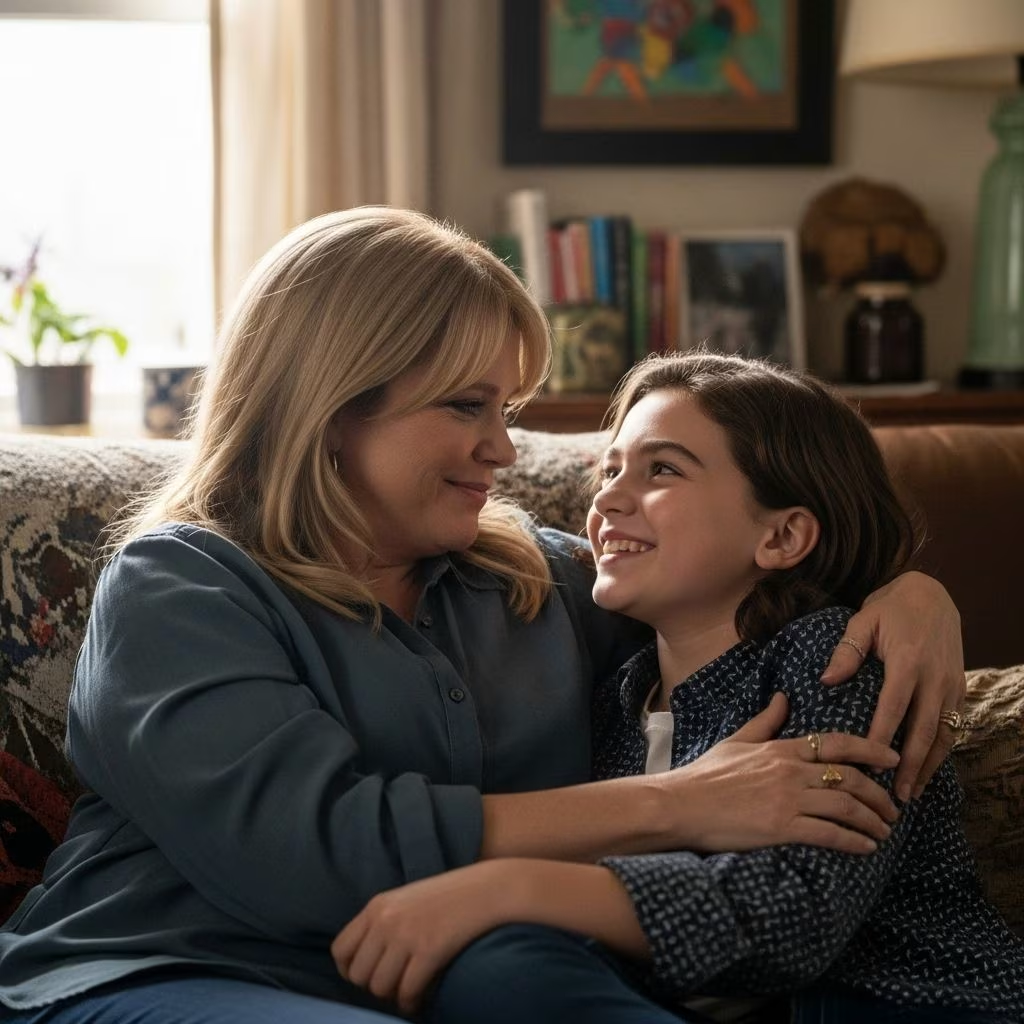
Sam & Duke: Growing Up Together on ‘Better Things’
‘Better Things’ has always prided itself on portraying the unique messiness of modern family life, and nowhere is this more true than in the evolving relationship between Sam Fox, the brash but loving single mother, and her youngest daughter Duke. As Duke matures, both she and Sam are thrust into a new phase of their relationship—one filled with bittersweet milestones, emotional growth, and a sometimes awkward shift in roles that hits close to home for many viewers.
The Shift: Duke Is Growing Up—and Sam Feels It
In Better Things Season 3, Episode 2, titled “Holding,” Duke’s transformation is unmistakable. Once the sweet youngest child, Duke (Olivia Edward) begins to assert her independence and maturity, to Sam’s clear discomfort. The push and pull between wanting to protect and needing to let go plays out in ways both comic and poignant. Duke’s request for her mother not to embarrass her during Science Night at school is a moment most parents and children can recognize—the familiar rite of passage when a parent’s presence is both comforting and, increasingly, mortifying.
- Duke asks Sam not to embarrass her at Science Night, a sign of growing social awareness.
- Sam, uncomfortable in the parent crowd, is ironically the one who struggles with maturity, lashing out at other parents.
- After Sam learns Duke was bullied, Duke asks, “He did a mean thing to me, not to you,” marking a major step in her emotional development.
This episode’s scenes echo memories from earlier seasons, reminding us that embarrassment caused by one’s parents is a nearly universal experience—one Sam has delivered in hilarious form to her older daughters Max and Frankie throughout their own adolescence.
Recalling the Past: Parental Embarrassment and Growing Pains
The transition Duke faces isn’t just about gaining independence—it’s about the changing nature of parental relationships as children grow. The show smartly draws connections to earlier moments:
- Sam once humiliated Max by commenting on a couple’s date within earshot, much to Max’s mortification.
- Sam’s infamous womanhood speech at Frankie’s school left her daughter squirming and redefined embarrassment for everyone present.
Now, Duke joins her sisters in the “embarrassed by Mom” club, signaling she’s not just growing, but growing up. Her increasing assertiveness and desire for autonomy emerge as central themes in the season.
Duke’s Sensitivity and Journey to Selfhood
Despite her new strength, Duke’s sensitivity remains a core part of her character. In Season 2, Duke asked to be eulogized with her mother—only to be upset when the outpouring of praise leaned towards Sam. This delicate blend of vulnerability and independence underlies her relationship with Sam, and as she stands up for herself, it’s clear she’s carving out her own identity, a development both necessary and difficult for her mother to witness.
Olivia Edward, who plays Duke, has spoken about channeling personal family experiences into her character, especially regarding intuition and emotional authenticity. Scenes depicting Duke’s ability to sense spirits, particularly her grandfather, deepen her journey towards self-discovery and emotional empowerment. These moments reflect a realness rarely seen in TV portrayals of young teens, and highlight Duke’s ongoing quest to understand herself.
Mothers and Daughters: Role Reversals and Emotional Flux
Ironically, as Duke displays more emotional maturity, Sam sometimes regresses, acting out against other parents at school—a mirror held up to viewers about how parents, too, can be overwhelmed by transitions. The reversal is striking: Duke tries to manage Sam’s behavior, echoing the caretaker role usually reserved for parents. This not only makes for compelling drama but also underscores the unpredictable rhythm of family relationships.
- Sam’s difficulty accepting Duke’s newfound independence is palpable, yet realistic.
- Duke takes on more responsibility for her own emotions, even asking Sam to let go of grudges for her sake, not just out of parental instinct.
- Both characters, in their own way, are learning to grow with—and sometimes despite—each other.
Across the Family: Parallel Journeys of Growth
Sam’s older daughters, Max and Frankie, provide crucial context for understanding the broader changes in the Fox household:
- Max heads off to college, signaling a new phase of independence and marking her transition from troubled teen to young adult.
- Frankie’s journey is marked by openness about gender identity and emotional complexity, leading to powerful stories about acceptance, boundaries, and finding one’s place within the family.
- Sam herself grapples with relationship changes, the departure of her eldest, and her own mother’s declining health, all contributing to an environment of flux.
The evolution within each relationship is distinct, yet interconnected. Each shift reverberates through Sam’s life, pushing her—and the audience—to confront the realities of growing up, letting go, and embracing change even when it feels uncomfortable.
Duke’s Psychic Intuition: Supernatural Overtures as Metaphor
One of the more unique features of Duke’s character is her intuitive sensitivity, a subplot that subtly influences her growth. Her experiences seeing “ghosts” or sensing energy offer symbolic echoes for her maturation—she’s deeply tuned into emotions and the unseen dynamics within her family.
- Duke’s intuition connects her with her late grandfather and becomes a channel for understanding grief and legacy.
- This subplot, rooted partly in Olivia Edward’s personal background, reflects the show’s willingness to explore themes of death, energy, and healing in a nuanced and age-appropriate manner.
In the fifth season, Duke’s empowering intuitive experiences culminate in a wordless scene with her grandmother, highlighting the power of nonverbal connection and the strength drawn from lineage and memory.
Sam’s Growing Realization
Throughout the third season, Sam faces the growing pains of letting her children go, especially as Duke begins to prefer friends to family. The heartbreak Sam feels when Duke chooses to hang out with her friend Pepper instead of her mother is both palpable and relatable.
- For Sam, the sense of loss comes hand-in-hand with pride; she’s aware, however reluctantly, that her baby is growing up.
- This challenge forces Sam to reevaluate her own role—not just as a caretaker, but as a supporter of independence.
The Theme of Change: ‘Better Things’ as a Reflection of Real Life
The title of the series, Better Things, may suggest optimism, but its message is more nuanced: change is inevitable, rarely neat, sometimes painful, yet often necessary for growth. Parenting demands adaptation, humility, and a willingness to embrace the discomfort that comes with seeing children become their own people.
- Sam’s recent breakup, Max’s departure, and her mother’s worsening health all paint a portrait of a life in transition.
- Through it all, the only true constant is change—embodied most clearly in Sam’s daughters’ evolutions.
Representation: Stories About Growing Up, Identity, and Family
The show has been lauded for its empathetic handling of issues surrounding adolescence, identity, and family secrets. Frankie’s storyline regarding gender identity refuses to fall into conventional TV traps, opting instead for a compassionate, complicated, and ultimately hopeful narrative. Duke’s experiences with loss, sensitivity, and intuition add another layer of authenticity.
| Character | Key Growth Theme | Memorable Season Highlight |
|---|---|---|
| Duke | Emotional maturity, intuition, self-expression | Asks Sam not to embarrass her, stands up to bullies |
| Sam | Letting go, emotional adaptation | Struggles with daughters’ growing independence |
| Max | Independence, new beginnings | Leaves for college |
| Frankie | Identity, acceptance | Explores gender identity and family roles |
Looking Forward: Change as an Opportunity
The evolution of Sam and Duke’s relationship offers hope alongside nostalgia. As difficult as letting go can be, the series reminds viewers that children growing up may allow mothers to rediscover themselves—not only as parents, but as individuals with aspirations and vulnerabilities.
- Duke’s independence means Sam can focus more on her own happiness and personal growth.
- The family’s ongoing changes present opportunities for everyone to form new types of bonds, reflecting life’s cyclical nature.
Frequently Asked Questions (FAQs)
Q: What is the central theme of Sam and Duke’s relationship in ‘Better Things’?
A: The main theme is the bittersweet transition from childhood to teenage independence, and the way parental roles shift with emotional maturity and autonomy.
Q: How does Duke’s character evolve over the seasons?
A: Duke transitions from being the sensitive youngest sibling to someone who stands up for herself, asserts boundaries, and explores her intuition and emotional depth.
Q: What makes ‘Better Things’ unique in its portrayal of family and adolescence?
A: The show balances humor with authentic portrayals of embarrassment, loss, generational change, and acceptance of diverse identities—all while maintaining emotional resonance and realism.
Q: How is parental embarrassment explored in the series?
A: Through a series of memorable—and often cringeworthy—moments where Sam’s well-intentioned actions mortify her daughters, especially in public and social settings.
Q: How do supernatural elements impact the narrative?
A: Duke’s ability to sense spirits serves as both literal and metaphorical illustration of her sensitivity and emotional connectivity within the family.
Key Takeaways
- Growing up creates friction, but also growth—for both children and parents.
- Independence in children prompts parents to rethink their own roles and identities.
- Authenticity and intuition add depth to character development, especially in Duke’s arc.
- Acceptance and adapting to change are central to emotional evolution on ‘Better Things’.
Conclusion: A New Phase—And New Possibilities
The transformation of Sam and Duke’s relationship on Better Things is more than a narrative about growing up; it is a meditation on the evolving nature of family, the necessity of change, and the enduring power of empathy. Whether through conflict or connection, the journey of letting children step into their own light is both poignant and empowering—proof that the “better things” ahead are found not in resisting change, but in embracing it as the heart of life itself.
References
- https://www.bustle.com/p/sam-dukes-relationship-on-better-things-is-changing-thats-not-necessarily-a-bad-thing-16819575
- https://tvline.com/news/better-things-recap-series-finale-season-5-episode-10-1234823050/
- https://www.autostraddle.com/better-things-tells-an-important-trans-story-by-not-telling-a-trans-story/
- https://cinemafemme.com/2024/10/21/a-sense-of-authenticity-olivia-edward-on-better-things/
- https://en.wikipedia.org/wiki/Better_Things_(TV_series)
- https://culturetrip.substack.com/p/the-meaning-of-life-according-to


