


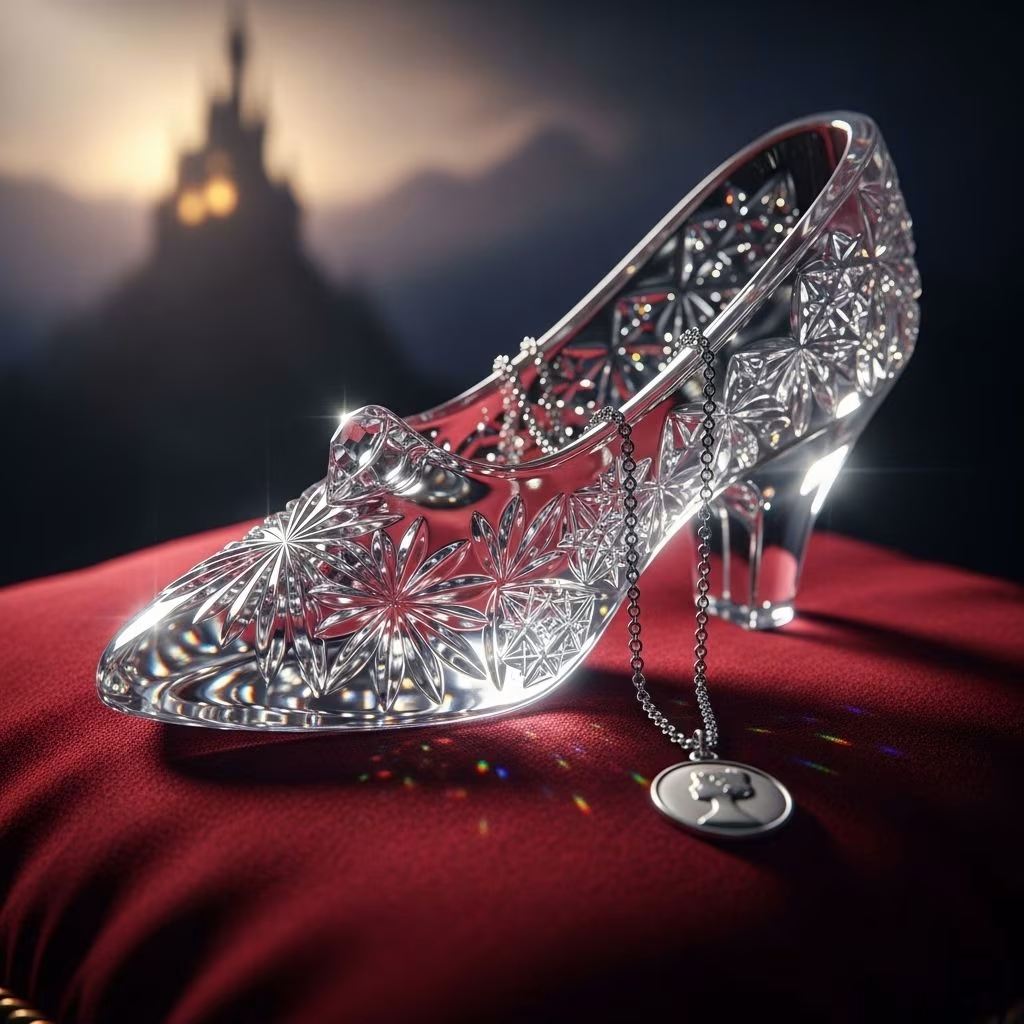
There’s something profoundly transformative about the perfect pair of shoes. They can change how we walk, how we feel, and perhaps most importantly, how we see ourselves. In the timeless tale of Cinderella, the glass slippers serve as far more than mere footwear—they become a powerful symbol of identity, self-worth, and the journey from invisibility to recognition. This seemingly simple element of a children’s story carries weight that resonates deeply with contemporary discussions about body acceptance, personal identity, and the relationship between external accessories and internal transformation.
The fairy tale of Cinderella has endured for centuries precisely because it speaks to universal human experiences. At its core, the story explores themes of recognition, worthiness, and the struggle to have one’s true self acknowledged by the world. The glass slippers become the ultimate proof of identity—an undeniable testament that the girl in rags and the elegant woman at the ball are one and the same person. This narrative device reveals something profound about how we understand ourselves and how we present that understanding to others.
The Symbolism of Perfect Fit
Throughout the Cinderella narrative, the protagonist’s identity is constantly defined and redefined by her appearance and clothing. When dressed in dirty rags, she assumes the role of household servant, treated as less than human by her stepfamily. When transformed by her fairy godmother into a vision of elegance, she is mistaken for royalty and captures the prince’s heart. This dramatic shift illustrates how profoundly external presentation can influence how others perceive us—and crucially, how we perceive ourselves.
The glass slippers, however, represent something more permanent and personal than the enchanted gown that disappears at midnight. Even after the magic fades and everything seems hopeless, Cinderella still possesses her pretty shoes to help her become what she’s always wanted to be. They serve as tangible proof that the transformation was real, that the magical evening actually happened, and most importantly, that she truly is the person worthy of love and recognition.
The concept of the perfect fit takes on multiple layers of meaning in this context. On the surface level, the glass slipper fits only Cinderella’s foot—a physical reality that proves her identity beyond doubt. But on a deeper level, the shoes represent the discovery of something that truly belongs to you, something that fits so perfectly it could belong to no one else. This unique fit becomes a metaphor for finding your authentic self and claiming your rightful place in the world.
Breaking Free from Societal Constraints
The environment in which Cinderella grew up, what society told her she was, and more specifically what her stepfamily deceived her into believing she was—all of this personal struggle becomes washed away with a single pair of shoes made of glass. Her truest self becomes reflected off that glass, finally able to break free from the entrapment of societal standards. This transformation speaks powerfully to anyone who has ever felt constrained by external expectations or limited by how others choose to define them.
The stepfamily’s treatment of Cinderella represents the toxic messages we often internalize about our own worth. They convince her through constant reinforcement that she is merely a servant, unworthy of attending the royal ball or aspiring to anything beyond her station. These destructive beliefs shape her reality until the intervention of magic—or in more realistic terms, until she finds the courage and means to claim her true identity.
The glass slippers become instruments of liberation because they cannot be altered, diminished, or made to fit anyone else. Unlike clothing that can be adjusted or stolen, unlike beauty that can be imitated or disguised, the unique fit of the shoes represents an immutable truth about identity. They prove to everyone, and most importantly to Cinderella herself, that she is a person fit to be a princess—fit in both senses of the word, as suitable and as perfectly sized.
The Relationship Between Accessories and Identity
Fashion and accessories have long served as tools for self-expression and identity construction. The shoes we choose to wear, the jewelry we select, the clothes that make us feel most ourselves—these items become extensions of our personality and vehicles for communicating who we are to the world. Cinderella’s glass slippers take this concept to its ultimate conclusion, becoming not just an expression of identity but actual proof of it.
In contemporary culture, we recognize that accessories can profoundly impact how we feel about ourselves. The right outfit can provide confidence for a job interview. A beloved piece of jewelry can serve as a talisman during difficult times. Comfortable shoes can literally change how we move through the world. These aren’t superficial concerns but rather acknowledgments of the complex interplay between external presentation and internal state.
The glass slippers represent the pinnacle of this relationship—accessories that don’t just complement identity but reveal it. They serve as a bridge between Cinderella’s internal sense of self and external recognition of that self. Before the prince finds her with the slipper, Cinderella knows who she is, but the world doesn’t acknowledge it. The shoes provide the evidence needed to align internal truth with external reality.
Lessons in Body Acceptance and Self-Worth
The story of Cinderella and her glass slippers offers unexpected wisdom about body acceptance and self-worth. The fundamental message—that something fits you perfectly and belongs to you alone—challenges the notion that we should conform our bodies or identities to external standards. Instead, it suggests that we should seek what truly fits us, what authentically belongs to our unique selves.
In a world that constantly bombards us with messages about how we should look, act, dress, and be, the glass slipper narrative provides a counter-message: your authentic self is worthy exactly as you are, and the right fit for you exists. You don’t need to cut off parts of yourself to squeeze into something that wasn’t meant for you. The stepsisters’ grotesque attempts to force their feet into shoes that don’t fit serve as a cautionary tale about the damage we do when we try to conform to standards that aren’t meant for us.
This message resonates particularly powerfully in discussions of body image and self-acceptance. Just as Cinderella’s foot fits the glass slipper perfectly without modification or force, we too can find ways of being in the world that honor our authentic selves rather than demanding we transform into something we’re not. The story encourages us to seek our own perfect fit rather than struggling to meet someone else’s expectations.
The Power of Transformation and Recognition
The transformation scene in Cinderella—where the fairy godmother changes rags to riches—represents more than external makeover. It symbolizes the moment when internal worth becomes visible to the external world. The beautiful gown and glass slippers don’t create Cinderella’s worthiness; they simply reveal what was always there. The magic allows her true self to shine through, unobscured by the dirt and degradation imposed by her stepfamily.
This distinction matters tremendously. The story isn’t suggesting that beauty or fine clothes create value in a person. Rather, it demonstrates how circumstances can obscure inherent worth and how sometimes we need help—whether magical or practical—to reveal our authentic selves to the world. The glass slippers endure beyond the spell because they represent something real and lasting about Cinderella’s identity, not a temporary enchantment.
The prince’s search for the mysterious woman who fits the glass slipper represents the world’s eventual recognition of worth that was always present. He doesn’t create Cinderella’s value by choosing her; he simply recognizes what was there all along. The shoes serve as the mechanism for this recognition, the tool that allows truth to overcome deception and authentic identity to triumph over imposed limitations.
Modern Applications of an Ancient Tale
While Cinderella may be a fairy tale set in a fantastical world of magic and royalty, its core themes remain strikingly relevant to modern life. We continue to struggle with questions of identity, worth, and recognition. We face pressures to conform to societal standards that may not fit our authentic selves. We experience the disconnect between how we see ourselves and how the world perceives us. And we search for ways to bridge that gap, to claim our rightful place and have our true identities acknowledged.
The glass slipper narrative suggests that authentic identity cannot be faked or forced. Just as the stepsisters cannot make themselves fit the shoe, we cannot sustainably maintain personas that don’t align with our true selves. The story encourages us to seek and claim what genuinely fits us rather than struggling to conform to what doesn’t. It reminds us that our unique qualities—the very things that make us who we are—serve as proof of our worth and identity.
In practical terms, this might mean pursuing careers that align with our values rather than simply chasing prestige or income. It might involve building relationships with people who appreciate our authentic selves rather than trying to maintain friendships that require us to pretend to be someone we’re not. It could manifest in fashion choices that express our personality rather than blindly following trends. The principle remains consistent: seek what fits you, not what you think you should fit into.
The Enduring Legacy of Glass Slippers
The image of Cinderella’s glass slippers has become iconic precisely because it captures something essential about the human experience. These delicate, transparent shoes represent the visibility of truth, the fragility of transformation, and the permanence of authentic identity. They remind us that who we truly are cannot be hidden forever, that our real selves will eventually find recognition, and that there exists somewhere in the world a perfect fit for each of us.
The story also acknowledges the struggle inherent in claiming that identity. Cinderella doesn’t simply walk into the palace and announce herself. She must wait while others try and fail to fit the shoe. She must overcome the barriers her stepfamily places in her way. She must have faith that her truth will eventually be recognized. This reflects the real-world experience of fighting for recognition and validation, of persisting despite obstacles, and of maintaining belief in one’s own worth even when the world seems determined to deny it.
The glass slippers prove to everyone that Cinderella was the beautiful girl from the Royal Ball who had danced with the prince. More importantly, they prove to Cinderella herself that she is worthy of recognition, love, and a life beyond the constraints imposed by her circumstances. This internal validation may be the most crucial element of the entire narrative—the moment when external proof aligns with internal knowledge to create unshakeable certainty about one’s own identity and worth.
Frequently Asked Questions
Q: What do Cinderella’s glass slippers symbolize beyond the fairy tale?
A: The glass slippers symbolize authentic identity and self-worth that cannot be imitated or forced. They represent the perfect fit between who we truly are and how we present ourselves to the world, serving as proof that our genuine selves are worthy of recognition and love.
Q: How does the Cinderella story relate to body acceptance?
A: The story emphasizes finding what fits you perfectly rather than trying to conform to standards meant for someone else. The stepsisters’ failed attempts to force their feet into the glass slipper illustrate the damage done when we try to change ourselves to meet external expectations instead of seeking what authentically suits us.
Q: Why do the glass slippers remain after the magic ends?
A: The slippers endure because they represent something real and permanent about Cinderella’s identity, not a temporary enchantment. They symbolize her inherent worth and true self, which exist independently of magical transformation or external validation.
Q: What lesson does Cinderella teach about self-identity?
A: The story teaches that authentic identity cannot be hidden forever and that we are worthy exactly as we are. It encourages us to seek what genuinely fits our true selves rather than struggling to conform to expectations or standards that don’t align with who we really are.
Q: How do accessories relate to personal identity in the Cinderella narrative?
A: In the story, accessories—particularly the glass slippers—serve as more than decoration. They become proof of identity and vehicles for self-expression, demonstrating how external items can help reveal and validate our internal sense of self when they authentically align with who we are.
References
- https://www.bustle.com/articles/79736-the-swarovski-cinderella-glass-slipper-is-perfect-but-these-5-clear-shoe-options-suit-all-styles
- https://www.bustle.com/articles/51260-on-cinderella-pretty-shoes-and-the-relationship-between-size-and-accessorize-because-theres-actually-something
- https://vc.bridgew.edu/cgi/viewcontent.cgi?article=1091&context=honors_proj
- https://en.wikipedia.org/wiki/Cinderella’s_stepsisters
- https://www.bustle.com/articles/69268-is-2015s-cinderella-anti-feminist-kenneth-branaghs-iteration-is-more-empowering-than-youd-expect-from-the-traditional
- https://migrationletters.com/index.php/ml/article/download/4124/2845/12451
- http://costumevault.blogspot.com/2016/04/oscar-retrospective-cinderella.html
- https://frockflicks.com/disney-princess-historical-influences-cinderella-1950-part-2/


