


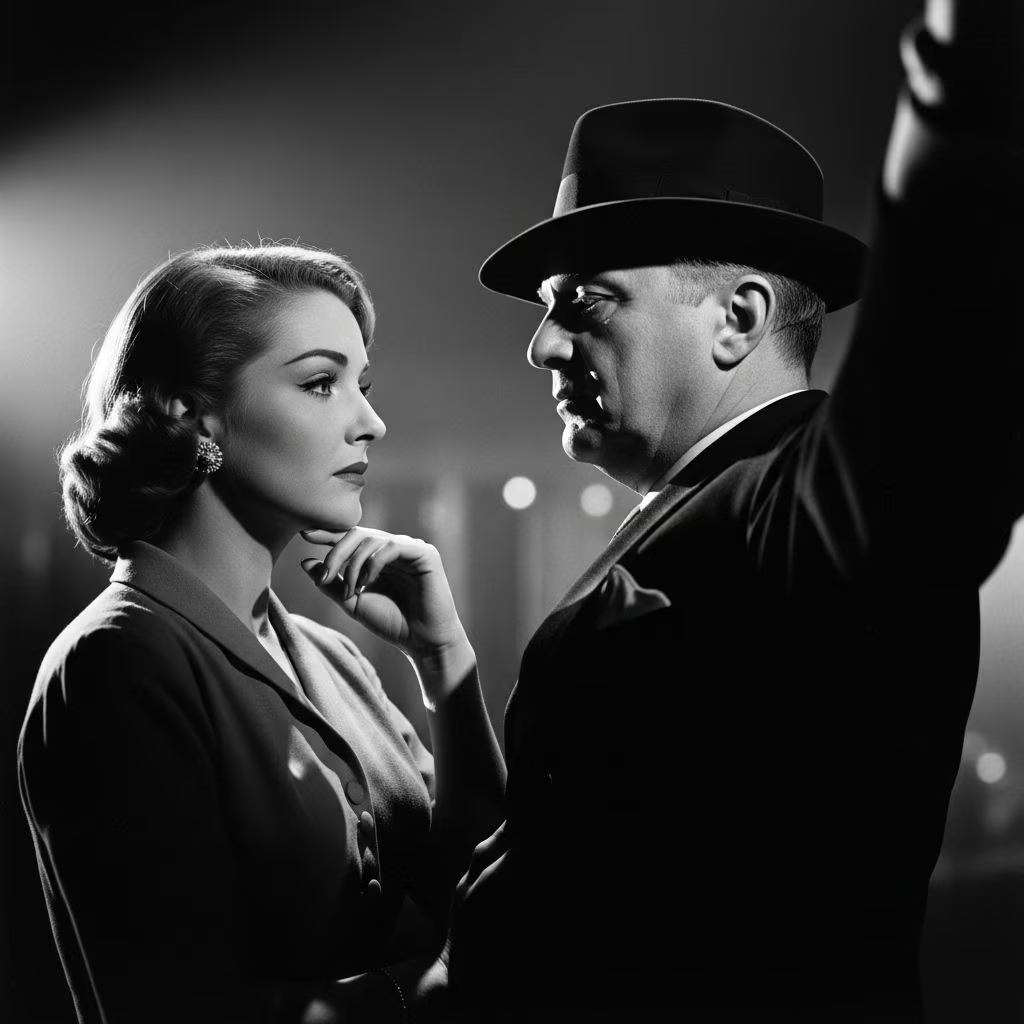
Did Gwen Verdon and Bob Fosse Ever Divorce? Their Remarkable, Complicated Partnership
Gwen Verdon and Bob Fosse—two icons whose names defined an era of Broadway—shared a marriage marked by intense passion, creative synergy, and extraordinary complexity. Though their professional collaboration achieved legendary status, their personal relationship was fraught with challenges, leading to a separation but never to an official divorce. Theirs was a marriage that shaped not only their lives but the very foundations of American musical theatre.
The Early Spark: How Gwen Verdon and Bob Fosse Met
Their fateful meeting occurred in 1955 during the casting of the hit musical Damn Yankees, where Fosse was the choreographer and Verdon was proposed for the lead role of Lola. Their chemistry in the rehearsal studio was immediate and electric, quickly resulting in a creative and romantic partnership. Both won Tony Awards for their work, cementing their connection as star collaborators and partners in life.
- First encounter: In rehearsals for Damn Yankees, Verdon and Fosse discovered deep creative chemistry.
- Instant connection: Their artistic sync quickly led to a romantic relationship, making them inseparable both on and off stage.
- Mutual admiration: Each respected the other’s talent and drive, fostering a dynamic partnership celebrated by their peers.
The Marriage That Defined Broadway
Fosse and Verdon married in 1960, and their union delivered some of the most acclaimed productions in musical theatre history. Their daughter, Nicole Fosse, was born in 1963, further entwining their personal and professional lives.
- Shared triumphs: The couple conquered Broadway together, with hits like Redhead, Sweet Charity, and Chicago.
- Creative synergy: Fosse served as director and choreographer, while Verdon wowed as the leading performer, forming an artistic powerhouse.
Their marriage, however, faced strains due to Fosse’s personal struggles, including infidelity and addiction, as well as tensions over career credits and creative control.
Artistic Collaboration: Creating Iconic Works
Their professional partnership transformed Broadway, introducing edgier themes and innovative choreography. Musicals like Redhead (1960), Sweet Charity (1966), and Chicago (1975) set new standards for theatrical excellence.
- Groundbreaking choreography: Fosse’s distinct style revolutionized dance, blending humor, sensuality, and darkness.
- Verdon’s influence: Gwen was regarded as a pivotal collaborator, sometimes teaching dancers and shaping performances beyond her credited roles.
- Equal credit debate: Many argue Verdon deserved co-credit on several projects due to her immense input.
Major Joint Productions
| Production | Year | Fosse’s Role | Verdon’s Role | Awards |
|---|---|---|---|---|
| Damn Yankees | 1955 | Choreographer | Lola (Lead Actress) | Tony Awards (both) |
| Redhead | 1960 | Director/Choreographer | Lead Actress | Six Tony Awards |
| Sweet Charity | 1966 | Director/Choreographer | Lead Actress | Tony Nominations |
| Chicago | 1975 | Director/Choreographer | Roxie Hart (Lead Actress) | Legendary status |
Personal Struggles and Separation
Despite the immense public success, their marriage was troubled. Fosse’s compulsive infidelity, substance abuse, and professional anxieties placed strain on their relationship, leading to their separation in 1971.
- Marital strains: Fosse’s affairs—often with cast members—led to repeated heartbreak for Verdon.
- Creative tensions: Verdon sometimes went uncredited in Fosse’s film projects, notably Sweet Charity (1969), where she coached dancers but did not appear as lead.
- Enduring affection: Despite the split, both maintained deep admiration—Fosse called Verdon his “best friend” and cherished their artistic union.
Even after separating, Verdon and Fosse continued to work closely, their connection undiminished by personal hardship. Their bond remained a defining force until Fosse’s death.
Why They Never Divorced
Though living apart from 1971 onward, Verdon and Fosse never filed for divorce. Their relationship instead evolved into a lifelong friendship and artistic alliance, marked by respect, support, and occasional romantic ambiguity.
- Lifelong partnership: They continued to collaborate on major works, with Verdon contributing to Fosse’s projects such as Cabaret and reprising her stage skills in Chicago.
- Enduring creative connection: Fosse once remarked the happiest moments of his life were in the rehearsal room with Gwen.
- Complicated friendship: Verdon described Fosse as an enigma, admitting that even after decades together, “nobody knows Bob”.
The Final Chapter: Fosse’s Death and Verdon’s Loyalty
Fosse suffered a fatal heart attack in 1987, with Verdon by his side in New York City—a testament to their undying connection. She remained dedicated to his legacy, helping revive Chicago and organizing a major career retrospective in his honor.
- Last moments together: Verdon was with Fosse during his final moments, underscoring the depth of their lifelong bond.
- Legacy guardian: Verdon supervised the Broadway revival of Chicago and supported documentaries and retrospectives of Fosse’s career.
Impact on Musical Theatre
The partnership of Verdon and Fosse reshaped American musicals, infusing the stage with new energy, emotional depth, and provocative choreography. Their shows introduced a rawer, darker edge to Broadway, departing from the “wholesome family fare” that had previously dominated.
- Transformation of Broadway: Fosse’s innovative choreography paired with Verdon’s expressive performance set new benchmarks for stagecraft.
- Continuing influence: Even decades later, their works remain staples of theater, dance, and popular culture.
Verdon’s later career included notable appearances in film and television, while Fosse’s creative genius was documented in his semi-autobiographical film All That Jazz and other retrospectives.
Frequently Asked Questions (FAQs)
Did Gwen Verdon and Bob Fosse ever officially divorce?
No. Although they separated in 1971, Verdon and Fosse remained legally married until Fosse’s death in 1987.
What were their most famous collaborations?
- Damn Yankees (1955)
- Redhead (1960)
- Sweet Charity (1966)
- Chicago (1975)
Did their personal struggles affect their creative output?
Yes. Fosse’s infidelity and substance abuse troubled their marriage, but both poured these experiences into their art, leading to even greater emotional resonance and innovation in their work.
Why is their story still relevant today?
Their lives inspired the Emmy-winning series Fosse/Verdon and continue to be referenced in discussions on artistic collaboration, relationship dynamics, and the evolution of musical theater.
Who safeguarded their shared legacy after Fosse’s death?
Gwen Verdon, along with their daughter Nicole Fosse, actively preserved and promoted Bob Fosse’s legacy through revivals, retrospectives, and advisory roles on television and theater projects.
Key Timeline: Gwen Verdon & Bob Fosse’s Relationship
| Year | Milestone |
|---|---|
| 1955 | Met during casting of Damn Yankees |
| 1960 | Married and collaborated on Redhead |
| 1963 | Birth of daughter Nicole Fosse |
| 1966 | Opened Sweet Charity on Broadway |
| 1969 | Sweet Charity adapted to film; Verdon uncredited in choreography |
| 1971 | Separated but maintained creative partnership |
| 1975 | Final stage collaboration on Chicago |
| 1987 | Fosse passes away, Verdon supervises his legacy |
| 2000 | Verdon dies, remembered as Fosse’s truest collaborator |
Their Enduring Inspiration
The story of Gwen Verdon and Bob Fosse remains a compelling example of how love, artistry, and ambition can intertwine—fostering innovation while sometimes causing deep personal pain. Through triumphs and tragedies, their partnership not only endured but also elevated the art form they cherished, leaving a legacy admired by performers and audiences for generations.
- Broadway revolution: They changed the definition of what musical theatre could be, bringing complexity and authenticity to the stage.
- Relationship lessons: Their union shows how creative collaboration can both strengthen and complicate personal ties.
- Eternal legacy: Verdon and Fosse’s works are celebrated, restaged, and honored as foundational pillars of American arts.
The legend of Gwen Verdon and Bob Fosse endures not only in their creative output but in the story of their relationship—a passionate, imperfect, and ultimately transformative union.
References
- https://www.elle.com/culture/movies-tv/a26409650/fosse-verdon-fx-true-story-explained/
- https://www.televisionacademy.com/features/news/features/partners-life
- https://www.townandcountrymag.com/leisure/arts-and-culture/a27008914/bob-fosse-gwen-verdon-relationship/
- https://www.biography.com/artists/bob-fosse-gwen-verdon-relationship
- https://www.harpersbazaar.com/culture/film-tv/a27021451/fosse-verdon-true-story-timeline/
- https://www.refinery29.com/en-us/2019/04/228903/fosse-verdon-true-story-bob-gwen-real-relationship
- https://www.ilovetheupperwestside.com/bob-fosse-gwen-verdon-upper-west-side-life/


