


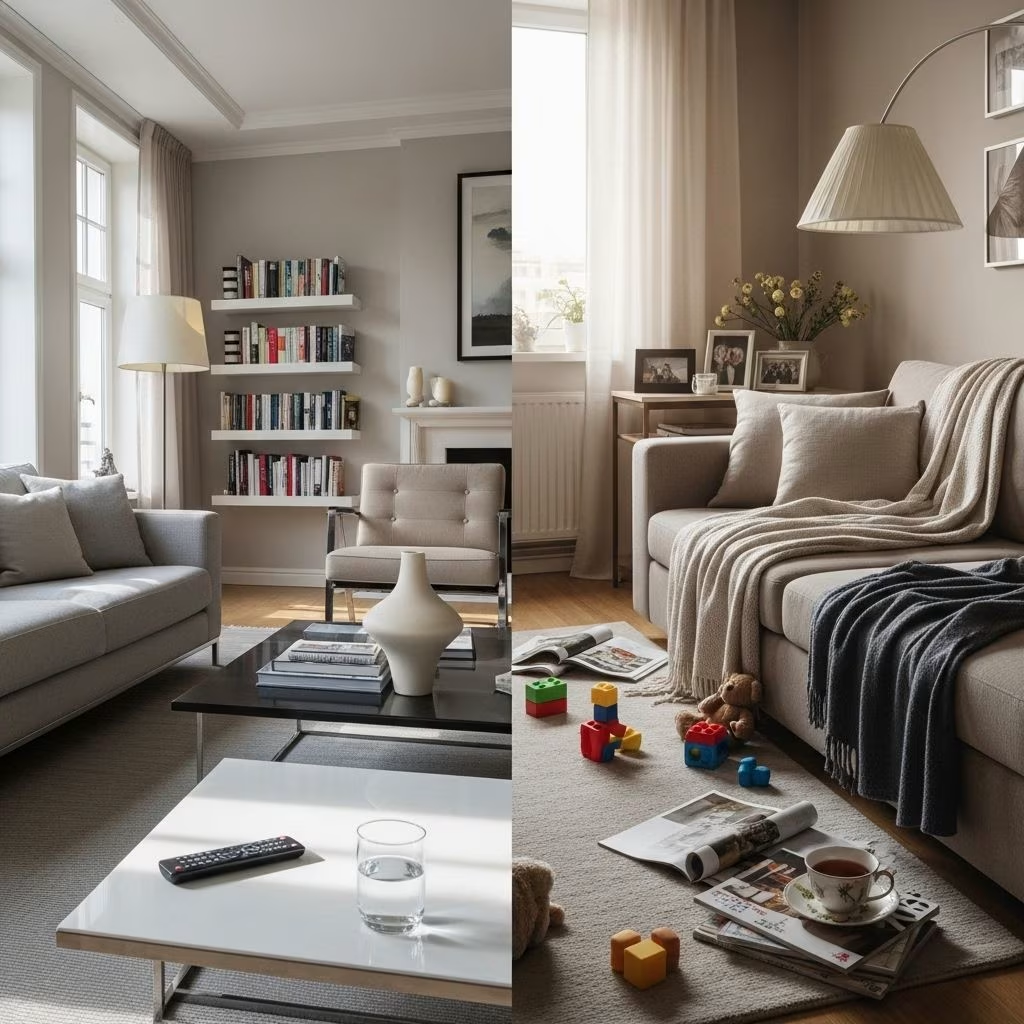
What Your Apartment Says About Your Relationship
Have you ever wondered if the way you and your partner organize your home might signal more about your relationship than just your taste in throw pillows or penchant for clutter? According to scientific research, the physical state and emotional feel of your shared living space can be a powerful indicator of how compatible you are, how you interact, and even how long you might last together. This article dives deep into the latest findings on how apartments and homes reflect relationship dynamics, what the experts are discovering, and what clues you can look for in your own surroundings.
Introduction: The Apartment as Relationship Barometer
When University of Texas researchers Lindsay Graham and Sam Gosling set out to study couples’ shared spaces, they were curious: Does the physical environment couples create together mirror the health and quality of their relationship? The preliminary answer, based on hundreds of photographs and surveys, is yes—your apartment may indeed reflect the core realities of your relationship.
- Shared spaces reveal habits, values, and compatibility.
- The transition to living together tests teamwork and negotiation.
- Visible objects and decor make ‘identity claims’ about each partner.
- Specific layout and division of space predict comfort and togetherness.
How the Study Was Conducted
Since 2012, Graham and Gosling have studied over 100 couples, inviting them to photograph their homes and complete detailed surveys about how they share space and resolve differences. Instead of snooping through drawers or cupboards, the researchers focused on what’s visible: books, artwork, entertainment choices, photographs, and decorative objects. These open markers, they reasoned, would say the most about both partners’ personalities and how they mesh to form a joint identity.
Key Research Questions
- How do couples decide on home design and arrangement?
- Whose possessions are prioritized—and who adapts most?
- How do couples handle privacy, shared interests, and territory?
- Do couples create an environment that feels like home to both partners?
The Meaning Behind What’s on Display
Your apartment is more than just walls and furniture; it’s a curated gallery reflecting values, memories, and passions. According to Graham, ‘identity claims’ play a central role. Objects such as religious art, sports memorabilia, music posters, or curated books and magazines are subtle (or outright bold) statements about the interests, backgrounds, or values of each person in the household.
Identity Claims and Mutual Acceptance
- Religious icons can reflect shared or negotiated spiritual values.
- Sporting gear or paraphernalia might indicate hobbies or suggest whose interests take precedence.
- Musical and pop culture memorabilia reveal individual histories and shared nostalgia.
- Books and magazines communicate educational backgrounds, interests, and future aspirations.
Mutual agreement—or tension—about which items are out in the open often signals deeper patterns of respect, compromise, or conflict in the relationship. A home filled with equal parts of each partner’s favorite things tends to suggest healthy negotiation and mutual validation. On the other hand, decor dominated by one partner’s taste might point to an imbalance in the relationship dynamic.
Personalization and Comfort
The process of blending two sets of preferences is rarely simple. Couples that successfully negotiate personal items and style signals tend to score higher in measures of relationship satisfaction, while those who struggle often experience underlying conflict.
The Layout: Hosting vs. Cocooning
Arrangement matters as much as content. Is your apartment optimized for parties and guests, or a private retreat for two? The way a home is designed—furniture placement, communal versus private zones, and overall flow—can be a map of the couple’s social and emotional needs.
- Open layouts with large communal spaces often correlate with extroverted couples who prioritize social gatherings or group activities.
- Cozy, segmented nooks and enclave-like settings tend to belong to couples who prefer solitude, relaxation, and one-on-one intimacy.
According to the research, the ability of both partners to feel truly at home is what predicts resilience and satisfaction, not whether the home is extroverted or introverted in spirit. The challenge is balancing autonomy and togetherness.
The Role of Photographs
A surprising signal uncovered by researchers is the importance of displayed photographs in couple’s homes. It emerged that most couples are ‘all or nothing’ in their approach to photos: they either have none at all or an abundance.
- Photo-filled homes may indicate strong family ties, shared memories, and relationship pride.
- No-photo homes could signal privacy, independence, or difficulty integrating family and shared pasts.
Researchers are still teasing apart the deeper meanings of these patterns, but the number and placement of photos—especially those of the couple together—can be a strong, visible indicator of how public or private partners feel about their bond.
Territory: The Value of Personal Space
Does your home contain a ‘man cave,’ a crafting nook, or a private reading chair? The division (or lack) of exclusive space in an apartment has emerged as a key factor in relationship health. Graham notes anecdotal evidence that having some area that feels entirely personal is important, but research is ongoing.
- Private nooks offer shelter for individual interests, creative expression, or recharge time.
- Shared zones foster intimacy, teamwork, and a sense of ‘us against the world.’
Negotiating these boundaries can be critical in the first years of living together. The healthiest couples encourage both individual and joint identity within their shared environment.
Moving In: A Critical Relationship Milestone
Today, more couples than ever cohabitate before marriage, viewing it as a major milestone and compatibility test. It’s well known that challenges—like sharing a bathroom or dealing with household mess—can strain even longstanding partnerships. But science suggests paying attention to how you and your partner handle these transitions can reveal long-term prospects.
- How decisions about space, design, and tidiness are handled predicts conflict resolution skills.
- Successful blending of two lifestyles boosts confidence and comfort.
- Patterns set in the early stages of cohabitation often persist, shaping future relationship satisfaction.
Table: Apartment Features and Relationship Insights
| Feature | What It Might Reveal |
|---|---|
| Lots of Personal Memorabilia | Rich histories, mutual acceptance, nostalgia |
| Sparse or Minimal Decoration | Privacy concerns, conflict, lack of joint identity |
| Balanced Division of Space | Healthy boundaries, respect, autonomy |
| Dominance of One Person’s Style | Power imbalance, negotiation challenges |
| Photos of Loved Ones & Couple Together | Pride, security, strong family/social ties |
| No Photos Displayed | Privacy, independence, possible emotional distance |
How to Use Apartment Clues to Improve Your Relationship
Given the scientific findings, couples can proactively use the state of their living space as an opportunity for self-reflection and growth. Consider asking the following questions as you evaluate your home together:
- Which design choices were made together, and which were made alone?
- Is each person’s taste and history visible and validated?
- Do shared areas promote togetherness, and are personal spaces respected?
- Is there an intentional balance between social life and couple time?
- Are sentimental objects and photographs given pride of place?
- How do we resolve disagreements about space or décor?
Practical Steps for Cohabitating Couples:
- Designate personal areas for each partner, regardless of apartment size.
- Curate decor together, mixing cherished items from both partners’ pasts.
- Openly discuss household rituals, routines, and comfort needs.
- Rotate the display of photographs and memorabilia to keep memories alive.
- Practice flexibility and compromise when arranging and decorating shared spaces.
Frequently Asked Questions (FAQs)
Q: Do messy apartments signal relationship trouble?
A: Not necessarily. Mess often reflects lifestyle or stress more than compatibility. However, ongoing resentment about cleanliness can point to unresolved tension or poor communication.
Q: Is it unhealthy to have more of one partner’s possessions visible?
A: It depends. If both partners agree and feel validated, it may be fine. But if one partner feels sidelined or unseen, it can indicate imbalance and should be addressed.
Q: What does the lack of photos mean for a couple?
A: Researchers aren’t sure yet. For some, it signals independence or privacy; for others, it may indicate difficulty integrating lives or sharing memories. Communication is key.
Q: How can couples use apartment clues to strengthen their relationship?
A: Periodically discussing the home environment, redecorating together, and ensuring both partners have space for their interests and rituals can foster closeness and satisfaction.
Conclusion: Your Apartment Is a Mirror
While definitive research is ongoing, the evidence so far suggests that your living space is more than mere shelter—it’s a physical map of your relationship’s strengths, struggles, and compromises. By paying attention to the cues your home offers, couples can identify underlying dynamics and proactively address areas for growth, ultimately creating an environment that nurtures both individual flourishing and shared joy.
Image credits: Fotolia, Giphy
References
- https://www.bustle.com/articles/63987-what-does-your-apartment-say-about-your-relationship-a-lot-according-to-science
- https://www.bustle.com/articles/176493-7-scientific-signs-your-partner-wants-to-get-more-serious
- https://sucheternaldelight.wordpress.com/2008/10/27/wearing-an-1875-bustle-gown-in-2008/
- https://www.businessinsider.com/moving-from-atlanta-to-south-of-france-nice-pastry-chef-2025-10
- https://digitalcommons.kennesaw.edu/cgi/viewcontent.cgi?article=1222&context=kjur


