


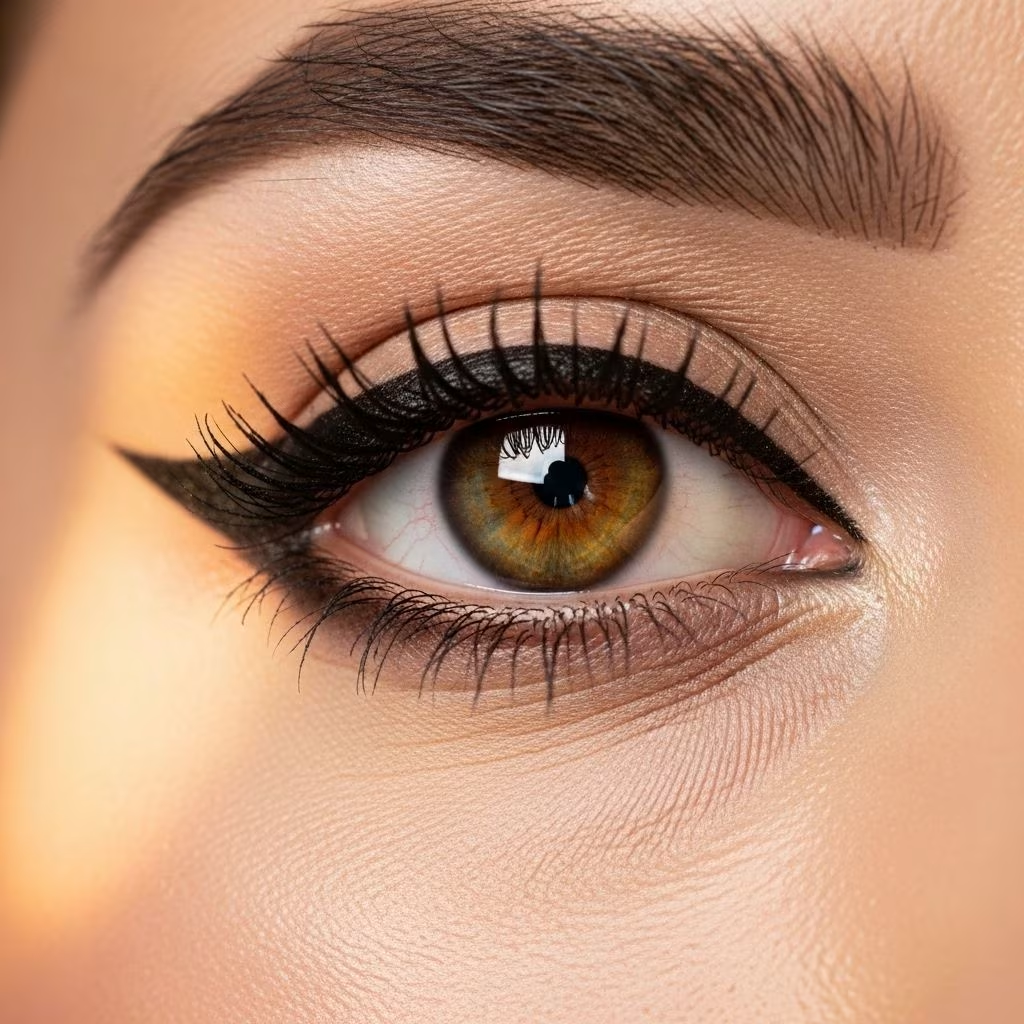
Makeup is more than pigment on skin; it can be a language, a shield, a catalyst, and, above all, a tool for self-invention. For many, especially within the queer community, the lines drawn on eyelids map out not just aesthetics but identity itself.
The Beginning: Makeup as a Portal to Self
My journey with makeup began in adolescence, in the underlit aisles of a drugstore, clutching the money my mother gave me. I wasn’t searching for perfection; I was searching for transformation. By picking out a charcoal eyeliner, I instinctively reached for a tool that promised to smooth the awkwardness of eighth grade into something bold, intriguing, and—if I was lucky—beautiful. At that age, each swipe of black pencil along my eyelids felt like a step closer to the person I wanted to become, or at least to someone less invisible.
At first, makeup was my secret. I wore it too heavily, the lines thick and imperfect, but those dark smudges gave me the thrill of agency. Charcoal would quickly fade from my oily skin, but for those few hours, I felt neither boy nor girl—just someone new. Each morning’s ritual was accompanied by a flutter of hope that this, finally, was the day I would fit in or stand out in exactly the right way.
Coming Out and Coming Into Color
By sophomore year, the lines I drew went from tentative to declarative. After coming out to family and friends, the urge to hide diminished. My eyeliner grew longer, the wings at the corners of my eyes extending outward like a rebellion in ink. I started experimenting with lipstick—beginning with conventional reds, then branching into plums, violets, colors loud enough to shout what I barely knew how to say: This is who I am. Watch me become.
- Makeup became a tool to assert my queerness in a world eager to keep it silent.
- Bold lipstick and eyeliner were acts of defiance: every streak and color a refusal to be overlooked or erased.
- Each imperfect wing was a flag of pride—not always straight, not always neat, but always uncompromisingly mine.
Applying makeup went from being a mask to being an act of revelation. It was no longer about hiding flaws, but about magnifying truth—sometimes even before that truth had words.
Public Perception and Family Critique
Early on, my experiments met with protest at home. The thrift-store blouses and heavy eyeliner were seen as provocation, not expression. I woke early to finish my look before my parents could weigh in, darting out the door before the conversations could begin. They believed it was rebellion for rebellion’s sake, but for me, it was survival—a way to be seen as me, rather than the expectation pressed on me.
There was no language for “genderqueer.” The internet was a rumor in the early ‘90s, and the words I had—like “bisexual”—felt like hand-me-downs, useful but not tailored. What language failed to articulate, makeup enacted: every morning’s black lines and purple lips became a lexicon, marking me as different even if I couldn’t yet articulate how or why.
The Queer Politics of Makeup
Makeup, especially for LGBTQ+ folks, is inescapably political. To use cosmetics is to claim space in a culture that polices gender expression and sexuality. Where mainstream narratives conflate femininity with womanhood, and makeup with femininity, the reality is far more complex. Makeup, for many, is a radical act—a refusal to be invisible and a demand to be truly seen.
- Some reject makeup as a rejection of enforced norms, choosing bare faces as protest.
- Others, like me, radically embrace makeup to queer those same norms.
- Each approach—whether full glam, minimalist, or nothing at all—becomes a statement about autonomy and self-determination.
For me, every flick of eyeliner is a deliberate declaration. I am augmenting myself precisely as I wish, challenging the assumption that cosmetics are used to please others or appease systems of oppression. Instead, I use them to disrupt, to subvert, to play. My winged eyeliner is never wholly symmetrical, but neither is my journey toward identity. Each attempt is a process of revision and reinvention—just as queerness itself resists fixity.
From Mask to Message: Makeup as Self-Definition
At the heart of my relationship with makeup is the transition from using it as camouflage to wielding it as a megaphone. There was a time when foundation and concealer were shields—ways to pass or avoid hostility. As my confidence grew, they became tools of transformation. My face transformed from a site of anxiety to a canvas of possibility.
Wearing vibrant lipstick or drawing a graphic cat-eye was less about appearing attractive to others and more about broadcasting intention. “I am here. I am queer. I intend to be visible.” Each look became both armor and celebration, worn daily in spaces that did not always welcome it.
Imperfect Lines: The Beauty of Ongoing Evolution
To this day, my eyeliner is never flawless. One wing droops or stretches too far, and the symmetry eludes me. But this is more than cosmetic misstep—it’s emblematic of the fluidity and experimentation at the center of my queerness. Like my evolving sense of self, my makeup is never final; it is a process, a series of trials and errors, revisions, and discoveries.
- Eyeliner reminds me that identity—like makeup—is crafted and continuously refined.
- Every “mistake” becomes an opportunity to play, recalibrate, or start anew.
- The perfect look is as elusive as the perfect label; both are less important than the freedom to change.
The constant experimentation with technique and products mimics the journey of coming out, of naming myself again and again, of choosing how I wish to be seen. Each attempt, each bold line, grants me permission to claim space even when others wish to narrow it.
Makeup as Safe Space Amid Queerphobia
Existing as openly queer often means moving through spaces laced with hostility or ignorance. In such climates, makeup becomes more than aesthetic. On days when I faced stares or slurs, my makeup drew boundaries—a signal to some and a shibboleth for others.
- Makeup marked my face as my own territory, a site where my rules applied.
- It provided comfort and strength, much like armor, but with glitter and gloss instead of steel.
- Each application reaffirmed my right to exist boldly, authentically, and unapologetically.
No amount of criticism could undo the statement embedded in an artful wing or a streak of turquoise eyeshadow. My face, alive with color, was declaration and defense—an ever-present reminder that I need not shrink or mute myself.
The Secret Weapons: Lipstick, Eyeliner, and Confidence
Within my kit, a handful of products rise above the rest, not because they promise perfection but because they conjure courage. That purple lipstick brings me joy, even defiance, in clubs and classrooms alike. Liquid eyeliner, finicky and dramatic, transforms vulnerability into confidence.
| Product | Symbolic Meaning | Typical Use |
|---|---|---|
| Winged Eyeliner | Rebellion, visibility, queer assertion | Daily statement, political act |
| Purple Lipstick | Nonconformity, celebration | Special occasions, self-celebration |
| Charcoal Pencil | Ritual, transformation | Adolescence, beginnings |
These are more than makeup—they are secret weapons, empowering me to face a world where acceptance isn’t a given. I wield them not for attention, but as reminders that every day is another chance to define myself on my terms.
Beyond Gender: Makeup and Self-Actualization
The lessons I learned in front of the mirror transcend gender. Everyone, regardless of identity, deserves the opportunity to explore and articulate their appearance in ways that feel honest. Gendered expectations remain, but every act that asserts agency in the face of them is radical.
- Makeup can be a tool of self-soothing, self-celebration, or outright rebellion.
- Choosing to wear it, or not, is always valid and powerful.
- No presentation makes you more or less authentic in your identity.
Ultimately, makeup’s true magic lies in its capacity to transform not just how we appear, but how we perceive ourselves—and how we demand to be perceived by others. Our faces become sites of creativity, assertion, and unending possibility.
Frequently Asked Questions (FAQs)
Q: Is wearing makeup required to express queer or genderqueer identity?
A: No, makeup is one of many creative tools for self-expression, but queer and gender-diverse identities are valid regardless of cosmetic use. Choosing to wear or reject makeup can both be radical acts of self-determination.
Q: How did eyeliner specifically become a symbol for queer identity?
A: For many, eyeliner marks a visible break from gender and sexuality norms. It can signal difference, pride, or nonconformity, which resonates especially within queer and trans communities navigating societal expectations.
Q: What if my makeup technique is not perfect?
A: Perfection is neither the goal nor the point; the beauty of makeup lies in experimentation and evolution. As with identity, imperfection is a mark of authenticity—not failure.
Q: Can makeup help with self-acceptance?
A: Absolutely. The act of creating a look can foster self-awareness, confidence, and self-acceptance, serving as both ritual and celebration of one’s unique identity.
Q: How do I handle criticism or negativity about my makeup choices?
A: It’s important to remember your makeup is for you, not others. Using makeup as an act of reclamation and resistance can build resilience in the face of criticism, turning your face into both sanctuary and statement.
Takeaways: Makeup as a Personal and Political Journey
- Makeup, when used intentionally, becomes a form of personal storytelling and resistance.
- Queer identities are multifaceted, and makeup offers just one of many possible tools for making the internal visible.
- The act of choosing one’s presentation—messy wings and all—is a radical, ongoing act of self-love.
In the end, eyeliner is not just about beauty. It’s about building a practice of self-acceptance and audacious visibility, one imperfect line at a time.
References
- https://www.bustle.com/p/how-eyeliner-defines-my-womanhood-54595
- https://www.autostraddle.com/lets-queer-the-nyt-debate-about-women-and-makeup-152970/
- https://www.bustle.com/articles/74752-makeup-and-identity-how-my-relationship-with-eyeliner-paralleled-my-relationship-with-sexuality
- https://www.autostraddle.com/monday-roundtable-the-makeup-that-changed-our-lives-424916/
- https://www.refinery29.com/en-us/pride-makeup-meaning-queer-creators
- https://www.healthline.com/health/beauty-skin-care/gender-neutral-skin-care
- https://archiveofourown.org/works/72368611


