


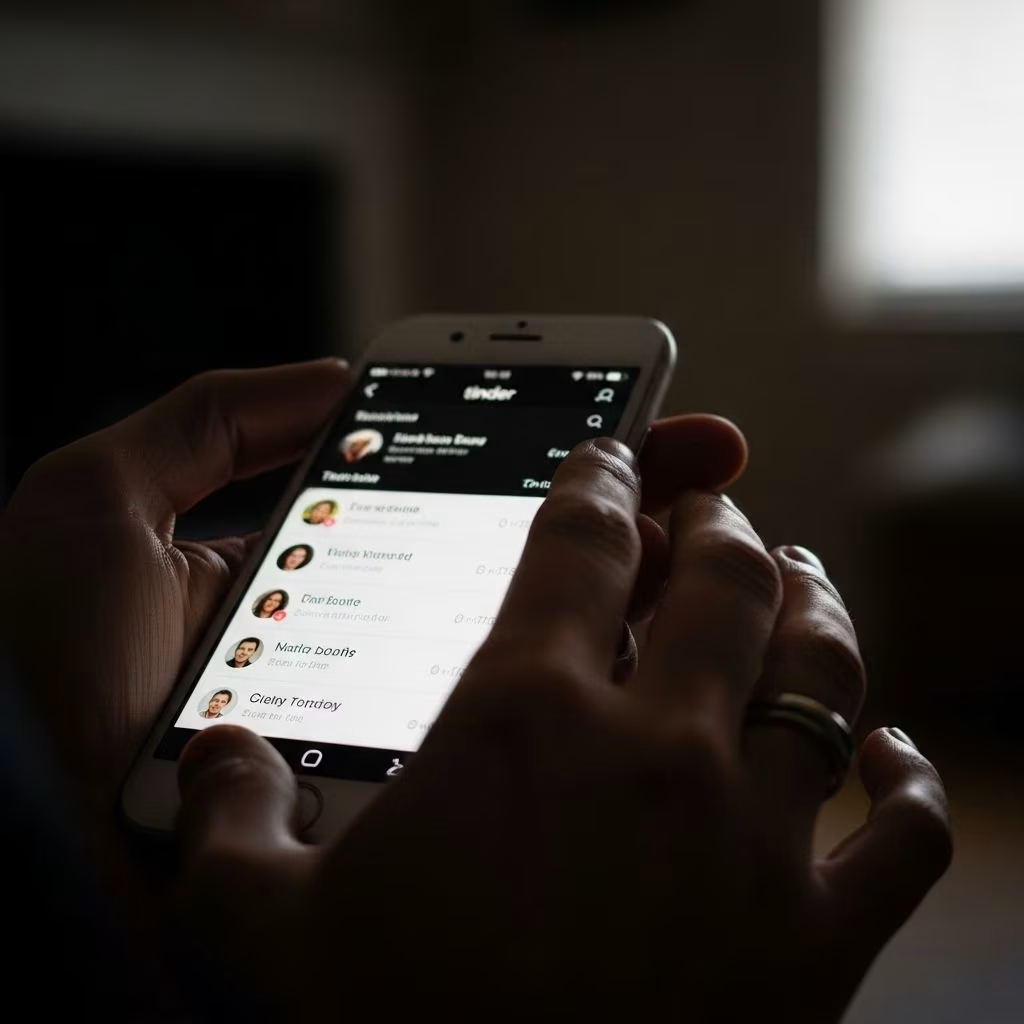
Undercover Love: Why So Many Tinder Users Are Secretly Attached
Tinder, the world’s most popular dating app, with around 75 million monthly active users, is renowned as the go-to platform for singles seeking romance. But a major survey and recent research reveal a surprising contradiction: a significant proportion of Tinder users are already married or in exclusive relationships, raising questions about the true purpose and psychology behind online swiping.2
The Surprising Stats: Who’s Really Swiping on Tinder?
Multiple studies paint a revealing picture of Tinder’s user base:
- Nearly two-thirds of Tinder users surveyed* are married or “in a relationship.”2
- Half reported no interest in meeting offline, indicating motivations beyond finding a date.2
- Tinder remains the top dating app, with usage most prevalent among adults under 30.1
- About one-in-ten partnered adults (married, cohabiting, or committed) met their significant other via dating apps.1
*Based on a Stanford Medicine survey of 1,387 English-speaking Tinder users aged 17 to 84.
Why Are Attached People Using Tinder?
The motivations for using Tinder—and other dating apps—extend far beyond the pursuit of new romantic connections:
- Entertainment & Distraction: For many, Tinder functions much like social media, offering amusement, distraction, and a quick confidence boost through matches.2
- Social Connectedness: Some users crave conversation or casual interaction rather than romance or physical intimacy.2
- Coping With Emotions: The app provides temporary relief from boredom, loneliness, or negative emotions, though research suggests it’s not an effective long-term solution.2
- Self-Esteem Enhancement: Gaining matches and positive feedback can help improve self-worth, regardless of relationship status.2
Not Just Cheating: The Many Faces of Tinder Usage
While allegations of infidelity often dominate conversations about committed people on Tinder, the reality is more nuanced. The psychological motivations uncovered by researchers indicate a spectrum of intent:
- Looking For Validation: Many attached users enjoy the affirmation that comes with matches and messages.
- Exploring Options: The so-called “grass is greener” mindset propels some to test their desirability without any intent to act on it.
- Filling a Social Void: For those feeling isolated—even within a relationship—Tinder offers a digital form of connection.
- Boredom Buster: Swiping is often a pastime, not a precursor to meeting someone new.
The Age Factor: Who Is Most Likely to Swipe While Attached?
| Age Group | % of Users Who Have Used Tinder | % Met Partner on App |
|---|---|---|
| Under 30 | 79% | 20% |
| 30–49 | 44% | ~10% |
| 50–64 | 17% | Low |
| 65+ | 1% | Rare |
Younger adults drive app usage and are disproportionately likely to have met a partner through Tinder or similar platforms.1 Evidence suggests even among those under 30, significant numbers use Tinder while in a committed relationship.2
How Attached Users Affect the Tinder Experience
The presence of users in committed relationships changes the nature of online dating. According to recent surveys:
- Mixed Satisfaction: Users are divided—53% report positive experiences, while 46% report negative ones.1
- Men more likely to report positive experiences (57%) versus women (48%).1
- LGB users are more likely than straight users to report satisfaction (61% vs. 53%).1
- Satisfaction is highest when the app is used for genuine social or romantic connection, not just distraction or coping with negative emotions.2
Motivational Impact: What Makes Tinder Satisfying?
- Dating or Socializing: Using the app as intended greatly increases user satisfaction.
- Entertainment/Distraction: Provides less lasting fulfillment, especially if serving as a coping tool for deeper issues.
- Attachment Style: Avoidant or impulsive personalities are less likely to find Tinder rewarding.2
Why Do Attached Users Matter?
Having large numbers of attached users creates several challenges for platforms and singles alike:
- Transparency Issues: Singles seeking genuine connection may unknowingly match with someone already committed.
- Trust and Authenticity: The prevalence of married or partnered users complicates users’ trust in profiles.
- Changing Social Norms: The normalization of “swiping while attached” signals broader shifts in attitudes toward fidelity, privacy, and online behavior.
Is This a Problem? Psychological and Relationship Implications
Experts argue that Tinder—and dating apps as a whole—may be less effective or even harmful as coping mechanisms for psychological challenges:
- Escapism risks: Seeking escape in apps can exacerbate depression, anxiety, or low self-esteem.2
- Nondisclosure dilemmas: Committed users rarely admit their relationship status, creating hidden risks for all parties.
- Relationship impact: Using Tinder secretly may erode trust, even if it doesn’t lead to physical cheating.
How Widespread Is This? Tinder’s Demographics and Reach
The phenomenon is not limited to a small group. Consider these additional findings:
- Tinder is the most-downloaded app among 18–25-year-olds worldwide.3
- Over 530 million downloads and 75 billion matches underscore its massive cultural footprint.3
- At least 37% know someone who’s begun a serious relationship through Tinder.3
- But even among this demographic, many users are not interested in meeting new partners offline.2
Do People Pay for Tinder?
Among online dating users:
- 35% have paid for extra features.1
- Payment likelihood increases with income, age, and gender (men are more likely to pay than women).
- Users over 30 are almost twice as likely to pay for premium features compared to those under 30.
Is Tinder Still Working for Singles?
Despite the growing number of attached users, Tinder continues to facilitate connections:
- Online dating is now the most common way singles make new connections.3
- Over half of young singles have used dating apps; for millions, it’s the first step into dating.
- One-in-five partnered adults under 30 met their spouse or partner via online dating.1
Key Takeaways:
- Tinder’s broad user base includes many not seeking actual relationships or encounters.
- All users—singles and attached—should be aware of shifting norms and motivations.
- Honesty and clarity in app profiles can remain a challenge in an era of ambiguous digital identity.
Frequently Asked Questions (FAQs)
Q: Are a lot of people on Tinder already married or in relationships?
A: Yes, surveys suggest nearly two-thirds of Tinder users are married or in a relationship.2
Q: If I match with someone on Tinder, how do I know they are single?
A: Unfortunately, many users do not disclose their relationship status in their profiles, making this difficult to verify without direct communication.
Q: Why do married or attached people use Tinder?
A: Many use Tinder for entertainment, validation, social interaction, or distraction—not just romantic or sexual encounters.2
Q: Does being in a relationship and using Tinder always mean infidelity?
A: No. While some may be seeking affairs, many are just browsing, chatting, or seeking attention without intent to cheat.
Q: What are the risks of swiping on Tinder when committed?
A: Risks include hurting your current relationship, violating trust, and contributing to online dating’s credibility issues.
Q: Is using Tinder a good way to cope with loneliness or negative emotions?
A: Research suggests it’s not effective for long-term mental health and may worsen symptoms for some.2
Q: Are younger people more likely to use Tinder?
A: Yes, usage is highly concentrated among adults under 30, who also report a greater likelihood of meeting partners through the app.13
Final Thoughts: The Reality Behind the Swipe
Despite its image as a matchmaking hub for singles, Tinder has evolved into a platform serving diverse needs—social, emotional, and psychological—for millions, including those already attached. This phenomenon reflects broader changes in online behavior and relationship dynamics, urging both users and observers to look beyond appearances and acknowledge the subtleties driving human connection in the digital age.


