


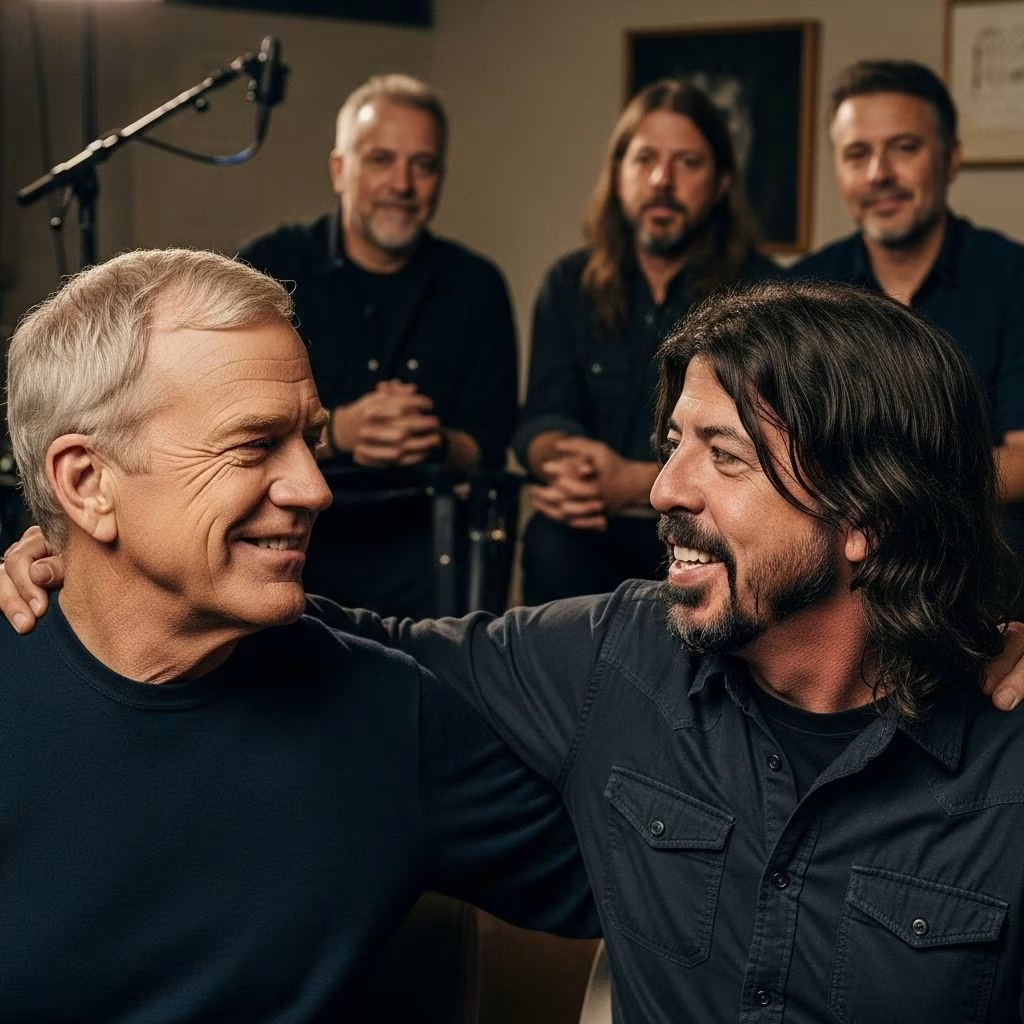
The relationship between David Letterman and the Foo Fighters represents one of the most profound connections in late-night television history. What began as a talk show host championing an emerging rock band evolved into a friendship that spanned more than two decades, marked by mutual respect, emotional moments, and genuine affection. This bond culminated in one of the most moving moments in television when the Foo Fighters performed “Everlong” during Letterman’s final episode of The Late Show in May 2015, leaving audiences and the participants themselves struggling to hold back tears.
The Foundation of an Extraordinary Partnership
David Letterman built his legacy not just as a comedic genius but as a tastemaker who could identify and nurture musical talent before it reached mainstream consciousness. Throughout his tenure on The Late Show, Letterman became known for giving emerging artists their first major television platform, launching careers that would go on to define generations of music. His roster of early discoveries reads like a who’s who of 1990s rock: The Dave Matthews Band, Hootie and the Blowfish, and the Counting Crows all made their television debuts on his stage, forever grateful for the exposure that helped catapult them to stardom.
The National even took to social media to thank Letterman for hosting their first-ever television appearance, acknowledging how crucial that moment was in their career trajectory. For decades, musicians understood that an invitation to perform on The Late Show wasn’t just another promotional stop—it was a validation from someone whose opinion carried weight in the industry. Letterman’s eye for talent and his genuine enthusiasm for music made him more than just a host; he was a curator of cultural moments.
Among all these musical relationships, however, none compared to what Letterman shared with the Foo Fighters. This wasn’t simply about providing a platform or booking a popular band to boost ratings. From their earliest days together, Letterman recognized something special in Dave Grohl and his bandmates, and he committed to supporting them in ways that extended far beyond the confines of his television studio.
Dave Grohl’s Journey and the Birth of Foo Fighters
To understand the significance of Letterman’s support, it’s essential to appreciate Dave Grohl’s remarkable journey through rock music. Born David Eric Grohl on January 14, 1969, he first gained prominence as the drummer for Nirvana, one of the most influential bands in rock history. His powerful, dynamic drumming style became an integral part of Nirvana’s sound, particularly on their landmark album Nevermind released in 1991.
The tragic suicide of Kurt Cobain on April 5, 1994, left Grohl at a crossroads. Nirvana had been more than just a band—it was a cultural phenomenon that defined the grunge movement. In the aftermath of Cobain’s death, Grohl channeled his grief and creative energy into a solo project that would eventually become the Foo Fighters. Working alone in a studio, he wrote, played, and recorded every instrument on what would become the band’s self-titled debut album in 1995.
What started as a one-man project quickly transformed into a full-fledged band. Grohl assembled talented musicians to tour and record under the Foo Fighters name, and they haven’t looked back since. The band has released eleven studio albums, each one building on their reputation as one of rock’s most consistent and exciting acts. Through it all, Grohl’s musical evolution—from punk rock drummer with Scream in the 1980s to Nirvana’s powerhouse percussionist to the Foo Fighters’ frontman—demonstrated his versatility and enduring passion for music.
How Letterman Nurtured Creative Ambitions
As the Foo Fighters grew in stature and success, Letterman’s role in Dave Grohl’s creative life expanded beyond television appearances. Their relationship transcended the typical host-guest dynamic, evolving into a genuine friendship where Letterman became a trusted confidant and advisor. This was perhaps most evident when Grohl developed the concept for Sonic Highways, an ambitious project that would combine documentary filmmaking with album recording.
Sonic Highways represented Grohl’s vision of exploring America’s musical heritage by recording in eight different cities—Chicago, Washington D.C., Nashville, Austin, Los Angeles, New Orleans, Seattle, and New York—with each location contributing its unique musical DNA to a song. The HBO documentary series would chronicle this journey, featuring interviews with local musicians and legends while capturing the recording process. It was an audacious concept that required significant resources and support.
According to Grohl, when he first conceived this idea, he didn’t approach HBO executives or music industry moguls. Instead, he went to David Letterman. He trusted Letterman’s judgment enough to share his creative vision in its earliest stages, seeking guidance and encouragement from someone he respected deeply. Letterman’s enthusiasm for the project and his nurturing of Grohl’s ambition played a crucial role in bringing Sonic Highways to fruition. The series premiered in October 2014, accompanied by an album of the same name, and received critical acclaim for its exploration of American musical culture.
This mentorship dynamic revealed something profound about their relationship: Letterman wasn’t just a platform for the Foo Fighters’ music; he was invested in Grohl’s artistic growth and creative fulfillment. He cared about where the band was going, not just where they had been. This level of personal investment is rare in the entertainment industry, where relationships are often transactional and fleeting.
The Miracle of a Father-Son Moment
Perhaps the most emotionally resonant moment in the Letterman-Foo Fighters relationship came in October 2014, during the band’s week-long residency on The Late Show to promote Sonic Highways. Throughout the week, the band had performed covers and collaborations, including a Black Sabbath tribute and a performance with Heart’s Nancy and Ann Wilson. But it was the third night that delivered an unexpectedly powerful moment.
After the cameras stopped rolling for the televised portion of the show, Letterman asked the Foo Fighters to stay and perform a web-exclusive video. The band assumed it would be a standard bonus performance for online fans. What they didn’t know was that Letterman had chosen the song specifically: “Miracle,” a track from the Foo Fighters’ 2011 album Wasting Light.
Before the band began playing, Letterman shared an intimate story about his life as a father. Having become a dad later in life, the 60-year-old Letterman had a four-year-old son, and he was constantly searching for activities they could share and bond over. Despite having no experience with the sport, Letterman decided to try skiing with his son, reasoning that they would both be beginners learning together, creating a level playing field that would allow them to share the experience as equals rather than as teacher and student.
During one of these skiing trips, Letterman’s instructor recorded video footage of father and son navigating the slopes together. When the instructor edited the footage, he chose the Foo Fighters’ “Miracle” as the soundtrack. The combination of the visual memory—Letterman and his young son experiencing the joy and challenge of skiing together—and the song’s emotional resonance created something deeply meaningful for the talk show host. The song became inextricably linked to that precious moment, a musical snapshot of fatherhood that he could revisit whenever he heard it.
As Letterman recounted this story to the band, standing on his stage after hours, the emotional weight was palpable. Grohl later recalled, “We had no idea how important the song was to him. So we’re standing there listening, and just holding back tears.” The band members found themselves moved not just by the story itself but by Letterman’s vulnerability in sharing such a personal memory. When Letterman finished speaking and returned to thank them after their performance, he too had a lump in his throat, the emotion of the moment overwhelming everyone present.
This incident perfectly encapsulated what made their relationship special. A song that the Foo Fighters had written and recorded years earlier had found new meaning in Letterman’s life, becoming the soundtrack to one of his most cherished memories as a father. By sharing this story and asking them to perform it, Letterman was offering the band a gift: the knowledge that their music had touched his life in a profound, personal way. For artists, knowing that their work has resonated so deeply with someone they admire creates a connection that transcends professional boundaries.
A Week-Long Celebration of Musical Legacy
The week-long residency in October 2014 showcased not just the Foo Fighters’ versatility but also Letterman’s role as a facilitator of memorable musical moments. Each night featured different performances that demonstrated the band’s range and their willingness to honor the music that influenced them. The Black Sabbath cover paid tribute to heavy metal pioneers who shaped rock music, while the collaboration with Heart’s Wilson sisters celebrated the legacy of one of rock’s most enduring bands.
These performances weren’t random selections. They reflected Letterman’s understanding of rock history and his desire to create television moments that would resonate beyond a single episode. By bringing together different generations of rock musicians on his stage, Letterman was curating musical conversations that educated viewers about the continuum of rock music while providing established artists with opportunities to honor their influences and collaborate with their heroes.
The residency format itself was a testament to Letterman’s commitment to the band. Rather than a single appearance to promote their new album and documentary, he dedicated an entire week to celebrating the Foo Fighters, giving them unprecedented exposure and creative freedom to craft each night’s performance. This generosity reflected not just good television programming but genuine friendship and respect.
The Farewell Performance That Stopped Time
All of these moments—the early support, the creative mentorship, the personal stories—built toward the emotional crescendo of Letterman’s final episode of The Late Show on May 20, 2015. After 33 years in late-night television and 22 years as host of The Late Show, Letterman was saying goodbye. The episode featured appearances by former Presidents, a comedic visit to Taco Bell, and a Top 10 List that reflected on his remarkable career.
But it was the closing segment that delivered the biggest emotional impact. As the Foo Fighters took the stage to perform “Everlong,” the significance of the moment was immediately apparent. This wasn’t just any song—it was Letterman’s favorite, a track that held special meaning for both the host and the band. Written and recorded by Dave Grohl alone in a Washington D.C. studio during a period of creative tension within the band, “Everlong” had become one of the Foo Fighters’ signature songs and a staple of rock radio since its release in 1997.
The performance itself was electrifying. Dave Grohl and his bandmates played with an intensity and passion that reflected the gravity of the occasion. They weren’t just performing for an audience; they were playing for their friend, pouring two decades of shared history, mutual respect, and genuine affection into every note. As they played, the show aired a montage of Letterman’s most memorable moments, carefully edited to sync with the rhythm and emotional arc of the song. Images of Letterman’s greatest interviews, his most iconic comedy bits, and his genuine reactions to musical performances flashed across the screen, creating a visual tribute that matched the song’s emotional power.
The 68-year-old Letterman watched from his desk, visibly moved by the performance and the montage. For viewers watching at home, the combination of the Foo Fighters’ passionate performance, the nostalgic montage, and Letterman’s emotional response created a moment that transcended television. It was a reminder of why Letterman had been so successful for so long: his genuine love of music, his ability to recognize and nurture talent, and his willingness to form real relationships with the artists who appeared on his show.
As Grohl later reflected on the performance, the intensity with which they played reflected their desire to honor Letterman properly. “You can see and hear how hard the Foo Fighters played this song for their good friend, Letterman,” observers noted. This wasn’t a typical television performance where bands sometimes hold back, saving their energy for paying concert audiences. This was the Foo Fighters at full throttle, giving everything they had because the occasion demanded nothing less.
The Legacy of Mutual Respect
The relationship between David Letterman and the Foo Fighters offers a compelling case study in how professional relationships can evolve into genuine friendships when built on mutual respect, shared values, and authentic connection. In an industry often characterized by superficiality and transactional interactions, their bond stood out as something rare and precious.
For Letterman, the Foo Fighters represented everything he valued in music: authenticity, consistency, musical excellence, and genuine passion for their craft. Unlike artists who chase trends or compromise their vision for commercial success, the Foo Fighters remained true to their rock roots while continuing to evolve and experiment. Grohl’s journey from drummer to frontman, his willingness to take creative risks, and his obvious love for music aligned perfectly with Letterman’s own values as a curator of cultural moments.
For the Foo Fighters, Letterman provided not just a platform but validation from someone whose opinion mattered. His early support helped establish them as serious artists rather than just “the band Dave Grohl formed after Nirvana.” His continued interest in their career, his encouragement of creative projects like Sonic Highways, and his genuine emotional investment in their music provided something invaluable: proof that their work was making a real impact on people’s lives.
The “Miracle” story exemplified this impact perfectly. The Foo Fighters couldn’t have known when they recorded that song that it would become the soundtrack to one of David Letterman’s most precious memories as a father. They couldn’t have anticipated that their music would capture the joy and vulnerability of a 60-year-old man learning to ski alongside his four-year-old son. But that’s the power of music—it finds its way into people’s lives in unexpected ways, creating associations and memories that give songs meaning beyond their original context.
What Made Their Connection Unique
Several factors contributed to the exceptional nature of the Letterman-Foo Fighters relationship. First, there was the element of timing. Letterman discovered and supported the Foo Fighters early in their career, giving them exposure when they needed it most. This early support created a foundation of gratitude that persisted throughout their relationship.
Second, both parties shared similar values regarding their craft. Letterman approached late-night television with the same dedication and pursuit of excellence that the Foo Fighters brought to their music. Both understood that consistency mattered, that showing up and doing the work night after night, year after year, was how you built something lasting. Neither was interested in cheap shortcuts or gimmicks; they believed in the value of genuine effort and authentic expression.
Third, there was personal chemistry. Dave Grohl and David Letterman simply liked each other as people, beyond their professional roles. They could have conversations about creativity, fatherhood, and life that went deeper than typical celebrity interactions. Grohl felt comfortable enough to share his creative visions with Letterman before presenting them to industry executives, while Letterman trusted the band enough to share deeply personal stories about his family.
Finally, there was mutual vulnerability. Both Letterman and Grohl were willing to show emotion, to acknowledge how much their connection meant, and to express their feelings publicly. In an industry that often prizes cool detachment and ironic distance, their willingness to be genuine and emotional was refreshing and meaningful.
The Broader Impact on Music and Television
The Letterman-Foo Fighters relationship also illuminated something important about the role of late-night television in music culture. At its best, late-night TV provides more than just promotional opportunities; it creates cultural moments that become part of our collective memory. Letterman understood this implicitly, which is why he invested so much time and energy in his musical bookings and why he built lasting relationships with artists.
Throughout his career, Letterman hosted over 19,000 musical performances, showcasing everyone from established legends to unknown newcomers. He gave Madonna her first major television interview, hosted countless performances by Paul McCartney, and provided a stage for Lady Gaga during her rise to superstardom. But quantity alone doesn’t explain his impact. What mattered was the care and attention he brought to these musical moments, his genuine enthusiasm for discovery, and his willingness to give artists time to showcase their talent properly.
The Foo Fighters benefited from this approach more than most. They appeared on The Late Show numerous times over the years, each appearance strengthening their bond with Letterman and introducing their music to audiences who might not otherwise have encountered it. These weren’t just performances; they were conversations between friends, shared moments that viewers were privileged to witness.
Lessons From a Legendary Friendship
What can we learn from the relationship between David Letterman and the Foo Fighters? Perhaps the most important lesson is that professional relationships don’t have to remain purely transactional. When people approach their interactions with authenticity, generosity, and genuine interest, something deeper can emerge. Letterman didn’t have to mentor Dave Grohl’s creative projects or share personal stories about his family, just as the Foo Fighters didn’t have to invest so much emotional energy into their Late Show performances. But they chose to do these things because they valued each other beyond the professional benefits their relationship provided.
Another lesson involves the power of consistency. This wasn’t a flash-in-the-pan connection based on a single memorable moment. It was built over 20 years of repeated interactions, each one adding another layer to their shared history. They showed up for each other consistently, whether that meant Letterman booking the band for important shows or the Foo Fighters making themselves available when Letterman needed them.
The relationship also demonstrates the importance of vulnerability in forming meaningful connections. Both Letterman and Grohl were willing to express their emotions, to admit how much they meant to each other, and to show that vulnerability publicly. In doing so, they gave permission for others—both in the entertainment industry and in the audience—to value emotional authenticity over cool detachment.
Frequently Asked Questions
Q: When did the Foo Fighters first appear on The Late Show with David Letterman?
A: The Foo Fighters began appearing on The Late Show in the mid-1990s, shortly after forming as a full band. Letterman was an early supporter of the band and featured them regularly throughout his tenure as host.
Q: What is the significance of the song “Everlong” to David Letterman?
A: “Everlong” was David Letterman’s favorite Foo Fighters song. He specifically requested that the band perform it during his post-heart surgery comeback episode and again during his final episode of The Late Show in May 2015, where it served as the emotional closing performance.
Q: How did Dave Grohl and David Letterman’s friendship extend beyond television?
A: Their friendship extended to creative mentorship, with Grohl consulting Letterman about his ambitious Sonic Highways project before taking it to network executives. Letterman also shared deeply personal stories with the band, such as his “Miracle” skiing story with his son, demonstrating trust and emotional vulnerability.
Q: What was the week-long Foo Fighters residency on The Late Show?
A: In October 2014, the Foo Fighters performed on The Late Show every night for a week to promote their Sonic Highways documentary and album. The residency featured various performances including covers of Black Sabbath, a collaboration with Heart, and the emotional “Miracle” performance with Letterman’s personal story.
Q: Why was the final Late Show performance so emotional?
A: The Foo Fighters’ performance of “Everlong” on Letterman’s final episode represented the culmination of over 20 years of friendship. The band played with exceptional intensity while a montage of Letterman’s career highlights played, creating a deeply moving tribute that left both the performers and viewers emotional.
The story of David Letterman and the Foo Fighters reminds us that some of the most meaningful relationships in life emerge when we least expect them, built through consistency, mutual respect, and genuine emotional investment. Their bond transcended the typical boundaries between late-night host and musical guest, becoming instead a friendship that enriched both their professional work and their personal lives. As Letterman closed the door on his remarkable late-night career, the Foo Fighters were there to honor him the only way they knew how: by playing their hearts out for their friend, creating a moment that will resonate for years to come.
References
- https://www.bustle.com/articles/85015-david-letterman-the-foo-fighters-have-a-sweet-relationship-that-stretches-back-further-than-you
- https://entertainment.ie/uncategorized/letterman-tells-poignant-fatherhood-story-in-latest-edition-of-his-foo-fighters-residency-265350/
- https://www.indystar.com/story/entertainment/music/2017/07/05/letterman-attention-flatters-foo-fighters/453464001/
- https://en.wikipedia.org/wiki/Dave_Grohl
- https://www.nickiswift.com/780629/dave-grohl-gets-real-about-his-friendship-with-david-letterman/


