


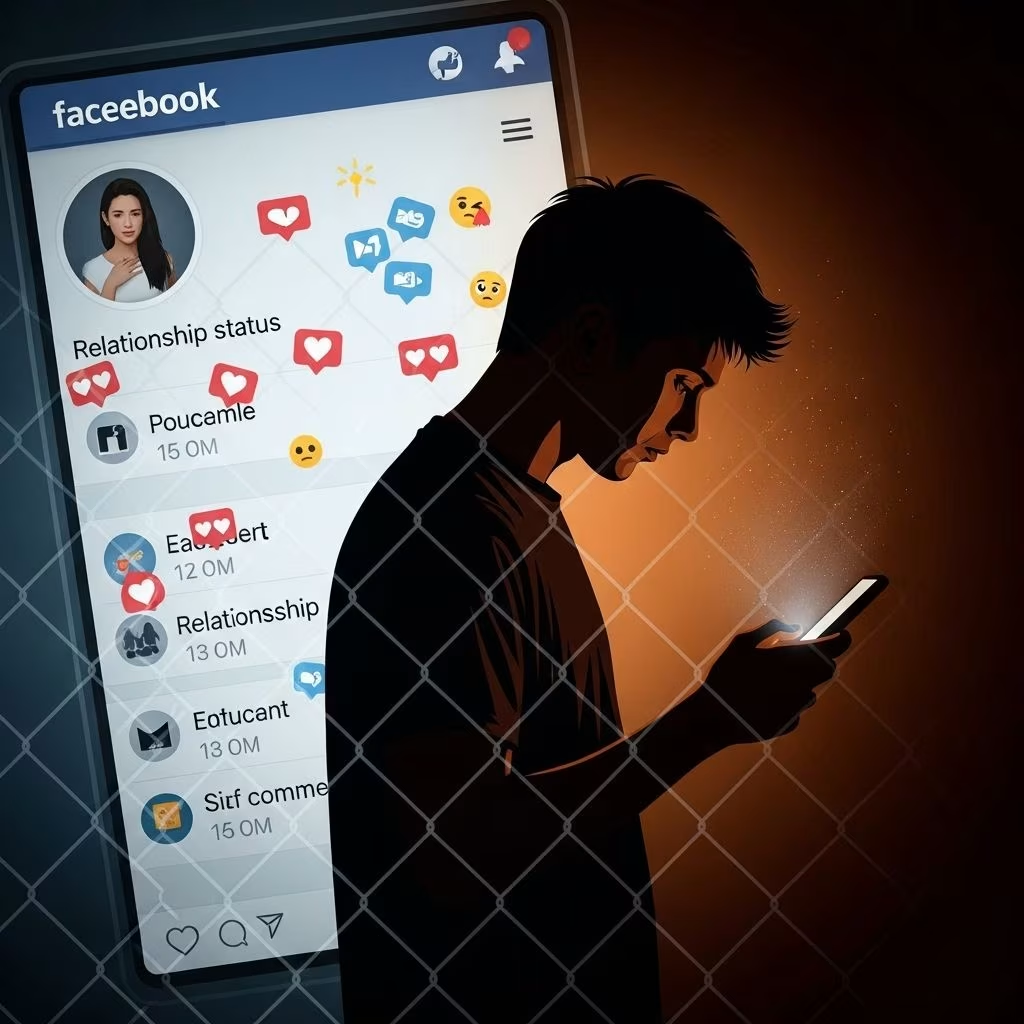
Can Facebook Status Updates Reveal Personality?
As social media platforms have become an entrenched part of daily life, psychologists have taken a keen interest in what Facebook status updates might reveal about users’ inner worlds. One standout discovery from recent research is the relationship between romantic relationship posts and self-esteem. Contrary to the celebratory tone often seen in such updates, individuals who frequently publicize their romantic lives on Facebook are statistically more likely to have low self-esteem.
Behind Facebook Relationship Bragging: What Studies Reveal
A 2015 study conducted by researchers at Brunel University London delved into the motivations driving various types of status updates. The team asked over 500 Facebook users to complete assessments measuring five major personality traits (known as the ‘Big Five’), their self-esteem, and level of narcissism. They found a clear pattern: people with low self-esteem were far more likely to post about their romantic relationships than those with higher self-esteem.
Lead researcher Tara Marshall explained, “It is important to understand why people write about certain topics on Facebook, because their updates may be differentially rewarded with ‘likes’ and comments. People who receive more likes and comments tend to experience the benefits of social inclusion, whereas those who receive none feel ostracized.” This cycle of seeking external validation can deeply impact users’ sense of belonging and psychological well-being.
The Link Between Low Self-Esteem and Social Media Behavior
Several psychological concepts emerge from studies on Facebook behavior:
- Self-esteem refers to an individual’s overall subjective sense of personal worth or value.
- Low self-esteem may drive users to seek validation through extrinsic means, such as public affirmation of their relationships.
- On Facebook, the instant feedback of ‘likes’ and positive comments offers a rapid, albeit temporary, boost to a user’s sense of self-worth.
- The absence of validation, however, can intensify feelings of rejection or insecurity.
Psychologists Amanda Forest and Joanne Wood suggest that people with low self-esteem, who may avoid face-to-face vulnerability, find Facebook an appealing space to gain connection and recognition. However, their posts often skew negative or needier than those of high self-esteem users, paradoxically making them less likable or relatable in the eyes of more distant Facebook friends.
What Role Does Narcissism Play?
While low self-esteem explains the proliferation of relationship-focused posts, another key trait—narcissism—drives a different genre of Facebook updates. The Brunel University study found that narcissists, characterized by grandiosity and a constant need for admiration, gravitate toward posting about their achievements, diet, and exercise routines.
- Narcissists often use Facebook as a platform to foster envy and admiration.
- The feedback loop of likes and comments feeds their need for external validation, encouraging even more exhibitionist behavior.
- However, this attention isn’t always positive; observers are more likely to support these posts when they feel personally close to the poster, but some may simply validate narcissistic tendencies out of politeness.
Despite different motivations and content, both low self-esteem and narcissism are linked by a shared reliance on external feedback to bolster self-worth.
The Science of Social Comparison on Facebook
Social comparison—the process by which people evaluate themselves against peers—plays a significant mediating role in how self-esteem shapes Facebook behavior. The platform’s design, which makes others’ lives highly visible, offers fertile ground for comparisons:
- People with low self-esteem, uncertain about their self-concepts, are drawn to Facebook because it provides ample material for comparison and validation.
- Many studies confirm that those spending more time on Facebook generally report lower self-esteem, perhaps as a means of compensating for real-world social struggles.
- Women, in particular, may use Facebook more for social comparison, especially concerning appearance, relationships, and lifestyle benchmarks.
Such comparisons can drive greater posting frequency, especially when users hope to outshine, fit in, or simply keep up with their peer group.
Friendship Contingent Self-Esteem and Its Impact
Research has also investigated the influence of friendship contingent self-esteem—the degree to which a person’s self-worth depends on the status and quality of their friendships.
- People who tie their self-esteem closely to their social connections tend to be more active on Facebook.
- This group is more likely to interpret online affirmation (such as likes and positive comments) as genuine validation of their worth.
- When the online response is positive, they may enjoy emotional boosts; when it is lacking or negative, their mental health can suffer.
Why Do People Broadcast Their Relationships?
According to the research, posting about romantic relationships serves several psychological and social functions, especially for individuals with low self-esteem:
- Seeking Reassurance: Public posts invite partners, friends, and acquaintances to affirm the value of the user’s relationship, which temporarily alleviates insecurity.
- Demonstrating Value: Some individuals hope to demonstrate their desirability by showing they are loved and wanted, which is especially appealing to those doubting their self-worth.
- Claiming Territory: By sharing couple photos or love declarations, users make their relationships visible, perhaps subconsciously warning off perceived rivals.
- Peer Pressure: In world saturated with social sharing, there is often unspoken pressure to keep up with others’ relationship milestones—engagements, anniversaries, vacations—and those with lower self-esteem are more vulnerable to these social norms.
The Double-Edged Sword of Social Validation
The guiding hope behind romantic posts is to accrue likes, hearts, and supportive comments—all forms of social validation. However, research highlights a more complex reality:
| Type of User | Most Likely Post Content | Impact of Validation |
|---|---|---|
| Low Self-Esteem | Romantic relationships, daily struggles | Positive feedback temporarily boosts mood; lack of feedback can deepen insecurity |
| Narcissist | Personal achievements, appearance, fitness | Positive feedback reinforces self-image and exhibitionism |
| High Self-Esteem | Varied (less need for external approval) | Less dependent on feedback for well-being |
For those with low self-esteem, dependence on social media validation can make their psychological well-being especially volatile, riding the highs of affirmation and the lows of perceived neglect.
Negative Consequences: The Pitfalls of Excessive Relationship Posts
- Less Genuine Connection: Bombarding social media feeds with intimate details may alienate acquaintances and lower the perceived authenticity of the relationship.
- Potential Relationship Strains: Relying on public validation may weaken private bonds if couples become more concerned with appearances than actual emotional intimacy.
- Heightened Anxiety and Depression: Tying self-worth to online responses leaves users vulnerable to mood swings based on follower engagement.
- Social Comparison Cycle: The visibility of ‘picture-perfect’ relationships often perpetuates unhealthy comparisons, both by the poster and by onlookers.
Can Facebook Post Feedback Influence Psychological Well-Being?
Some research has explored whether the number of likes or supportive comments received on posts (particularly about relationships) has a measurable effect on psychological health. The answer? Yes, but with caveats.
- Users with lower self-esteem are particularly sensitive to feedback—positive responses can bring short-term mental boosts, but lack of attention may lead to feelings of social exclusion or worthlessness.
- People with a greater sense of meaning or purpose in life seem less reliant on Facebook affirmation and less affected by lack of online feedback.
- Understanding why a person posts (seeking approval, sharing genuine moments, etc.) can influence their psychological susceptibility to online feedback.
What Makes Relationship Posts Different from Normal Updates?
All status updates are not created equal. Posts about travel, achievements, or daily musings are often widely shared, but romantic relationship updates carry unique psychological functions and impacts:
- They typically involve more personal vulnerability and the seeking of deeper affirmation.
- They may evoke stronger responses, both in terms of likes and in sparking social comparison among friends and acquaintances.
- Frequent posting about relationships is less common among users with high self-esteem, who may share milestones but rarely use such updates as a primary means of social validation.
The Cultural Context: Social Networks and Shifting Relationship Norms
The relationship between social media and self-esteem-dependent posting is shaped by wider cultural trends:
- The concept of relationship visibility has become a social norm, and couples who do not participate may feel—or be perceived as—less secure in their union.
- Peer competition for attention and status is amplified online, as every engagement or anniversary sets a new benchmark for comparison.
- Generational trends indicate that younger adults are more susceptible to these comparisons, making the effects even more widespread among digital natives.
Strategies to Foster Healthy Social Media Relationships
For those concerned about the influence of Facebook on their psychological well-being and relationships, experts suggest several strategies:
- Limit the role of external validation: Consciously notice when an urge to post is driven by a need for affirmation rather than genuine sharing.
- Build self-esteem offline: Invest in self-care, meaningful activities, and supportive friendships that are not contingent on social media feedback.
- Prioritize genuine connection: Cultivate private moments and conversations with partners instead of centering the relationship around public displays.
- Acknowledge the highlight reel effect: Remind oneself that online posts reflect curated moments, not the totality of real relationships.
Frequently Asked Questions (FAQs)
Q: Does posting about your relationship on Facebook automatically mean you have low self-esteem?
A: Not necessarily. While studies find a correlation between frequent relationship posts and low self-esteem, many people casually share relationship milestones without seeking external validation. It’s the pattern and underlying motivation that matter.
Q: Are relationship posts always a red flag for relationship troubles?
A: No. Public relationship posts can reflect genuine happiness or a desire to share meaningful moments. It’s excessive or need-driven posting that research suggests may reflect insecurity.
Q: How can I tell if my social media use is harming my self-esteem?
A: Signs include feeling anxious or upset when posts receive little attention, posting mainly to seek approval, or comparing yourself negatively to others. Consider taking breaks or shifting focus to offline connections.
Q: Can ‘likes’ and positive comments really boost mental health?
A: Temporary mood improvements are common, especially among users with low self-esteem, but reliance on social media validation can make self-worth fragile in the long term.
Q: How can couples maintain a healthy relationship both online and offline?
A: By openly communicating expectations about social media, prioritizing private connection, and remembering that online validation is not the same as real-world closeness.
References
- https://www.sciencealert.com/study-finds-people-who-facebook-relationship-brag-are-more-likely-to-have-low-self-esteem
- https://raywilliams.ca/how-facebook-can-amplify-low-self-esteem-narcissism-and-anxiety/
- https://pmc.ncbi.nlm.nih.gov/articles/PMC6266525/
- https://cyberpsychology.eu/article/view/4257
- https://www.psychologytoday.com/us/blog/close-encounters/201610/do-facebook-likes-affect-psychological-well-being
- https://openpsychologyjournal.com/VOLUME/12/PAGE/155/FULLTEXT/


