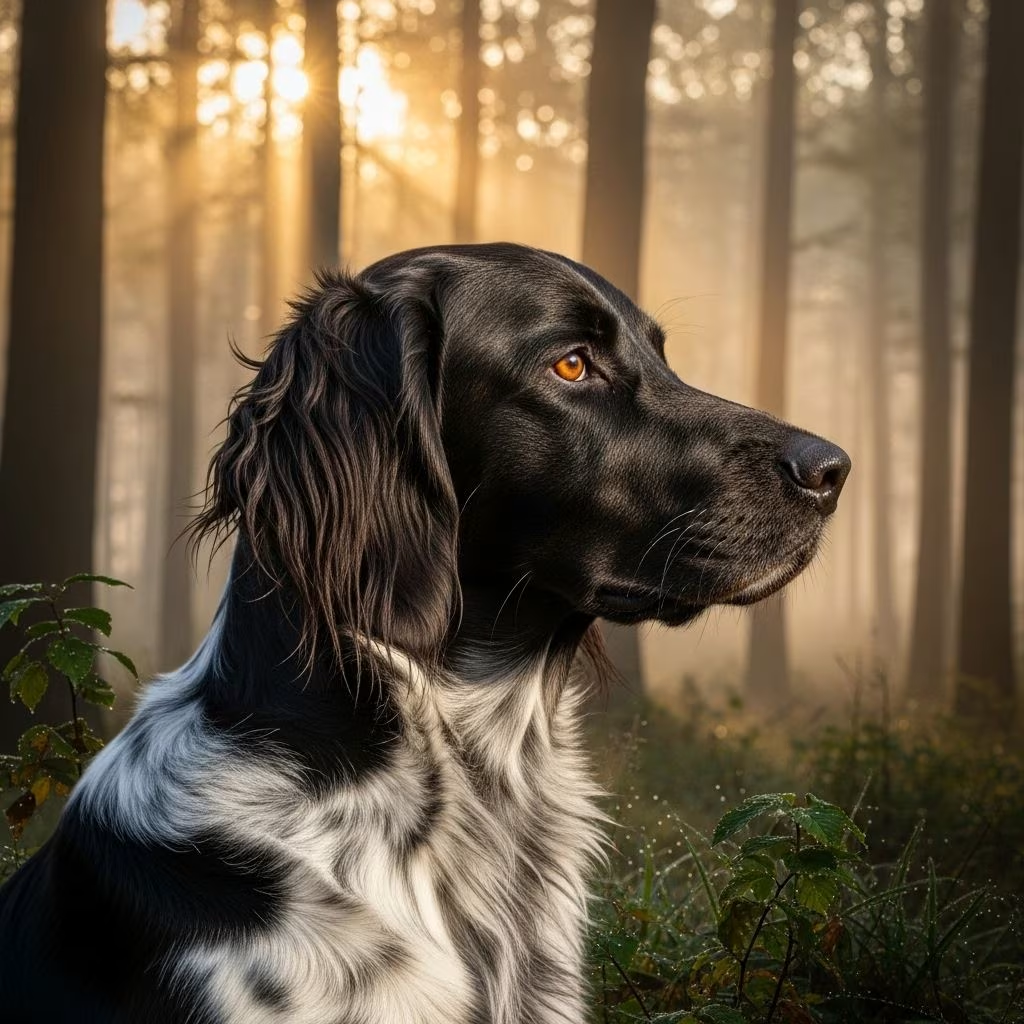
The Large Munsterlander represents one of Germany’s most distinguished versatile hunting dogs, combining elegant appearance with exceptional working ability. This striking black and white gun dog has earned recognition among hunters and dog enthusiasts for its intelligence, trainability, and noble demeanor. While less common than other sporting breeds, the Large Munsterlander offers a unique combination of field prowess and family companionship that makes it an outstanding choice for active households.
Developed near Munster, Germany, this breed emerged from the same root stock as the German Longhaired Pointer but took a different path when black coloration was excluded from that breed’s standard. Forward-thinking hunters recognized the value of these black and white dogs and continued breeding them, ultimately establishing the Large Munsterlander as a distinct breed with its own characteristics and capabilities.
Historical Development and Breed Origins
The Large Munsterlander’s ancestry traces back to the parti-colored bird and hawking dogs used throughout the Middle Ages in Germany. These versatile hunting companions were prized for their ability to work with falconers and hunters, locating and retrieving game across varied terrain. The breed’s development intensified in the Munster region of Germany, where local hunters cultivated dogs that could excel in multiple hunting roles.
A pivotal moment in the breed’s history occurred in the early 20th century when the German Longhaired Pointer breed club decided to exclude black-coated dogs from their breeding programs, favoring brown coloration instead. Rather than abandoning these capable black and white dogs, dedicated breeders in the Munster region chose to preserve and refine them as a separate breed. This decision led to the formal establishment of the Large Munsterlander as a distinct breed in 1919, when the first breed club was founded in Germany.
The breed gained international recognition gradually, with The Kennel Club in the United Kingdom acknowledging the Large Munsterlander in 1971. The United Kennel Club followed suit in 2006, further cementing the breed’s status in the dog world. According to the Large Munsterlander Association of America, over 80 dogs have been imported from Europe, and more than 2,000 puppies have been registered in North America, demonstrating growing interest in this versatile hunting companion.
Physical Characteristics and Breed Standard
The Large Munsterlander presents an impressive picture of canine athleticism and elegance. This medium to large-sized dog possesses clean lines and a distinct look of nobility that immediately conveys both strength and refinement. The breed’s physical structure reflects its functional purpose as a versatile gun dog capable of working in diverse conditions.
Size and Build
Male Large Munsterlanders typically stand between 23.5 and 25.5 inches at the withers, while females measure approximately 22.5 to 24.5 inches. The breed’s weight ranges from 50 to 75 pounds, with an average of 65 pounds. This substantial size provides the stamina and power needed for extended hunting sessions while maintaining the agility required for working in varied terrain. The distance from elbow to ground should be slightly greater than the distance from withers to elbow, creating a balanced, athletic silhouette.
Head and Facial Features
The head of the Large Munsterlander is long and moderately wide, displaying a medium amount of stop between the skull and muzzle. The muzzle itself is long and strong, featuring a well-developed underjaw and straight nasal bone. The breed standard calls for lips that are not pendulous, maintaining clean lines. Dark brown eyes of medium size with tight-fitting lids express intelligence and alertness, while the fully pigmented black nose completes the functional hunting dog appearance. The ears are broad at the base, tapering to the tips, set high and carried close to the head, covered with feathering that adds to the breed’s distinctive appearance.
Coat and Coloration
The Large Munsterlander’s coat is one of its most striking features, being long and dense over most of the body while remaining short and smooth on the head. The coat lies flat and close to the body, with good feathering on the back of the front and hind legs, tail, and ear leather in both males and females. This medium-long coat provides protection in various weather conditions without being so thick as to cause overheating in warmer climates or so thin as to offer insufficient protection in cold water.
The breed’s distinctive coloration features a white ground color marked with black patches, spots, ticking, or roan patterns. Two main coat patterns are recognized: “plated” coats display patches of solid black hair with primarily white areas between them, while “ticked” coats show plates of solid black hair with black specks or black roan between the plates. The head is characteristically solid black, sometimes with a blaze or spot on the forehead, creating the breed’s signature appearance.
Movement and Gait
The Large Munsterlander moves with a long-strided, springy trot that demonstrates efficiency and endurance. This gait reflects the breed’s construction and allows it to cover ground effectively during hunting activities. The movement should appear effortless and balanced, with good reach in the forequarters and drive from the hindquarters.
Temperament and Personality Traits
The Large Munsterlander’s temperament ranks among its most valued attributes, combining working drive with family-friendly companionship. This breed must be tractable, trainable, and intelligent to fulfill its role as a versatile gun dog. The Large Munsterlander displays a lively temperament while remaining steady and reliable, never exhibiting nervousness or hyperactivity that would interfere with its work or home life.
Compared to the Small Munsterlander, the Large Munsterlander tends to be less excitable and independent, displaying a more laid-back and handler-oriented personality. This makes the breed particularly responsive to training and eager to work closely with its owner. The breed’s courage and cheerful disposition combine with obedience and intelligence to create a wonderful house companion dog that excels in multiple roles.
In the field, Large Munsterlanders demonstrate intelligence and responsiveness to the hunter, adjusting their working style to match the situation. With regular exercise meeting their considerable energy needs, they transform into calm and easygoing companions at home. This adaptability makes them suitable for families who can provide adequate physical activity and mental stimulation while appreciating a devoted canine companion during downtime.
Hunting Abilities and Working Style
As a versatile gun dog, the Large Munsterlander excels in multiple aspects of hunting work. The breed is especially well known for its ability to locate and retrieve shot game, but its talents extend far beyond simple retrieval. Large Munsterlanders are adept at pointing, tracking, and retrieving, proving adaptable to a variety of game types, weather conditions, and terrain challenges.
Field Performance
In the field, Large Munsterlanders typically hunt at a medium range and medium pace, adjusting their pattern as cover conditions require. This balanced approach makes them versatile hunting partners suitable for different hunting scenarios rather than specialists in one particular style. The breed demonstrates a natural aptitude for water work and retrieving, with many dogs showing little hesitation when introduced to aquatic environments. Some hunters have noted a natural tendency for Large Munsterlanders to honor or back other dogs on point, a valuable trait in multi-dog hunting situations.
In their native Germany, Large Munsterlanders are frequently employed for big game tracking, demonstrating their versatility beyond bird hunting. This application showcases the breed’s strong tracking ability, determination, and steady temperament under challenging conditions. The combination of pointing, tracking, and retrieving skills makes the Large Munsterlander a true hunt-point-retrieve breed capable of handling the complete hunting sequence from locating game to bringing it to hand.
Training Characteristics
Large Munsterlanders are relatively uncomplicated when it comes to training, capable of handling a standard amount of pressure while responding best to positive training approaches. Their intelligence and desire to please facilitate the training process, though like all sporting breeds, they benefit from early socialization and consistent, patient instruction. The breed matures at a standard rate for large dogs, allowing handlers to develop their skills progressively without rushing the training process.
Care Requirements and Maintenance
Owning a Large Munsterlander requires commitment to meeting the breed’s substantial exercise needs and moderate grooming requirements. These dogs were bred for demanding physical work and retain the energy levels and drive associated with their sporting heritage.
Exercise Needs
Large Munsterlanders require more than two hours of exercise daily to maintain physical fitness and mental well-being. This exercise should include a variety of activities such as long walks, running opportunities, swimming, and engagement in activities that challenge their hunting instincts. Without adequate exercise, these energetic dogs may develop behavioral problems or become restless in the home. The breed is suitable for active families who enjoy outdoor activities and can incorporate their dog into their lifestyle rather than those seeking a more sedentary companion.
Grooming and Coat Care
The Large Munsterlander’s medium-length coat requires grooming more than once a week to maintain its condition and prevent matting, particularly in the feathered areas. Regular brushing removes loose hair, distributes natural oils, and allows owners to check for burrs, briars, and field matter that inevitably become trapped in longer coats after outdoor activities. Like all longer-haired breeds, the Large Munsterlander’s coat does collect debris from the field, requiring post-hunt cleaning and maintenance.
The breed does shed, though regular grooming helps manage loose hair. Attention should be paid to the ears, which should be checked regularly for cleanliness and signs of infection, particularly after water work. The coat serves best in mid-range climates, providing adequate protection without being too thick for warm weather running or too thin for cool water temperatures, though it is not ideal for extremes of hot or cold.
Health Considerations
Large Munsterlanders are generally healthy dogs, but like all breeds, they have some health concerns that potential owners should understand. Hip dysplasia, common to large breed dogs, can occur in the breed, making it essential to acquire dogs from parents that have been screened through appropriate health testing programs. Cataracts have been identified as a potential health problem in the breed, warranting eye examinations as part of responsible breeding practices.
The breed’s lifespan typically exceeds 10 years, with proper care, nutrition, and veterinary attention. Prospective owners should work with responsible breeders who conduct appropriate health testing and can provide documentation of their breeding stock’s health clearances. Regular veterinary check-ups, appropriate vaccinations, parasite prevention, and dental care contribute to maintaining the Large Munsterlander’s health throughout its life.
Living Requirements and Home Environment
The Large Munsterlander is best suited to homes that can accommodate its size and exercise needs. While adaptable to either town or country living, the breed requires a large house and preferably a large garden where it can move freely and burn energy between more structured exercise sessions. The breed’s size, energy level, and working heritage make it less suitable for apartment living or small spaces where movement is restricted.
These dogs thrive in active households where they receive adequate attention, exercise, and mental stimulation. They form strong bonds with their families and prefer to be included in household activities rather than left alone for extended periods. The Large Munsterlander’s calm demeanor at home, when properly exercised, makes it a pleasant house companion, though its size requires space for comfortable coexistence.
Finding a Large Munsterlander
Large Munsterlanders are considerably less common than many other sporting breeds, particularly in North America. This relative rarity means that prospective owners may need to be patient and thorough in their search for a quality puppy. The Large Munsterlander Association of America and the Large Munsterlander Association of Canada serve as the best resources for locating reputable breeders who prioritize health, temperament, and working ability in their breeding programs.
The North American Versatile Hunting Dog Association (NAVHDA) also provides connections to breeders and owners of versatile hunting breeds, including Large Munsterlanders. Prospective owners should research breeders carefully, asking about health testing, working titles or certifications on the parents, and the breeder’s goals for their breeding program. Responsible breeders will ask questions about the prospective owner’s lifestyle, experience with dogs, and plans for the puppy to ensure appropriate placement.
It is worth noting that while the United Kennel Club recognizes the Large Munsterlander, the American Kennel Club does not currently include the breed in its recognized breeds list. This does not reflect on the breed’s quality but rather its relative rarity in the United States and the stage of its development as an established breed in North America.
Breed Faults and Disqualifications
The breed standard identifies several faults that deviate from the ideal Large Munsterlander. Minor faults include a level bite rather than scissors bite, missing first or second premolars or third molars, low-set ears or ears not carried close to the head, and the presence of dewlap on the neck. More serious faults include a Roman nose or dished face, light eyes or loose lids with prominent haw, a butterfly nose (lacking complete pigmentation), crooked legs, smooth short hair on ears, and curly coat.
Eliminating faults are serious enough to prevent a dog from obtaining awards in conformation events. These include fearfulness, overshot, undershot, or wry mouth, missing any teeth other than those specifically allowed, entropion or ectropion, and a nose completely lacking pigmentation. Disqualifications that prevent consideration in conformation events include cryptorchidism (unilateral or bilateral), viciousness or extreme shyness, and albinism.
Frequently Asked Questions
Q: Is the Large Munsterlander the same as a Small Munsterlander?
A: No, despite similar names, Large Munsterlanders and Small Munsterlanders are distinct breeds with separate histories and breed standards. Large Munsterlanders are black and white, while Small Munsterlanders are brown and white, and each breed developed independently with different characteristics.
Q: Are Large Munsterlanders good family dogs?
A: Yes, Large Munsterlanders make wonderful family companions when their exercise needs are met. They are calm and easygoing at home, intelligent, and trainable, with a temperament that is lively but never nervous or hyperactive. However, they require active families who can provide substantial daily exercise.
Q: How much grooming does a Large Munsterlander require?
A: Large Munsterlanders need grooming more than once a week to maintain their medium-length coat. Regular brushing prevents matting in the feathered areas and removes debris collected during outdoor activities. The breed does shed, and the longer coat naturally traps burrs and field matter.
Q: Can Large Munsterlanders adapt to different hunting situations?
A: Absolutely. Large Munsterlanders are versatile gun dogs adaptable to various game types, weather conditions, and terrain. They excel at pointing, tracking, and retrieving, work well in water, and can adjust their hunting range and pace based on cover conditions.
Q: Where can I find a Large Munsterlander puppy?
A: Large Munsterlanders are relatively rare, especially in North America. The Large Munsterlander Association of America, the Large Munsterlander Association of Canada, and NAVHDA are the best resources for finding reputable breeders. Be prepared to wait for a puppy and research breeders thoroughly.
Q: What health issues should I be aware of?
A: Hip dysplasia and cataracts have been identified as potential health concerns in the breed. Responsible breeders screen their breeding stock for these conditions. Prospective owners should request health clearances and work with breeders who prioritize health testing in their programs.