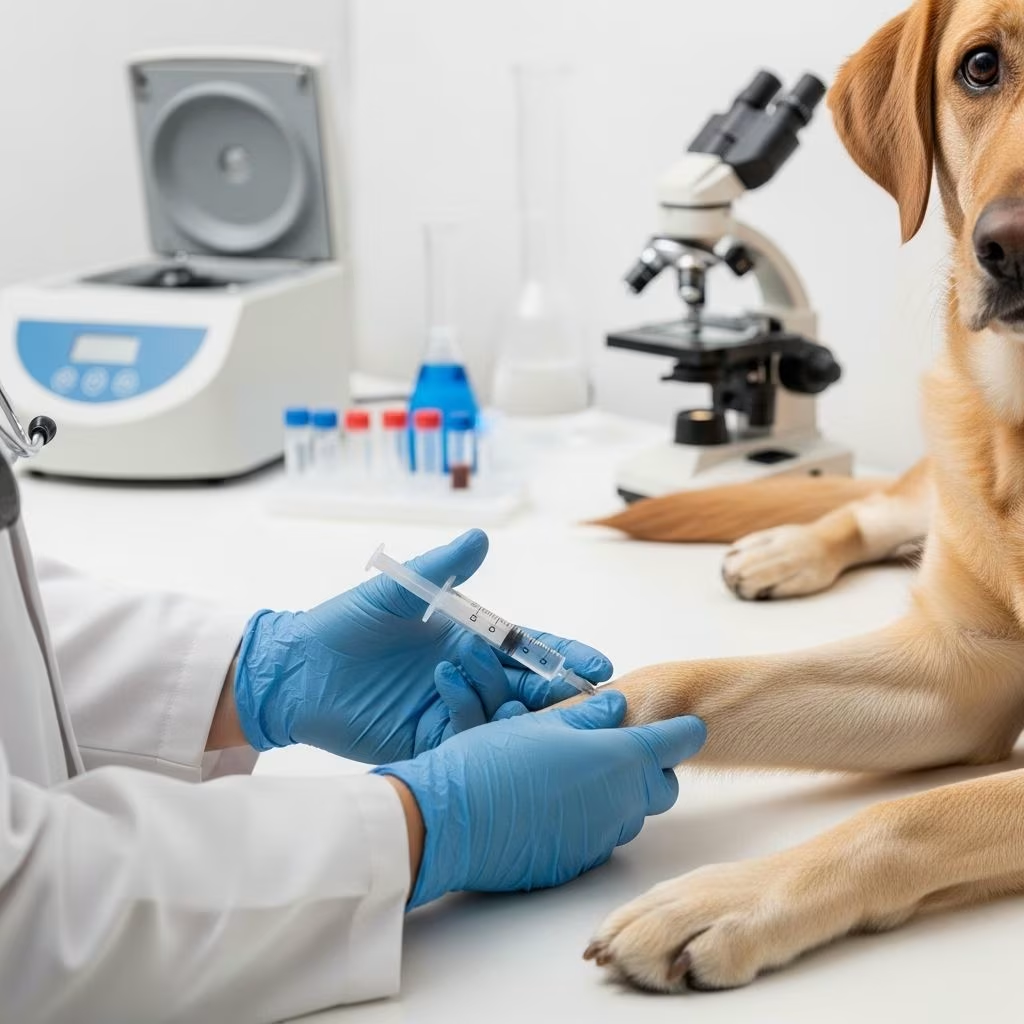
Progesterone Testing in Dogs: Timing, Frequency, and Best Practices
Progesterone testing is an essential tool for dog breeders aiming to optimize conception rates and predict the most fertile period for breeding. Understanding the hormonal changes in the canine reproductive cycle and the science behind progesterone measurements is crucial for maximizing reproductive success and avoiding missed breeding opportunities.
Why Is Progesterone Testing Important?
Progesterone testing is indispensable for accurately identifying the optimal breeding period in female dogs. Since dogs can display variable external signs during their heat cycle—with some showing subtle changes—relying solely on behavioral or physical cues is risky. Progesterone levels in the blood serve as a precise indicator of ovulation timing, which is vital for:
- Improving conception rates
- Planning natural matings, artificial or surgical insemination, especially with shipped or frozen semen
- Managing breeding of bitches with previous conception difficulties
- Diagnosing fertility issues and timing planned litters
The Canine Reproductive Cycle: Overview and Key Stages
Understanding the female dog’s reproductive cycle is key to effective progesterone testing. The cycle includes several stages, each marked by characteristic hormonal and physical changes.
Stages of the Reproductive Cycle
- Proestrus: This stage lasts anywhere from several days up to three weeks, marked by vulval swelling and bloody discharge. The bitch attracts males but is not yet receptive to mating.
- Estrus: Lasting from 3 to 21 days (typically around nine days), this is the fertile period. The discharge lightens in color, and the bitch becomes receptive to males.
- Diestrus: Lasts approximately 57 days in pregnant bitches—during this time, irrespective of pregnancy, progesterone levels rise, causing signs of so-called pseudopregnancy in some dogs.
- Anestrus: The resting period until the next cycle begins.
Hormonal Events and Progesterone
Progesterone, a hormone produced by the ovaries after ovulation, is undetectable or extremely low before the luteinizing hormone (LH) surge but rises rapidly after ovulation begins. Monitoring this rise is the entire basis of progesterone testing, as it provides a reliable indicator for breeding timing, surpassing less predictable physical cues.
When Should Progesterone Testing Begin?
Pinpointing the ideal starting point for progesterone testing hinges on observing the first external signs of the approaching heat cycle:
- Pay close attention to vulval swelling and the start of any discharge. These usually mark the beginning of proestrus.
- The first progesterone test should be performed five or six days from this initial observation. This provides a baseline for that cycle. If the detected progesterone level is very low, you can wait a few more days before retesting.
- Once progesterone begins to rise, testing should occur every other day to avoid missing the fertile window.
Adjusting Test Timing for Cycle Variability
- For bitches with very short cycles (7–9 days), begin progesterone testing as early as day 2 or 3 of the heat cycle.
- In dogs with a 10–12 day cycle, start by day 6; for those with a 14–16 day cycle, begin by day 8.
- With prolonged cycles (up to 21 days), testing can start later, but always adjust for earlier than expected behavioral cues.
How Often Should Progesterone Tests Be Done?
One test is never enough during a breeding cycle. The pattern of testing should follow:
- If the initial value is low (<1 ng/mL, known as ‘basal’), wait four to five days before retesting.
- As levels begin to rise, retest every other day to avoid missing the LH surge and subsequent ovulation.
- Once significant change is noted, consider daily testing to confirm ovulation, especially when using frozen or poor-quality semen.
Each cycle can differ by up to 40% in timing, so timing ovulation should be performed for every cycle rather than relying on previous patterns.
Interpreting Progesterone Levels: Milestones and Numbers
| Progesterone Level (ng/mL) | Cycle Event | Breeding Recommendation |
|---|---|---|
| <1 | Basal; pre-LH surge | Wait and retest in several days |
| 2–3 | LH surge peak | Ovulation estimated to occur in 2–3 days |
| 5–6 | Ovulation | Best time for breeding with natural mating or fresh semen |
| 10–20+ | Eggs mature; post-ovulation | Ideal for AI with chilled/frozen semen |
Note: Values can vary between laboratory equipment and measurement techniques. Always consult with a veterinarian familiar with the specific assay in use.
Why Machine Calibration Matters
Progesterone assay machines are often calibrated for human hormones, but dogs share the same progesterone molecule. Despite this, different machines may return slightly different results. Consistency in using the same laboratory or equipment is recommended for accurate interpretation of results.
Linking Progesterone, LH, and Ovulation
Understanding the role of LH (luteinizing hormone) is important:
- The LH surge typically occurs when progesterone reaches 2–3 ng/mL.
- Ovulation usually takes place 2–3 days after the LH surge, marked by a rapid progesterone rise to 5–6 ng/mL.
- Bitches are most fertile during the last three to four days before the end of heat.
Since physical signs can be unreliable and there can be anovulatory cycles (when no ovulation occurs despite rising progesterone), monitoring both LH and progesterone, when possible, is preferred.
How Long After Ovulation Is Fertility Highest?
- Eggs require an additional two days post-ovulation to reach maturity and be fertilizable—a unique feature of canine reproduction.
- Fresh semen survives in the reproductive tract for several days, but frozen or chilled semen should be inseminated closer to the time when mature ova are present (usually when progesterone is well into the 20s ng/mL).
Applying Progesterone Testing to Different Breeding Scenarios
Progesterone testing strategies may differ based on the breeding plan:
- Natural mating or fresh semen vaginal AI: Opt for insemination just as progesterone hits 5–6 ng/mL (at or just after ovulation).
- Artificial insemination with chilled or frozen semen: Plan insemination when the progesterone level is 20 ng/mL or higher, ensuring eggs have matured.
- Bitches with irregular cycles or infertility issues: More frequent and earlier testing, with the possible addition of LH and ultrasound monitoring, is advisable.
Potential Problems Identified by Progesterone Testing
- Anovulatory cycles: Progesterone may rise but fail to reach the expected ovulation pattern, indicating a cycle without ovulation. Frequent retesting and possibly adding LH testing and ovarian ultrasound may be needed.
- Progesterone plateau: If progesterone rises but then stabilizes (does not spike as expected), this could indicate ovarian dysfunction, such as cysts. Plateaus should not last more than three days.
- Cycle variation: The timing of ovulation can shift up to 40% between cycles in the same dog, so regular testing is essential every cycle.
Frequently Asked Questions (FAQs)
How long does each progesterone test take?
Most in-house veterinary lab analyzers can deliver results in 18–20 minutes, allowing for timely breeding decisions.
How soon after heat should progesterone testing begin?
Begin testing five to six days after first noticing signs of heat (vulval swelling or discharge). Start sooner if your dog historically has short cycles or behavior changes are noticed earlier than usual.
What is considered the ideal progesterone level for breeding?
Ovulation typically occurs at 5–6 ng/mL. For fresh semen, inseminate at or just after this level. With frozen or chilled semen, wait until levels are consistently above 20 ng/mL for best results.
Does my dog have to follow the exact same ovulation schedule every cycle?
No. There is up to 40% variation in timing from one cycle to the next, even in the same dog. Always repeat progesterone testing for each cycle.
Can progesterone testing diagnose all causes of infertility?
Progesterone results are just one part of fertility assessment. Additional diagnostics may include vaginal cytology, ultrasound, and LH testing if repeated breeding attempts are unsuccessful.
Is progesterone testing useful for planning C-sections?
Yes, tracking progesterone drop late in pregnancy can help predict the best time for elective cesarean sections, as progesterone drops below a threshold immediately before labor begins.
Breeding Success: Records, Partnerships, and Expert Tips
- Keep detailed records of every cycle, test result, and observed sign. Each cycle is unique but patterns over time can guide decisions.
- Work closely with a canine reproduction veterinarian, especially when using AI, chilled or frozen semen, or when a bitch has previous breeding challenges.
- Be flexible. Unexpected changes in behavior or test results may indicate the need for schedule adjustments, additional tests, or even foregone breeding attempts if cycles are abnormal.
- Understand that not every cycle will result in pregnancy—infertility can have numerous underlying causes beyond ovulation timing.
Summary Table: Progesterone Testing Timeline
| Day of Heat Cycle | Action | Typical Progesterone Level | Notes |
|---|---|---|---|
| Day 1–5 | Observe vulval swelling/discharge | <1 ng/mL | Signs of heat; not fertile yet |
| Day 5–6 | First baseline progesterone test | Low | Adjust timing if early/short cycle |
| Day 7–14 | Repeat every 2 days as rise begins | 2–5 ng/mL | LH surge and ovulation approach |
| Day 8–16 | Every other day/daily if indicated | 5–20+ ng/mL | Ovulation and egg maturation |
| Post-ovulation | Monitor for confirmation | 10–60+ ng/mL | Plan AI with chilled/frozen semen |
Practical Tips for Maximizing Breeding Success
- Start progesterone testing with every cycle, adjusting start dates based on individual cycle length and previous records.
- Work with a consistent laboratory or testing machine to reduce confusion from variable calibration.
- Perform repeat testing as the numbers begin to rise, not relying on a single test result.
- Recognize the optimal progesterone value for your intended breeding method (natural, fresh, chilled, or frozen semen).
- Monitor for abnormal patterns (plateaus or failed spikes) and consult an expert if abnormalities occur.
Breeding FAQs
Q: Can external signs alone tell me when to breed my dog?
A: No. Some dogs show clear behavioral and physical signs while others do not. Progesterone testing provides a scientific measure for precision timing.
Q: What if my dog’s progesterone levels plateau?
A: A plateau should not last more than three days. If it does, ovarian cysts or other pathologies may be present—ultrasound and specialized vet care are recommended.
Q: How much does progesterone testing cost?
A: Costs vary by region and veterinary facility, but frequent, well-timed tests are an investment in breeding success, particularly with valuable matings or shipped semen.
Q: Is regular progesterone testing needed for every cycle?
A: Yes. Since each cycle can vary by up to 40%, all testing should be repeated to ensure the optimal breeding window is not missed.
Applying science-backed progesterone testing methods helps ensure planned litters, reduce wasted breedings, and identify challenges early—critical factors for both novice and experienced dog breeders.
References
- https://www.akc.org/expert-advice/dog-breeding/progesterone-testing-often/
- https://www.akc.org/expert-advice/dog-breeding/timing-ovulation/
- https://www.akc.org/expert-advice/dog-breeding/dog-is-ready-to-breed/
- https://www.purinaproclub.com/pro-resources/learning-hub/breeding/progesterone-testing-best-dog-breeding-window
- https://www.akc.org/expert-advice/dog-breeding/ovulation-timing-in-the-female/
- https://www.akc.org/expert-advice/dog-breeding/dogs-in-heat/
- https://www.akc.org/expert-advice/dog-breeding/no-puppies-look-causes-infertility-female-dogs/
- https://www.akc.org/expert-advice/dog-breeding/dog-reproductive-cycle/
- https://pmc.ncbi.nlm.nih.gov/articles/PMC7151760/