The Newfoundland Dog: Origins, History, and Legacy
Newfoundlands are celebrated worldwide for their gentle spirits, robust strength, and legendary water rescue abilities. Yet beyond their reputation as gentle giants lies a rich tapestry of heritage, service, and transformation that stretches across continents and centuries. This article explores the Newfoundland dog’s impressive journey—its origins, the traits that made it indispensable, and the lasting legacy it continues to leave on the canine world.
Origins and Influences
The Newfoundland breed’s history is intimately linked with the settlement and culture of its namesake, the island of Newfoundland, off northeast Canada. As early European settlers established communities in the 17th and 18th centuries, they needed a versatile companion—one as adept in icy waters as in hauling heavy loads on land. Here, the Newfoundland’s unique blend of traits began to take shape.
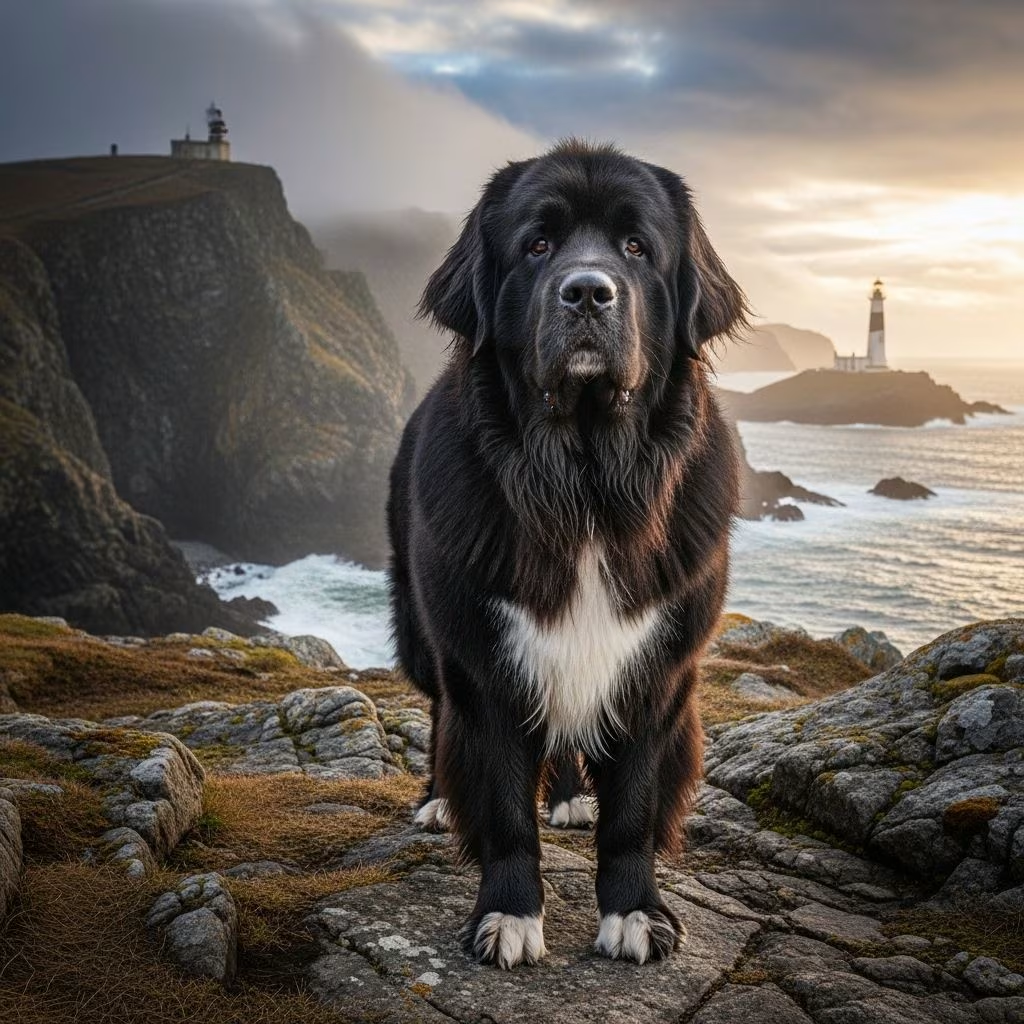
- Webbed Feet: An adaptation for swimming, these partially webbed feet set the Newfoundland apart and made it a natural in harsh, cold waters.
- Thick, Water-Resistant Double Coat: A dense undercoat and coarse outer layer provided vital protection from frigid sea temperatures.
- Massive, Hardy Build: The dogs’ large frames and strong muscles enabled them to work as draft and haul animals.
According to historian Maryjane Spackman, the breed originated from a mix of indigenous North American dogs and various European breeds brought by settlers. Early reports suggest these included Mastiff-types, Portuguese Water Dogs, Collie-types, and possibly even spaniels.
Development of the Breed
Between 1500 and 1700, European fishing vessels were frequent visitors to the Maritimes, often accompanied by dogs. Crossbreeding with native dogs produced two distinct types:
- Lesser St. John’s Dog: Eventually developed into the Labrador Retriever.
- Greater St. John’s Dog: The direct ancestor of what we now recognize as the Newfoundland.
By the early 1700s, a unique canine populated the island, known for its size, endurance, and swimming prowess. The breed gained official recognition in 1775 when English naval captain George Cartwright named it for its place of origin.
Legendary Working Companion
The Newfoundland quickly became an indispensable companion to Canada’s fishermen, sailors, and settlers. Their value was proven through their exceptional versatility and bravery:
- Water Rescue Specialist: Newfoundlands could leap overboard to save people from drowning, drag lines between boats, and retrieve fishing nets.
- Draft and Hauling Animal: Their strength made them perfect for carting loads, hauling fishing gear, and delivering the day’s catch to market.
Their willingness and ingenuity in life-saving efforts earned them an enduring status among working dogs worldwide. What the Saint Bernard represented to mountain rescues, the Newfoundland embodied in sea rescues.
Breed Export and Global Transformation
Intense demand for Newfoundlands led to massive exportation to Europe after their formal naming, particularly to England and the rest of the continent. By the early 1800s, exports had depleted native populations, shifting the responsibility for maintaining the breed overseas. British breeders played a pivotal role in refining the Newfoundland into the form we know today, favoring features like the “blocky” head, longer ears, and specific colorations.
Notable developments include:
- The Rise of the Landseer: The black-and-white variety was immortalized by animal painter Sir Edwin Landseer and still bears his name today.
- Display in Dog Shows: By 1860, only six Newfoundland dogs appeared at the Birmingham “National” show—rising to 41 entries within two years, evidence of the breed’s surging popularity in England.
This new phase of breeding also spurred the development or enhancement of several notable retriever breeds, including the Chesapeake Bay Retriever, Labrador Retriever, and Flat-Coated Retriever—many tracing their ancestry to the Newfoundland.
Newfoundlands in American History
The Newfoundland’s devotion and utility found a prominent place in American legend through the adventures of Seaman, a Newfoundland dog who accompanied Lewis and Clark’s 1802 expedition across North America. Seaman’s loyalty, hunting skill, and fearless protection of the explorers—including once saving lives by charging away a buffalo—cemented the breed’s status as an American hero. Throughout the United States, Seaman is honored in monuments commemorating his invaluable role.
The Newfoundland Club of America (NCA): Guardians of a Legacy
The preservation and promotion of the Newfoundland breed in the United States is largely credited to the formation of the Newfoundland Club of America (NCA). Founded on February 21, 1930, the NCA quickly became the breed’s official standard bearer, ensuring consistent breeding, care, and education efforts.
- 1931: The first American breed standard for the Newfoundland established, adapted from the English version.
- 1933: The NCA held its initial National Specialty event, in partnership with Morris and Essex Kennel Club.
- Post-WWII: Growth resumed rapidly, with substantial revisions to the club’s constitution and bylaws, newsletter launches, and formal recognition from the American Kennel Club (AKC).
- 1980s–1990s: The NCA advanced breed-specific events, such as water and draft tests, and celebrated show wins, especially the 1984 Westminster Best in Show awarded to Ch. Seaward’s Blackbeard.
Today, the NCA continues to set standards, test working abilities, and advocate for the Newfoundland’s health and welfare nationwide.
Breed Characteristics
| Trait | Description |
|---|---|
| Height | Males: 28 inches (avg), Females: 26 inches (avg) |
| Weight | Males: 130–152 lbs, Females: 100–120 lbs |
| Coat | Double coat (water-resistant outer, dense undercoat) |
| Colors | Black, brown, gray, white with black markings (Landseer) |
| AKC Group | Working Group |
Beyond their impressive size and strength, Newfoundlands are known for their gentle, patient temperaments. Their calm disposition, combined with deep loyalty, makes them excellent family companions and children’s guardians.
Modern Role and Legacy
While their days as commercial ship dogs have largely passed, Newfoundlands remain unmatched as water-rescue dogs, regularly participating in organized water trials and lifesaving demonstrations worldwide. In Europe, Newfoundlands are still employed in water rescue operations along crowded beaches, often working alongside lifeguards.
Their intelligence, eagerness to please, and steady temperament also see them excel in modern obedience, therapy, search and rescue, and other working dog competitions.
Influence on Other Breeds
The Newfoundland breed’s impact resonates throughout the dog world. Several now-prominent breeds were either directly descended from or heavily influenced by it:
- Labrador Retriever: Developed from the Lesser St. John’s Dog; originally known as the “Lesser Newfoundland.”
- Chesapeake Bay Retriever
- Golden Retriever
- Flat-Coated Retriever
This legacy of versatility, intelligence, and gentle bravery is a testament to the breed’s lasting contribution to dog breeding and working dog traditions worldwide.
Famous Newfoundlands Through History
- Seaman: Hero dog of the Lewis and Clark expedition, famed for loyalty and resourcefulness.
- Landseer: The black-and-white variant named after painter Edwin Landseer, featured in iconic works of art and literature.
- Nana: The Newfoundland nurse-dog immortalized in J.M. Barrie’s “Peter Pan.”
Frequently Asked Questions (FAQs)
What were the Newfoundland dog’s original purposes?
Newfoundlands served as versatile working dogs for fishermen, excelling in water rescue, hauling fishing equipment, delivering catches to market, and even carting loads on land.
Why are Newfoundlands such strong swimmers?
Their partially webbed feet, muscular build, and thick, waterproof double coat enable them to navigate cold, treacherous waters efficiently—traits that evolved to meet the rigorous demands of their seafaring environment.
What is a Landseer Newfoundland?
The Landseer refers to the striking black-and-white variety of Newfoundland, named for 19th-century painter Sir Edwin Landseer, whose artwork popularized the color variant.
How has the breed contributed to the development of other dog breeds?
The Newfoundland is a progenitor for several retrieving and working breeds, most notably the Labrador Retriever, Golden Retriever, and Chesapeake Bay Retriever, all of which inherited key physical and behavioral traits.
What is the modern role of the Newfoundland dog?
Today, Newfoundlands are beloved family companions, working therapy dogs, and remain world-renowned for their water rescue skills, participating in both recreational and real-life rescue operations.
Is the Newfoundland a good family pet?
Yes, Newfoundlands are famous for their loving temperament, particularly with children, and their gentle, patient nature makes them a treasured addition to many households.
References
- https://www.akc.org/expert-advice/dog-breeds/newfoundland-history/
- https://www.akc.org/dog-breeds/newfoundland/
- https://www.akc.org/expert-advice/lifestyle/facts-newfoundland/
- https://www.thenewfoundland.org/morris.html
- https://www.akc.org/about/archive/guide-collections/nca-collection/
- https://www.nylabone.com/dog101/newfoundland
- https://www.ncanewfs.org
- https://www.petsbest.com/blog/breed-guide-newfoundland