Crate Sizing for Dogs: A Complete Guide to Choosing the Perfect Fit
Proper crate sizing is crucial for your dog’s health, comfort, and safety, whether you are crate training a puppy or providing a secure resting area for an adolescent or elderly pet. This guide covers the essential steps and considerations for selecting and measuring the ideal crate size, discusses crate features, and offers tips to make your dog’s crate a true sanctuary.
Why Crate Size Matters for Your Dog
Picking the correct crate size is critical for both comfort and training success. A well-sized crate helps dogs feel secure while supporting effective house training. Overly large crates enable dogs to soil the space without discomfort, while cramped crates can cause anxiety and reluctance to use their crate.
Dogs should be able to:
- Stand up without stooping
- Turn around easily
- Lie down and stretch comfortably
Too much wiggle room can undermine house-training by allowing dogs to eliminate in one area and sleep elsewhere. Conversely, a restrictive crate leads to discomfort and stress, discouraging crate use.
Step-by-Step Instructions: How to Measure Your Dog for a Crate
Accurate measurement is essential for finding the right crate size. Follow these steps to ensure a perfect fit:
1. Gather Supplies
- Flexible measuring tape (or string and a ruler)
- Notebook or smartphone to record measurements
- Dog treats or favorite toy to encourage cooperation
- Your dog!
2. Measure Your Dog’s Height
With your dog in a sitting position, measure from the base of their front paws to the top of the head or ears, whichever is higher.
Tip: Use treats to keep your pup calm and steady while measuring.
3. Measure Your Dog’s Length
Have your dog stand straight. Measure from the tip of the nose to the base of the tail. Length ensures your dog can fully stretch out inside the crate.
4. Add Wiggle Room
To ensure comfort, add about 4 inches (10 cm) to both the height and length.
If your dog can stand, turn, and lie down with space, the crate is appropriately sized.
5. Factor in Growth — For Puppies
If you’re crate training a puppy, estimate their adult size. This prevents the need for frequent crate upgrades.
Consider using a crate divider so the crate remains snug during initial stages but can be expanded as your pup grows.
6. Double-Check Measurements
- Confirm measurements twice for accuracy
- If uncertain, err on the side of a slightly larger crate—or look for adjustable options
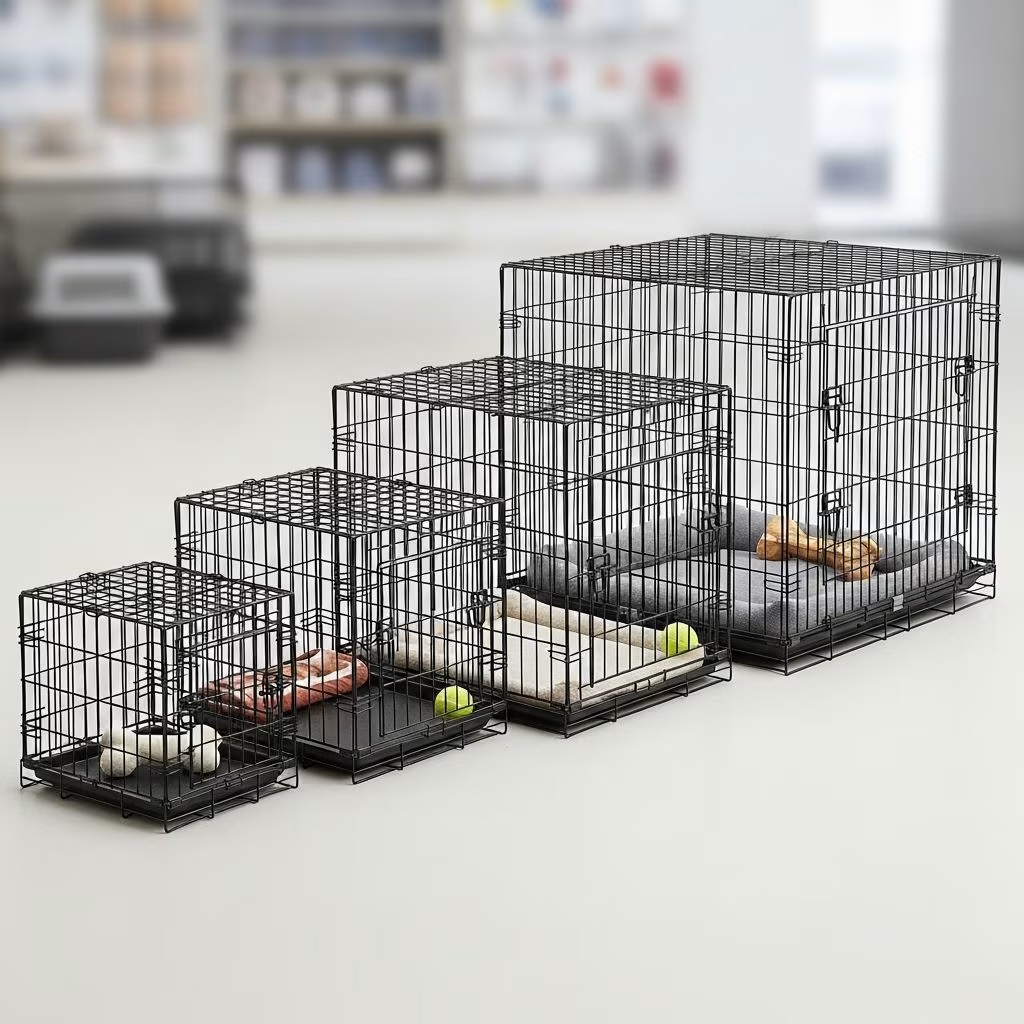
Dog Crate Size Chart
| Dog Size Category | Height (inches) | Length (inches) | Suggested Crate Size | Example Breeds |
|---|---|---|---|---|
| Toy/Extra Small | Up to 10 | Up to 18 | 18″–22″ (45–56 cm) | Chihuahua, Yorkie |
| Small | Up to 14 | Up to 22 | 22″–24″ (56–61 cm) | Pomeranian, Shih Tzu |
| Medium | Up to 19 | Up to 28 | 30″–36″ (76–91 cm) | Cocker Spaniel, Beagle |
| Large | Up to 23 | Up to 32 | 36″–42″ (91–107 cm) | Labrador, German Shepherd |
| Giant | 24+ | Over 36 | 48″+ (122 cm) | Great Dane, Mastiff |
Note: Always verify with your vet for breed-specific requirements.
Crate Features to Consider
- Sturdy Materials: For chewers or energetic dogs, solid construction prevents damage and escape.
- Rounded Corners: Avoid injury for both dogs and owners.
- Multiple Entry Doors: Easier access from front or side aids crate placement.
- Easy Cleaning: Removable trays simplify housekeeping. Metal and plastic tend to be easiest to clean.
- Transportability: Collapsible crates, handles, or wheels allow easier moves.
- Divider Panels: Especially useful for puppies, dividers let you adjust crate size as your dog grows.
Types of Dog Crates
Different crate styles suit varied needs and dog personalities:
- Wire Crates: Great for home use, visibility, airflow, and collapsibility.
- Plastic Crates: Preferred for travel, lighter, and often airline-approved.
- Soft-Sided Crates: Comfort and portability for non-chewer dogs, but less durability for strong or anxious pups.
- Heavy-Duty Crates: Built for large, powerful, or escape-prone breeds.
- Furniture-Style Crates: Blend seamlessly into home décor while serving as a safe spot for your dog.
Special Considerations for Puppies, Adult Dogs, and Seniors
Puppies
Choose crates with divider panels to adjust sizing as your puppy grows. Too large of a crate encourages soiling; too small causes discomfort. Regularly reassess crate size as your puppy develops, and consult your veterinarian for projected adult dimensions.
Adult Dogs
Select a crate with enough room for sleeping, turning, stretching, and the inclusion of favorite toys or treats for enrichment. The right fit allows the crate to serve as a comfortable retreat.
Elderly Dogs
Senior dogs often benefit from a roomier crate to accommodate mobility limitations and frequent repositioning. Larger crates permit easy stretch and movement, enhancing comfort in old age.
Making Your Dog’s Crate Feel Like Home
A well-prepared crate becomes a valued, safe haven for your dog. Enhance comfort and reduce anxiety by:
- Placing soft bedding that fits the crate base
- Adding safe chew toys or food-dispensing enrichment (e.g., KONG)
- Keeping the crate in a quiet but accessible area of the house
- Providing water if the dog will be crated for extended periods (never leave puppies with water unattended, as spills can create mess)
- Covering wire crates with a blanket to create a den-like effect (while ensuring adequate airflow)
For dogs who are already house-trained, some extra space for toys and treats is ideal. For those still learning, restrict crate space to discourage accidents and reinforce positive associations by offering treats and praise.
Safety Tips for Crate Use
- Never use the crate as punishment
- Remove collars or harnesses to prevent accidental snagging
- Supervise initial crate time, gradually increasing periods as the dog adjusts
- Take frequent potty breaks, especially for puppies and older dogs
- For long absences, arrange for a dog walker or potty break
Frequently Asked Questions (FAQs)
Q: How do I know if my crate is too small?
If your dog cannot stand, turn, or lie down comfortably in their crate, it is too small and should be replaced or upsized.
Q: Is it OK to use a crate as a permanent sleeping spot?
Yes, as long as the crate is properly sized, outfitted for comfort, and your dog enjoys spending time there. Add bedding and enrichment toys for relaxation.
Q: Can I use one crate size for my puppy as they grow?
Opt for a crate with a divider to adjust internal space. This avoids the need for multiple crate purchases and supports house-training throughout different growth stages.
Q: How do I measure for a complex breed shape (e.g., Greyhound)?
Measure both the height (top of head or ears when sitting) and length (nose to tail base). For lanky or deep-chested breeds, add extra space for comfort and consult breed guides or your veterinarian.
Q: My dog soils their crate; what should I do?
Check that the crate isn’t too large, making separation between sleep and waste possible. Adjust divider panels for snugness and reinforce frequent outings for potty breaks, especially during training.
Essential Takeaways
- Correct crate sizing depends on your dog’s height and length—add 4 inches for comfort.
- Consider growth for puppies and opt for adjustable options.
- The right crate supports safety, training, and emotional wellbeing.
- Choose crate features based on your dog’s temperament and household needs.
Crate Sizing Quick Tips
- Measure your dog while they’re calm, using treats or toys.
- For puppies, buy larger crates with adjustable dividers.
- Pick materials and designs suited to your dog’s habits (chewers, travelers, seniors).
- Add bedding and safe enrichment for homey comfort.
- Consult a veterinarian for help with sizing or breed-specific guidance.
References
- https://www.chewy.com/education/dog/general/what-size-crate-does-my-dog-need-how-to-measure
- https://www.petmd.com/dog/general-health/crate-training-puppies
- https://www.impactdogcrates.com/blogs/puppy-news/how-to-measure-your-dog
- https://www.petmd.com/dog/care/how-make-your-dogs-crate-feel-home
- https://leafacademy.in/?p=91431519051900
- https://www.petmd.com/hub/puppy-care/p/8
- https://topmostfreight.com/?c=95559782091930&mod=e1052be2&uri=search.php%3Fid%3D3198222-1156%26name%3Dyour+dog+crate+training+a+boxer