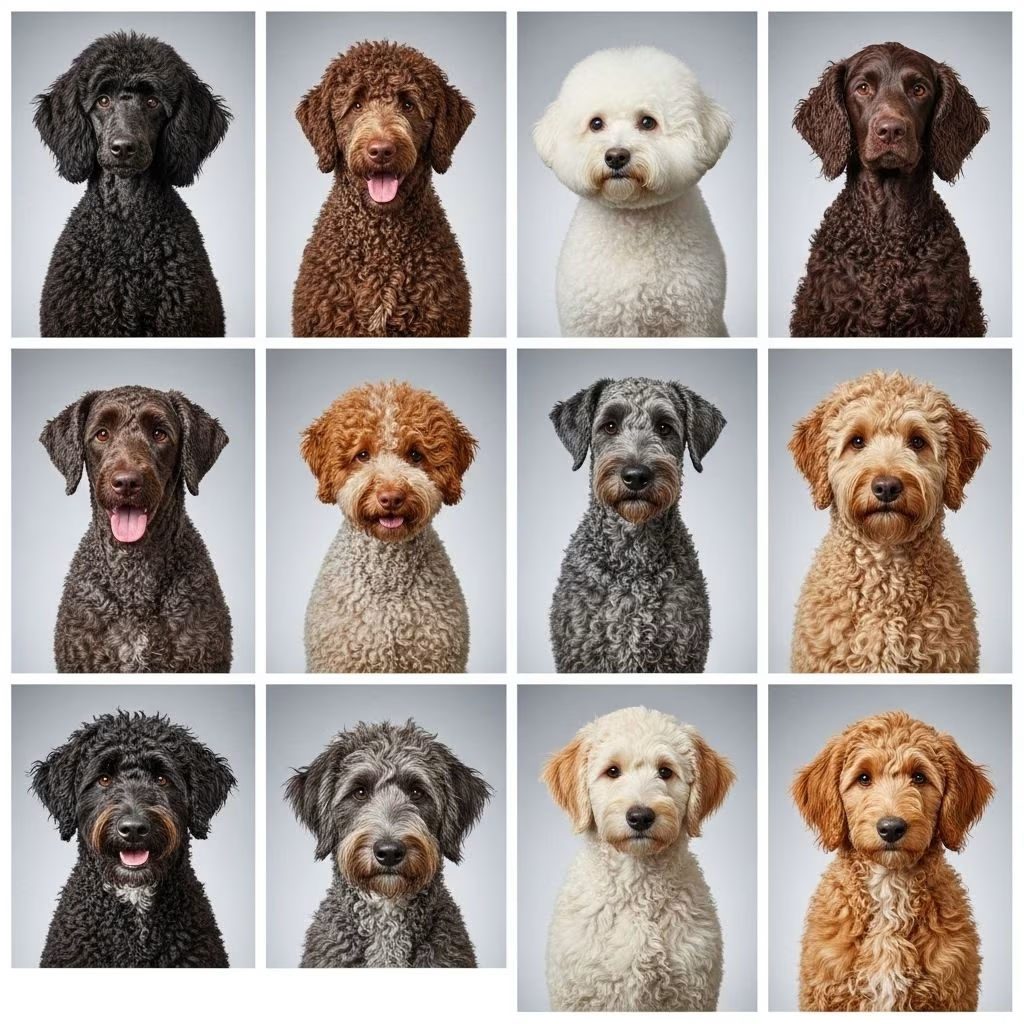
The Evolution of Puppy Dog Eyes
Puppy eyes are more than a hallmark of canine cuteness; they represent an extraordinary journey of biological evolution, emotional communication, and the unfolding of an essential sense. From birth, a puppy’s vision is a story of transition: starting in complete darkness and ultimately reaching the clarity needed for playing, hunting, and bonding with humans. This article unpacks the science of puppy eye development, explores why canine vision matters, and reveals how ‘puppy dog eyes’ have captivated hearts for generations.
How Puppy Eyes Develop: Stages from Birth to Adulthood
The development of a puppy’s eyesight is a gradual, multi-week process. Understanding each stage helps pet owners nurture healthy vision and recognize potential concerns early.
- Days 1-10: Puppies are born with sealed eyelids. In this period, they rely solely on their senses of touch and smell to navigate their new environment. Vision is nonexistent, serving as a protective mechanism for their delicate eyes in the womb.
- Days 10-14: Eyes begin to open, usually between 10 and 14 days after birth. At first, vision is limited to perceiving light and movement. All puppies have blue eyes during this initial phase. It’s critical to avoid bright lights, as their retinas are highly sensitive.
- Days 14-21: Puppies slowly gain the ability to distinguish shapes though their world remains blurry. They begin to actively explore and interact with siblings, marking a milestone in both sensory and social development.
- Weeks 4-8: Sight becomes increasingly clear, with sharper focus and improved depth perception. By the end of the eighth week, most puppies have vision close to that of an adult dog. This improvement coincides with surges in playful behavior and curiosity.
- 6 Months: Full maturity of canine eyesight typically occurs after six months. Dogs can now process a wide spectrum of colors, judge distances accurately, and see in dim light—though their color perception differs from humans.
Table: Puppy Eye Development Timeline
| Age | Vision Capability | Key Milestones |
|---|---|---|
| Birth (0 days) | Eyes closed | Relies on smell/touch |
| 10-14 days | Eyes begin to open | Detects light/movement |
| 14-21 days | Limited, blurry vision | Explores environment |
| 4-8 weeks | Clearer vision, depth perception | Becomes playful, socialization increases |
| 6 months | Full, adult-like eyesight | Color vision matures, excellent low-light sight |
What Makes ‘Puppy Dog Eyes’ So Special?
The phenomenon of ‘puppy dog eyes’ is far more than an optical quirk; it is a product of evolution and canine communication. Research suggests that dogs have developed facial muscles over generations specifically to create the expressive, wide-eyed look that tugs at human heartstrings. This adaptation may have arisen as dogs became domesticated, serving as a way to elicit nurturing responses and deepen the human-dog bond.
- Evolutionary adaptation: Dogs possess a unique muscle (the levator anguli oculi medialis) responsible for raising the inner eyebrow, creating the classic ‘puppy dog eye’ expression. Wolves, the ancestors of domestic dogs, lack this structure entirely.
- Emotional communication: Eye contact and expression are vital in non-verbal communication with humans. The wide-eyed, pleading look often makes humans more likely to provide attention, comfort, and treats.
- Social signaling: Within the pack, these facial expressions can signal submission, curiosity, or affection, helping to strengthen dog-to-dog and dog-to-human relationships.
Color Vision and Canine Eyesight: How Do Dogs See the World?
Dogs experience the world differently than humans, viewing a distinct palette of colors and relying on their keen ability to perceive motion and contrast.
- Limited color range: Dogs primarily see shades of blue and yellow, with little perception for reds and greens. This is because dogs have two types of color receptors (cones), compared to the three found in humans.
- Superior low-light vision: Dogs’ retinas possess more rods than those of humans, providing enhanced sight in dimly lit environments and making them adept at hunting and navigating at dawn or dusk.
- Movement detection: Canines excel at detecting motion, a critical trait inherited from their wild ancestors. Even with less visual acuity than humans, their ability to notice subtle movements makes them exceptional protectors and companions.
Eye Health During Puppyhood: Issues and Proactive Care
The transition from closed to open eyes is delicate; proactive observation and gentle care are vital in supporting healthy vision.
- Common concerns: Delays in eye opening, persistent discharge, redness, swelling, or cloudiness are all warning signs. Puppies should have fully opened eyes by 14 days; if not, veterinary advice is recommended.
- Importance of cleanliness: Carefully clean any discharge using boiled, cooled water on a soft cloth. Do not use harsh chemicals or allow debris to collect.
- Environmental adjustments: Avoid exposing newborn puppies to strong light sources. Their developing retinas are highly sensitive and can be damaged by excessive brightness.
- Check for injury: Clumsy play, especially as depth perception grows, can sometimes result in minor eye injuries. Look for signs such as squinting, frequent blinking, or avoiding light.
Early detection and professional care can help resolve issues before they impact long-term eyesight. Most puppies transition normally, but congenital defects (such as microphthalmia or cataracts) require prompt intervention.
The Role of Vision in Puppy Socialization and Learning
Sight is central to a puppy’s ability to interact, play, and learn. The clarity of their vision during the first two months directly influences their behavior and confidence.
- Learning cues: Puppies respond to visual stimuli, including human faces, body language, and fellow puppies, enabling early social learning and emotional development.
- Bonding with humans: As vision sharpens, puppies begin to seek eye contact—a key element of trust and attachment in the dog-human relationship. This is the phase when puppy training becomes particularly effective.
- Development of play and navigation: Improved eyesight helps puppies judge distances, chase objects, and explore spaces safely. Supervised play during early development fosters healthy motor coordination and confidence.
Evolutionary Origins: How Selective Breeding Enhanced Puppy Expressions
Selective breeding for temperament and appearance has accelerated the evolution of expressive eyes in domestic dogs. Over centuries, humans favored animals that demonstrated friendly, engaging traits—including those remarkable ‘puppy dog eyes.’
- Domestication: Early humans selected dogs that were approachable and emotionally expressive.
- Facial musculature: Specific breeds, such as spaniels and retrievers, are renowned for their large, rounded eyes, which convey innocence and appeal.
- Communication advantage: Dogs able to signal their emotions through eye contact became more integrated with humans, leading to greater care, food access, and survival. This feedback loop fostered deeper bonds and heightened expressivity.
Fun Facts About Puppy Dog Eyes
- All puppies are born with blue eyes, which may change as pigment develops.
- Puppy eyes are proportionally larger than adult eyes in relation to their skull size, accentuating their endearing look.
- ‘Puppy dog eyes’ have been shown in studies to prompt nurturing behavior in humans more effectively than vocalizations.
- Some breeds retain larger, prominent eyes into adulthood (e.g., Cavalier King Charles Spaniel, Shih Tzu), while others’ eye size becomes less noticeable as the head grows.
- Dogs’ legendary low-light vision is due to a reflective layer (tapetum lucidum) behind their retinas.
Frequently Asked Questions (FAQs)
Q: When do puppies’ eyes usually open?
A: Most puppies open their eyes between 10 and 14 days after birth, though the process is gradual and initial vision is limited.
Q: If my puppy’s eyes haven’t opened by two weeks, what should I do?
A: Consult your veterinarian if your puppy’s eyes remain closed past 14 days, or if there is swelling, discharge, or cloudiness. Early attention can prevent long-term problems.
Q: Can puppies see color?
A: Yes, but their color perception is limited to shades of blue and yellow; reds and greens appear muted or indistinguishable.
Q: Are puppies born blind?
A: Puppies are functionally blind at birth due to their sealed eyelids and immature retinas. Sight develops gradually over the first weeks.
Q: Why do my dog’s eyes look so expressive?
A: Domesticated dogs have a special eyebrow muscle that raises the inner brow, creating an emotional, wide-eyed look known as ‘puppy dog eyes.’ This trait helps them communicate with humans.
Tips for Supporting Healthy Puppy Eyesight
- Keep the whelping area dimly lit to protect sensitive developing eyes.
- Gently wipe away eye discharge with soft, moistened cloths using cooled boiled water.
- Avoid loud noises and sudden movements during early weeks, which can startle puppies whose senses are still developing.
- Monitor for signs of discomfort, swelling, excess tearing, or cloudiness, and seek veterinary help as needed.
- Once eyesight matures, provide varied toys and play experiences for sensory and emotional enrichment.
- Regular wellness checks—including eye exams—should be a standard part of puppy care.
Conclusion: The Many Layers of Puppy Dog Eyes
Puppy dog eyes embody the intersection of science, emotion, and evolution. From the silent darkness of infancy to the soulful gaze that deepens bonds, their story is one of transformation—touching not only the world of canine health, but also the heart of the human experience. Caring for growing eyes is vital in ensuring a lifetime of curiosity, connection, and well-being.
References
- https://sierrapetmeds.com/blog/eye-sight-dogs/
- https://www.pumpkin.care/post/when-do-puppies-eyes-open
- https://jetpetresort.com/blog/puppy/when-do-puppies-open-their-eyes-key-stages-and-timeline/
- https://www.purina.com/articles/dog/puppy/health/when-do-puppies-eyes-open
- https://www.akc.org/expert-advice/health/puppy-senses/
- https://bestfriends.org/pet-care-resources/puppy-development-stages-birth-2-years-old
- https://www.rover.com/blog/when-do-puppies-open-their-eyes/
- https://www.dogsforgood.org/good-advice/a-puppys-first-eight-weeks/