


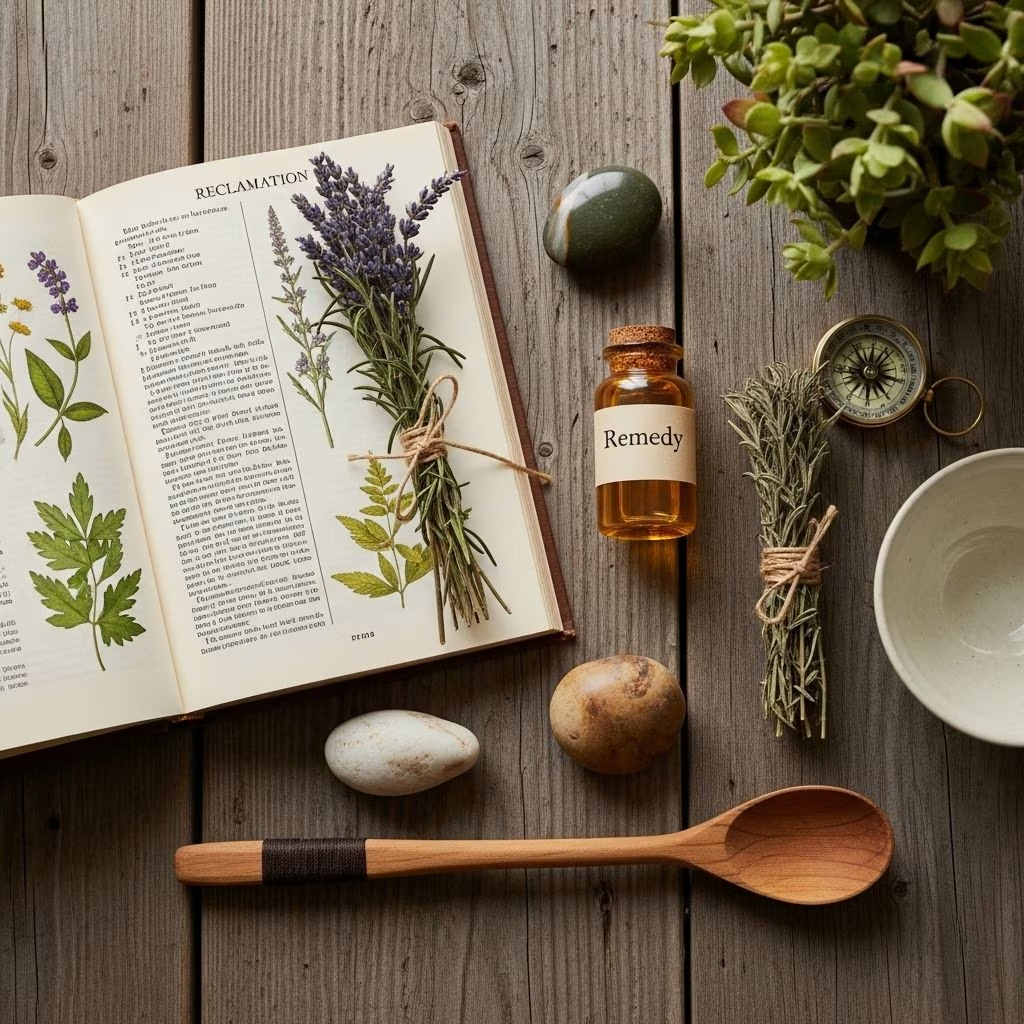
The National Museum of Women in the Arts (NMWA) presents RECLAMATION: Recipes, Remedies, and Rituals, a groundbreaking participatory online exhibition that transforms our understanding of food from mere sustenance into a powerful medium for artistic expression and cultural connection. This innovative exhibition, which ran from January 18 through December 31, 2021, brought together nine interdisciplinary artists whose work challenges traditional boundaries between art, domesticity, and social change.
At its core, RECLAMATION recontextualizes the traditional roles women have played throughout history in providing sustenance and healing for their families and communities. By centering the kitchen table as both a physical space and symbolic meeting ground, the exhibition creates an intimate portal into the creative processes of artists who transform everyday cooking into meaningful artistic practice. The exhibition’s participatory nature invited global audiences to contribute their own recipes, stories, and photographs, creating a living archive that celebrates the interconnectedness of food traditions across cultures and generations.
The Vision Behind RECLAMATION
RECLAMATION emerged as part of NMWA’s Women, Arts, and Social Change initiative, leading a year-long season of programming dedicated to examining the profound relationship between food, art, and women’s creative labor. The exhibition was originally conceived as an intimate, in-person experience built around the physical elements of a kitchen. However, as the COVID-19 pandemic reshaped museum practices and public gathering spaces, curator Melani N. Douglass and the NMWA team reimagined the project as a digital experience that could reach audiences far beyond the museum’s physical walls.
This transformation from physical to virtual proved fortuitous. During the pandemic, kitchens became central to daily life in unprecedented ways. Conversations about food shifted to encompass issues of access, safety, ritual, and comfort. The exhibition’s focus on domestic spaces and nourishment practices resonated deeply with audiences navigating lockdowns, social distancing, and the heightened importance of home cooking. What began as a practical adaptation became an opportunity for wider public participation and more diverse community engagement.
Douglass approached artist selection through a distinctive lens, prioritizing storytelling ability over specific mediums. She sought visual griots—artists who weave narratives into their work, whose creative processes hold equal importance to their finished products, and whose practices engage directly with daily living and social transformation. This curatorial approach resulted in a diverse roster of artists working across dance, photography, filmmaking, writing, cooking, community organizing, and performance art.
The Kitchen Table as Artistic Center
The kitchen table serves as the conceptual and visual anchor of RECLAMATION. This ubiquitous domestic object represents the gathering place where families share meals, stories, traditions, and love across generations. By focusing on this central piece of furniture, the exhibition highlights how ordinary spaces become sites of extraordinary creativity, cultural transmission, and social bonding.
Each of the nine featured artists activated their own kitchen tables, sharing photographs, videos, and narratives about how they use this essential domestic object. These intimate glimpses into artists’ homes simultaneously reveal finished works of art and document the processes through which they are made. The kitchen table becomes both stage and studio, a place where cooking, creating, and community-building intersect.
This approach challenges traditional museum exhibition models by bringing the gallery into the home rather than extracting objects from their contexts of use. Viewers witness art-making in its natural habitat, surrounded by the tools, ingredients, and family members that inform each artist’s practice. The kitchen table framework emphasizes that artistic creation doesn’t require separation from daily life but can emerge directly from the rituals of nourishment and care that structure our days.
Featured Artists and Their Practices
The nine interdisciplinary artists featured in RECLAMATION each brought unique perspectives on food, family, and cultural identity. Their diverse backgrounds and artistic approaches demonstrated the expansive possibilities of using food as a creative medium while honoring traditions of women’s domestic labor.
Wanda Raimundi-Ortiz, born in 1973 in the Bronx, New York, created work exploring Puerto Rican culinary traditions and cross-cultural family dynamics. For the exhibition, she prepared Puerto Rican comfort food for her Pennsylvania Dutch in-laws, making pollo guisado (stewed chicken) with white rice and pastelillos (beef patties). Her process honored recipes handed down from her mother, who cooked without measuring tools, teaching Raimundi-Ortiz to cook by feel and instinct rather than precise measurements.
Raimundi-Ortiz’s contribution exemplifies how food becomes a bridge between different cultural backgrounds within families. Her choice to make vegetarian pastelillos acknowledged her fifteen years as a vegetarian while maintaining the essential character of traditional Puerto Rican cuisine. She used recaito, a foundational Puerto Rican base of cilantro, peppers, garlic, and oil, along with tomato paste, bay leaf, and chicken stock. Even her choice of cookware—bringing a specific pot used exclusively for Puerto Rican-style rice—demonstrated how culinary traditions carry material histories through particular objects and practices.
The other eight artists similarly explored their own cultural heritages, family recipes, and the ways food carries memory and meaning across time and distance. Each brought professional expertise from fields beyond traditional visual arts, enriching the exhibition with perspectives from diverse creative disciplines.
The Digital Ingredient Archive
One of RECLAMATION’s most innovative features was its digital ingredient archive, developed in partnership with the Family Arts Museum and Ten-Fifteen Media. This interactive platform allowed online visitors to actively participate in the exhibition by submitting their own recipes, anecdotes, photographs, and reflections related to food. The archive functioned as both a component of the exhibition and a standalone resource for exploring the cultural significance of ingredients used in cooking, healing, and ceremonial practices.
Public submissions were layered with the featured artists’ work, creating a dynamic, evolving portal that explored the interconnectedness of food traditions and the communal nature of nourishing and curing the body. This participatory approach fundamentally changed the relationship between museum and audience, transforming visitors from passive observers into active contributors whose stories held equal weight alongside professional artists’ work.
The response exceeded expectations. People from across the United States and around the world submitted their family recipes, cultural traditions, and personal food memories. Curator Melani N. Douglass highlighted one particularly touching submission: a story accompanied by hand-drawn images about the profound importance of a grandmother’s pancake recipe. Such contributions demonstrated how food memories connect us to loved ones, preserve cultural heritage, and provide comfort through sensory experiences that transcend language barriers.
The ingredient archive captured the exhibition’s commitment to honoring women’s roles in practices and traditions surrounding food. By collecting and preserving these stories, RECLAMATION created a living document of domestic knowledge typically passed through oral tradition and hands-on demonstration rather than formal documentation. The archive recognizes that recipes are never merely lists of ingredients and instructions—they are vessels carrying family histories, migration stories, adaptations to new circumstances, and the accumulated wisdom of generations of cooks.
The Curative Collective
RECLAMATION extended beyond individual artists and public submissions to include content and interviews from the Curative Collective, a group of partner organizations focused on various aspects of food culture. These partnerships ensured the exhibition reflected and served diverse communities while sharing arts and social change resources with NMWA’s audience.
Curative Collective partners spanned a range of food-related work, from advocacy and social justice initiatives to healing and restorative self-care practices. Featured organizations included Black Magick Sisters, Dreaming Out Loud, Herbal Aid Apothecary, and STRŌB Apothecary, among others. Each brought specialized knowledge about food access, herbalism, community health, and the connections between nourishment and social justice.
These partnerships grounded the exhibition in real-world efforts to address food insecurity, preserve traditional healing knowledge, and build community resilience through food-based organizing. The Curative Collective expanded RECLAMATION’s scope beyond aesthetic appreciation to engage pressing contemporary issues about who has access to healthy food, whose culinary and healing traditions receive recognition and preservation, and how food systems can be transformed to serve communities more equitably.
Women, Arts, and Social Change
RECLAMATION launched a year-long season of programming examining the relationship between food, art, and women as part of NMWA’s Women, Arts, and Social Change (WASC) initiative. This framework positioned the exhibition not as an isolated project but as part of a sustained institutional commitment to highlighting women’s creative contributions to social transformation.
The WASC initiative recognizes that art-making and social change work are deeply interconnected, particularly in women’s historical and contemporary practices. Women have long used creative expression to challenge oppressive systems, preserve cultural knowledge, build community solidarity, and imagine alternative futures. By focusing on food—a realm historically delegated to women’s domestic labor—RECLAMATION illuminated how everyday acts of feeding and healing families constitute both artistic practice and social change work.
This framing challenges hierarchies that separate “fine art” from “craft,” museum-worthy objects from domestic creations, and professional artists from home cooks. RECLAMATION insists that the knowledge, skill, and creativity required to prepare nourishing meals and healing remedies deserves recognition as genuine artistic and intellectual labor. The exhibition reclaims women’s domestic work from its devaluation, recontextualizing it as vital cultural production that sustains communities materially and spiritually.
From Physical to Virtual: Adaptation and Innovation
The shift from an in-person exhibition to a virtual experience required significant reconceptualization but ultimately expanded the project’s reach and impact. The original vision centered on built elements recreating a kitchen environment within the museum galleries. Visitors would have encountered a physical kitchen table and surrounding domestic objects, creating an immersive environment that blurred boundaries between gallery space and home space.
The pandemic made such intimate, tactile experiences impossible. Yet the transition to a digital format opened new possibilities. Geographic barriers dissolved, allowing international participation. The ingredient archive could grow continuously rather than being constrained by gallery space limitations. Artists could document their processes in their actual kitchens rather than gallery recreations. Visitors could engage from their own homes, perhaps while cooking their own meals, creating meaningful resonances between the exhibition content and their immediate circumstances.
This adaptation reflected broader museum sector innovations during the pandemic as institutions discovered new ways to connect with audiences remotely. RECLAMATION demonstrated that virtual exhibitions need not be inferior substitutes for in-person experiences but can offer distinctive advantages, particularly for participatory projects seeking to engage diverse publics in sustained, meaningful ways.
Cultural Preservation and Intergenerational Knowledge
One of RECLAMATION’s most significant contributions lies in its documentation and preservation of intergenerational knowledge transmission. Food traditions typically pass from older to younger generations through observation, oral instruction, and hands-on practice. Recipes exist in sensory memory—the feel of dough at the right consistency, the smell indicating proper seasoning, the sound of oil at the correct temperature—rather than written documentation.
This embodied knowledge is vulnerable to loss as families scatter geographically, younger generations adopt different foodways, and elders pass away without having fully transmitted their culinary wisdom. RECLAMATION created a space for preserving these traditions through photography, video, and written narrative while acknowledging that such documentation can never fully capture the tacit knowledge embedded in cooking practices.
The exhibition’s focus on intercultural experiences recognized that food traditions constantly evolve through cultural contact, migration, and adaptation to new circumstances. Families develop hybrid cuisines that blend ingredients and techniques from multiple heritages. Immigrant communities recreate homeland dishes with available substitutes. Children of mixed-heritage families learn to navigate multiple culinary traditions, creating new fusion practices that honor all aspects of their backgrounds.
These processes of cultural mixing and innovation represent living traditions rather than static preservation. RECLAMATION celebrated both continuity and change, recognizing that keeping traditions alive often requires adapting them to new contexts while maintaining their essential meanings and connections to cultural identity.
The Power of Communal Nourishment
Throughout RECLAMATION runs a central theme: the communal nature of nourishing and curing the body. Food is never purely individual sustenance. It connects us to the farmers who grew our ingredients, the workers who processed and transported them, the family members who taught us to cook, the loved ones we feed, and the cultural traditions that shape our preferences and practices.
Healing through food similarly extends beyond individual bodies to encompass community wellbeing. Traditional healing practices using herbs, spices, and particular food combinations represent accumulated knowledge about maintaining health and treating illness. These practices often carry spiritual and ceremonial dimensions, recognizing that healing involves mental and emotional wellbeing alongside physical health.
The exhibition’s title—RECLAMATION—signals its political dimension. By reclaiming women’s food work as art and cultural knowledge, the exhibition challenges gendered devaluations of domestic labor. By reclaiming traditional healing practices, it resists the medicalization of health that dismisses folk wisdom. By reclaiming food traditions from cultural erasure, it asserts the continued relevance and vitality of diverse culinary heritages in a globalizing world.
Legacy and Continuing Impact
Although RECLAMATION’s exhibition period concluded at the end of 2021, its ingredient archive remains accessible, continuing to serve as a resource for exploring food traditions and cultural connections. The project demonstrated innovative approaches to participatory exhibition-making that other museums have since adapted for their own community engagement initiatives.
The exhibition expanded thinking about what constitutes museum-worthy content and who qualifies as a cultural producer deserving institutional recognition. By treating home cooks’ recipes with the same curatorial care as professional artists’ work, RECLAMATION validated forms of knowledge and creativity typically excluded from museum spaces. This democratizing impulse reflects growing movements within museums to become more inclusive, participatory, and responsive to diverse communities.
For the featured artists, RECLAMATION provided a platform to share work that might not fit conventional gallery formats. The exhibition’s interdisciplinary approach and focus on process over product created space for artistic practices that engage multiple senses, unfold over time, and exist primarily as documentation rather than discrete objects. This expanded conception of what art can be opens possibilities for artists working in performance, social practice, and other non-traditional mediums.
Frequently Asked Questions
Q: What was the main purpose of the RECLAMATION exhibition?
A: RECLAMATION examined food as a creative medium for visual art and a connective tool for exploring intergenerational and intercultural experiences. The exhibition recontextualized traditional roles women play in providing sustenance and healing, elevating domestic food work to the status of artistic and cultural production worthy of museum recognition.
Q: How could the public participate in RECLAMATION?
A: Visitors could participate through the digital ingredient archive by submitting their own recipes, anecdotes, photographs, and reflections related to food. These public submissions were layered with the featured artists’ work, creating a dynamic, evolving exhibition that grew throughout its year-long run.
Q: Why did RECLAMATION focus on the kitchen table?
A: The kitchen table served as the central domestic object for gatherings of family and friends, representing a space where people share meals, stories, and traditions across generations. By centering the kitchen table, the exhibition highlighted how ordinary domestic spaces become sites of extraordinary creativity and cultural transmission.
Q: What was the Curative Collective?
A: The Curative Collective was a group of partner organizations focusing on various aspects of food, from advocacy and social justice work to healing and restorative self-care. Members included Black Magick Sisters, Dreaming Out Loud, Herbal Aid Apothecary, and STRŌB Apothecary, ensuring the exhibition reflected and served diverse communities.
Q: How did the pandemic affect RECLAMATION?
A: Originally conceived as an in-person exhibition in NMWA’s galleries, RECLAMATION was reimagined as a virtual experience due to COVID-19. This adaptation actually expanded the exhibition’s reach, allowing for wider public participation from audiences around the world and creating opportunities for engagement that wouldn’t have been possible in a physical gallery setting.
Q: Who were the featured artists in RECLAMATION?
A: The exhibition featured nine interdisciplinary artists who work across fields including dance, photography, filmmaking, writing, cooking, community organizing, storytelling, and performance art. One featured artist was Wanda Raimundi-Ortiz, who created work exploring Puerto Rican culinary traditions and cross-cultural family connections through food preparation.
References
- https://nmwa.org/blog/nmwa-exhibitions/behind-the-scenes-reclamation/
- https://nmwa.org/exhibitions/reclamation-recipes-remedies-rituals/
- https://nmwa.org/press/reclamation-recipes-remedies-and-rituals-online-exhibition-at-national-museum-of-women-in-the-arts/
- https://narmassociation.org/reclamation-recipes-remedies-and-rituals/
- https://nmwa.libguides.com/reclamation
- https://nmwa.org/blog/nmwa-exhibitions/reclamation-wanda-raimundi-ortiz/
- https://www.youtube.com/playlist?list=PL1boWZ4URBmo_hSzyGZJlbj1AxfAhYv0D
- https://nmwa.org/blog/nmwa-exhibitions/reclamation-welcomes-more-voices/
- https://www.downtowndc.org/events/reclamation-recipes-remedies-and-rituals/


