


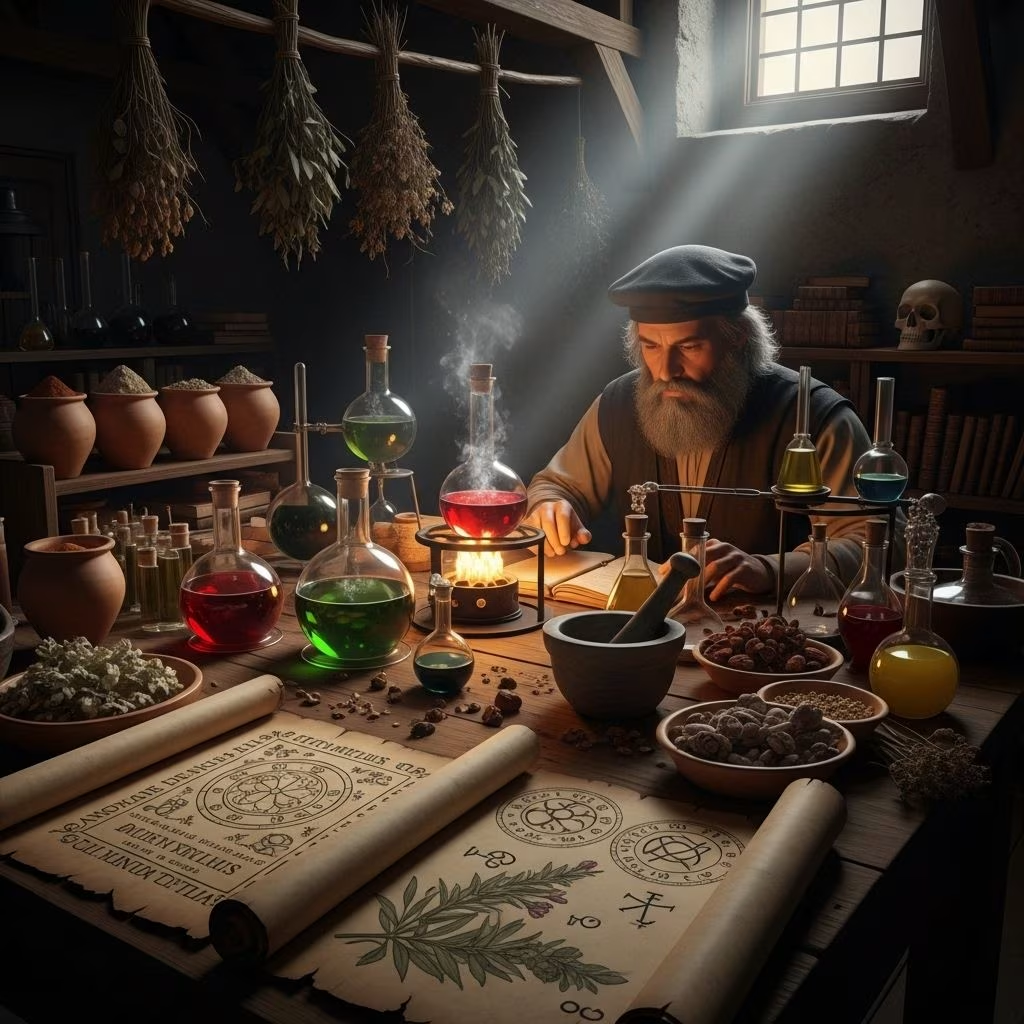
The medieval period, spanning roughly from the 5th to the 15th century, was a time of remarkable complexity in medical practice. While modern sensibilities might view medieval remedies as primitive or even barbaric, these treatments represented the culmination of centuries of accumulated knowledge, blending ancient wisdom, religious beliefs, and practical observation. Understanding medieval medicine offers us a window into how our ancestors grappled with disease, pain, and mortality in an era before modern science.
The Foundation of Medieval Medical Theory
Medieval medicine was deeply rooted in the ancient theory of the four humors, a concept inherited from Greek physician Galen and earlier from Hippocrates. According to this theory, the human body contained four essential fluids: blood, phlegm, yellow bile, and black bile. Health was believed to be a state of perfect balance among these humors, while illness resulted from their imbalance. This fundamental belief shaped virtually every medical intervention during the Middle Ages, from dietary recommendations to surgical procedures.
Physicians of the era believed that each humor was associated with specific qualities—hot, cold, wet, and dry—and that environmental factors, diet, and even emotional states could disrupt this delicate equilibrium. An excess of black bile, for instance, was thought to cause melancholia, what we might today recognize as depression or schizophrenia. This theoretical framework, while scientifically inaccurate by modern standards, provided medieval doctors with a systematic approach to understanding and treating disease.
The Practice of Bloodletting
Perhaps no medieval medical practice is more infamous than bloodletting, a procedure that involved deliberately removing blood from a patient to restore humoral balance. Doctors recommended bloodletting for an astonishing array of conditions, including smallpox, fainting spells, gout, and even poor temperament. The procedure could be performed through various methods: using lancets to open veins, applying leeches to the skin, or employing cupping techniques that drew blood to the surface through heated glass vessels.
The body could be purged of excess by bleeding, cupping, and leeching—medical practices that continued throughout the Middle Ages and persisted well into the 19th century. While we now understand that excessive bloodletting often weakened patients rather than cured them, the practice was based on logical reasoning within the context of humoral theory. If illness was caused by an excess of blood or other humors, removing some of that excess seemed like a sensible solution.
Herbal Medicine and Wise-Women
Most people in medieval times never saw a formally trained doctor. Instead, they were treated by local wise-women who possessed extensive knowledge of herbs, or by priests, or even barbers who pulled teeth, set broken bones, and performed various operations. The ointment used on legendary figures like Yvain exemplifies what medieval medicine was truly like—remedies that came from wise-women rather than physicians, typically made from herbs according to recipes passed down through generations.
These herbal remedies represented a more practical and accessible form of medicine for common people. Village healers, often women, had knowledge passed on from previous generations and many years of hands-on experience working with plants and natural substances. Their cures were a mixture of superstition, with magic stones and charms being very popular, religion such as driving out evil spirits from people who were mentally ill, and herbal remedies, some of which are still used today in modern pharmacology.
Monks weighing out herbs in monastery gardens contributed significantly to preserving and advancing medical knowledge. Monastic communities ran hospitals that took in the sick and dying, and their systematic cultivation of medicinal plants created living libraries of pharmaceutical knowledge. These religious healers combined spiritual care with practical medicine, offering patients both prayer and poultices.
Bizarre and Disturbing Treatments
Medicinal Cannibalism
Among the most shocking practices of medieval medicine was medicinal cannibalism, a treatment that seems almost incomprehensible to modern sensibilities. Despite the era’s general intolerance and superstition, consuming human flesh, blood, and bones was widely accepted and even revered as medical treatment. Doctors would prescribe human blood for epilepsy, migraines, eye problems, and ulcers. For gout and epilepsy, physicians prepared oil made from boiled human bones.
For the wealthy, Egyptian mummies provided a large source of medicinal, magical human flesh. However, those with fewer means could obtain the cheaper option by attending public executions and filling a jug, towel, or cup with fresh blood before the victim had even died. Many believed that consuming human parts could leave you with a portion of the deceased person’s soul, boosting vitality and serving as a gruesome fountain of youth.
This practice was so common that most kings and queens consumed human-made elixirs. Charles II, Queen Mary, Francis I, and numerous other monarchs reportedly relied on cannibalistic remedies to cure their illnesses, demonstrating that even the highest levels of society embraced these disturbing treatments.
The Royal Touch
Medieval society placed tremendous faith in the divine right of kings, extending this belief to their supposed healing powers. The Royal Touch was a treatment where a monarch’s hand was believed to heal the sick through divine intervention. This practice was particularly popular for treating scrofula, a type of tuberculosis affecting lymph nodes in the neck, which became known as “the King’s Evil” due to this association.
People would stand in line for hours awaiting the king’s magical healing touch. King Charles II reportedly touched 100,000 of his subjects after performing several ceremonies annually throughout his entire reign. By the 15th century, monarchs began distributing blessed golden coins called “touchpieces” instead, which were believed to retain healing properties while sparing rulers from touching oozing boils all day.
Treatment of Wounds and Physical Injuries
Bone Fractures
Sieges and battles made broken bones a common medical challenge, with soldiers falling while scaling walls and sustaining injuries from various combat situations. Typically, long bones were the most frequently fractured. Medieval physicians would manipulate these fractures to return bones to their correct position, then immobilize the injury using either wooden splints or plaster molds. These early casts, made from flour and egg whites, were applied to the injured area and left the bone immobilized, giving it a chance to heal properly.
Burn Treatment
Burns from boiling oil, flaming arrows, and scalding water required specialized approaches. In the early stages of treatment, physicians attempted to prevent blister formation by keeping the burn from becoming dry through application of ointments. These salves typically consisted of vinegar, egg, rose oil, opium, and various herbs. The ointment was applied to the affected area and reapplied as needed, representing a surprisingly sophisticated understanding of wound care.
Wound Management
Medieval surgeons developed techniques for extracting arrows, treating blade and knife wounds, and managing various traumatic injuries. While lacking antiseptics and modern surgical tools, these practitioners developed practical methods based on careful observation and accumulated experience. Wounds were cleaned, foreign objects removed, and healing promoted through various ointments and poultices.
Mental Health in Medieval Medicine
Those with mental disorders in medieval Europe received treatment using various methods, depending on the physician’s beliefs. Some doctors believed that supernatural forces such as witches, demons, or possession caused mental disorders. These physicians relied on prayers, incantations, and exorcisms to cure the afflicted and relieve their suffering.
Trephining represented another dramatic intervention—a means of treating epilepsy and mental illness by opening a hole in the skull through drilling or cutting. Practitioners believed that evil spirits or bad air would flow out of the body through this opening, leaving the patient at peace. Contrary to popular belief, most physicians actually attributed mental illness to physical factors rather than supernatural ones, such as organ malfunction or humoral imbalances.
Responses to the Black Death
The Black Death, which killed nearly one-third of Europe’s population—approximately 20 million deaths in just five years—spawned desperate and often bizarre treatment attempts. This bacterial infection, spread by fleas living on rats, created widespread panic and led to numerous strange theories about prevention and cure.
Some believed stale air caused the disease and attempted to break it up with loud noises from bells, guns, and birds. Others burned aromatic herbs, relied on bloodletting, and bathed in rosewater. Most people interpreted the Black Death as divine punishment for sin, leading to even more extreme responses. Flagellants, groups who whipped themselves with leather straps studded in metal in public town squares, believed that inflicting pain could help them repent and end God’s harsh judgment.
Unfortunately, these methods proved entirely ineffective against the bacterial infection, which would eventually respond only to antibiotics discovered centuries later.
The Legacy of Medieval Medicine
Despite its many flaws and sometimes horrifying practices, medieval medicine laid important groundwork for modern healthcare. The systematic documentation of remedies, the establishment of hospitals, and the development of surgical techniques all contributed to medical progress. Many herbal remedies identified by medieval healers contained active compounds that modern pharmacology has validated and refined.
The period also saw important advances in understanding anatomy through careful observation, even if religious prohibitions limited dissection. Medical schools began to emerge, creating formal systems for training physicians and preserving medical knowledge through written texts rather than oral tradition alone.
Frequently Asked Questions
Q: Were medieval remedies ever effective?
A: Yes, many herbal remedies used in medieval times contained active compounds that modern science has validated. Willow bark, for instance, contains salicin, the precursor to aspirin, and was used for pain relief. However, many other treatments like bloodletting and medicinal cannibalism had no therapeutic value and often harmed patients.
Q: Who provided medical care in medieval villages?
A: Most medieval villagers received care from local wise-women or wise-men who possessed extensive herbal knowledge passed down through generations. Priests, barbers, and traveling healers also provided medical services. Formally trained physicians were rare and expensive, serving primarily the wealthy.
Q: What was the theory of humors?
A: The humoral theory, inherited from ancient Greek medicine, held that the body contained four fluids: blood, phlegm, yellow bile, and black bile. Health required these humors to remain in perfect balance, while disease resulted from imbalance. This theory dominated medical thinking throughout the medieval period.
Q: How did medieval doctors treat the Black Death?
A: Medieval physicians tried numerous ineffective treatments for the plague, including bloodletting, aromatic herbs, loud noises to break up bad air, and rosewater baths. Many people believed the plague was divine punishment, leading to flagellation and prayer as attempted cures. None of these methods worked against the bacterial infection.
Q: Did medieval surgery exist?
A: Yes, medieval surgeons performed various procedures including setting broken bones, extracting arrows, treating wounds, tooth extraction, and even trepanning skulls. While lacking anesthesia and antiseptics, skilled practitioners developed effective techniques for managing traumatic injuries and fractures.
Q: What role did monasteries play in medieval medicine?
A: Monasteries served as important centers of medical care and knowledge preservation. Monks and nuns ran hospitals, cultivated medicinal herb gardens, copied medical texts, and provided care for the sick and dying. Their systematic approach to documenting remedies helped preserve medical knowledge across generations.
Conclusion
Medieval medicine represents a fascinating chapter in human history, revealing how our ancestors attempted to understand and combat disease with the limited knowledge available to them. While many practices seem strange or even horrifying by modern standards, they reflect genuine attempts to relieve suffering and restore health. The blend of herbal wisdom, religious belief, classical theory, and practical observation created a complex medical landscape that would eventually evolve into modern scientific medicine. By studying these historical remedies, we gain not only appreciation for modern medical advances but also insight into the enduring human drive to heal and be healed.
References
- https://www.abdn.ac.uk/sll/disciplines/english/lion/medicine.shtml
- https://guavahealth.com/article/six-medieval-practices-that-will-make-you-relieved-to-live-in-the-21st-century
- https://en.wikipedia.org/wiki/Medieval_medicine_of_Western_Europe
- https://www.metmuseum.org/essays/medicine-in-the-middle-ages
- https://www.abpischools.org.uk/topics/history-of-medicine/500-1400-ad-the-middle-ages/
- https://www.youtube.com/watch?v=fuEuaSmDOec
- https://www.cam.ac.uk/stories/curious-medieval-medicine
- https://www.binghamton.edu/news/story/3834/healing-in-the-dark-ages-new-book-explores-early-medieval-medicine


