


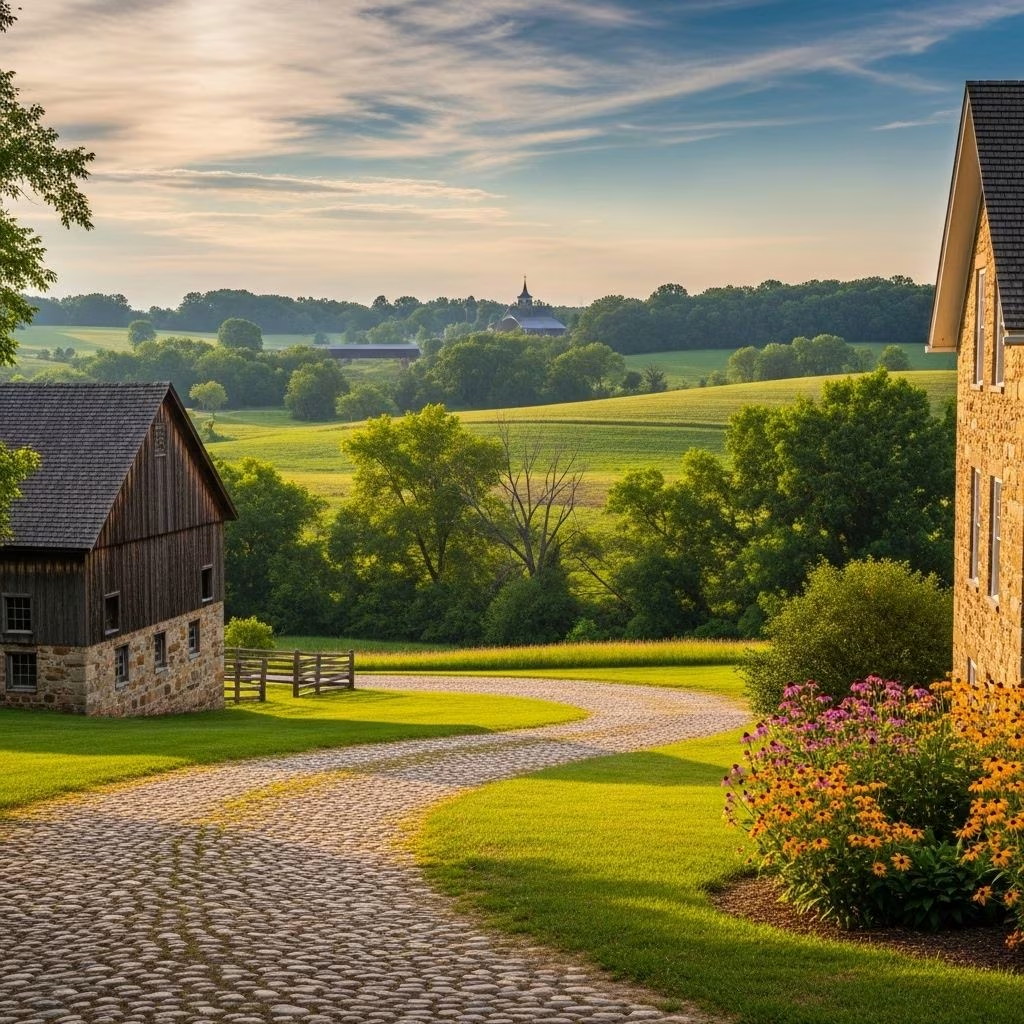
Pike County, Indiana: An Introduction
Pike County, nestled in southwestern Indiana, stands as a testament to America’s evolving frontier. From early settlements and Native American heritage to today’s rural traditions, its timeline is rich with stories of exploration, resilience, and community ties. Named in honor of Zebulon Pike—the famed explorer who journeyed through the sites of the Louisiana Purchase—the county bears a name synonymous with adventure and pioneering spirit.
This article navigates Pike County’s layered history, genealogical resources, township makeup, local culture, and the roots of its enduring rural character.
Historical Overview
Understanding Pike County’s present begins with a journey into its past—a narrative shaped by treaties, early settlements, and shifting borders.
Formation and Early History
- Pre-Statehood Territories: The area now known as Pike County was part of the Northwest Territory founded in 1787, later divided as the U.S. expanded westward.
- Native American Heritage: Title to these lands was relinquished through a combination of treaties, purchases, and conflict, including the 1804 Treaty of Vincennes and the 1809 Treaty of Fort Wayne.
- First Settlers: European-American settlement began around 1800, with Woolsey Pride credited as the first to establish roots at White Oak Springs.
- County Formation: Pike County was officially created on December 21, 1816, just ten days after Indiana gained statehood, drawing lands from Gibson, Knox, and Perry Counties.
- County Seat: Petersburg, named for Peter Brenton, was designated the county seat in 1817.
How Pike County Got Its Name
The county honors Zebulon Pike (1779–1813), known for the Pike Expedition (1806–1807), which explored the Southwest after the Louisiana Purchase. Pike later served in the War of 1812 and died as a U.S. brigadier general.
Key Dates in Pike County’s Formation
| Date | Event |
|---|---|
| 1790 | Knox County established, spanning a vast area that included present-day Pike. |
| 1813 | Part of Knox became Gibson and Warrick Counties. |
| 1814–1816 | Warrick and Gibson lands partitioned to form Perry and then Pike County. |
| 1816 | Pike County authorized; Petersburg founded as the county seat. |
Courthouse Evolution
- 1817: The original courthouse, a two-story log building, marked the county’s judicial beginnings.
- 1834: A more permanent two-story brick courthouse replaced the original.
- 1868: A larger, more elaborate structure took its place.
- 1922: The present courthouse was constructed, serving as a historic landmark in Petersburg today.
Economic and Infrastructural Developments
- Mid-20th Century: Pike County produced notable political figures, such as Senators Vance Hartke and Homer E. Capehart.
- Modern Era: The completion of Interstate 69 in 2015 sparked economic opportunity in the northern part of the county.
Genealogical Resources and Local Historians
Genealogy is a thriving pursuit in Pike County. With layered migration and deep-rooted families, tracing family lines connects generations and preserves legacy.
INGenWeb Project
- Indiana’s INGenWeb Project provides a comprehensive, cross-linked database for every Indiana county. Here, volunteers help centralize records, making family research more accessible for descendants and historians.
- Pike County’s coordinator, Rose Beyke, highlights the importance of mining and industry in her own five-generation family narrative rooted in Winslow.
Early Family Lines and Migration
Many early families came in search of work, particularly in mining and agriculture. Over the decades, they established firm community networks. Resources for genealogists include:
- Public records and courthouse archives (birth, death, marriage, and land deeds).
- Genealogical societies and reunions.
- Connections with neighboring counties—since early settlers may appear in records for Knox, Gibson, or Perry prior to 1816.
Local Storytelling and Family Traditions
Pike County is a treasure trove for oral history. Local storytellers and family historians keep the county’s living memory vibrant, passing down tales of early settlers, coal miners, and prominent families through generations.
Pike County Township Structure
Pike County’s government and land organization are built around its townships—the fundamental regional divisions that manage local services and support both rural and town communities.
Township System Overview
The county is divided into several townships, each with its own historical communities, schools, and records. Townships maintain property records, support township government, and serve as additional layers for genealogical discovery.
Key Townships (Sample Listing)
- Patoka Township – Home to the county seat, Petersburg.
- Washington Township – Notable for farming and small communities.
- Jefferson Township – Known for deep historical roots and original settlements.
- Lockhart Township – Contains significant genealogical and land records.
- Monroe Township – Features lines of long-established families and churches.
Geography and Surrounding Counties
Pike County’s setting in southwestern Indiana places it at a crossroads of rolling agricultural fields, rivers, and thick forests.
Bordering Counties
- Knox County – North/west, established 1790.
- Gibson County – West, established 1813.
- Perry County – Southeast, formed 1814.
- Daviess and Dubois Counties – Additional neighbors, aiding genealogical researchers who may need to check neighboring county records before 1816.
From Frontier to Modern Times: Social and Economic Evolution
The story of Pike County is a narrative of transformation—from frontier lands claimed by Woodland cultures to a bustling mining, agricultural, and later, transport-oriented economy.
Early Natural Environment
- Woodland Native Cultures: The region was first inhabited by Native Americans, particularly the Woodland culture, who left behind burial and effigy mounds.
- Bison and Wildlife: The area’s prairies supported buffalo herds, while dense forests of oak and maple blanketed its landscape.
- Rivers and Streams: Early waterways teemed with fish and provided vital resources for early settlers and communities.
Settlement and Growth
- 19th-century Boom: Growth surged as coal mining and agriculture fueled economic opportunity. In the late 1800s, small communities flourished throughout the township structure, with agriculture as the economic backbone.
- 20th-century Changes: Farms grew larger and more mechanized, shifting from hundreds to thousands of acres; new technology allowed for advanced farm management.
- Modern-Day Pike: Today, Pike County maintains its rural character, with agriculture and livestock still central, while recreation (notably deer hunting) attracts visitors and sustains local traditions.
Maps and Historic Places
Historic maps, such as those from 1876, offer a window into the evolving boundaries, towns, and infrastructure of Pike County. The locations of churches, cemeteries, and one-room schoolhouses provide vital roadmaps for researchers and visitors alike.
Community Life, Culture, and Rural Traditions
Despite changes in population and industry, Pike County has retained its small-town hospitality and rural values. Residents support annual events, maintain historic churches, and gather for community festivals, strengthening intergenerational roles and neighborly ties.
- Local agriculture fairs and farmers’ markets.
- Church gatherings and historic sites, such as old one-room schools and cemeteries, where stories are preserved.
- Outdoor activities—whitetail deer hunting is particularly renowned, attracting hunters from across the country, while fishing, camping, and hiking celebrate the county’s natural beauty.
Contact and Research Resources
If you are searching for ancestors or family records in Pike County, numerous resources are available for support and information exchange:
- Pike County coordinators and genealogy volunteers.
- IN GenWeb Project and affiliated local history websites.
- Pike County courthouse, historical societies, and county archives.
- Libraries and online records databases, including census and land records.
Frequently Asked Questions (FAQs)
Q: How did Pike County get its name?
A: Pike County is named for Zebulon Pike, a famed explorer and brigadier general who led the Pike Expedition into the Louisiana Purchase territory in the early 19th century.
Q: What are the best resources for genealogy in Pike County?
A: The INGenWeb Project, local genealogical societies, the county courthouse, and libraries are excellent starting points. Volunteers and local coordinators can help guide research and connect you with family records.
Q: What was the main economic activity in Pike County’s history?
A: Agriculture and coal mining were historically the mainstays, with agriculture remaining vital today. Whitetail deer hunting and recreation also play important modern roles.
Q: Which town is the county seat of Pike County?
A: Petersburg has served as the county seat since 1817 after being laid out and platted by the first commissioners.
Q: How has Pike County changed over time?
A: Pike County grew from a frontier region to a resource-rich rural community. Farms increased in size and adopted new technology, while the completion of Interstate 69 has spurred economic opportunity in recent years.
Conclusion: Preserving Legacy and Looking Forward
Pike County’s enduring story is one of layered identities—from Native American lands and pioneering settlements to coal towns and modern agriculture. Its people, proud of their roots and traditions, continue to foster a resilient community spirit, making it a place where past and present harmoniously intertwine. For researchers, descendants, and visitors, Pike County offers a journey through Indiana’s heartland history and the living vitality of its rural communities.
References
- https://en.wikipedia.org/wiki/Pike_County,_Indiana
- https://archive.org/details/historyofpikedub00good
- https://inpikeco.wordpress.com
- https://images.indianahistory.org/digital/collection/p16797coll20/id/74/
- https://www.familysearch.org/en/wiki/Pike_County,_Indiana_Genealogy
- http://ingenweb.org/inpike/Piketwp.htm
- https://pikelincoln.com/explore-historical-pike-county/


