


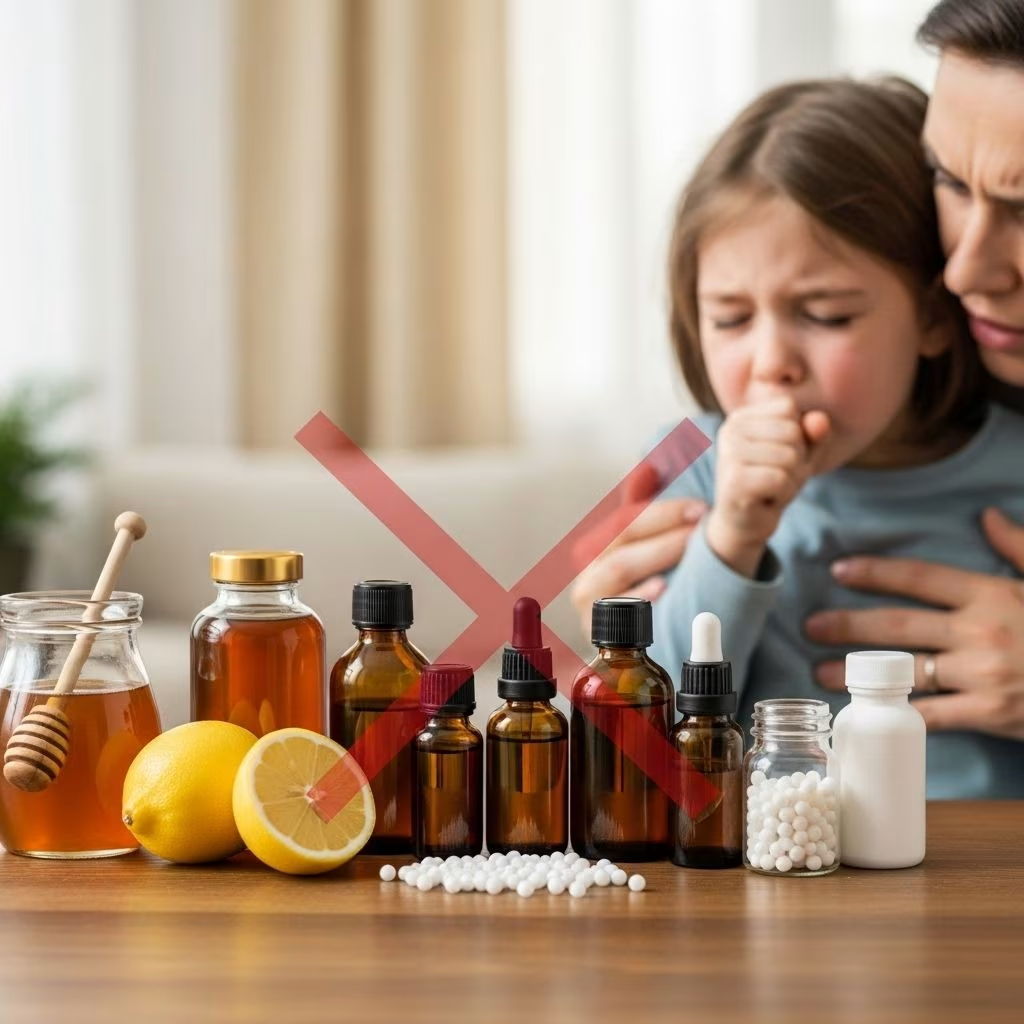
Why Parents Seek Alternatives for Children’s Coughs and Colds
Every winter, families confront the trial of runny noses, relentless coughs, and sleepless nights brought on by their children’s colds. For many parents, frustration rises as their child’s cough persists and conventional over-the-counter medicines fall short. The allure of homeopathic or ‘natural’ remedies—promising relief without the chemicals—has grown steadily, especially among those worried about side effects or unsatisfied with pharmaceutical options.
But can these remedies deliver? Do natural and homeopathic cough and cold products for children actually work, or are parents investing in false hope? This article examines the evidence, the regulatory and safety landscape, and practical, science-backed advice for parents seeking genuine relief for their kids.
How Children’s Cough and Cold Medications Are Marketed
Supermarket and drugstore shelves are crowded with brightly colored packages promising to ease children’s coughs, soothe sore throats, and clear up stuffy noses—sometimes with a ‘natural’ or ‘homeopathic’ label that seems reassuringly gentle. Ads frequently feature smiling children, comforting parents, and promises of restful sleep “without harsh chemicals.” It’s little surprise, then, that click-bait headlines and celebrity endorsements have made these products household staples.
- Natural and homeopathic options market themselves as safer due to the absence of conventional drugs and chemicals.
- Many products combine multiple herbal ingredients or highly diluted substances, which they claim can ‘stimulate the body’s natural healing.’
- Some brands refer to traditional remedies, such as honey, echinacea, or elderberry, while others contain less familiar substances like belladonna or aconitum, often in extremely small, sometimes unmeasurable, quantities.
But are these claims supported by science?
Understanding Homeopathy: Claims vs. Reality
Before evaluating whether homeopathic and natural remedies work, it’s essential to understand what homeopathy is. Developed in the 18th century, homeopathy is based on two foundational but scientifically unsubstantiated principles:
- ‘Like cures like’—the notion that a substance causing specific symptoms in a healthy person can, when highly diluted, cure those symptoms in a sick person.
- The belief that extreme dilution increases potency—homeopathic remedies are created by repeatedly diluting ingredients in water or alcohol, often until not a single molecule of the original ingredient remains in the final product.
In contrast, herbal remedies and dietary supplements generally contain measurable quantities of plant-derived substances, some of which may have pharmacological effects, but are not prepared using homeopathic dilutions.
Do These Principles Hold Up?
Modern science does not support either of homeopathy’s core beliefs:
- No credible proof exists that ‘like cures like’ works outside of vaccination and allergy desensitization, which follow very different scientific principles.
- Repeated dilution to the point of nonexistence cannot plausibly cause stronger biological effects.
Bottom Line: The theoretical foundation of homeopathy is not supported by current scientific understanding of chemistry, biology, or medicine.
What Does The Evidence Say?
The critical question for families is not in theory, but in practice: do homeopathic or natural remedies relieve coughs and colds in children? Large-scale, high-quality studies and systematic reviews consistently find that these products are either ineffective or, at best, marginally helpful—and sometimes not better than a placebo.
Homeopathic Syrups: Recent Clinical Trials
- A randomized controlled trial of a leading homeopathic syrup for preschool children with upper respiratory infections found no significant difference in symptom improvement one hour after dosing, but some mild improvements in sneezing and cough after the first and second days compared to placebo.
(Source: PubMed, UW School of Public Health) - Another controlled study found that adding a homeopathic product to standard treatment slightly shortened the duration of cold symptoms and reduced symptom severity, but these benefits were modest and may not be clinically meaningful for most families.
(Source: PMC)
Additionally, there is evidence that homeopathic management leads to lower use of conventional medications (like antibiotics), perhaps due to parents’ belief in the remedy, not necessarily its biological effects.
Natural and Herbal Remedies: What Works?
- Honey has the best evidence base for soothing cough in children older than one year, improving sleep, and reducing cough frequency. (Do not give honey to children younger than 12 months due to the risk of botulism.)
- Herbal treatments such as echinacea, elderberry, and others have been widely marketed, but the research is mixed and often shows little or no benefit over placebo.
- Vitamin and supplement regimens (like vitamin C and zinc) have not convincingly demonstrated consistent benefits for treating children’s colds.
Takeaway: Few, if any, natural supplements are supported by robust evidence for treating children’s coughs and colds. Honey remains the exception.
Common Misconceptions and Regulatory Loopholes
Homeopathic and most dietary supplement products are regulated very differently from pharmaceutical drugs. In the United States:
- The FDA does not require premarket proof of efficacy for homeopathic products.
- Manufacturers are not obligated to demonstrate that homeopathic remedies actually work.
- Ingredient lists and dilutions can be difficult for parents to interpret; some products once contained dangerous substances like belladonna in unsafe amounts.
This regulatory gap means that products appearing safe and “doctor-approved” on store shelves might not have been scientifically scrutinized or consistently quality controlled.
Potential Harms: Safety Concerns and Hidden Risks
While many believe homeopathic and natural remedies must be safe because they are “gentle” or “chemical-free,” this is not always the case. Documented issues include:
- Products contaminated with active pharmaceutical ingredients or toxins.
- Severe adverse reactions when mislabeled or not diluted properly (e.g., belladonna poisoning).
- Allergic reactions, especially to herbal ingredients like echinacea or elderberry.
- Delaying effective treatment for conditions that appear like a simple cold but are actually more serious (such as pneumonia, RSV, or influenza).
Always seek immediate medical attention if your child:
- Has trouble breathing or rapid breathing.
- Has a high fever persisting more than three days.
- Is unusually lethargic, irritable, or not drinking.
What Can Parents Do to Soothe Children’s Cough and Cold Symptoms?
When it comes to treating coughs and colds at home, simple, supportive care is generally best:
- Ensure your child stays well hydrated with plenty of fluids.
- Use a humidifier or vaporizer to moisten the air and ease congestion.
- Offer honey (for those over one year) to soothe cough and sore throat.
- Encourage rest and monitor for signs of more severe illness.
- Use saline nasal drops or sprays to help clear congestion.
- Allow the illness to run its course while keeping your child comfortable.
Avoid these routines:
- Avoid using over-the-counter cough and cold medications in children under six years without a doctor’s guidance.
- Do not rely on unproven or unregulated homeopathic and herbal preparations, especially those with unclear dosages.
- Never give aspirin to children due to the risk of Reye’s syndrome.
Expert Perspectives and The Evidence Gap
While some practitioners and parents have anecdotal success with homeopathic or herbal remedies, major medical organizations—including the American Academy of Pediatrics and Centers for Disease Control—consistently advise caution, emphasizing the lack of scientifically validated benefits and highlighting safety concerns.
Researchers encourage further, well-designed studies to determine if any alternative treatments can deliver real-world benefits comparable to those seen with the most effective remedies, like honey for cough. At present, most claims remain unsupported by rigorous evidence.
Comparison Table: Conventional, Homeopathic, and Natural Cough Remedies for Children
| Remedy Type | Common Examples | Evidence for Efficacy | Safety Profile |
|---|---|---|---|
| Conventional OTC Cough/Cold Medicines | Dextromethorphan, Guaifenesin, Antihistamines | Weak or no benefit, especially in young children | Potential side effects; not recommended for under 6 years |
| Homeopathic Remedies | Hyland’s, Boiron, Zarbee’s (homeopathic varieties) | No strong evidence of benefit above placebo | Generally safe if truly diluted, but risk of mislabeling |
| Herbal/Natural Products | Honey, Echinacea, Elderberry, Herbal teas | Only honey shows robust evidence | Honey safe after age one; other herbal products may cause allergies |
Frequently Asked Questions (FAQs)
-
Q: Are homeopathic cough syrups effective for children?
A: There is little convincing evidence that homeopathic cough syrups are more effective than placebo in managing children’s colds and coughs. Some studies show slight improvements, but these are inconsistent and may not be clinically important.
-
Q: Is it safe to give herbal remedies or supplements for a child’s cold?
A: While some natural options like honey are safe for children over one, most herbal supplements are unproven and could cause allergic reactions. Check with your pediatrician before using any new supplement.
-
Q: Why are OTC cough and cold medicines discouraged for young children?
A: Studies show these products offer little benefit and can cause dangerous side effects in children under six, including drowsiness, heart rhythm abnormalities, and even life-threatening events.
-
Q: What is the best way to help my child recover from a cold?
A: Offer supportive care—hydration, rest, and a comfortable environment. Use honey for children old enough, and consult your doctor if symptoms worsen or linger.
-
Q: Are there any risks in using homeopathic remedies?
A: Most highly diluted homeopathic products are unlikely to cause harm, but quality control issues have led to some products being contaminated or improperly formulated, which has caused adverse events in the past.
Final Thoughts for Parents
Parents want what’s best for their children. The appeal of homeopathic and natural remedies is understandable, but wishful thinking is not enough when it comes to your child’s health. The evidence shows these remedies—homeopathic products most of all—generally do not outperform placebos, with rare exceptions and limited cases. To support your child’s recovery, rely on proven methods: fluids, rest, humidified air, and honey for age-appropriate children. Always keep an eye out for signs of worsening illness requiring medical attention.
Remember: If a remedy sounds too good to be true, it probably is. Science—not hope—should guide the choices you make for your child’s health.
References
- https://pubmed.ncbi.nlm.nih.gov/27912951/
- https://sph.washington.edu/news-events/news/researchers-find-homeopathic-cold-syrup-effective-young-children
- https://pmc.ncbi.nlm.nih.gov/articles/PMC4959794/
- https://pedemmorsels.com/homeopathic-remedies-for-children/
- https://www.peacehealth.org/medical-topics/id/hn-2213002
- https://karenleadbeater.co.uk/top-ten-homeopathic-remedies-for-coughs/
- https://www.peacehealth.org/medical-topics/id/hn-2216005


