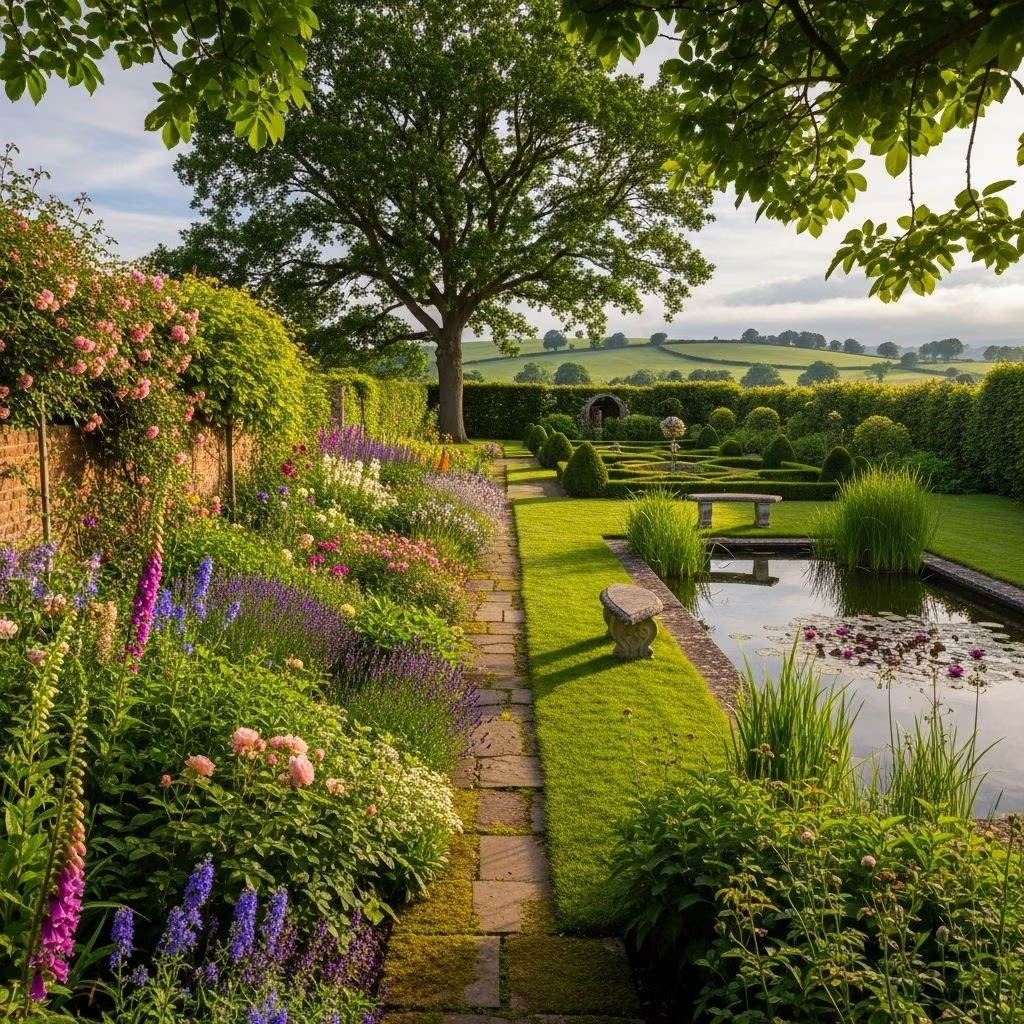
Lessons from Wonderlands: Insights from Britain's Garden Designers
Wonderlands: British Garden Designers at Home by Clare Coulson invites readers behind the gates of 18 celebrated designers' own gardens throughout the United Kingdom. This article synthesizes the essential ideas, anecdotes, and lessons uncovered in the book, offering a journey into the creative sanctuaries where world-renowned landscape architects refine their craft, experiment boldly, and rediscover the personal joys of gardening.
Introduction: The Designer at Home
Renowned landscape designers express their most authentic creative vision in their personal gardens, unburdened by client demands or deadlines. In Wonderlands, Clare Coulson explores these intimate sanctuaries, where designers retreat not only to innovate, but also to seek solace and connection with nature, family, and themselves. These spaces serve as active laboratories for ideas and as refuges, allowing designers the freedom to experiment, reflect, and grow. The result is an unparalleled look at the interplay between a designer’s personal life and professional mastery, illuminated through Eva Nemeth’s evocative photography.
Themes and Insights from Designer Gardens
The private gardens profiled in Wonderlands are as unique as their creators, yet several strong themes unite them:
- Experimentation and Innovation: Designers use their gardens as testbeds, freely trialing new planting combinations, ecological techniques, and landscape forms without fear of failure or client restrictions.
- Personal Reflection and Restoration: These spaces are nurturing havens—places for recuperation, contemplation, and the joys of domestic life, deeply interwoven with the designers’ identities.
- Continuous Evolution: Unlike many client projects, which must meet deadlines, a designer’s own garden continually evolves, often over decades, reflecting learning, shifting interests, and changing family needs.
- Watching and Tending: An ‘everyday watchfulness’ emerges—a readiness to respond to subtle changes, experiment, and adapt in real time as seasons and ideas shift.
Portraits of Designers and Their Havens
Wonderlands is structured around individual chapters, each focusing on a designer, their garden, and the intertwined story of personal and professional development.
Tom Stuart-Smith – The Barn, Hertfordshire
Tom’s garden is a testament to patience and vision. The now-famous cloud-hedging began as slender whips; elements from previous Chelsea Flower Show exhibits were reused, emphasizing a sustainable, evolutionary approach. Over decades, his garden has expanded to become part of a community resource, The Serge Hill Project, illustrating how a private sanctuary can seed wider communal learning and creativity.
Butter Wakefield – Urban Revival in London
Butter’s London garden, brimming with meadow-style plantings, exemplifies how even a city space can serve as a therapeutic retreat. She describes her ever-changing urban landscape as a vital counterpoint to the rush of work life—a place that forces her to slow down and engage deeply with natural processes.
Sarah Price – A Living Sketchbook
For Sarah Price, gardening is as much about observation as creation. Her Monmouthshire home is described as “a library and a sketchbook,” a site for trying out new plant palettes and ideas while maintaining a spirit of ongoing curiosity.
Harry and David Rich – Fairytale Cottage, Wales
The brothers’ secluded cottage garden is fully embedded in the wild Welsh landscape, accessible only by a bridge over a stream. Their garden is living evidence of resourceful hands-on experimentation, shaped by limited resources, personal vision, and commitment. These young Chelsea Flower Show gold medalists use their own grounds as the ultimate proving ground for design and horticultural daring.
Isabel and Julian Bannerman – Ashington Manor
Known as ‘serial doer-uppers,’ the Bannermans’ gardens are continually in flux, embodying the spirit of renewal and the delight of starting afresh. Each garden becomes both a legacy and a draft for the next project—a never-ending cycle of learning and creativity.
Mary Keen – Watchful Gardening in Gloucestershire
Mary places a premium on attentiveness—everyday watchfulness and incremental adjustment. Her Gloucestershire haven is less about grand gestures and more about subtle gains, close observation, and the simple daily pleasures of hands-on gardening.
Catherine FitzGerald & Dominic West – North Wiltshire Sanctuary
Arriving at North Wiltshire, visitors are greeted by a 18th-century house enveloped in exuberant plantings: climbing roses, yews, ox-eye daisies, and foxgloves abound. Catherine’s philosophy prioritizes harmony with the site’s historic character, blending romance with ecological logic. Her horticultural apprenticeship, collaborations, and personal projects—like Glin Castle’s evolving meadows and exotic bog gardens—demonstrate a professional life shaped by personal passion and experimentation.
Arabella Lennox-Boyd – Gresgarth Hall
For Arabella, the garden is a portrait of her passions—an expressive counterweight to the formal demands of commission work, evolving gently over the decades.
Arne Maynard – Allt-y-Bella
Arne’s practice at his Welsh garden is defined by a relentless drive to refine and edit, enjoying a freedom from rigid timelines. This perpetual cycle of editing is both a source of inspiration and a reflection of the realities inherent in long-term gardening.
Experimentation and Creative Freedom
One of the strongest lessons from Wonderlands is that a designer’s own garden is a zone of risk-taking, play, and invention. Here, they:
- Trial new plant varieties and combinations without client pressure.
- Build and adapt ecological features—bioswales, miniature meadows, wildlife habitats—with the flexibility to revise or remove as needed.
- Use the space as a personal sketchbook, allowing the unfinished, the spontaneous, and the provisional to sit side-by-side with established plans.
The gardens profiled are raw and authentic—often a work in progress. This sense of ongoing experimentation infuses the spaces with energy and creativity, influencing the designers’ practice beyond their own gates.
Growth, Reflection, and Personal Connection
While every designer brings technical expertise and fresh ideas, Wonderlands reveals a shared tendency toward deep personal reflection. Gardens serve as their sanctuaries for both joy and solace:
- They are family spaces—extensions of the designers’ homes, often filled with children and pets, and shaped by generations.
- Emotional landscapes—places to process busy work schedules or life transitions, providing grounding through engagement with earth and seasons.
- Zones of memory and legacy—where each planting or structure may recall previous gardens, travels, or formative collaborations.
Gardens as Living Sketchbooks
A recurring motif in Wonderlands is the garden as a ‘library and sketchbook.’ Many designers view their grounds as living laboratories where forms, textures, and colors are studied, adapted, and sometimes discarded. For example:
- Sarah Price documents plant trials as reference for future projects.
- Nigel Dunnett experiments with bioswales and meadows, translating direct discoveries into broader ecological practice.
- Changes in a garden are not always premeditated—seasonal happenstance, wildlife, and weather frequently shape both challenges and breakthroughs.
Responding to Spirit and Place
A critical lesson among Britain’s best designers is the importance of ‘reading’ and working with the spirit of the place. Each designer approaches this differently:
- Catherine FitzGerald aims for her garden to look as if it “had always been there,” achieving harmony with vernacular architecture and local ecology.
- Designers adapt plant palettes, materials, and structures to complement historic buildings, borrowed views, or unique microclimates.
- Gardeners respond dynamically to their plot’s evolution—changing light, worn paths, or the growth (and sometimes loss) of trees and shrubs.
For the designers profiled, the goal is not so much imposing will upon land as gently uncovering and enhancing the latent potential of a site.
Legacy, Learning, and Community
As their gardens mature, many designers develop a sense of stewardship, hoping to pass on inspiration, skills, and sometimes the literal landscape itself to family, visitors, or the local community. Examples include:
- Tom Stuart-Smith’s expansion into a learning resource and community hub, inviting others to experience and study the garden.
- Catherine FitzGerald’s enduring ties to Glin Castle, maintaining both familial and historical continuity through careful, ongoing planting.
- The Bannermans’ series of gardens, each contributing to a lineage of design, experimentation, and joy.
In all cases, the process of tending and improving an evolving site encourages humility and resilience, confirming that even for experts, gardening is a never-finished education.
Frequently Asked Questions (FAQs)
Q: Why do leading garden designers prioritize their own gardens for experimentation?
A: Designers’ own gardens offer the rare chance to experiment without commercial pressure. Freed from deadlines and client expectations, they can pursue ideas, plant combinations, and ecological innovations, using these private spaces as working laboratories that influence their wider portfolio.
Q: Do designers’ gardens always reflect their professional work?
A: While there are frequent overlaps, many designers treat their home gardens as realms for relaxation, family connection, and play—spaces where they may try things deemed too risky or unpolished for client projects. These gardens often reveal a more informal, experimental side not always visible in their commissioned designs.
Q: How do designers balance formality and wildness in their gardens?
A: Many gardens profiled in Wonderlands blend structure and exuberance, respecting a site’s natural tendencies while framing and guiding growth through careful layout, pruning, or architectural interventions. The aim is balance: harmonizing cultivated pleasure with wild vitality.
Q: Can urban gardens serve as test beds for professional ideas?
A: Absolutely. Several designers—like Butter Wakefield and Emily Erlam—have made creative use of limited urban space, transforming city plots and even balconies into oases for experimentation, restoration, and inspiration.
Q: What is the most valuable lesson from Wonderlands for amateur gardeners?
A: Patience and openness to change are essential. Even celebrated designers embrace gradual growth, ongoing trial and error, and the possibility of starting over. The journey, not just the outcome, defines a great garden.
Key Takeaways
- A designer’s private garden is both a refuge and an ever-evolving workshop for creative risk-taking and playful learning.
- Gardening for oneself offers the freedom to experiment, reflect, and reconnect with nature—often fueling innovations that ripple outward to client work and the gardening community at large.
- Above all, humility, patience, and a willingness to observe and adapt support the ongoing mastery of the garden arts.
References
- https://www.gardensillustrated.com/garden-equipment/gardening-books/wonderlands-british-garden-designers-clare-coulson
- https://www.theenglishgarden.co.uk/gardens/gardens-to-visit/wonderlands-by-clare-coulson/
- https://www.gardenista.com/posts/fairytale-cottage-garden-wales-harry-david-rich/
- https://www.gardenista.com/posts/lessons-learned-wonderlands-british-garden-designers-home/
- https://www.gardenista.com/author/clare-coulson/
- https://www.gardenista.com/tag/england/