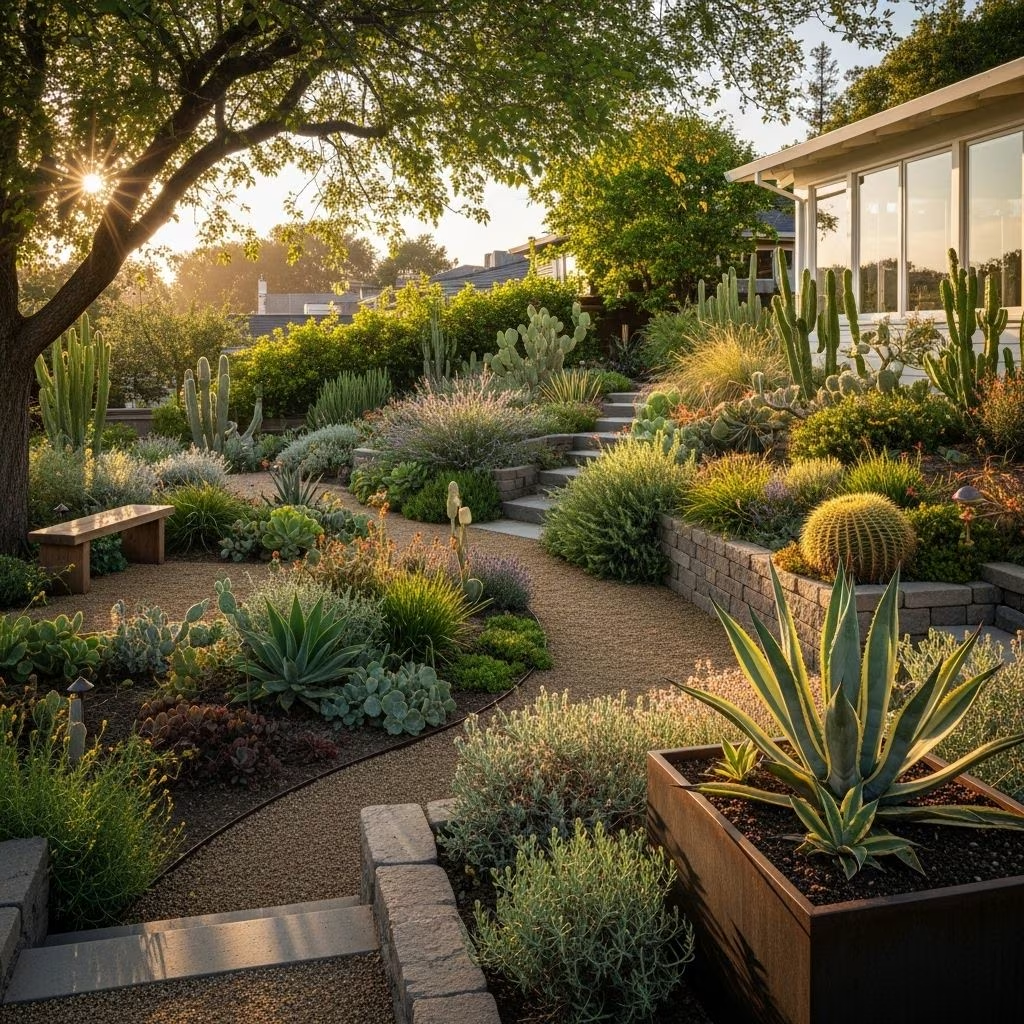
When California landscape designer Flora Grubb and her young son first encountered a modest Berkeley bungalow, they experienced an immediate connection that transcended typical house-hunting pragmatism. Their unanimous declaration—”This is our house”—marked the beginning of a remarkable garden transformation journey that would showcase Grubb’s exceptional design philosophy and horticultural expertise. The property, initially characterized by an uninspiring strip of lawn bordered by concrete, presented a blank canvas that most homeowners might view with trepidation. However, for Grubb, whose eponymous plant nursery has earned recognition as a Bay Area destination for gardening enthusiasts, this modest urban lot represented boundless creative potential.
The transformation of this Berkeley property exemplifies how thoughtful landscape design can convert ordinary urban spaces into extraordinary private retreats. Grubb’s approach demonstrates that even compact city gardens can become immersive sanctuaries when designed with intentionality, horticultural knowledge, and an understanding of how landscapes shape our emotional well-being. Her success in creating what she describes as “your own little island” within a dense urban environment offers valuable lessons for homeowners seeking to maximize limited outdoor spaces.
Creating Privacy and Enclosure in Urban Gardens
The foundation of Grubb’s garden transformation centered on establishing a sense of enclosure—a critical element often overlooked in urban garden design. In densely populated neighborhoods where homes stand shoulder-to-shoulder, creating the perception of privacy without completely closing off a space requires strategic planning and thoughtful plant selection. Grubb understood that successful urban gardens balance openness with seclusion, allowing residents to feel protected while maintaining visual interest for passersby.
Her first major design decision involved installing a substantial acacia tree, which immediately altered the spatial dynamics of the front yard. This wasn’t merely about adding greenery; it was about fundamentally changing how the space felt to those within it. Large specimen trees serve as natural architectural elements, creating overhead canopies that define outdoor rooms and establish vertical layers that interrupt sightlines from neighboring properties. The acacia’s spreading branches and delicate foliage provided dappled shade while introducing movement and texture to the previously flat landscape.
Complementing the acacia, Grubb added a bulky palm that contributed another dimension of privacy screening. Palms, with their distinctive silhouettes and year-round presence, create bold visual statements while their fronds rustle soothingly in the breeze. Together, these immediate plantings—what Grubb describes as going “up immediately”—established the garden’s structural framework and transformed the experience of being in the space almost overnight.
The Art of Transparent Boundaries
Following the installation of her privacy trees, Grubb turned her attention to defining the garden’s perimeter with fencing. Rather than constructing solid barriers that would create a fortress-like atmosphere, she opted for a wide-slatted fence design that she characterizes as “pretty transparent.” This choice reflects a sophisticated understanding of urban garden dynamics and community relationships.
The semi-transparent fence accomplishes multiple objectives simultaneously. It establishes clear property boundaries while maintaining visual porosity that prevents the garden from feeling claustrophobic or completely isolated from its surroundings. This openness serves both practical and social functions—it allows air circulation, permits light penetration, and creates opportunities for neighborhood connection. Grubb’s observation that she frequently notices people “peeking into my garden all the time” doesn’t concern her; instead, she embraces it enthusiastically, confessing, “I’m totally a garden peeper myself.”
This philosophy represents a generous approach to urban gardening where beautiful landscapes become semi-public amenities that enhance neighborhood character. Rather than hoarding aesthetic pleasure behind impenetrable walls, Grubb’s design allows her garden to contribute to the streetscape, offering visual interest to pedestrians while still providing her family with functional outdoor living space. This balance between privacy and community engagement exemplifies thoughtful urban design that recognizes gardens as both personal sanctuaries and neighborhood assets.
Transforming Hardscape: From Turf and Concrete to Living Landscape
Two years before the documentation of her completed garden, Grubb undertook the physical transformation of her property’s hardscape—a process that involved removing both the conventional turf grass and the concrete surfaces that dominated the original landscape. This demolition phase, while labor-intensive and sometimes costly, proved essential for creating the garden she envisioned. The removal of traditional lawn represented both a practical and philosophical choice aligned with California’s evolving relationship with water-intensive landscaping.
Turf grass, despite its prevalence in American residential landscapes, demands significant resources including regular irrigation, mowing, fertilization, and pest management. In California’s Mediterranean climate, where water scarcity presents ongoing challenges, replacing lawns with low-water plant communities has become increasingly important. Grubb’s decision to eliminate her lawn demonstrates how landscape professionals practice the sustainable principles they advocate to their clients.
Similarly, tearing up concrete created opportunities for soil improvement and increased permeability. Concrete surfaces contribute to urban heat island effects, prevent rainwater infiltration, and offer no ecological value. By replacing these impervious surfaces with planted areas, Grubb increased her property’s environmental benefits while creating more visually interesting and emotionally satisfying outdoor spaces. This transformation required physical effort and temporary disruption but yielded long-term rewards in both aesthetics and sustainability.
The Psychology of Green: Color as Emotional Design
One of the most intriguing aspects of Grubb’s design philosophy involves her deliberate focus on specific shades of green—particularly vibrant, spring-like greens that evoke powerful emotional responses. This attention to color nuance demonstrates a sophisticated understanding of how landscapes affect human psychology and well-being. While many gardeners think about bloom colors extensively, Grubb’s emphasis on foliage tones reveals deeper layers of horticultural artistry.
Grubb articulates a compelling theory about why certain greens resonate so profoundly with viewers: “Those bright greens tell you that there’s enough—enough water, enough food, enough everything.” This observation connects instinctive human responses to environmental cues with conscious design choices. Throughout evolutionary history, humans relied on landscape reading for survival, interpreting lush vegetation as indicators of resource availability and safety. Bright, saturated greens signal healthy, thriving ecosystems where water and nutrients support abundant growth.
By deliberately selecting plants that display these vibrant green hues, Grubb taps into primal associations that create feelings of abundance, security, and vitality. This psychological dimension elevates her garden beyond mere decoration, transforming it into a space that actively contributes to emotional well-being. The color palette communicates prosperity and health at a subconscious level, making the garden not just beautiful to observe but also restorative to experience.
Achieving Lushness with Low-Water Plants
Perhaps the most impressive aspect of Grubb’s garden design lies in her ability to create an impression of lushness using primarily low-water plants—a seemingly paradoxical achievement that requires extensive botanical knowledge and careful plant selection. The conventional association between verdant, luxuriant gardens and high water consumption runs deep in landscape culture, yet Grubb demonstrates that these qualities can be decoupled through informed design.
This approach addresses one of California gardening’s central challenges: creating visually satisfying landscapes that remain viable during inevitable drought periods and align with evolving water conservation ethics. Low-water plants, often dismissed as suitable only for stark, minimalist desert gardens, can actually produce remarkably lush effects when chosen thoughtfully and arranged strategically.
Grubb packed her compact landscape densely with carefully selected species that exhibit the bright greens she prioritized while requiring minimal supplemental irrigation once established. This plant selection likely includes drought-adapted species from Mediterranean climates worldwide—regions with similar rainfall patterns to California where plants have evolved strategies for thriving with limited water. Many such plants display surprisingly lush foliage textures and vibrant colors despite their water efficiency.
The density of planting also contributes significantly to the perception of lushness. By filling spaces completely and layering plants at multiple heights, Grubb created visual abundance that reads as luxuriant regardless of the individual plants’ water requirements. This technique, sometimes called “stacking” in permaculture design, maximizes visual impact per square foot while also providing ecological benefits including reduced soil evaporation, weed suppression, and habitat creation.
The Critical Importance of Proper Watering Technique
Despite her garden’s low-water character, Grubb emphasizes that proper watering remains “job one” in garden maintenance—a seemingly contradictory statement that actually reveals sophisticated understanding of plant physiology and establishment processes. She identifies one of the most common and damaging mistakes gardeners make: failing to water plants sufficiently during establishment periods and then attempting to compensate by drowning them.
This feast-or-famine watering pattern creates multiple problems for plants. Inconsistent moisture availability prevents roots from establishing properly, as plants never develop the extensive root systems they need to access deeper soil moisture. When gardeners notice their plants showing drought stress, they often respond by flooding the root zone, which can lead to root rot, fungal diseases, and nutrient leaching. This cycle of neglect and overcompensation weakens plants and makes them perpetually vulnerable to stress.
Grubb’s advice implicitly advocates for what horticulturists call “deep and infrequent” watering—providing sufficient water to thoroughly moisten the entire root zone, then allowing soil to dry somewhat before watering again. This approach encourages roots to grow downward in search of moisture, creating more resilient plants capable of withstanding dry periods. Even low-water plants require consistent moisture during their first growing season as they establish root systems; the “low-water” designation refers to their reduced needs once fully established, not their requirements during installation.
This nuanced understanding separates successful gardeners from those who struggle. Low-water gardening doesn’t mean neglecting irrigation; it means understanding plant water needs throughout their lifecycle and providing moisture strategically to build drought-resilient landscapes. Grubb’s professional expertise ensures she waters her own garden with the same care and attention she would recommend to nursery customers.
Small Space, Big Impact: Urban Garden Design Principles
Grubb’s Berkeley garden exemplifies several principles that make small urban gardens successful and satisfying. Her focus on creating “the illusion that you’re on your own little island” in a city garden context provides a valuable framework for homeowners working with limited outdoor space. This approach acknowledges that urban gardens cannot achieve the expansive openness of rural landscapes but can instead offer different qualities—intimacy, enclosure, and intensive sensory experience.
The first principle involves maximizing vertical space through trees and tall plantings that create overhead canopies. Vertical elements dramatically expand the perceived volume of small gardens by drawing the eye upward and creating multilayered compositions. The acacia and palm in Grubb’s garden accomplish this while also providing the privacy screening essential for urban comfort.
Second, Grubb demonstrates the power of abundant planting in compact spaces. Rather than leaving breathing room between specimens, she packed her garden densely, creating immersive environments where visitors are surrounded by foliage. This generosity of planting transforms small areas into distinct destinations rather than merely decorated passageways.
Third, her attention to boundaries—creating them without excessive solidity—shows how thoughtful edge treatment balances privacy with community connection. Urban gardens exist within neighborhood contexts, and completely isolating them diminishes both the property and the streetscape. Semi-transparent boundaries maintain relationships with surroundings while still defining protected space.
Finally, Grubb’s psychological approach to color demonstrates how emotional responses to landscapes can be deliberately cultivated. By understanding why certain greens feel abundant and reassuring, she creates spaces that offer not just visual pleasure but also emotional restoration—particularly valuable in urban environments where natural landscapes are scarce.
Flora Grubb: From Nursery Owner to Home Gardener
Flora Grubb’s professional background as nursery owner adds particular interest to her personal garden project. Her San Francisco plant nursery has achieved reputation as a destination for Bay Area gardeners seeking unusual plants, expert advice, and design inspiration. This professional expertise informs every aspect of her home garden, from plant selection to installation techniques to ongoing maintenance practices.
However, designing for oneself presents unique challenges even for professionals. Personal gardens must balance aesthetic ambitions with practical realities including limited time, finite budgets, and the competing demands of family life. Grubb’s willingness to share her home landscape offers valuable insight into how professional designers approach their own spaces—the priorities they set, the compromises they accept, and the principles they refuse to abandon even under practical constraints.
Her Berkeley garden also serves as a living advertisement for her nursery, demonstrating to potential customers what can be achieved in small urban spaces using plants and techniques available through her business. This connection between professional practice and personal expression creates authenticity that resonates with customers seeking relatable expertise rather than unattainable perfection.
Sustainability Meets Beauty in California Landscapes
Grubb’s garden represents broader trends in California landscape design where environmental responsibility increasingly intersects with aesthetic ambition. The state’s ongoing water challenges have pushed designers, nurseries, and homeowners toward plant palettes and design approaches that reduce resource consumption without sacrificing visual appeal. This evolution has accelerated the adoption of native plants, Mediterranean species, and creative hardscaping alternatives to traditional lawns.
The success of gardens like Grubb’s helps shift public perception about what sustainable landscapes can be. When water-wise gardens look sparse, utilitarian, or aesthetically compromised, they fail to inspire widespread adoption regardless of their environmental benefits. However, when low-water landscapes achieve genuine beauty and emotional resonance, they prove that sustainability and sensory pleasure need not conflict.
This demonstration effect extends beyond individual properties to influence neighborhood character and community standards. As more visible, attractive low-water gardens appear in residential neighborhoods, they normalize these approaches and make traditional lawns seem increasingly anachronistic. Grubb’s transparent fence, allowing neighbors to observe and appreciate her garden, maximizes this positive influence by making her design choices visible and inviting.
Lessons for Aspiring Garden Makers
Several practical lessons emerge from Grubb’s garden that apply to anyone undertaking landscape projects, particularly in urban settings with limited space and water resources. First, establishing strong structural elements early—large trees, prominent shrubs, defining hardscape—creates immediate impact and provides a framework for layering additional plantings over time. Grubb’s decision to install her acacia and palm immediately demonstrates this priority.
Second, removing problematic existing elements, though initially expensive and disruptive, enables transformations that would be impossible through incremental improvement. Turf grass and excessive concrete cannot be reformed; they must be replaced to create sustainable, beautiful landscapes. This recognition helps homeowners move beyond cosmetic interventions toward fundamental reimagining of their outdoor spaces.
Third, understanding the emotional and psychological dimensions of gardens—not just their functional or aesthetic aspects—produces more satisfying results. Grubb’s focus on specific green tones because of their emotional associations demonstrates this higher level of design thinking that transcends mere prettiness to address how gardens make us feel.
Fourth, proper maintenance techniques, particularly watering, determine whether well-designed gardens thrive or fail. Even the most thoughtful plant selection and arrangement cannot overcome neglectful or ignorant care. Grubb’s emphasis on correct watering as “job one” reflects this reality and reminds gardeners that installation represents only the beginning of the garden-making process.
Finally, embracing community connection rather than pursuing complete isolation produces more generous urban landscapes that benefit entire neighborhoods. Grubb’s transparent fence and her comfort with garden peepers exemplify this philosophy, recognizing that beautiful gardens enrich communities when shared visually even if not physically accessible.
Frequently Asked Questions
Q: What are the key principles of small urban garden design?
A: Successful small urban gardens focus on creating enclosure through vertical plantings, establishing privacy without complete isolation using semi-transparent boundaries, planting densely to maximize visual impact, and selecting plants that create emotional resonance through color and texture. The goal is creating an “island” feeling within limited space.
Q: How can you create a lush-looking garden with low-water plants?
A: Achieving lushness with low-water plants requires selecting drought-adapted species with vibrant green foliage, planting densely to create visual abundance, layering plants at multiple heights, and ensuring proper establishment watering. Many Mediterranean-climate plants display surprisingly luxuriant appearances despite minimal water needs once established.
Q: What is the most common watering mistake gardeners make?
A: The most damaging watering mistake involves inconsistent irrigation—not watering plants enough during establishment, then drowning them to compensate when they show stress. This pattern prevents proper root development and can cause root rot. Proper technique involves deep, thorough watering followed by appropriate drying periods.
Q: Why did Flora Grubb remove her lawn and concrete?
A: Grubb removed traditional turf grass because it requires excessive water, maintenance, and resources inappropriate for California’s climate. She tore up concrete to increase soil permeability, reduce heat island effects, and create space for planted areas that offer environmental benefits and visual interest.
Q: What role does color psychology play in garden design?
A: Color psychology significantly influences how gardens affect our emotions. Bright, spring-like greens signal abundance and health, triggering positive responses rooted in evolutionary associations between lush vegetation and resource availability. Deliberately selecting plants for these color qualities creates gardens that feel restorative and reassuring.
Q: How important are large trees in establishing urban garden structure?
A: Large specimen trees are critical for urban gardens, providing immediate structure, creating overhead canopy layers, establishing privacy screening, and fundamentally altering spatial dynamics. Installing substantial trees early in the design process creates framework for all subsequent planting decisions.
Q: What does “proper watering” mean for low-water gardens?
A: Proper watering for low-water gardens means providing consistent, adequate moisture during plant establishment (typically the first year), using deep watering techniques that encourage root growth, and then gradually reducing frequency as plants mature. “Low-water” refers to mature plant needs, not installation requirements.
Q: Should urban gardens be completely private or share views with neighbors?
A: The most successful urban gardens balance privacy with community connection. Semi-transparent boundaries provide functional privacy while allowing gardens to contribute to neighborhood character. Sharing garden views enriches the streetscape and builds community appreciation for beautiful landscapes without sacrificing usable private space.