Introduction to Professional-Grade Espresso Machines
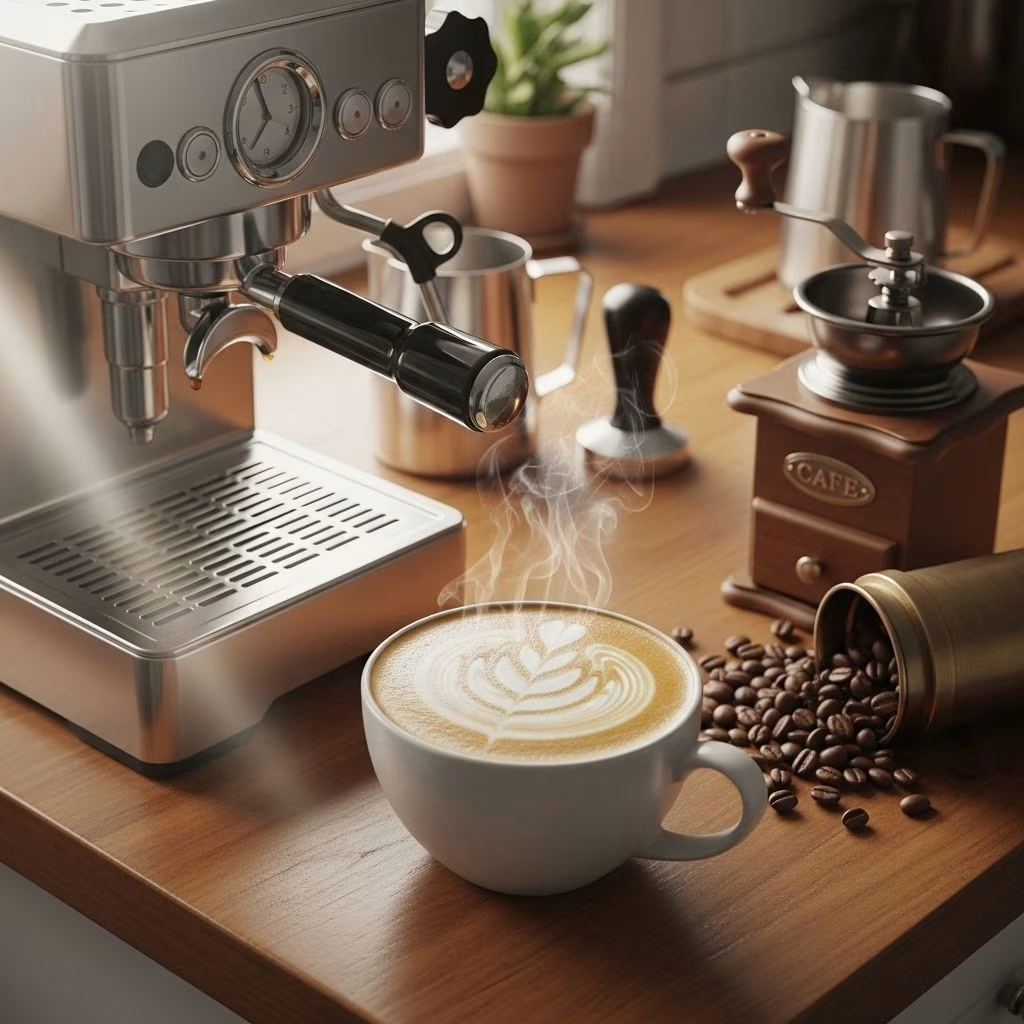
Professional-grade espresso machines are not just for commercial settings; they can also be a fantastic addition to your home, allowing you to create high-quality espresso shots with ease. These machines are designed to provide consistent results, rich flavors, and a wide range of customizable options to suit your taste preferences.
Key Features of Professional-Grade Espresso Machines
When looking for a professional-grade espresso machine for home use, several features are crucial:
- Temperature Control: A PID (Proportional-Integral-Derivative) controller ensures precise temperature control, which is essential for optimal espresso extraction. This feature allows for adjustments to suit different roast levels and brewing styles.
- Boiler Configuration: Machines can have single, dual, or heat exchanger configurations. Dual-boiler machines are ideal for high demand, offering separate boilers for brewing and steaming, thus maintaining consistent temperatures.
- Group Head and Portafilter: The group head is where espresso is extracted, and the portafilter holds the coffee grounds. A larger portafilter size (e.g., 58mm) is often preferred for its compatibility with various accessories.
- Steam Wand and Milk Frothing: A steam wand is essential for creating lattes and cappuccinos. Some machines feature automatic or advanced frothing systems for easier use.
Benefits of Professional-Grade Espresso Machines
Professional-grade machines offer several advantages over standard home espresso machines:
- Consistency and Quality: They ensure consistent brewing conditions, resulting in high-quality espresso shots every time.
- Customization Options: Users can adjust brewing parameters like temperature, pressure, and volume to suit their preferences.
- Durability and Reliability: These machines are built to last, with durable materials and components designed for heavy use.
Manual vs. Automatic Espresso Machines
Both manual and automatic machines have their advantages:
- Manual Machines: Provide full control over brewing variables, allowing for precise adjustments. They are often more affordable and portable, ideal for enthusiasts who enjoy the process of brewing.
- Automatic Machines: Offer convenience and ease of use, with programmable settings and automatic cleaning cycles. They are suitable for those who want a hassle-free espresso experience.
Considerations When Buying an Espresso Machine
Purchasing the right espresso machine requires careful consideration of several factors:
- Space and Budget: Choose a machine that fits your available space and budget. Manual machines are generally more compact and cost-effective.
- Usage Frequency: If you plan to use the machine frequently, durability and speed are important factors.
- Personal Preferences: Consider whether you prefer a manual or automatic brewing experience and what features are most important to you.
Frequently Asked Questions (FAQs)
Q: What is the ideal temperature for brewing espresso?
A: The ideal brewing temperature for espresso is between 195°F and 205°F.
Q: What is the difference between a single-boiler and dual-boiler espresso machine?
A: A single-boiler machine uses one boiler for both brewing and steaming, while a dual-boiler machine has separate boilers for each function, ensuring consistent performance.
Q: How do I choose the right espresso machine for my needs?
A: Consider your budget, available space, desired level of automation, and how often you plan to use the machine. Reading reviews and comparing features can also help in making an informed decision.
References
- https://procoffeegear.com/collections/commercial-espresso-machines
- https://www.chriscoffee.com/collections/espresso-machines
- https://coffeebros.com/blogs/coffee/what-to-look-for-when-buying-an-espresso-machine
- https://www.coffeefest.com/blog/choose-commercial-espresso-machine
- https://flairespresso.com/product/flair-pro-3-espresso-maker/
- https://perfectdailygrind.com/2018/12/understanding-the-different-types-of-espresso-machine/
- https://procoffeegear.com/blogs/articles/espresso-machine-features-to-consider
- https://sca.coffee/sca-certified/commercial-equipment
- https://www.youtube.com/watch?v=bYSOrMJ6u1E