Why a Portable Drive Toolkit Should Be Every DIYer’s First Purchase
Imagine tackling a home repair or automotive project and realizing you’re missing just the right tool for the job. Enter the portable drive toolkit: a compact, durable, and highly versatile accessory that makes completing everything from furniture assembly to bicycle adjustments remarkably straightforward. Whether you are a seasoned repair expert or just dipping your toes into DIY, having a toolkit ready to roll at a moment’s notice is a transformative addition to your workspace and lifestyle.
The Modern DIY Landscape: Why Convenience is King
The advent of flexible, mobile lifestyles has extended into how we approach repairs and maintenance. Space-saving solutions are no longer just nice-to-have—they’re essential. Today’s toolkits are designed to move with you, fitting easily in apartments, cars, office drawers, or backpacks, allowing for fixes anywhere and anytime. With a portable drive set, you’re no longer beholden to bulky toolboxes: you get practicality and portability without sacrificing essential functionality.
Main Benefits of Compact Toolkits
- Space Efficiency: Fits neatly into bags, glove compartments, or desk drawers.
- Travel-Ready: Lightweight and streamlined for on-the-go repair needs.
- All-in-One Versatility: Multiple bits and drive options cover a wide repair spectrum.
- Simplifies Repairs: No more hunting for mismatched tools or missing pieces.
- Minimizes Mess: Organized compartments keep bits and handles in place.
What’s Inside a Quality Portable Drive Toolkit?
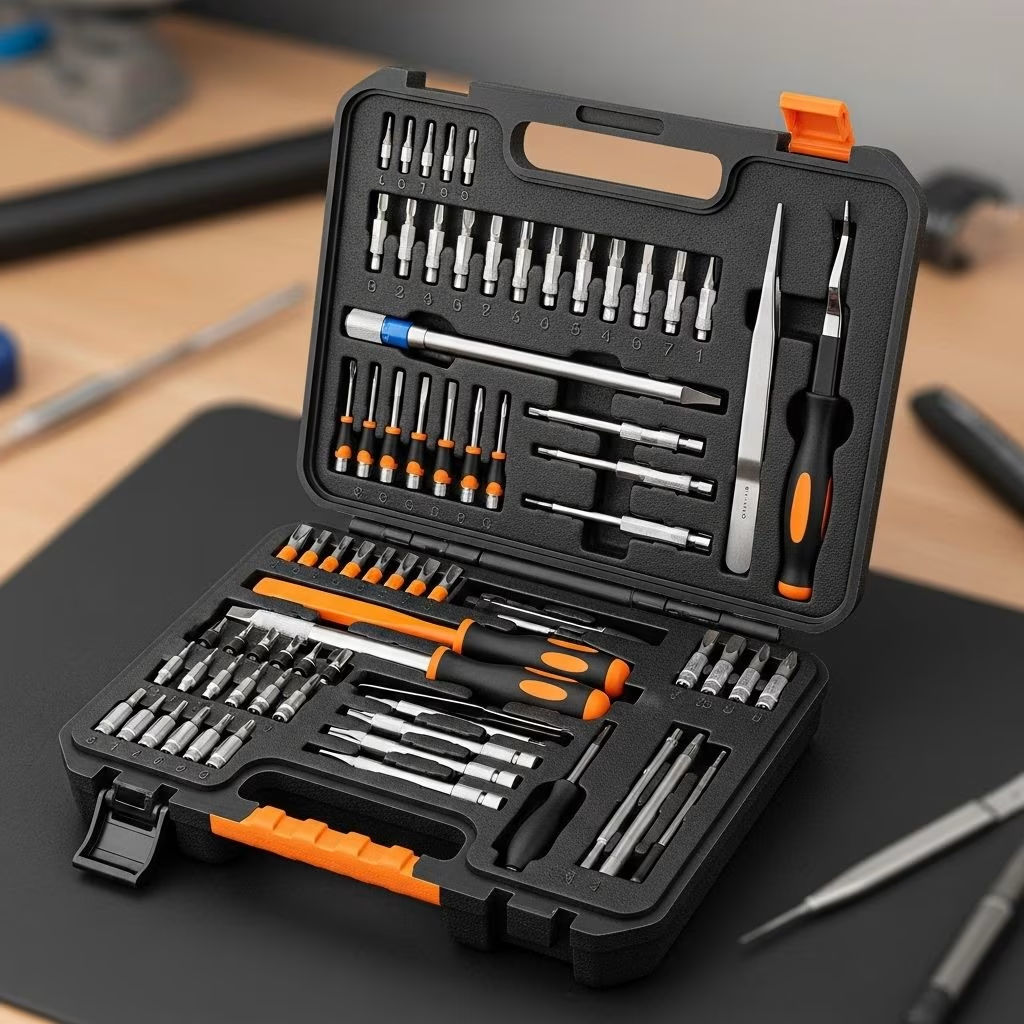
The right toolkit strikes a balance between content depth and ease of use. Here’s what typically comes in a modern set that stands out:
- Ratchet Handle: Ergonomically designed for easy grip and extra torque, enabling faster, safer fastening and loosening.
- Socket and Bit Selection: A full spectrum of driver bits (Phillips, flathead, hex, Torx, square, and more) to handle electronics, appliances, furniture, bikes, and vehicles.
- Extension Bar: For reaching tricky, deep-set screws or bolts.
- Adapters: Convert bits and sockets for compatibility with different fastener types.
- Magnetic Tips: Secure grip on screws for one-handed starting, even in awkward positions.
- Sturdy Carrying Case: Keeps all components organized and prevents loss or damage, often designed to open flat for easy access.
Core Use Cases: How a Portable Toolkit Saves the Day
A smart toolkit isn’t just insurance against occasional loose screws—it’s the backbone of everyday problem-solving for a range of scenarios.
- Furniture Assembly & Flat-Pack Projects
Tackle the confusing maze of Allen keys and poor-quality included tools. A drive toolkit lets you breeze through installations with the bit you need ready at hand. - Automotive Maintenance
Address battery terminals, license plates, interior panels, or car stereos without hauling around heavy wrench sets. - Quick Electronic & Computer Repairs
Open laptops, replace phone batteries, or tighten glasses and gadgets with precision bits, preventing stripped screws and slippage. - Household Fixes
Door handles, light switch covers, bike repairs, cabinet latches—if it has a screw, you’re covered. - Emergency On-the-Go Repairs
Bring your toolkit camping, to the office, or in the car for when unexpected maintenance is needed.
Breaking Down Toolkit Features: What Sets the Best Sets Apart
Not all toolkits are created equal. Here’s what to look for—and avoid—when choosing your portable companion.
| Feature | Why It Matters |
|---|---|
| Bit Variety | Covers every imaginable screw and bolt, from standard to specialty fasteners. |
| Ergonomics | Handles that minimize strain and provide real leverage for tight spaces. |
| Build Quality | High-carbon alloy steel or S2 tool steel resists stripping, rust, and deformation. |
| Secure Carrying Case | Precision-cut slots hold each tool in place for instant identification and stress-free transport. |
| Magnetic Holders | Prevent lost screws—especially important in electronics work. |
| Clear Labeling | Quick size and type identification: no more playing ‘which bit is this?’ |
Choosing the Right Toolkit: Factors to Consider
With so many products vying for your attention, these factors will help narrow your options to the most practical and durable pick:
- Intended Primary Use: Are you focused on home repairs, electronics, vehicles, or all of the above?
- Number and Types of Included Bits: More isn’t always better—check if the set includes the types you’ll actually use most.
- Quality of Material: Hardened bits last longer and provide better torque transfer.
- Portability: Weight, size, and the design of the carrying case matter for frequent movers or tight storage.
- Value for Price: Compare not just the number of pieces, but the actual utility and reputation of the brand.
Kit in Action: Real-World Scenarios
Every tool’s worth is measured by how it performs in the field. Here are some everyday examples of how a portable drive toolkit proves its value:
- During a Move: Effortlessly disassemble and reassemble bookshelves, beds, and tables in minutes, not hours.
- Routine Car Checks: Handle battery swaps, license plate changes, and emergency repairs without a trip to the mechanic or the garage.
- Setting Up Appliances: Install mounted devices, repair doorknobs, or secure loose fixtures with a single kit—no more running up and down for missing tools.
- Travel Repairs: Keep the kit in your car or luggage for tackling everything from a bike chain repair to tightening ski boots.
- Assisting Friends and Family: Show up prepared for any call for household help, and step in as a DIY hero—no more improvising with butter knives or coin edges!
Getting the Most from Your Toolkit: Care and Maintenance
Like any investment, proper maintenance ensures longevity and peak performance:
- Regular Cleaning: Wipe down bits and handles after use to prevent buildup of dirt or grease.
- Dry Storage: Keep the toolkit in a cool, dry place to deter rust and material degradation.
- Inventory Checks: Before and after use, confirm all parts are in place—reducing the risk of lost pieces.
- Lubricate Moving Parts: Apply a drop of oil to ratchets or extension bars for smooth operation.
Toolkit Comparison: Portable vs. Traditional Toolboxes
| Feature | Portable Drive Toolkit | Traditional Toolbox |
|---|---|---|
| Size & Portability | Ultra-compact, lightweight, easy to carry anywhere | Often bulky, heavy, and stationary |
| Organization | All parts in dedicated slots; fast visual inventory | Mix of loose tools; time-consuming to find items |
| Scope of Repairs | Great for most screw/fastener-based fixes | Comprehensive, including bulky tools (hammers, pliers, etc.) |
| Cost-Efficiency | Affordable, especially for first-timers | Higher initial investment, can be overkill for simple jobs |
| Learning Curve | Beginner-friendly bits and handles | May require more tool knowledge |
Who Should Own a Portable Drive Toolkit?
There’s a toolkit for almost every type of fixer—and every toolkit becomes an extension of its owner’s lifestyle. Here’s who particularly benefits:
- Apartment Dwellers: With little storage space, a portable toolkit is perfect for lockers, drawers, and closets.
- Students: Ideal for dorm-living, moving between accommodations, or quick bike fixes on campus.
- Car Owners & Commuters: Keep one in the glove box or trunk—never call a tow for something as simple as a loose battery cable again.
- Homeowners: Essential for ongoing repairs, upgrades, and emergencies year-round.
- First-Time DIYers: Intuitive and non-intimidating, these kits are an inviting introduction to self-reliance.
Expert Tips: Maximizing Your Toolkit’s Potential
- Label Your Kit: Add a name or contact info in case you leave it at a job site or lend to a friend.
- Supplement With Your Needs: If your kit lacks a certain bit, buy infill packs rather than a whole new set.
- Keep a Backup: For the projects that require more torque or reach, have a separate ratchet or full-size screwdriver on hand.
- Practice Makes Perfect: Try mock repairs or practice assembling/disassembling simple items to get familiar with all included bits.
Frequently Asked Questions (FAQs)
Q: Can a portable drive toolkit handle heavy-duty repairs?
A: While designed for versatility, most portable drive kits are best for light to moderate repairs, such as furniture, electronics, or minor vehicle tasks. For very high-torque or industrial projects, a dedicated heavy-duty toolset is recommended.
Q: Is a compact toolkit enough for new homeowners?
A: For many basic home repairs and adjustments, a portable drive toolkit covers the essentials. Over time, as needs expand, you can supplement with larger tools as necessary.
Q: What material should I look for in a toolkit?
A: Opt for kits with bits made from high-carbon or S2 steel. These materials offer greater durability, torque, and resistance to stripping.
Q: How do I keep track of small bits and drivers?
A: Use the provided slots in the carrying case, and do a quick inventory after each use. Some cases have clear lids, making checks even easier.
Q: Are these toolkits suitable for professional maintenance techs?
A: Portable drive kits are excellent as second or travel sets for on-site adjustments, though trade professionals often supplement with more specialized tools tailored to their jobs.
The Bottom Line: A Tiny Toolkit With Outsize Impact
The best DIYers know that reliability, speed, and self-sufficiency come down to having the right tools at your fingertips. A well-chosen portable drive toolkit elevates your problem-solving capabilities—no more delays, lost screws, or missing bits. For students, renters, motorists, and handypeople alike, investing in a quality compact toolset pays dividends every time the unexpected strikes.
Grant yourself the confidence that comes with always being prepared. Pick the portable drive toolkit that fits your needs, and step up your DIY game—anywhere, anytime.
References
- https://interaliaproject.com/wp-content/uploads/2021/03/SMI-Toolkit.pdf
- https://mosaik-or.de/index.php/bffbecwshop/picks/the-best-wireless-hard-drives
- https://engagingmen.futureswithoutviolence.org/wp-content/uploads/2024/06/Campus-Engaging-Men-Toolkit_FUTURES.pdf
- https://www.tn.gov/content/dam/tn/mentalhealth/documents/Advancing_CIT_Programs_in_Tennessee_ALL.pdf