17 Stunning Hellebore Varieties for Every Garden
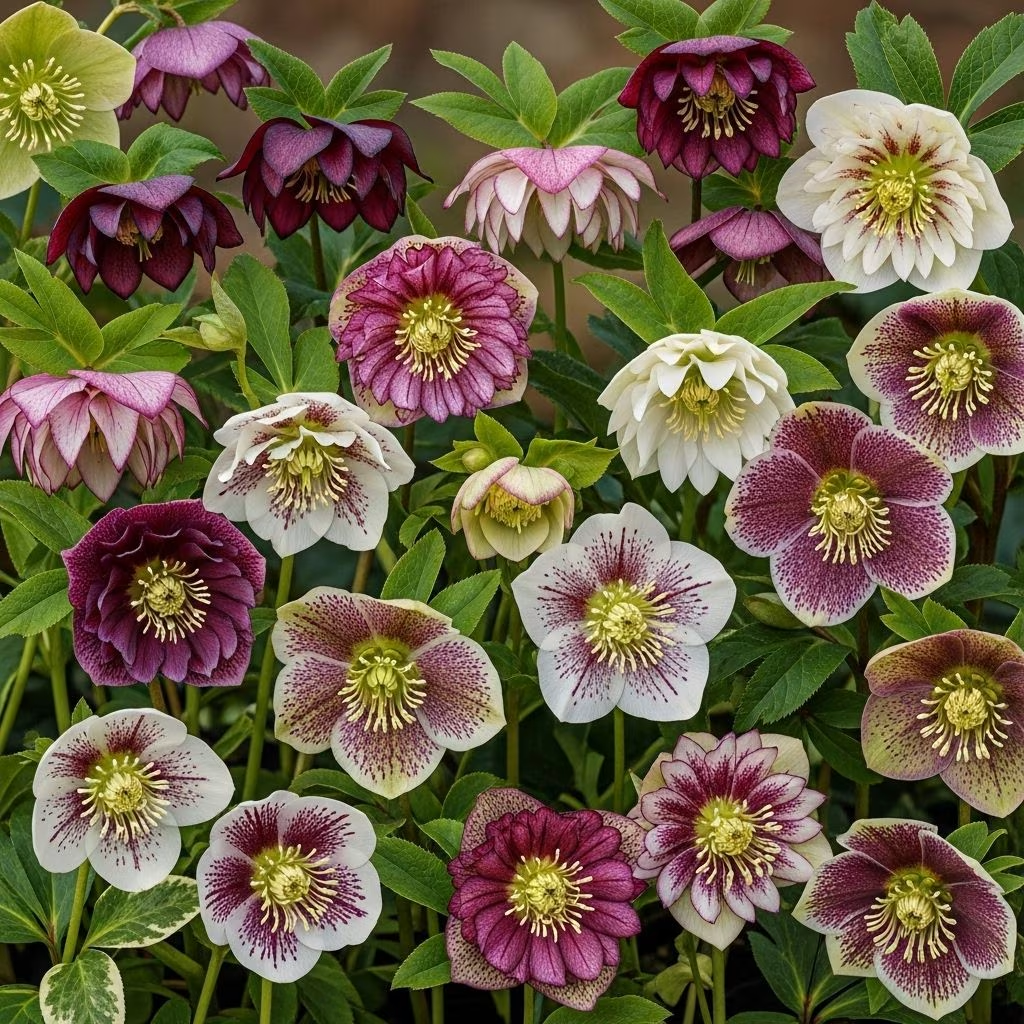
Hellebores, cherished for their cold-season blooms and evergreen foliage, offer a dazzling array of varieties for gardeners seeking beauty and resilience. With colors ranging from creamy whites to dark purples, and features such as double petals or spotted sepals, these perennials thrive where few flowers dare: in winter and early spring. Hellebores enliven shady borders, woodland edges, and containers with their spectacular flowers and enduring leaves.
What are Hellebores?
Hellebores are perennial flowers hardy to USDA zone 4 and up, delivering brilliant blooms early in the spring when few other plants are flowering. Most varieties feature evergreen foliage that provides year-round texture. The flowers can start in late winter or as early as January in milder climates. Deer-resistant and largely pest-free, they require rich soil, partial shade, and only moderate water in summer.
- Bloom February to April (varies by variety and climate)
- Evergreen or semi-evergreen foliage
- Colorful flowers: white, pink, green, purple, yellow, and more
- Resistant to deer and most pests
- Ideal for woodland gardens, shaded borders, and containers
Types of Hellebores: An Overview
A selection of the most beloved hellebore species includes:
- Helleborus niger: Christmas Rose
- Helleborus x hybridus: Lenten Rose
- Helleborus foetidus: Stinking Hellebore
- Helleborus corsicus: Corsican Hellebore
- Helleborus argutifolius: Holly-leaved Hellebore
- Helleborus orientalis: Oriental Hellebore
17 Noteworthy Hellebore Varieties
Here’s an in-depth guide to 17 unique hellebore varieties, each with its own charm and growing requirements.
| Variety | Height | Sun | Flower Color | Zone | Key Features |
|---|---|---|---|---|---|
| ‘Angel Glow’ | 1-2 ft | Partial Shade | Pink (fades to green) | 6-8 | Small clumps, compact, late winter bloom |
| ‘Ivory Prince’ | 1-2 ft | Partial Sun | Creamy White | 3-8 | Red stems, hints of silver in leaves, early bloomer |
| ‘Anna’s Red’ | 1-2 ft | Shade | Rich Red | 4-9 | Dark foliage, robust stems, February-April flowers |
| ‘Double Queen’ | 1-2 ft | Shade | Varied (doubles) | 4-9 | Ruffled, double blooms in many colors |
| ‘Brandywine’ | 1.5-2.5 ft | Partial Shade | Pink, Purple, Apricot, White | 4-8 | Spotted, doubles, and anemone types |
| ‘Harvington Double Yellow’ | 1-2 ft | Shade | Clear Yellow (double) | 4-8 | Unusual double yellow blooms |
| ‘Penny’s Pink’ | 1-2 ft | Partial Shade | Purple-Pink | 4-9 | Dark veined foliage, vivid blooms |
| ‘Winter Jewels’ | 1-2 ft | Shade | Mixed: Yellow, Pink, Red, Green | 4-8 | Double and single, large selection |
| ‘Picotee’ | 1-2 ft | Shade | White w/ Pink Edges | 4-9 | Crisp flower edges, long-lasting blooms |
| ‘Black Beauty’ | 1-2 ft | Shade | Near Black | 4-9 | Dramatic dark flowers, winter interest |
| ‘Apricot Blush’ | 1-2 ft | Shade | Apricot with blush | 4-8 | Soft colors, compact growth |
| ‘Red Lady’ | 1-2 ft | Partial Shade | Deep Red | 4-9 | Early, long-flowering period |
| ‘Snowdrift’ | 1-2 ft | Partial Shade | White | 4-8 | Prolific white blooms, good for contrast |
| ‘Frilly Swirls’ | 1-2 ft | Shade | White with green hints | 4-9 | Frilled, double petals |
| ‘Safari Sunset’ | 1-2 ft | Part Shade | Burnt Orange, Red | 5-8 | Tropical tones, late bloom |
| ‘Silver Dollar’ | 1-2 ft | Part Shade | Green-white | 4-8 | Silvered foliage, subtle blooms |
| ‘Golden Lotus’ | 1-2 ft | Shade | Yellow (double) | 4-8 | Rare yellow double, vigorous |
Signature Species: Hallmarks of the Genus
Helleborus niger (Christmas Rose)
- Bowl-shaped, pure white flowers, 3 inches across
- Flowers feature a crown of golden-yellow stamens
- Blooms in warm climates as early as Christmas, in cooler regions during late winter or spring
- Flowers face outward, sepals fade to green or pink with age
- Short, thick stems and palmate, deeply-lobed dark foliage
Helleborus x hybridus (Lenten Rose)
- Large rosettes of broad, evergreen leaves
- Stout stems with five-petaled flowers in pink, rose, purple, yellow, and nearly black
- Both single and double blooms, including spotted and anemone types
- Popular varieties: Brandywine™ (broad color range, doubles, anemone types)
Helleborus foetidus (Stinking Hellebore)
- Evergreen, up to 2.5 feet tall
- Fern-like, deeply-lobed foliage
- Abundance of light green, chartreuse bell-shaped flowers edged with red
- Self-seeds in dry, shaded spots (excellent for naturalizing)
- Early winter to late spring bloom
Rare and Uncommon Varieties
Some hellebores remain rare in gardens yet are prized for their beauty or unique features:
- Helleborus cyclophyllus: Early winter bloomer; soft, medium-width leaves in circular clusters; reddish new foliage
- Helleborus dumetorum: Small, light green flowers (~1 inch); cup-shaped, nodding blooms; foliage starts reddish, matures green
Growing and Care Tips for Hellebores
Hellebores are famously sturdy, but proper care ensures prolific blooming and healthy plants:
- Plant in rich, organic soil; amend with compost before planting
- Place in partial shade (morning sun, afternoon shade ideal)
- Water moderately; do not overwater during summer
- Deadhead spent flowers to neaten and prevent excessive self-seeding
- Divide clumps every few years if growth slows or plants become congested
- Add mulch every spring to retain moisture and regulate winter soil temperatures
Landscape Uses: Where to Plant Hellebores
- Woodland edges: Provide the dappled shade and organic matter hellebores favor
- Shaded borders: Under deciduous trees, where spring light is strongest
- Containers: Brilliant for patios and entryways; use well-drained potting mix
- Groundcover: Hellebores form dense, weed-suppressing mats
- Cut flower arrangements: Choose upright-blooming types like H. niger
Frequently Asked Questions (FAQs): Hellebore Varieties
Q: Are hellebores toxic to pets or children?
Yes, all parts of hellebores are considered toxic if ingested. Exercise caution in gardens accessible to pets and children.
Q: How long do hellebore flowers last?
Most varieties bloom for up to two months, with some holding color for three months or more.
Q: Can I plant hellebores in full sun?
Hellebores tolerate morning sun but need afternoon shade, especially in hot climates. Full sun can scorch leaves and shorten bloom duration.
Q: Do hellebores attract pollinators?
Yes, early-spring blooms lure bees and overwintering insects when few alternative sources exist.
Q: Why aren’t my hellebores blooming?
- Too much shade: Move to brighter position
- Poor soil: Amend with compost
- Recently divided or planted: It may take a year to settle in
Choose Your Hellebore: A Colorful Guide
Whether you favor pristine whites, deep purples, glowing pinks, or dramatic near-blacks, there’s a hellebore variety suited for every shade garden or wintry container. Select singles for classic elegance, doubles for ruffled exuberance, or spotted and picotee types for a painterly effect.
- For compact clumps: ‘Angel Glow’, ‘Ivory Prince’
- For color diversity: ‘Brandywine’, ‘Winter Jewels’
- For dramatic flair: ‘Anna’s Red’, ‘Black Beauty’
- For unusual hues: ‘Harvington Double Yellow’, ‘Golden Lotus’
Plant a mix for blooms from Christmas to April and enjoy durable foliage, disease resistance, and a riot of early-season color for years to come.
References
- https://gardenerspath.com/plants/flowers/hellebore-varieties/
- https://phsonline.org/for-gardeners/gardeners-blog/hellebores-care-varieties-tips
- https://www.epicgardening.com/hellebore-varieties/
- https://www.gardeningknowhow.com/ornamental/flowers/hellebore/different-hellebore-varieties.htm
- https://www.gardenia.net/genus/helleborus-hellebores