Palm Sunday Bible Verses: The Meaning and Significance of Jesus’ Triumphal Entry
Palm Sunday marks the unforgettable day when Jesus entered Jerusalem to the enthusiastic cheers of a gathered crowd, setting the stage for the events of Holy Week. This triumphant entry, recorded in all four Gospels, is rich with symbolism, prophecy, and powerful messages for believers today. Below, we explore the biblical passages that recount this event, the significance of the palm branches, prophecy fulfillment, and the enduring hope found in the message of Palm Sunday.
What is Palm Sunday?
Palm Sunday is the Sunday before Easter, commemorating Jesus Christ’s triumphant arrival in Jerusalem, just days before His crucifixion and resurrection. Crowds welcomed Him as a king, laying down palm branches and their cloaks along the road, shouting praise and calling Him the “Son of David.” This event is seen both as the fulfillment of messianic hope and as the beginning of the Passion Week.
Palm Sunday is sometimes called the “Triumphal Entry.”
Palm Sunday in Scripture: Gospel Accounts
The story of Palm Sunday is recorded in all four Gospels, each emphasizing unique details. Together, these accounts paint a vivid picture of a day filled with expectation and revelation:
- Matthew 21:1–11
Jesus approaches Jerusalem and instructs His disciples to fetch a donkey and her colt. Crowds spread cloaks and palm branches on the road, shouting, “Hosanna to the Son of David! Blessed is he who comes in the name of the Lord! Hosanna in the highest heaven!” When asked who Jesus is, the multitude proclaims, “This is Jesus, the prophet from Nazareth in Galilee.” - Mark 11:1–11
Jesus enters Jerusalem on a colt, greeted by crowds shouting, “Hosanna! Blessed is he who comes in the name of the Lord!” Mark notes that Jesus, after entering Jerusalem, visits the temple and then returns to Bethany with His disciples. - Luke 19:28–44
Luke’s account emphasizes the rejoicing of the whole crowd of disciples, praising God for the miracles they had witnessed. The Pharisees, disturbed by this acclaim, urge Jesus to silence His followers. Jesus replies, “If they keep quiet, the stones will cry out!” - John 12:12–19
Jesus’ entry is anticipated by a large crowd who had heard of the raising of Lazarus. They meet Him with palm branches, affirming His kingship as “the King of Israel.” The Pharisees despair that “the whole world has gone after him.”
| Gospel | Main Details |
|---|---|
| Matthew 21 | Donkey & colt, crowd’s response, fulfillment of prophecy |
| Mark 11 | Colt, Jesus’ authority, temple visit |
| Luke 19 | Miracles praised, Pharisees’ objection, prophecy of Jerusalem’s fate |
| John 12 | Palm branches, reference to Lazarus, global recognition of Jesus |
Prophecies Fulfilled on Palm Sunday
The events of Palm Sunday fulfill prophecies written centuries before Jesus’ birth. The most significant is the prophecy in Zechariah 9:9:
“Rejoice greatly, O daughter of Zion! Shout aloud, O daughter of Jerusalem! Behold, your king comes to you; righteous and having salvation is he, humble and mounted on a donkey, on a colt, the foal of a donkey.”
This prophecy is quoted directly by the Gospel writers (see Matthew 21:5). Additionally, the crowds’ shouts of “Hosanna” are drawn from Psalm 118:25–26, a messianic Psalm often associated with salvation and God’s deliverance.
- Zechariah 9:9 – Foresaw the humble king entering Jerusalem on a donkey.
- Psalm 118:25–26 – Declares, “Blessed is he who comes in the name of the Lord.”
- Isaiah 62:11 – Proclaims, “See, your Savior comes!”
Symbols and Traditions of Palm Sunday
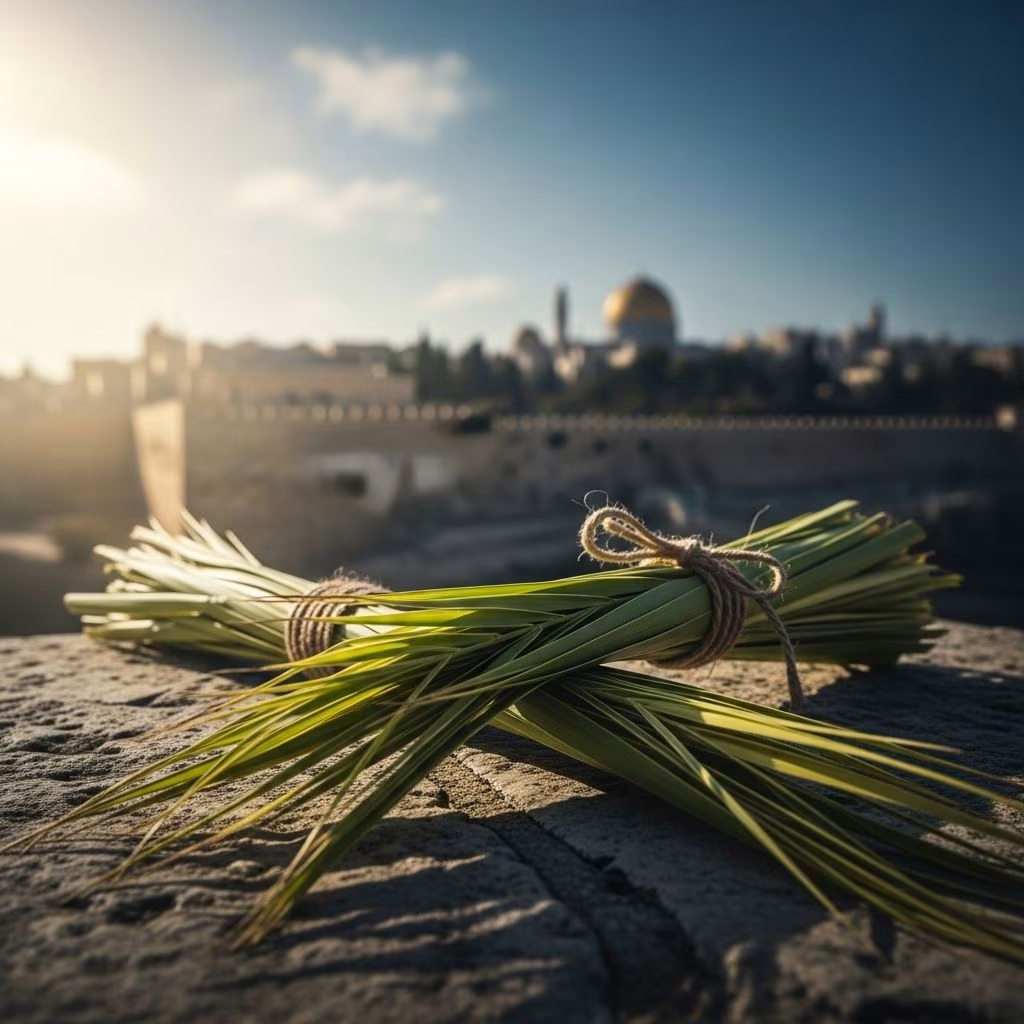
The most recognizable symbol of Palm Sunday is the palm branch, which was used by the crowd to honor Jesus as He entered Jerusalem. In the ancient world, palms represented victory, triumph, peace, and eternal life. The laying of cloaks and branches before Jesus is a traditional way of welcoming and honoring a victorious or royal figure.
- Palm branches: Signify victory and peace.
- Cloaks on the road: Symbolize submission and honor for Jesus as King.
Today, many Christian churches distribute palm fronds to congregants on Palm Sunday. In some traditions, these palms are kept, then burned the following year to create the ashes used on Ash Wednesday.
The Meaning of ‘Hosanna’
One of the most important words declared on Palm Sunday is “Hosanna”. This term comes from Hebrew, meaning “save now” or “save, we pray”, reflecting the crowd’s deep desire for deliverance. The full phrase, “Hosanna to the Son of David!” is both a cry for salvation and a confession of Jesus as the awaited Messiah.
- Hosanna – Derived from Psalm 118:25; originally a prayer for help, then became an acclamation of praise and salvation.
- “Blessed is he who comes in the name of the Lord:” A direct messianic greeting acknowledging Jesus’ divine mission.
In the New Testament narrative, the use of “Hosanna” stirred both joy among Jesus’ supporters and concern among the religious leaders, who understood the messianic implications of this proclamation.
Living the Message of Palm Sunday
Palm Sunday is not just a historical event; it is a call to every believer to recognize Jesus as King—and to live in response to His sacrificial love and saving power. The crowd’s enthusiastic welcome challenges modern followers to:
- Openly praise and honor Jesus: Just as the people laid down their cloaks and shouted praise, Christians are to proclaim Christ’s kingship.
- Receive Jesus with humility and obedience: Jesus entered on a lowly donkey, fulfilling the prophecy of a gentle king, offering peace rather than conquest.
- Reflect on the meaning of salvation: The week following Palm Sunday leads to Good Friday and Easter—the core of the Christian faith.
- Embrace hope in God’s perfect timing: God’s redemptive plan unfolds with divine precision, exemplified in the timing of the Triumphal Entry just before Passover.
Church leaders encourage believers to reflect on Palm Sunday throughout Holy Week, seeking to follow Christ more closely by serving others, praying more fervently, and living out the gospel in daily life.
21 Powerful Palm Sunday Bible Verses
These select Bible verses capture the prophecy, celebration, and deeper meaning of Palm Sunday. Use them for personal reflection, church reading, or family devotions during Holy Week.
- Matthew 21:8-9
“A very large crowd spread their cloaks on the road, while others cut branches from the trees and spread them on the road. The crowds that went ahead of him and those that followed shouted, ‘Hosanna to the Son of David!’ ‘Blessed is he who comes in the name of the Lord!’ ‘Hosanna in the highest heaven!'” - Mark 11:9-10
“Those who went ahead and those who followed shouted, ‘Hosanna! Blessed is he who comes in the name of the Lord! Blessed is the coming kingdom of our father David! Hosanna in the highest heaven!'” - Luke 19:37-38
“…the whole crowd of disciples began joyfully to praise God in loud voices for all the miracles they had seen: ‘Blessed is the king who comes in the name of the Lord! Peace in heaven and glory in the highest!'” - John 12:13
“They took palm branches and went out to meet him, shouting, ‘Hosanna! Blessed is he who comes in the name of the Lord! Blessed is the king of Israel!'” - Zechariah 9:9
“Rejoice greatly, Daughter Zion! Shout, Daughter Jerusalem! See, your king comes to you, righteous and victorious, lowly and riding on a donkey, on a colt, the foal of a donkey.” - Psalm 118:25-26
“Lord, save us! Lord, grant us success! Blessed is he who comes in the name of the Lord. From the house of the Lord we bless you.” - Isaiah 62:11
“Say to Daughter Zion, ‘See, your Savior comes! See, his reward is with him, and his recompense accompanies him.'” - John 12:15
“Do not be afraid, Daughter Zion; see, your king is coming, seated on a donkey’s colt.” - Luke 19:40
“I tell you,” he replied, “if they keep quiet, the stones will cry out.” - Matthew 21:5
“Say to Daughter Zion, ‘See, your king comes to you, gentle and riding on a donkey, and on a colt, the foal of a donkey.'” - John 1:29
“Behold, the Lamb of God who takes away the sin of the world!” - Exodus 12:3
“Tell the whole community of Israel that on the tenth day of this month each man is to take a lamb for his family, one for each household.” - Psalm 24:7–10
“Lift up your heads, you gates; be lifted up, you ancient doors, that the King of glory may come in… Who is he, this King of glory? The Lord Almighty— he is the King of glory.” - Luke 1:32–33
“He will be great and will be called the Son of the Most High. The Lord God will give him the throne of his father David, and he will reign over Jacob’s descendants forever; his kingdom will never end.” - Revelation 7:9–10
“After this I looked, and there before me was a great multitude… standing before the throne and before the Lamb. They were wearing white robes and were holding palm branches in their hands… they cried out in a loud voice: ‘Salvation belongs to our God who sits on the throne, and to the Lamb.'” - Isaiah 49:16
“See, I have engraved you on the palms of my hands; your walls are ever before me.” - 1 Peter 1:19
“…but with the precious blood of Christ, a lamb without blemish or defect.” - Colossians 2:16–17
“Therefore do not let anyone judge you by what you eat or drink, or with regard to a religious festival… These are a shadow of the things that were to come; the reality, however, is found in Christ.” - Hebrews 10:1
“The law is only a shadow of the good things that are coming—not the realities themselves.” - 1 Corinthians 5:7
“For Christ, our Passover lamb, has been sacrificed.” - Philippians 2:8–11
“He humbled himself by becoming obedient to death—even death on a cross! Therefore God exalted him to the highest place… that at the name of Jesus every knee should bow…”
Frequently Asked Questions (FAQs)
Q: Why is Palm Sunday important in Christianity?
A: Palm Sunday commemorates Jesus’ public declaration as the Messiah, fulfills messianic prophecy, and leads believers into Holy Week, focusing on the sacrifice of Christ for humanity’s salvation.
Q: What does the palm branch represent?
A: Palm branches signify victory, peace, and eternal life. In the context of Palm Sunday, they represent welcoming Jesus as King and Savior.
Q: How is Palm Sunday celebrated today?
A: Christian communities celebrate the day with special readings, processions, and distribution of palm fronds, sometimes followed by worship and reflection on Jesus’ journey to the cross.
Q: What does “Hosanna” mean?
A: ‘Hosanna’ is a prayer for salvation, meaning ‘Save now’ or ‘Please save us.’ Over time, it became an exclamation of praise for the Messiah.
Q: Where in the Old Testament is Palm Sunday prophesied?
A: Zechariah 9:9 describes a king coming to Jerusalem “lowly and riding on a donkey,” directly fulfilled by Jesus’ actions on Palm Sunday.
Q: How does Palm Sunday relate to Easter?
A: Palm Sunday marks the beginning of Holy Week, leading up to Good Friday (the crucifixion) and culminating in Easter Sunday, which celebrates Christ’s resurrection and ultimate victory over sin and death.
Conclusion: The Hope of Palm Sunday
Palm Sunday is a celebration filled with joy and anticipation. It is a reminder of God’s faithfulness across generations, the humility and kingship of Jesus, and the invitation for every believer to recognize, rejoice, and follow Him. Through Scripture, worship, and action, Christians around the world mark this day as the gateway to the central events of salvation history—never forgetting the palms waved in expectation and the palms of Christ’s hands, pierced in love for humanity.
References
- https://www.biblestudytools.com/bible-study/topical-studies/what-is-the-meaning-of-palm-sunday-and-why-celebrate-it.html
- https://www.pureflix.com/insider/palm-sunday-scriptures
- https://www.gotquestions.org/Palm-Sunday.html
- https://www.logos.com/grow/palm-sunday-and-why-the-date-is-so-significant/
- https://newsroom.churchofjesuschrist.org/article/what-is-palm-sunday-and-why-does-it-matter-to-latter-day-saints