19 Astilbe Varieties for Show-Stopping Shade Gardens
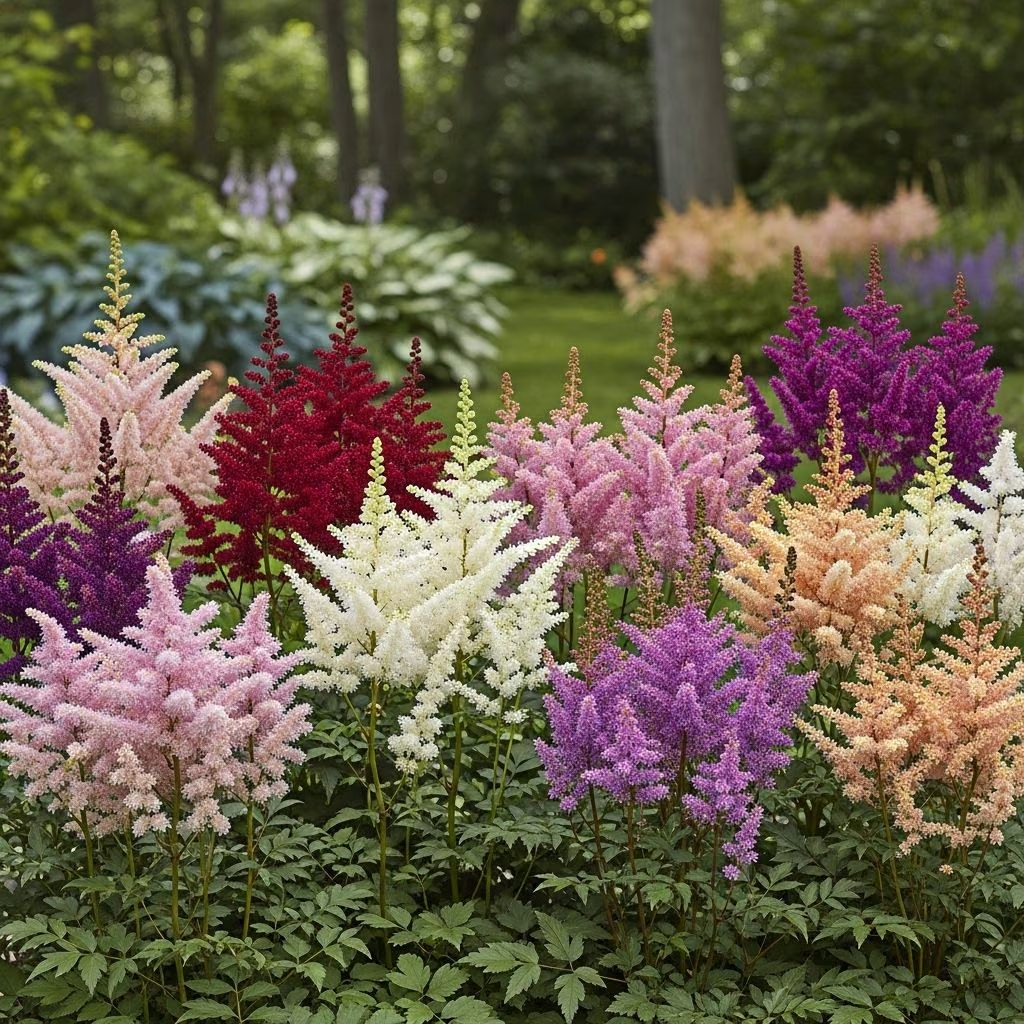
Astilbes are essential perennials for anyone seeking to bring vibrant color and texture to shady corners of the garden. With their exquisite, feather-like plumes and delicate, ferny foliage, astilbe varieties provide a long season of visual interest throughout the summer months. This detailed guide introduces 19 different astilbe varieties, highlighting their unique traits, bloom times, and best uses.
Understanding Astilbe: The Garden’s Shade-Loving Gem
Astilbe (commonly called False Spirea) belongs to the Saxifragaceae family and boasts more than 25 species and countless hybrids.
Native to woodland edges in Asia and North America, these perennials thrive in moist, well-draining soil and partial to full shade. Their signature trait: feathery plumes—often pink, red, purple, or white—held above neat, lacy foliage. Astilbes also attract pollinators, rarely suffer from pests or diseases, and return reliably year after year, making them a favorite in shade gardens, borders, and alongside water features.
- Height: Ranges from compact 10” types to towering 4’ cultivars
- Bloom time: Early to late summer, depending on variety
- Colors: From the softest whites and pinks to fiery reds and cool purples
- Foliage: Finely cut, often with reddish, bronze, or shiny dark green tints
- Zones: Hardy in USDA Zones 3-9 (varies by type)
1. Fanal: A True Scarlet Star
| Botanical Name | Astilbe x arendsii ‘Fanal’ |
|---|---|
| Bloom Color | Deep scarlet red |
| Height/Width | 24” tall x 18” wide |
| Bloom Period | Early to midsummer |
‘Fanal’ brings intense, narrow spires of rich red flowers to shaded borders. Its dark green foliage often takes on a rosy tinge as the season progresses. Use this variety in large drifts for maximum impact—perfect as a dramatic mass planting.
2. Ostrich Plume (Straussenfeder): Cascading Apricot-Pink Elegance
| Botanical Name | Astilbe x thunbergii ‘Straussenfeder’ |
|---|---|
| Bloom Color | Apricot pink |
| Height/Width | 36” tall x 24” wide |
| Bloom Period | Midsummer |
‘Ostrich Plume’ is notable for its unique flower form: long, pendulous plumes arching gracefully instead of standing upright. These soft, apricot-pink blooms are perfect for the back of borders, creating vertical interest and a lush, layered look.
3. Bridal Veil: Pristine White for Classic Shade Gardens
| Botanical Name | Astilbe x arendsii ‘Bridal Veil’ |
|---|---|
| Bloom Color | White |
| Height/Width | 30” tall x 18” wide |
| Bloom Period | Early to midsummer |
With pure white plumes and bright green, lacy foliage, ‘Bridal Veil’ introduces a calm, elegant presence to shade plantings. Its white spikes brighten dark spots and serve as a pleasing contrast to deeper-colored astilbes or bold-leaved hostas.
4. Vision in Red: Dark Drama and Reliable Bloom
| Botanical Name | Astilbe chinensis ‘Vision in Red’ |
|---|---|
| Bloom Color | Reddish purple |
| Height/Width | 18” tall x 18” wide |
| Bloom Period | Late summer |
‘Vision in Red’ produces deep reddish-purple plumes contrasted by bronze-green foliage. This compact, drought-tolerant selection is ideal for front-of-border groupings or containers in shadier spots.
5. Pumila: Petite and Prolific Purple
| Botanical Name | Astilbe chinensis ‘Pumila’ |
|---|---|
| Bloom Color | Purple |
| Height/Width | 12” tall |
| Bloom Period | Late summer/early fall |
One of the best dwarf astilbe types, ‘Pumila’ offers vivid purple flower spikes atop sturdy, fine-leafed foliage. It’s an excellent choice for edging and rock gardens, where full-sized astilbes would outgrow their space.
6. Hennie Graafland: Refined Pink with Polished Foliage
| Botanical Name | Astilbe x simplicifolia ‘Hennie Graafland’ |
|---|---|
| Bloom Color | Soft pink |
| Height/Width | 16” tall |
| Bloom Period | Early summer |
‘Hennie Graafland’ is a tidy, compact astilbe with bright pink plumes above fresh green leaves. Its dwarf size makes it perfect for borders, containers, or tight spaces in shade gardens.
7. Maggie Daley: Vibrant Purple Clusters for Pollinators
| Botanical Name | Astilbe chinensis ‘Maggie Daley’ |
|---|---|
| Bloom Color | Bright purple |
| Height/Width | 28” tall x 20” wide |
| Bloom Period | Mid-late summer |
‘Maggie Daley’ stands out with brilliant purple spikes, blooming later in the season and attracting butterflies. Ideal for adding late color to beds that may be winding down in midsummer.
8. Sister Theresa: Cotton Candy Clouds
| Botanical Name | Astilbe x arendsii ‘Sister Theresa’ |
|---|---|
| Bloom Color | Light pink |
| Height/Width | 20-24” tall |
| Bloom Period | Early summer |
‘Sister Theresa’ produces soft, light-pink plumes reminiscent of cotton candy, along with rich green foliage. Its upright, neat habit makes it suitable for mixed borders and cottage gardens alike.
9. Gloria Purpurea: Showy Violet-Pink for Impact
| Botanical Name | Astilbe x arendsii ‘Gloria Purpurea’ |
|---|---|
| Bloom Color | Violet-pink |
| Height | 24” |
Known for its dramatic, violet-pink inflorescences, ‘Gloria Purpurea’ adds stature and bold color to shady areas. Its medium height bridges the gap between short and tall varieties in multi-tiered plantings.
10. Delft Lace: Apricot-Pink on Red Stems
| Botanical Name | Astilbe ‘Delft Lace’ |
|---|---|
| Bloom Color | Apricot-pink |
| Foliage | Glossy blue-green with red highlights |
‘Delft Lace’ impresses with soft apricot-pink blooms atop deep red stems, plus handsome foliage that transitions to a burgundy glow in fall. Vigorous and colorful in borders or as an accent plant.
11. Purple Candles (Purpurkerze): Power and Height
| Botanical Name | Astilbe chinensis ‘Purple Candles’ |
|---|---|
| Bloom Color | Dark violet-red |
| Height | Tall, back-of-border selection |
| Foliage | Dark green, may be bronzed |
With dense, tall spires of violet-red flowers, ‘Purple Candles’ is ideal for the back of the border or as a shade garden focal point. Plants are robust and offer better heat tolerance than many other astilbes.
12. Sprite: Dwarf Pink for Edges
| Botanical Name | Astilbe simplicifolia ‘Sprite’ |
|---|---|
| Bloom Color | Soft pink |
| Height | 10” |
‘Sprite’ excels as an edging plant with shimmering pink flowers and elegant bronze foliage. Its compact height makes it one of the most adored dwarf astilbes for front-of-border ribbons or rock gardens.
13. Visions in Pink: Reliable Mid-Sized Pink
| Botanical Name | Astilbe chinensis ‘Visions in Pink’ |
|---|---|
| Bloom Color | Light pink |
| Height | 14-16” |
Offering dense, luminous plumes of pink, ‘Visions in Pink’ is a popular choice for both mixed beds and massed plantings. Tough and drought-resistant compared to older types.
14. Email Lace: Lacy Charm and Textural Interest
| Botanical Name | Astilbe x arendsii ‘Email Lace’ |
|---|---|
| Bloom Color | Pale pink |
| Height | 24” |
‘Email Lace’ presents delicate, pale-pink plumes on finely cut, deep green foliage. It shines when allowed to naturalize in semi-shaded woodland gardens or as a cottage border anchor.
15. Montgomery: Dark-Red Drama
| Botanical Name | Astilbe japonica ‘Montgomery’ |
|---|---|
| Bloom Color | Deep red |
| Height | 20-24” |
‘Montgomery’ carries dense, deep-red plumes over robust, dark bronze-green leaves. An old favorite for strong color contrast in partly shaded gardens.
16. Superba: Tall, Late-Blooming Lavender Magenta
| Botanical Name | Astilbe chinensis var. taquetii ‘Superba’ |
|---|---|
| Bloom Color | Lavender-magenta |
| Height | 36–48” |
| Bloom Period | Late summer |
One of the tallest astilbes, ‘Superba’ adds late-season, upright lavender-magenta color and structure. Perfect for the backs of borders and for extending the bloom season.
17. Erica: Soft Pink Like Morning Clouds
| Botanical Name | Astilbe japonica ‘Erica’ |
|---|---|
| Bloom Color | Soft pink |
| Height | 18–24” |
‘Erica’ delights with gentle pink plumes that soften the look of mixed plantings and provide a romantic touch near streams or under trees.
18. Diamond: Sparkling Ivory for Moonlit Borders
| Botanical Name | Astilbe x arendsii ‘Diamond’ |
|---|---|
| Bloom Color | Ivory white |
| Height | 24-30” |
With shining ivory blooms held aloft on sturdy stems, ‘Diamond’ illuminates dusk shaded beds and highlights darker-leaved companions.
19. Rheinland: Rose-Pink Mid-Summer Mainstay
| Botanical Name | Astilbe x arendsii ‘Rheinland’ |
|---|---|
| Bloom Color | Rose-pink |
| Height | 24” |
‘Rheinland’ produces upright, fluffy rose-pink plumes that bloom prolifically in mid-summer atop attractive green foliage, making it a staple for brightening up shady beds.
Tips for Planting and Caring for Astilbe
- Light: Best in part to full shade; morning sun is tolerated if soils are moist.
- Soil: Rich, humusy, consistently moist, but well-drained.
- Watering: Essential during hot, dry weather, especially for new plantings or in sun.
- Spacing: 12–24” apart, depending on mature size.
- Fertilizing: Apply a balanced, slow-release fertilizer in spring.
- Mulching: Mulch in late spring to reduce weeds and retain moisture.
- Dividing: Every 3–5 years as clumps expand and flower production wanes.
How to Use Astilbe in the Landscape
- Mixed borders and woodland gardens: Pair with hostas, ferns, bleeding hearts, Japanese forest grass, and heucheras for textured shade displays.
- Moist, shady spots: Plant near streams or ponds; astilbes love consistently moist sites.
- Mass plantings and drifts: Achieve dramatic color impact by grouping the same variety in ribbons or clusters.
- Containers: Compact varieties like ‘Sprite’ and ‘Pumila’ excel in pots for shaded patios.
Dwarf Astilbe Varieties
- Sprite – Tidy 10″ pink for the front of borders
- Pumila – 12″ purple dwarf ideal for edges
- Visions and Hennie Graafland – Compact, brightly colored options for small gardens
- Gloria Purpurea – Violet-pink flowers with a moderate height
Frequently Asked Questions (FAQs) about Astilbe
Q: What is the best time to plant astilbe?
A: Plant astilbes in early spring or fall, allowing roots to establish in cool, moist soil before summer heat.
Q: How do I keep my astilbe blooming each year?
A: Ensure soil remains moist, divide overcrowded clumps every few years, and feed with organic matter annually for best performance.
Q: Which astilbe varieties are best for sunny areas?
A: Astilbe chinensis varieties (e.g., ‘Vision in Red’, ‘Superba’, ‘Pumila’) are more sun and drought tolerant than most, but all astilbes require consistent moisture and shade during the hottest part of the day.
Q: Can astilbes be grown in containers?
A: Yes, especially dwarf and compact types like ‘Sprite’ or ‘Pumila’. Containers must be kept consistently moist and shaded.
Q: Are astilbe plants poisonous to pets?
A: No, astilbe is non-toxic to cats and dogs, according to the ASPCA.
Choosing the Best Astilbe for Your Garden
With such a rich palette of heights and hues, there’s an astilbe variety for almost every shaded or moist garden site. Consider bloom time, mature size, and flower color, and combine different varieties to extend the show all summer long. Astilbe’s resilience, beauty, and ability to enliven dark corners make it an indispensable shade perennial for new and experienced gardeners alike.
References
- https://www.finegardening.com/article/12-brilliant-astilbes
- https://plantdetectives.com/pages/the-astilbe-guide
- https://www.epicgardening.com/astilbe-varieties/
- https://gardenerspath.com/plants/flowers/best-astilbe-varieties/
- https://www.gardeningknowhow.com/ornamental/flowers/astilbe/types-of-astilbe.htm