Dacha: The Soviet Country Cottage—A Vanishing Russian Tradition
In the tapestry of Russian life, few things are as evocative or as deeply rooted as the dacha. More than a mere summerhouse or country retreat, the dacha has come to signify a way of life, a symbol of both escape and endurance. Across the vast lands of Russia and the former Soviet Union, these humble wooden cottages are mosaics of memory, leisure, self-sufficiency, and architectural ingenuity. Dacha: The Soviet Country Cottage, with its evocative photography by Fyodor Savintsev and an insightful essay by Anna Benn, opens a vivid window into this beloved, yet often overlooked, world.
What is a Dacha?
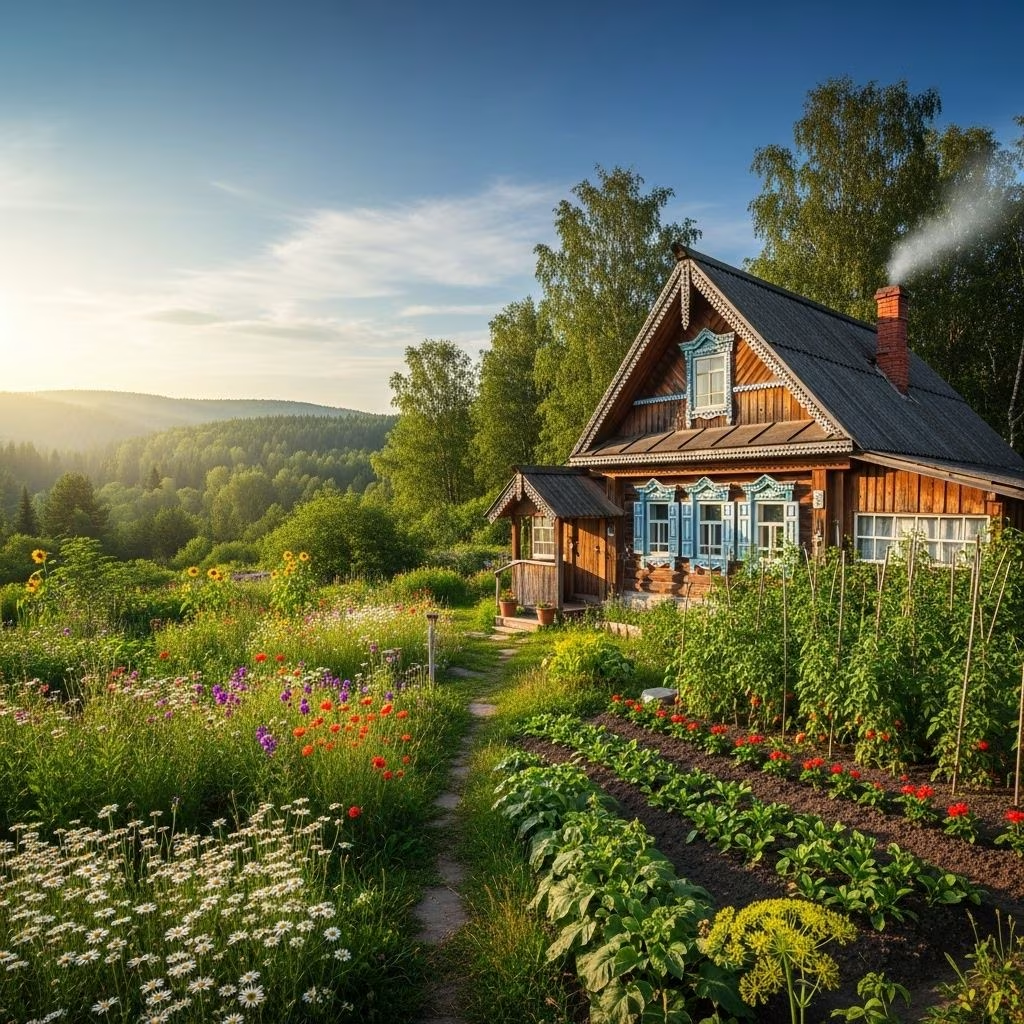
The dacha is a unique Russian phenomenon: a country cottage, typically built of wood, once awarded by tsars to loyal courtiers and then, later, allocated to Soviet citizens by the authorities as a summer escape from the urban grind. Dachas have existed in many forms and sizes—from grand, turreted villas to humble, handmade sheds—yet they all share a few essential qualities: simplicity, adaptability, and deep ties to the land and community. In the Soviet consciousness, the dacha is as revered as the samovar or vodka—core to Russia’s cultural DNA.
From Tsarist Gift to Soviet Institution
The roots of the dacha tradition reach back to the 17th century, when tsars rewarded their loyalists with country estates on prime outskirts of St. Petersburg and Moscow. In the later Soviet period, the practice continued—albeit in altered forms. Cooperatives, comprising employees of one workplace or members of a professional group, would be granted tracts of peri-urban land where simple cottages could be self-built. These plots were not simply rewards, but instruments to organize and control society, as well as to offer limited enrichment to the favored classes—famous writers, artists, and high-ranking technocrats among them.
- Imperial dachas: spacious villas for the elite, often built in European styles.
- Soviet dachas: modest, utilitarian cottages for ordinary citizens—on strictly regulated plots (often just 600 square meters, or shest’ sotok).
The Architecture of the Dacha
Dachas encompass a striking range in architectural variation: from ornate, two-story villas replete with decorative wooden trims and vibrant paintwork to the simplest of garden shacks. The Soviet state often imposed strict rules: limited house size, few fruit trees, and even quotas on how many apple trees were permissible per garden. Yet, within these restrictions, dacha owners demonstrated remarkable resourcefulness and creativity, often using scavenged materials or repurposing industrial leftovers to forge personal sanctuaries that blend pragmatism and whimsy.
- Common features: wooden construction, small windows, steep roofs, and hand-carved trims.
- DIY spirit: Dachas feature sheds built from old train cars, barns from buses, and whimsical outhouses fashioned from phone booths.
- Ornamentation: Intricate wood carvings, lacework trim, and bold colors, all rooted in regional folk traditions, add character and individuality.
Inside the Dacha: Living, Gardening, and Inventiveness
A dacha is as much about what happens outside its walls as within. For decades, it’s been a playground for weekend gardeners, families, and creative tinkerers. Soviet restrictions ensured that plots were sometimes just large enough for a modest garden—a patch of potatoes, a row of onions, perhaps a pink rosebush. The simple act of leaving the city by antique train, rushing along with like-minded neighbors, and spending the weekend tending the earth has long been a cherished ritual.
- Gardening for survival and joy: During times of scarcity, gardens were vital for providing food; at other times, they became havens of floral abundance and relaxation.
- Watering ingenuity: Cast-iron bathtubs, relics from Soviet blocks, would collect rainwater for thirsty vegetables.
Most dachas lacked modern conveniences—indoor plumbing, heating, or electricity—making life at the dacha a test of self-reliance and adaptability. Yet this, too, is part of their magic: the simplicity, the improvisation, the forced encounters with nature and neighbor alike.
Dachas and the Changing Soviet Landscape
The dacha tradition survived—and was indeed reshaped by—the cataclysmic events of 20th-century Russia: revolution, war, economic turmoil, and the sudden collapse of the Soviet Union. In the USSR’s last decades, owning a dacha was a tool not only for recreation but for survival. Gardens became vital contributors to family nourishment amid chronic shortages, and dachas became the center of rural self-sufficiency. After the Soviet fall, as uncertainty rocked the country, these tiny country plots offered a modicum of security and peace, their value both nostalgic and practical.
The Dacha Community
Unlike the isolated second homes of the West, dacha neighborhoods are fundamentally collective. They often cluster colleagues: writers with writers, scientists with scientists, factory workers with factory workers. This sense of relaxed sociability forms a crucial part of the dacha experience: shared walks, communal gardening, children’s games across rambling fences, and informal markets swapping seeds and advice.
Dacha as Cultural Icon
The dacha is woven into the literature, politics, and consciousness of Russia. Some of the country’s most famous writers, poets, and composers—Boris Pasternak, Sergei Prokofiev, Anna Akhmatova—produced masterpieces from their peaceful dacha retreats. Whole villages, for example Peredelkino near Moscow, became hothouses of creativity and cultural exchange.
- Dacha in literature: settings for summer romances, political intrigue, and childhood nostalgia.
- Dacha in photography and art: evocative scenes of faded wood, overgrown gardens, and the flame of twilight on painted eaves.
A Vanishing World: The Modern Dacha
Today, many dachas, lovingly chronicled in Savintsev’s photographs, are reaching their twilight—“on their last legs,” as the author notes. Some stand abandoned, their carved balconies and whimsical ornamentation sinking under decades of moss and weather. Others have been swept away by new development or the rise of “super-dachas”—modern, opulent villas bearing little resemblance to their humble Soviet ancestors.
The dacha persists, however, not only in preserved examples and nostalgia, but also in Russia’s contemporary dreams of freedom, creativity, and rural connection. As city life intensifies and longing for green spaces grows, the modest cottage outside the city, with its garden and time-worn shed, retains a magnetic pull.
Why the Dacha Endures: Key Reasons
- Escape: From city stress to the simplicity of country living.
- Self-sufficiency: Growing food, preserving traditions of independent living.
- Creativity: A blank canvas for architectural and artistic expression.
- Community: Connection with neighbors, family, and friends in a shared rural space.
- Tradition: A ritual as entrenched as tea drinking or storytelling.
Gallery: Visual Character of the Dacha
- Hand-carved facades painted in turquoise, ochre, and lilac.
- Gardens brimming with currants, tomatoes, dahlias, and sunflowers.
- Outhouses disguised with lace curtains.
- Improvised sheds with bicycles and rainwater barrels.
- Overgrown paths winding to quiet front doors.
Recommended Resources & Further Reading
- Dacha: The Soviet Country Cottage (FUEL, 2023) — Fyodor Savintsev, Anna Benn
- Explore the dacha’s presence in Russian literature and film (works by Chekhov, Nabokov, and Pasternak)
- Contemporary tours and photoessays on the vanishing dachas
- Essays on Russian vernacular architecture
Frequently Asked Questions (FAQs)
What does the word “dacha” mean?
A dacha is a Russian country cottage, originally allotted by the state or by the Tsar, serving as both a rural retreat and a means for growing food and relaxing outside the city.
Are dachas only found in Russia?
Dachas originated in Russia, but variations exist across other former Soviet republics such as Ukraine, Belarus, and the Baltic States, though each region develops its own traditions.
What do people do at their dachas?
Typical dacha activities include gardening, cooking, socializing, reading, and enjoying nature; many dachas are used as seasonal retreats for families during summer.
Were all Soviet citizens entitled to a dacha?
No. While dachas became widespread from the 1960s onward, allocation depended on factors such as employment, status within the cooperative, and favor within the system.
Why are dachas considered important culturally?
Dachas play a central role in Russian cultural identity, symbolizing rural simplicity, creativity, community, and resistance to both political and economic change.
Conclusion: The Dacha’s Enduring Echo
The story of the Soviet dacha is the story of Russia’s complicated passage through modernity. These eccentric, cherished, and rapidly vanishing cottages echo with laughter, invention, and the scent of blackcurrant bushes. Preserved in poignant photographs and remembered in novels and essays, the dacha’s allure persists, reminding new generations of the joys—and the challenges—of making peace with land, history, and the demands of simple living.
References
- https://fuel-design.com/publishing/dacha/
- https://www.houzz.com/magazine/the-russian-dacha-from-imperial-residence-to-country-cottage-stsetivw-vs~66639082
- https://www.gardenista.com/posts/required-reading-dacha-soviet-country-cottage/
- https://www.designboom.com/architecture/imperial-villas-humble-sheds-dacha-book-fairytale-wooden-world-fyodor-savintsev-09-06-2023/
- https://www.new-east-archive.org/features/show/8881/dacha-dacha-shkurpela-russia