Aster Yellows: Identification, Impact, and Effective Management
Aster yellows is a persistent and perplexing disease affecting over 300 kinds of ornamental, vegetable, and wild plants, especially those in the Asteraceae family. Resulting in strange growths and yellowing foliage, it’s a concern for both home gardeners and commercial growers. This article explores what aster yellows is, how it spreads, its characteristic symptoms, and, most importantly, what actions you can take to manage and prevent it.
What Is Aster Yellows?
Aster yellows is a chronic, systemic plant disease caused by a bacteria-like organism known as a phytoplasma. Unlike typical bacteria, phytoplasmas have no cell wall and reside in the plant’s vascular system, causing widespread symptoms across all affected tissues. The aster yellows phytoplasma (commonly abbreviated as AYP) can infect both garden favorites (like asters, coneflowers, and black-eyed Susans) and important food crops (such as carrots, lettuce, and tomatoes) .
- Causal agent: Phytoplasmas (single-celled, bacteria-like organisms)
- Main vector: Aster leafhopper (Macrosteles quadrilineatus)
- Hosts: Over 300 herbaceous plant species in at least 38 families
- Notable affected families: Asteraceae (daisies, sunflowers, coneflowers), Apiaceae (carrots), Solanaceae (tomatoes)
How Is Aster Yellows Transmitted?
The aster leafhopper is the primary culprit behind aster yellows’ rapid spread. As these small, piercing-sucking insects feed on infected plants, they ingest the phytoplasma. Once a leafhopper acquires the phytoplasma, it can transmit the disease to every plant it subsequently feeds on. Without the activity of these vectors, the organism does not move readily from plant to plant .
- The phytoplasma resides in the plant’s sap (phloem).
- A healthy leafhopper becomes infectious after feeding on a diseased plant.
- This process is not instant: it takes 10 days to three weeks for the phytoplasma to reach the insect’s salivary glands.
- Once infectious, the vector remains so for life.
- Leafhoppers move quickly from plant to plant, especially in windy or warm conditions, spreading the disease widely in a short period.
- Only a fraction of leafhoppers carry the disease, but even one infectious individual can cause significant outbreaks.
What Are the Symptoms of Aster Yellows?
Symptoms of aster yellows are varied and often bizarre, making identification tricky. Different plant species may show a mix of these signs, which often appear 10 to 40 days after infection .
- Yellowing (chlorosis): Affected leaves, stems, or the entire plant turn pale yellow, though leaf veins often remain green, giving a contrasting appearance.
- Stunted or abnormal growth: Plants may become dwarfed or develop “witches’ brooms”—clusters of thin, tangled stems.
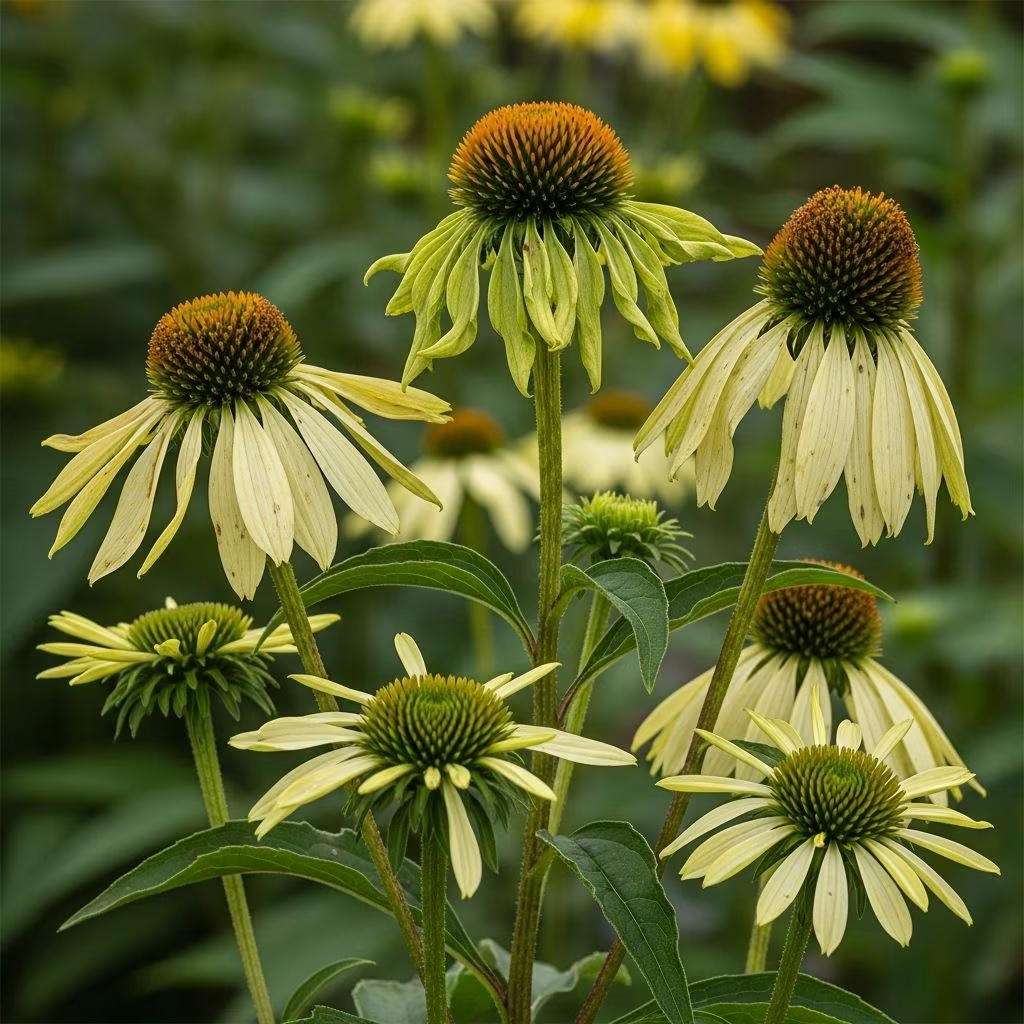
- Distorted flowers: Flowers may stay green or become leaf-like instead of colored and petaled (a symptom called phyllody). In some cases, extra shoots or blossoms may emerge from flower centers.
- Malformed roots: Carrot roots become bitter, hairy, and thin; garlic bulbs are small and soft with an unusual odor.
- Other color changes: Some plants (such as coneflowers) may show abnormal purple, red, or white hues in foliage or flowers.
| Plant Type | Common Symptoms |
|---|---|
| Asters, Coneflowers | Yellowing, brush-like shoots in flower centers (witch’s broom), deformed blooms |
| Carrots | Yellow leaves, hairy and thin taproots, bitter taste |
| Garlic | Premature yellowing, dieback, small/soft bulbs, dark streaking on wrappers, odd odor |
| Black-eyed Susans, Coreopsis, Zinnias | Pale foliage, disfigured flowers that may stay green or look leafy |
| Tomatoes, Lettuce | Stunting, leaf distortion, yellowing, misshapen growth |
Which Plants Are Commonly Affected by Aster Yellows?
While plants in the Asteraceae family make up the largest group of susceptible hosts, many other ornamental and edible plants may fall victim :
- Sunflowers (Helianthus)
- Marigolds (Tagetes)
- Zinnias (Zinnia)
- Coneflowers (Echinacea)
- Black-eyed Susans (Rudbeckia)
- Coreopsis (Coreopsis)
- Carrots, lettuce, tomatoes, barley, wheat, and garlic
- Countless weed species, which can serve as reservoirs for the disease
Lifecycle and Spread of Aster Yellows
The disease’s spread is dictated by the lifecycle of the aster leafhopper, which travels from the southern U.S. northward in spring, depositing the phytoplasma as it feeds. The pathogen is not soil-borne or seed-borne but relies on live plant tissue and insect movement .
- After overwintering in southern climates, aster leafhoppers migrate north on wind currents.
- Leafhoppers acquire the phytoplasma from infected wild plants or cultivated crops.
- The insects transmit the disease as they continue feeding, infecting multiple plants throughout the season.
- Since the phytoplasma is not present in seeds or soil, removing infected plants can help reduce sources for future outbreaks.
Identification Tips: Is It Really Aster Yellows?
Confusing aster yellows with other common garden problems is easy. Here are helpful identification guidelines:
- Look for yellowing leaves with green veins; this pattern is distinctive.
- Check the blooms: green, distorted, or leafy flowers are particularly suggestive.
- Notice stunted growth or witch’s broom—clusters of thin stems emerging from one point.
- If you see multiple signs in a single plant or across a group, suspect aster yellows.
What to Do If Your Plants Have Aster Yellows
There is no cure for aster yellows. Once a plant becomes infected, it will remain symptomatic and serve as a source of further spread . Therefore, effective management is based on prompt action and prevention strategies:
- Remove infected plants immediately. Uproot and completely destroy (by bagging and disposing or burning, according to local guidelines) symptomatic plants as soon as you detect them.
- Don’t compost infected plants. Composting may allow infected material to survive and perpetuate the problem in subsequent seasons.
- Monitor susceptible species closely. Watch asters, coneflowers, zinnias, and carrots for early signs of infection.
- Control weeds. Many common weeds harbor both the phytoplasma and leafhoppers, serving as a disease reservoir.
Can You Prevent Aster Yellows?
While you cannot eradicate the disease entirely from your environment, you can significantly limit its impact with proactive steps:
- Promote plant health. Sturdy, well-watered, and fertilized plants are less attractive and sometimes less susceptible to feeding leafhoppers.
- Netting and row covers. Use fine-mesh barriers to exclude leafhoppers, especially early in the season when they migrate into new areas.
- Strategic planting times. Delay sowing carrots or susceptible crops to avoid peak leafhopper migration.
- Biological and chemical controls. In agricultural settings, insecticides may reduce leafhopper populations (always follow label and safety directions). Home gardeners usually avoid insecticides to protect pollinators, but organic options such as insecticidal soaps may offer some temporary relief if used early and carefully.
Table: Summary of Aster Yellows Management Strategies
| Strategy | Details | Effectiveness |
|---|---|---|
| Remove & Destroy Infected Plants | Dispose by bagging or burning, not composting | Very High (removes phytoplasma source) |
| Control Weeds | Eliminate hosts for leafhoppers and disease | High |
| Monitor & Exclude Vectors | Use netting/row covers to keep out leafhoppers | High when feasible |
| Delay Planting | Avoid peak vector activity | Moderate to High |
| Insecticides (agricultural) | Target leafhoppers directly. Use with care in home gardens for pollinator safety | Variable (depending on use) |
Impact on Food Crops and Ornamentals
Aster yellows is especially devastating in carrot fields and nurseries, where widespread infection can cause severe crop loss and economic harm. In the home garden, ornamentals like coneflowers, zinnias, and sunflowers most often exhibit the disease’s effects. Vegetables like carrots, lettuce, and tomatoes may yield poorly or develop unpleasant flavors when infected.
- Garlic may develop yellowing, soft bulbs, streaking, and an off odor, rendering it unusable.
- Wild plants and weeds in and around gardens offer a continual reservoir for both phytoplasma and insect vectors.
Frequently Asked Questions (FAQs)
What is aster yellows?
Aster yellows is a plant disease caused by a bacteria-like organism called phytoplasma. It affects a wide range of plants, notably those in the aster family, causing yellowing, distorted growth, and malformed flowers .
How is aster yellows transmitted?
The disease is primarily spread by the aster leafhopper, which feeds on infected plants, acquires the phytoplasma, and then transmits it to healthy plants by feeding again .
How can I recognize the symptoms?
Symptoms vary between plant species but include yellowed or white leaves with green veins, stunted or distorted growth, the presence of leafy instead of floral structures, and abnormal root development in crops like carrots .
Can infected plants recover?
No, there is no cure for aster yellows. Infected plants remain diseased and serve as a reservoir for further infection, so immediate removal is necessary .
How can I manage the risk?
Remove infected plants promptly, control weeds, use row covers, monitor for signs in susceptible plants, and reduce vector (leafhopper) populations when possible. Chemical controls are usually reserved for large-scale agriculture due to risks to pollinators and beneficial insects.
Is aster yellows dangerous to humans or animals?
Aster yellows affects only plants. The disease and its causal organisms pose no risk to human or animal health.
Key Points to Remember
- Aster yellows is a widespread, incurable disease that affects a huge range of garden plants.
- Symptoms include yellowing, stunting, and bizarre flower development.
- Remove and destroy infected plants immediately to contain the disease.
- Control weeds and leafhoppers to minimize future outbreaks.
- No risk to humans—but significant risks to harvests and ornamentals.
Further Reading and Resources
- Consult your local extension service for specific control recommendations in your region.
- Use garden reference texts or university plant pathology resources to learn more about susceptible species and management.
References
- https://fairfaxgardening.org/aster-yellows/
- https://en.wikipedia.org/wiki/Aster_yellows
- https://piedmontmastergardeners.org/article/aster-yellows-what-is-it-and-what-do-i-do-about-it/
- https://www.gardenista.com/posts/aster-yellows-garden-decoder-definition/
- https://extension.umn.edu/plant-diseases/aster-yellows