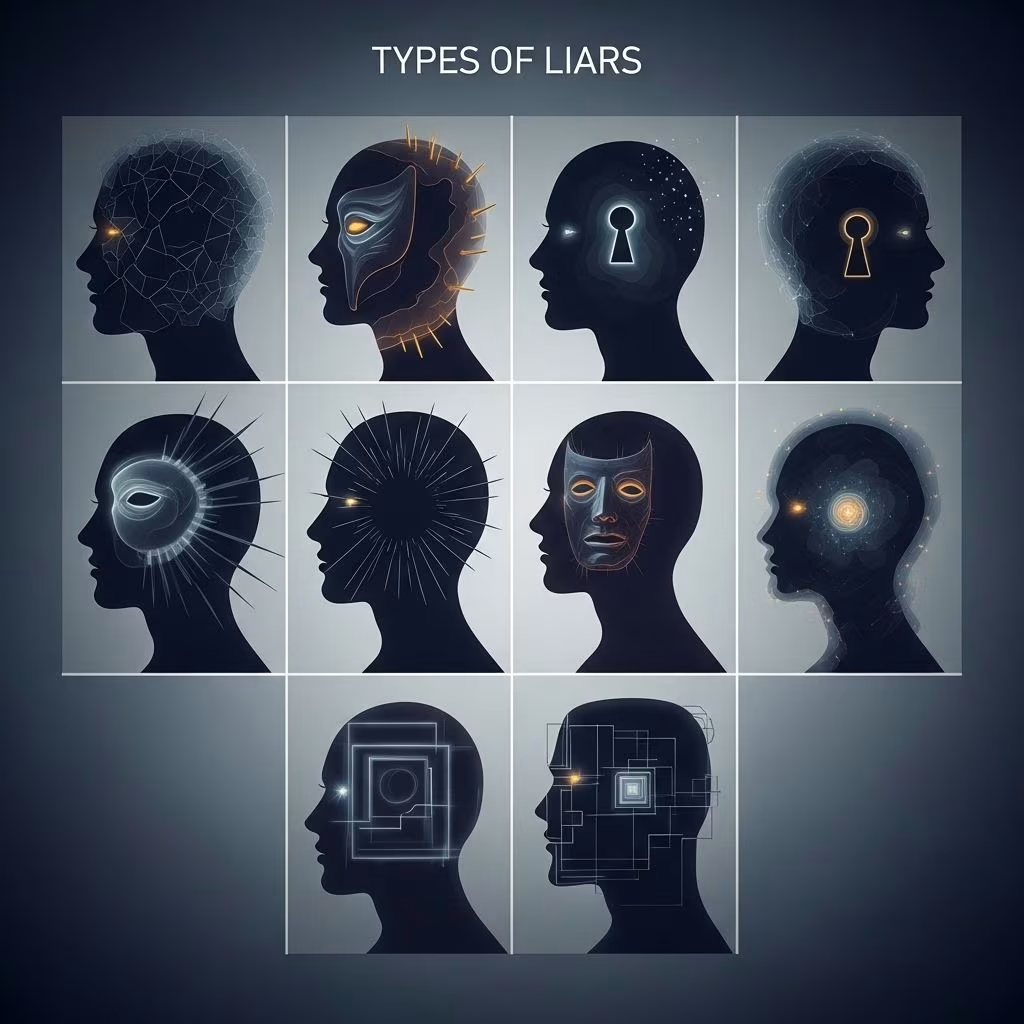
Understanding the Many Types of Liars: Psychological Profiles and Traits
Dishonesty is a complex human behavior that manifests in countless forms, from small, seemingly harmless fibs to elaborate deceptions woven into daily life. Lying is not a uniform act; rather, there are many types of liars, each exhibiting specific motivations, patterns, and psychological traits. Understanding these distinctions is crucial for managing personal relationships, professional interactions, and safeguarding one’s psychological well-being.
Why Do People Lie?
Humans lie for a variety of reasons, including protecting themselves or others, gaining an advantage, avoiding punishment, or sometimes, simply out of habit or compulsion. Lying can range from white lies told to shield someone’s feelings to pathological deceptions ingrained in a person’s character. The motivations behind lying provide insight into the type of liar an individual may be.
Common Types of Liars
The following list explores the most recognized types of liars, their defining features, and common behaviors observed in each category. Understanding these types helps in recognizing dishonesty and responding appropriately.
- Pathological Liars: Individuals who lie habitually, often without clear reasoning or personal gain.
- Compulsive Liars: Those who lie out of habit, struggling to tell the truth even when it would be easier or more advantageous.
- Manipulative Liars: People who lie strategically to influence or control outcomes in their favor.
- Protective Liars: Individuals who lie to protect themselves or others, sometimes with noble but potentially harmful intentions.
- Sociopathic/Psychopathic Liars: Liars who show little regard for truth, often lacking empathy and remorse.
- Narcissistic Liars: People who lie to maintain a self-image, manipulate perceptions, or feed their ego.
- Careless Liars: Individuals who lie without attention to detail or accuracy, often leading to inconsistencies.
- Occasional/White Liars: Those who tell minor, infrequent lies, usually to prevent harm or discomfort.
Table: Comparison of Key Liars and Traits
| Type of Liar | Core Motivation | Recognizable Traits | Impact On Relationships |
|---|---|---|---|
| Pathological Liar | Compulsion or habit | Frequent lies, shifting stories, little self-awareness | Trust erodes; unpredictable bonds |
| Manipulative Liar | Personal gain or influence | Persuasive, calculated, flattery | Relationships are often exploited |
| Protective Liar | Protection of self/others | Secretive, loyal to some, hidden agendas | Trust varies, can be loyal or damaging |
| Compulsive Liar | Habit, chronic tendency | Inconsistencies, discomfort when truth-telling | Trust diminishes; confusion and frustration |
| Narcissistic Liar | Self-importance, image protection | Exaggeration, denial, self-aggrandizement | Can be harmful; difficult to confront |
| Sociopathic/Psychopathic Liar | Manipulation, lack of empathy | Remorseless, skilled storytelling | Can be destructive or dangerous |
| Careless Liar | Laziness, indifference | Poor details, frequent contradictions | Short-term confusion, long-term annoyance |
| White Liar | Avoiding discomfort, protection | Minor lies, often harmless | Brief impact, generally forgivable |
Deep Dive: Profiles of Liars
Pathological Liars
Pathological liars have a chronic tendency to lie, even when there is no clear reason or benefit. Lying is ingrained in their behavior, often becoming second nature. They may fabricate stories routinely and have difficulty distinguishing between truth and fiction. This behavior is associated with certain personality disorders, such as antisocial or narcissistic personality disorder.
Characteristics:
- Invents elaborate stories or false histories
- Rarely feels guilt or anxiety about getting caught
- May have underlying psychological or genetic factors
Compulsive Liars
A compulsive liar’s main motivation is habitual—a pattern formed over years, often to avoid discomfort, gain approval, or escape unfavorable outcomes. These individuals find it difficult not to lie, even when the truth would be more straightforward. Their lies frequently lack sophistication and are easily exposed because they fail to monitor details.
Traits:
- Frequent, often unnecessary lying
- Lies sometimes have no clear benefit
- Discomfort and anxiety when trying to tell the truth
Manipulative Liars
Manipulative liars are strategic in their dishonesty, using lies as tools to achieve specific goals. They are often socially skilled, employing flattery, charm, or persuasive tactics to convince others of their stories. The manipulative liar’s lies can be convincing and tailored to suit the situation.
- Calculative behavior and goal-oriented lies
- Often uses others to achieve personal ambitions
- Flattery and exploiting trust are common
Protective Liars
Protective liars lie to shield themselves or others, sometimes risking their own integrity for the sake of loyalty or affection. While some protective lies are harmless—such as shielding someone from bad news—other lies can conceal major secrets, causing deep issues in relationships.
This type can range from the loyal friend who keeps confidences to someone hiding serious transgressions or offenses.
Sociopathic/Psychopathic Liars
Sociopathic and psychopathic liars lie with little regard for consequences, often driven by a lack of empathy, remorse, or conscience. They may use deception to manipulate, exploit, or even harm others, viewing people merely as means to their own ends.
- Skilled at deception; unphased by getting caught
- No concern for ethical boundaries
- Often correlated with extreme personality disorders
Narcissistic Liars
Narcissistic liars seek to maintain their self-image, often exaggerating achievements, denying faults, or manipulating others’ perceptions. Their lies serve the purpose of reinforcing their ego and shielding their reputation.
- Denial of personal mistakes
- Story-telling that flatters their self-image
- Difficulty with genuine self-reflection
Careless Liars
Careless liars lie out of laziness or indifference, often providing inconsistent or sloppy accounts. Their lack of commitment to accuracy results in contradictions and confusion in interpersonal communication.
- Negligent with details
- Tends to forget previous lies
- Frustrating to communicate with
Occasional/White Liars
Occasional or white liars tell lies infrequently and usually for benevolent reasons, such as to avoid hurting someone’s feelings. While these deceptions are rarely harmful, repeated white lies can erode trust over time.
- Lie frequency is low
- Intent is typically non-malicious
- Often socially accepted
Other Less Common Types
- Pseudologia Fantastica: An extreme form of pathological lying, often with elaborate or bizarre stories.
- Impulsive Liars: Lie in the spur of the moment, usually to cover minor faults or exaggerate success.
- Habitual Liars: Lying becomes a pattern or habit over time, sometimes bridging from occasional to compulsive lying.
- Duplicitous Liars: Lie not just about facts, but also about values or intentions, betraying both trust and principle.
Psychological and Social Impacts of Lying
The consequences of lying vary depending on frequency, motivation, and type. Pathological or manipulative lying can destroy relationships and foster environments of distrust and anxiety. Occasional and protective lies may have less impact, but over time, even minor lies can undermine intimacy and mutual respect.
Long-term effects may include:
- Chronic mistrust within relationships
- Increased anxiety and stress for the liar and those deceived
- Difficulty forming or maintaining true connections
- Potential for escalation into compulsive or pathological lying
How to Spot Dishonesty and Deal With Liars
Recognizing the type of liar you are dealing with is key to determining how to respond to dishonesty in your life. Here are some signs and strategies for different types:
- Inconsistencies: Frequent contradictions or shifting accounts suggest habitual or careless lying.
- Lack of remorse or guilt: Indicates possible sociopathic or pathological lying.
- Grandiose claims: May point to narcissistic lying patterns.
- Secretive behavior: Protective liars are often hard to read and may keep major secrets.
Strategies for Handling Liars
- Set strong and clear boundaries to protect yourself
- Confront dishonesty calmly and assertively
- Seek professional guidance if dealing with extreme or dangerous liar types
- Recognize patterns; document inconsistencies if needed
- Avoid enabling frequent lying through silence or tolerance
Is Lying Related to Mental Health or Genetics?
Some forms of lying, such as pathological or pseudologia fantastica, may be symptomatic of underlying personality disorders, including antisocial or narcissistic disorders. In rare cases, compulsive lying may be linked to genetic predispositions.
- Lying itself is not considered a mental disorder, but can be a symptom of an existing psychological issue.
- Genetic factors have been identified in specific subtypes of pathological liars.
- Environmental factors, upbringing, and personal experiences also play significant roles in the development of dishonesty.
Frequently Asked Questions (FAQs)
Q: What makes someone a pathological liar?
A: Pathological liars exhibit a chronic compulsion to lie, regardless of context or consequence, often associated with personality disorders. Their lies may be elaborate and without clear benefit.
Q: Are all liars dangerous?
A: Not necessarily. Some types of liars, such as white or protective liars, tell lies to avoid harm or discomfort. Others, particularly manipulative or sociopathic liars, can be harmful depending on intent and frequency.
Q: Is there a cure for compulsive or pathological lying?
A: Treatment options include psychotherapy, behavioral interventions, and addressing any underlying disorders. Consistent and habitual lying can be difficult to treat, requiring professional guidance.
Q: How can I tell if someone is lying to me?
A: Common signs include frequent contradictions, evasive behavior, lack of eye contact, overcompensation, and inconsistent details. Patterns are often more revealing than individual incidents.
Q: Should I confront a suspected liar?
A: It’s recommended to approach the topic calmly and assertively, maintaining healthy boundaries. For dangerous liar types (e.g., sociopathic or psychopathic), consider professional support for your safety.
Conclusion: Building Trust and Navigating Dishonesty
Understanding the types of liars is essential for navigating human relationships and protecting your emotional well-being. Whether dealing with habitual, manipulative, or occasional lying, knowing the psychological underpinnings can guide decisions regarding trust, confrontation, and support. While not all lies are harmful, ongoing dishonesty can erode bonds and create lasting damage. Recognizing the signs, maintaining boundaries, and seeking professional help when necessary empowers individuals to manage dishonesty constructively.
References
- https://mindremakeproject.org/2018/06/08/8-types-of-liars/
- https://www.regain.us/advice/infidelity/how-to-spot-dishonesty-in-your-life-5-types-of-liars-and-how-to-deal-with-them/
- https://www.nirandfar.com/types-of-liars/
- https://www.newportinstitute.com/resources/co-occurring-disorders/pathological-liar-signs/
- https://en.wikipedia.org/wiki/Pathological_lying
- https://kendallinvestigations.com/understanding-different-types-of-liars.php
- https://pmc.ncbi.nlm.nih.gov/articles/PMC9176035/
- https://www.marriage.com/advice/relationship/types-of-liars/