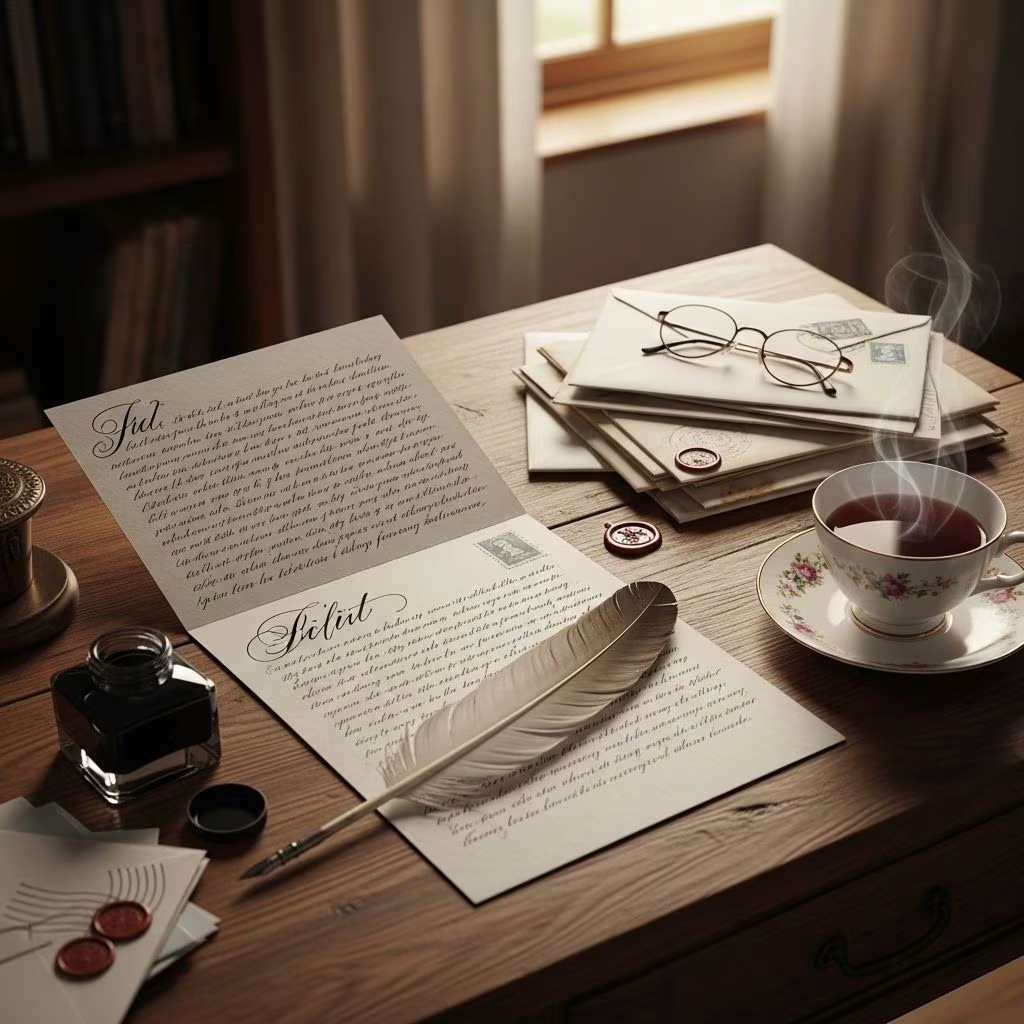
In today’s digital world, handwritten and thoughtfully composed letters hold a unique emotional power. Sending a heartfelt letter to a friend is an enduring way to nurture relationships, share memories, and offer encouragement — whether you’re near or far. This comprehensive guide will help you master the art of writing the perfect friendly letter, covering structure, tone, creative greetings, content ideas, and handy tips. Whether you’re writing for the first time or rekindling an old tradition, these steps ensure your message is genuine, organized, and memorable.
Why Write a Letter to a Friend?
In our fast-paced, hyper-connected world, most personal exchanges happen through quick messages, social media comments, or brief phone calls. A letter—handwritten or digital—offers:
- Personal touch: Shows thought, care, and effort that digital messages lack.
- Emotional impact: Provides comfort, encouragement, and joy to the recipient.
- Tangible memories: Becomes a keepsake that can be treasured and revisited.
- Creative outlet: Lets you express yourself uniquely through words, doodles, or decorated stationery.
The Structure of a Friendly Letter
Every well-crafted friendship letter follows a simple structure that makes your message clear and inviting. Here are the key components:
| Section | Description | Example |
|---|---|---|
| Heading | Your address (optional) and the date. | 123 Apple Road, Springfield March 24, 2025 |
| Greeting | Warm opening addressing your friend. | Dear Sarah, |
| Body | Main content—news, stories, and questions. | Sharing updates, asking about their life. |
| Closing | A friendly sign-off phrase. | With love, |
| Signature | Your name or nickname. | Emily |
| Postscript (P.S.) | Optional final thought or question. | P.S. Did you see the new series we loved? |
Step-by-Step: How to Write a Letter to a Friend
- Decide Who You’re Writing To
Think about the friend you want to reach out to. Consider their preferences—some love long letters, while others appreciate short, sweet notes. - Start with the Heading
At the top left (for traditional letters), include your full address and the date. If sending digitally or to a close friend, you can skip the address but always provide the date so your friend knows when you wrote. - Add a Friendly Greeting
Tailor the salutation to match your friendship’s tone:- Classic: “Dear [Name],”
- Casual: “Hey [Name],” or “Hi [Name],”
- Creative: “To my favorite travel buddy,” or “Hello from [your city]!”
Choose a greeting that feels most natural for your relationship.
- Write an Engaging Opening Line
The first few sentences set the mood. Try one of these strategies:- Ask a direct question: “How have you been?”
- Reference a shared memory: “Remember our last beach trip? I still laugh thinking about it.”
- Share a life update: “Big news—I finally adopted a puppy!”
- Compose the Body of Your Letter
This is where your personality shines. Organize your thoughts to include:- Life updates—work, school, family, travel, hobbies.
- Personal stories or funny incidents.
- Thoughtful questions about your friend’s life.
- Shared memories or inside jokes.
- Words of encouragement or empathy, if needed.
Be genuine and write as if you’re speaking in person. Mix short and long paragraphs for a natural, engaging flow.
- End With a Thoughtful Closing
Choose an ending phrase that suits the letter’s tone:- Best wishes,
- Yours truly,
- With love,
- Take care,
- Catch you soon,
Leave some space after your closing, then sign your name on the next line.
- Include a Postscript (P.S.)
Add a lighthearted final thought or question: “P.S. — Found that book you loved! Want to borrow it?” Postscripts offer an opportunity to add warmth or a sense of spontaneity.
Sample Friendly Letter
123 Apple Road Springfield March 24, 2025 Dear Sarah, How have you been? It feels like ages since we last caught up, and I was just thinking about our epic study sessions during finals week. I still can’t believe we survived on nothing but coffee and late-night snacks! Life here is pretty much the same, though I started hiking at the park near my place. It’s been strangely relaxing and made me appreciate quiet weekends more. What about you—are you still playing guitar? By the way, did you end up watching the series I recommended? I’d love to hear your thoughts. And, if you’ve tried any new recipes lately, I could use some ideas! Let’s plan a call sometime next week—can’t wait to catch up! With love, Emily P.S. — I found an old photo of us dressed as superheroes. Let me know if you want a copy!
Tips for Writing a Great Letter to a Friend
- Be yourself: Your voice and personality should shine through.
- Use language your friend will relate to: Don’t be afraid to include jokes, nicknames, or informal phrasing.
- Add small details: Descriptions, funny observations, or doodles make letters feel personal.
- Use quality stationery: For handwritten letters, choose nice paper, envelopes, and maybe stickers for an extra touch.
- Proofread quickly: Check for spelling and grammar, but don’t obsess—imperfections add authenticity to friendly letters.
- Respond to your friend’s updates: If you’re replying to a letter, mention specific things your friend wrote—this shows you care and creates an ongoing conversation.
- Encourage a reply: End with a question or express excitement about hearing back.
Friendship Letter Salutation & Opening Ideas
- Formal & Timeless: Dear [Name],
- Super-Casual: Hey [Name]! / Hi [Nickname],
- Creative: To my partner in crime, / Greetings from [your city]!
- Opening Lines:
- “How have you been holding up lately?”
- “I just passed your favorite coffee shop and thought of you.”
- “Do you remember our last summer getaway? I can’t wait to do it again with you!”
When to Write a Letter to a Friend
There is no wrong time to write to a friend. People appreciate receiving letters:
- During holidays or special occasions—birthdays, anniversaries, friendship day.
- To celebrate milestones—graduations, new jobs, moving houses.
- When a friend is going through a hard time—offering comfort or support.
- To share big news—engagements, travels, achievements.
- Just because—spontaneous notes to stay connected.
Differentiating Emails From Traditional Letters
While the heart behind both is the same, there are small differences:
| Traditional Letter | |
|---|---|
| Written on paper | Typed and sent digitally |
| Requires envelope & postage | Receives instantly, no cost |
| Can be decorated or personalized physically | Can include images, links, emojis |
| Becomes a physical keepsake | Easily archived and found later |
Common Mistakes in Friendship Letters (and How to Avoid Them)
- Forgetting the recipient’s address or date (for mailed letters): Always include both for clarity.
- Being overly formal: Let your natural voice and warmth show!
- Missing a closing or forgetting to sign: Always wrap up and add your name.
- Making it one-sided: Balance your updates with questions and comments about your friend’s interests or situation.
- Writing too little or too much: Find a comfortable length; a few paragraphs are usually enough unless you have lots to share.
Frequently Asked Questions (FAQs)
What are the essential parts of a friendly letter?
A friendly letter should have a heading, greeting, body, closing, signature, and optionally a postscript (P.S.).
Can I write a friendly letter as an email?
Yes, all the same structure and warmth apply. Just format it as you would a traditional letter, starting with a greeting and ending with a friendly closing.
What topics can I write about in a letter to a friend?
Anything that feels relevant or fun—recent adventures, life updates, shared memories, questions, book or movie recommendations, funny incidents, or words of encouragement.
Do I have to use perfect grammar or spelling?
No, friendly letters are informal. Your friend will appreciate your honesty and unique voice; however, a quick proofread is thoughtful.
How do I encourage my friend to write back?
End your letter with open-ended questions, express excitement about hearing their news, or simply invite them to reply soon.
Final Thoughts
Writing a letter to a friend is a rewarding way to strengthen connections and create lasting memories. Be authentic, thoughtful, and creative — your words could brighten someone’s entire week. Grab a pen, pick up your favorite stationery, or start typing, and send some happiness to someone special today!
References
- https://study.com/academy/lesson/how-to-write-a-friendly-letter-format-parts-example.html
- https://commonsensepress.com/how-to-write-a-letter-to-a-friend/
- https://www.grammarly.com/blog/writing-tips/how-to-write-a-letter/
- https://www.readingrockets.org/topics/writing/articles/introduction-letter-writing
- https://www.papier.com/us/thefold/articles/how-to-write-a-letter-guide
- https://emilypost.com/advice/writing-personal-letters