Why Do Older Men Like Younger Women? Exploring the Complex Realities
Age gap relationships—where an older man pairs with a significantly younger woman—are a long-standing and often controversial subject in society. From pop culture to psychology journals, people routinely debate the motivations behind these connections, the roles of societal expectations, evolutionary biology, and the personal satisfaction or challenges faced by couples with large age differences. This article unpacks the most common reasons older men are attracted to younger women, how these dynamics play out, and what research says about the long-term realities of such relationships.
Psychological Theories and Evolutionary Biology
Much of the scholarly conversation on older men being attracted to younger women begins with evolutionary psychology. According to this perspective, men are subconsciously drawn to cues associated with youth—such as physical health, appearance, and energy—because these have been historically correlated with fertility and reproductive potential over millennia of human evolution.
- Research across multiple cultures finds that men, regardless of their age, rate women in their 20s at the top for attraction.
- Women, in contrast, often show a preference for somewhat older men, presumably due to perceptions of stability, status, or resources.
However, evolution is only part of the story. Psychological needs and modern social circumstances also play big roles. Some men find that relationships with younger women offer renewed optimism, adventure, and a sense of vitality that may feel lost in the routine of middle life.
The Role of Attachment and Power Dynamics
Attachment theory explores how early life relationships with caregivers shape adult relationships. Securely attached individuals can handle age differences well, but anxious or avoidant attachments may make power differences problematic.
Emotional Security and Maturity
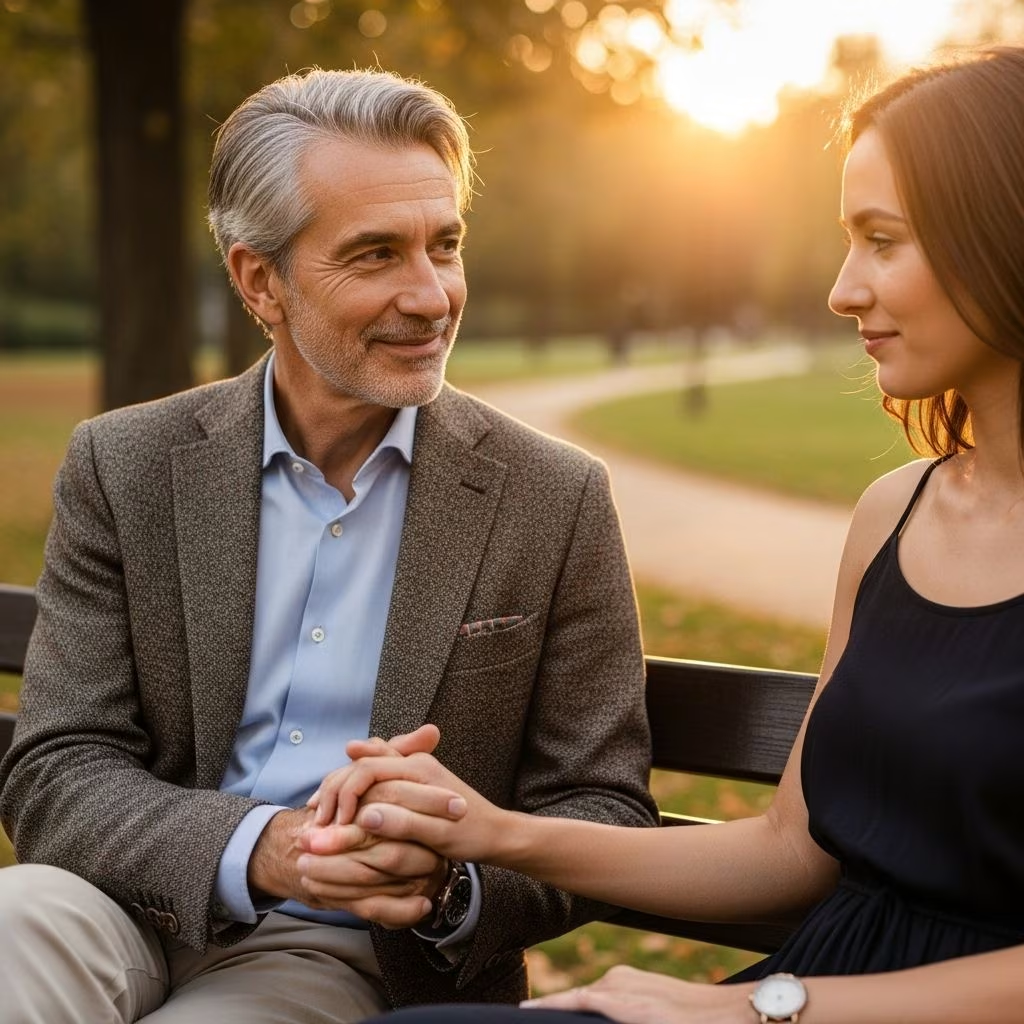
Emotional compatibility is another oft-cited reason. Studies suggest that men may take longer than women to achieve emotional maturity. As a result, younger women can find older men to be more emotionally available, communicative, or secure than peers their own age.
- Older men often express a sense of wanting to “be needed”—the role of mentor or provider can boost their self-esteem.
- In turn, some younger women seek out security or wisdom that is sometimes lacking in relationships with same-age partners.
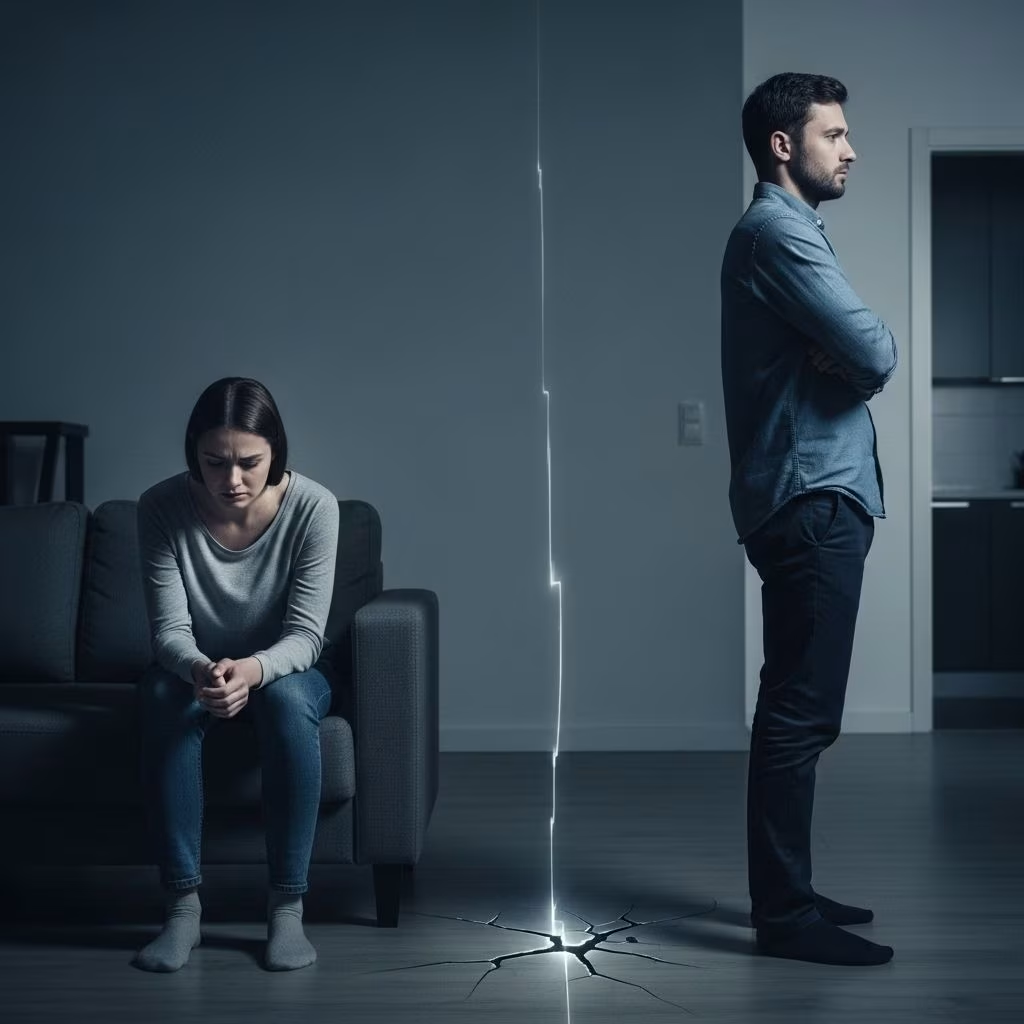
This dynamic’s flip side can involve unhealthy power imbalances—where guidance slides into control or dependence. Healthy relationships require open dialogue and respect for autonomy on both sides.
The Father Complex Theory
A controversial angle is the so-called “father complex,” linked to Sigmund Freud’s early psychoanalytic theories. This posits that women with absent or emotionally unavailable fathers may seek out older male partners in adulthood. However, it’s not a recognized condition in modern psychology and its validity is debated.
Energy, Attraction, and Fresh Perspective
Many older men report that relationships with younger women bring energy, novelty, and a sense of fun back into their lives. The daily grind, work burnout, or parenting responsibilities often leave their mark, and a younger partner can act as a catalyst to rejuvenate routines.
- “With her, every day feels like an adventure,” is a common sentiment.
- The feeling is less about physical appearance alone, and more about an outlook on life—spontaneity, play, or optimism.
The Midlife Crisis and Seeking a ‘Reset’
The cliché of the “midlife crisis”—a stage usually between ages 45 and 55—frequently emerges in the context of older men dating younger women. For some, this is genuinely a self-reflective period to reevaluate priorities, not just an impulsive attempt to recapture lost youth. For others, dating someone younger can feel like a new beginning or “reset” as they navigate shifting identity and life goals.
Yet, therapists caution against assuming every such relationship is rooted in crisis or immaturity—sometimes people just connect regardless of age.
Social Stigma and Cultural Influences
Western culture is full of stories about older men and younger women—from classical literature to modern films. These relationships are often normalized in media, even glamorized, while the opposite dynamic sometimes draws criticism. However, society can quickly judge when age gaps feel “too big” or when people make assumptions about motives (such as gold-digging or control).
| Factor | Older Man–Younger Woman | Older Woman–Younger Man |
|---|---|---|
| Media Representation | Common, rarely criticized | Uncommon, often stigmatized |
| Social Perceptions | Assumed to be normal | Subject to jokes, scrutiny |
| Google Search Volume* | High | Moderate |
*Based on anecdotal public interest.
The Role of Online Dating
With the rise of dating apps and sites, age preferences have become easier to pursue. Platforms allow filtering by age and location, creating more opportunities for age-mismatched couples to meet. However, these connections must move beyond the initial spark for lasting satisfaction.
The Reality of Age-Gap Relationships: Satisfaction, Longevity & Challenges
The data paints a nuanced portrait:
- Most heterosexual couples show a small age gap (2–3 years) with the man slightly older.
- Larger age gaps (>10 years) are less common but not rare—up to 40% of people have tried a substantial gap at some point.
- Relationship satisfaction tends to drop as the age gap widens beyond 10 years. Couples may struggle with discordant life stages, health, or family planning.
- According to European data, as men age, their partners tend to be even younger than average.
- Interestingly, some studies show higher life expectancy for men with younger wives—and vice versa.
In practice, therapists note that couples in wide age-gap relationships face unique challenges:
- Navigating family disapproval or social scrutiny
- Power imbalances and control issues
- Different goals regarding career or children
- The reality of health and aging
Addressing Common Criticisms and Misconceptions
Critics frequently question the motives of older men who date younger women—suggesting manipulation, “midlife panic,” or a desire for control. Conversely, younger women in such relationships are sometimes labeled “gold diggers” or assumed to lack confidence. The reality is often more complex:
- Consent and Legal Age: Both partners should always be above the legal age of consent. No relationship is healthy without true, informed consent and agency for both individuals.
- Power Dynamics: Age differences may create a mentor-mentee feeling. This can be positive, but both partners need to remain equals in decision making.
- Not All Relationships Fit a Stereotype: While some connections are transactional or driven by insecurity, many begin from genuine respect, attraction, or shared worldview.
Celebrity Examples and What We Can Learn
Famous couples illuminate these issues. Consider:
- Leonardo DiCaprio: Known for consistently dating women under 25, he attracts criticism for allegedly avoiding mature relationships. Psychologists tie this pattern to an evolutionary or even commitment-avoidant impulse.
- Ellen Burstyn: Her late-in-life romance with a much younger man received criticism—showing the cultural double standard around age-gap relationships.
Celebrity stories amplify the challenges—public scrutiny, power dynamics—but also highlight that age differences can work when grounded in respect, communication, and mutual support.
Frequently Asked Questions (FAQs)
Q: Is it normal for older men to be attracted to younger women?
Yes, research shows that men tend to rate women in their 20s as most attractive, regardless of their own age. This is consistent across cultures, though individual motives can vary widely.
Q: Do relationships with large age gaps last?
The larger the age gap (especially over 10 years), the more potential for challenges relating to health, goals, or family dynamics. Satisfaction tends to decline at higher gaps, but many couples succeed through mutual respect and communication.
Q: Are such relationships only about attraction or appearance?
No. While attraction plays a role, couples commonly cite shared interests, emotional support, stability, and personal connection.
Q: What are the social perceptions of older men–younger women couples?
They are often normalized in media, though individuals may experience judgment or assumptions about their motives—from “gold digging” to seeking control.
Q: How can age-gap couples maintain healthy relationships?
- Prioritize open, honest communication
- Recognize and address power imbalances
- Support each other’s autonomy and growth
- Seek counseling or therapy if unique challenges emerge
Takeaway: Beyond Stereotypes—Creating Meaningful Connections
Older men’s attraction to younger women arises from a blend of biology, psychology, emotion, and culture. While stereotypes and criticism persist, every relationship is unique, requiring trust, shared values, and mutual respect to thrive. Age, ultimately, is only one piece of a much larger relationship puzzle.
References
- https://www.peggybolcoa.com/older-man-younger-woman-relationships/
- https://psychcentral.com/relationships/older-men-dating-younger-women
- https://jill.substack.com/p/the-problem-with-men-who-date-much
- https://www.psychologytoday.com/us/blog/why-bad-looks-good/201908/why-many-young-women-prefer-to-be-with-older-men
- https://www.du.edu/news/age-gap-relationships-are-having-moment-du-professor-weighs
- https://www.marriage.com/advice/relationship/age-difference-in-dating/