The Unlikely Story of Margarine’s Colorful Past
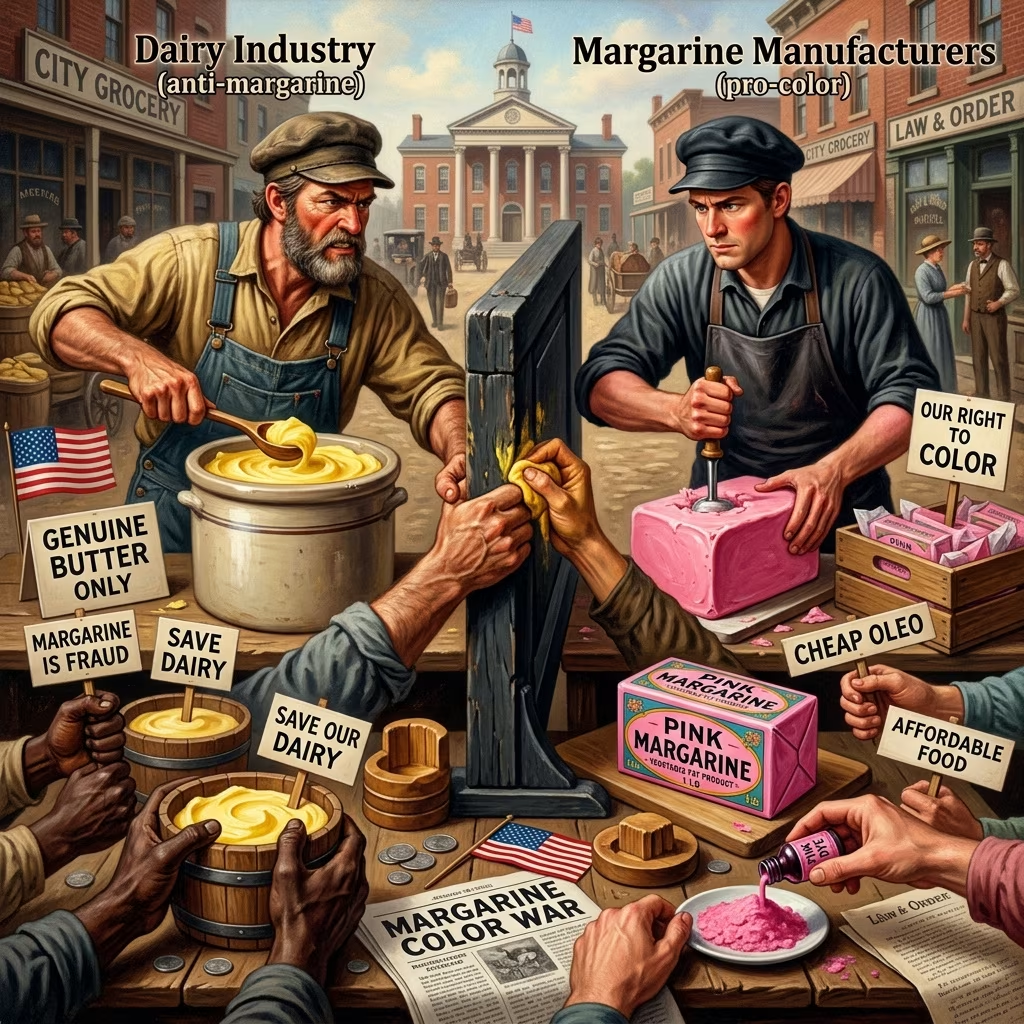
Few foods have sparked as much cultural and legal controversy as margarine. From its invention as a butter alternative to the splashy campaigns by the dairy industry, margarine’s journey through the American grocery store aisle is marked by lawsuits, smear tactics, and—in one of food history’s oddest chapters—the battle to make margarine pink. This article explores why margarine was dyed pink, the powerful interests behind that decision, and how consumers ultimately shaped the fate of what was meant to be a humble spread.
The Birth of Margarine: An Affordable Butter Alternative
Margarine was not always a controversial staple. Invented in 1869 by French chemist Hippolyte Mège-Mouriès in response to Napoleon III’s challenge to create a cheap butter substitute, margarine was initially made from beef fat and later from vegetable oils. It offered an economical alternative to butter at a time when dairy prices kept climbing, bringing affordable “butter” to the masses.
When margarine crossed the Atlantic to the United States, its low price quickly threatened the American dairy industry’s profits. The butter industry—well-established and politically connected—reacted swiftly and aggressively.
The Dairy Industry’s Smear Campaign: Turning Public Opinion
The arrival of margarine in America ignited an unprecedented advertising and lobbying blitz by the dairy sector. The butter lobby funded colorful editorial cartoons and wild rumors that margarine was made from all manner of revolting ingredients—including animal offal and even, according to some depictions, old shoes and mice. The goal was clear: to frame margarine as suspicious, foreign, and perhaps even dangerous.
- Disinformation campaigns: Editorials, political cartoons, and stunts portrayed margarine as mysterious, unhealthy, or downright grotesque.
- Legislative pushback: Dairy interests lobbied for laws to make margarine less attractive or less competitive compared to butter.
The Color Wars: From Yellow to Pink and Beyond
Margarine’s visual similarity to butter was viewed as its greatest threat—and also as its greatest vulnerability. Butter’s signature yellow color was central to its brand identity, while fresh margarine was naturally white or pale. To make food more appealing, both products often had added color. For margarine, this meant dyeing the spread to a buttery yellow hue.
The Oleomargarine Act of 1886
Lobbying efforts led to the 1886 Oleomargarine Act. Rather than banning margarine outright, the act imposed heavy taxes on margarine and allowed state regulations to flourish. The central argument: consumers had to be ‘protected’ from mistaken margarine-butter identity.
- The act imposed a federal tax and strict regulations on colored margarine.
- Butter manufacturers hoped to maintain their products’ premium standing through legal and commercial pressure.
Pushing Pink: When States Outlawed Yellow Margarine
States passed a bewildering array of laws in the race to suppress margarine. Some forbade any coloring, making margarine a pale, unappetizing product. Others required odd hues—most notably pink margarine. Vermont, New Hampshire, and West Virginia became infamous for mandating that margarine producers dye their product vivid pink. The strategy was simple: if you could not ban margarine, you could make it repulsive to look at.
- States such as New Hampshire made it illegal to sell non-pink margarine, imposing fines or even jail time for violations.
- Pink was chosen not for its appeal, but for its power to evoke disgust: pink was “not the color of oleomargarine in its natural state,” the Supreme Court would later point out.
- Some jurisdictions even experimented with red or brown hues, compounding the unappetizing effect.
Consumer Experience: Mixing Your Own Yellow Margarine
Banned from selling pre-colored margarine in many states, manufacturers sought creative workarounds. The most popular was the “dye pack” method. Margarine, sold in plastic or waxed sacks, included a small capsule of yellow food dye.
- Consumers would knead or pop the dye capsule, then spend up to 20 minutes mixing the color throughout the margarine at home.
- This DIY approach allowed families to enjoy margarine that looked like butter—albeit after a bit of effort.
- Despite color laws, the practice helped preserve margarine’s appeal among the public.
The Supreme Court Decision: Striking Down the Pink Mandate
As margarine producers and consumers fought back, the controversy eventually reached the nation’s highest court. In 1898, the
U.S. Supreme Court weighed in on the New Hampshire law requiring margarine to be pink.
- The Court found the law unconstitutional, writing that pink margarine “excites a prejudice and strengthens a repugnance up to the point of a positive and absolute refusal to purchase the article at any price”.
- Pink, the Court noted, was unnatural for margarine and rendered the product unsalable.
- The ruling marked a turning point in the margarine wars: although other restrictions would persist for decades, the battle over pink was lost for butter partisans.
Lasting Effects: Lingering Laws and Changing Markets
Although the most extreme color laws were struck down, battles over margarine’s color and composition continued well into the 20th century. Some states simply banned all colored margarine for decades; others imposed high taxes on yellow margarine, incentivizing the purchase of pale, weird-looking spreads.
- Quebec was the last major jurisdiction to enforce ban on colored margarine, only ending the law in the early 2000s.
- For years, many families routinely mixed margarine at home to skirt color bans—a vivid memory for several generations.
The dairy industry’s campaign succeeded in delaying, but not defeating, the popularity and proliferation of margarine. As industrial advances reduced costs and improved flavor, public resistance to margarine’s natural look faded.
Nutritional Controversies: From Wonder Food to Health Debate
By the mid-20th century, attention slowly shifted from color to nutrition. Margarine was promoted as a healthier alternative to butter because its plant-based oils contained less saturated fat. Yet, new controversies arose, particularly regarding the use of trans fats and, later, palm oil.
- Palm oil’s rising use in margarine became a health and environmental flashpoint, with studies linking certain processing techniques to increased risk of heart disease.
- Reformulations in recent decades have reduced or eliminated trans fats from many margarines.
- Despite changes in regulation and recipe, the debates over healthiness, labeling, and transparency continue to this day.
Margarine in Popular Culture: From Scandal to Staple
What began as a food-science marvel became mired in scandal, cartoonish depictions, and ultimately, legal precedent. Over time, margarine lost its association with controversy and became simply another spread in American kitchens—albeit sometimes still eyed warily by purists.
| Year | Key Event | Impact on Margarine |
|---|---|---|
| 1869 | Invention of margarine in France | Affordable butter substitute enters market |
| 1886 | U.S. Oleomargarine Act | Federal tax and regulation, local state laws enacted |
| 1898 | Supreme Court strikes down pink law | End of mandated pink margarine |
| 20th century | Various state bans and restrictions | DIY coloring becomes common, margarine’s reputation shifts |
| Late 1900s | Health and nutrition debates | Focus on fats, new marketing positioning |
| 2000s | Final color bans lifted (e.g., Quebec) | Margarine widely accepted and sold as yellow |
FAQs: The Pink Margarine Story Explained
Q: Why was margarine dyed pink in some states?
A: States such as New Hampshire, Vermont, and West Virginia enacted laws requiring margarine to be dyed pink to make it unappetizing, hoping to drive consumers towards butter instead.
Q: How did margarine manufacturers and consumers respond to restrictive color laws?
A: Manufacturers sold margarine with yellow dye packs so consumers could color their spread at home, circumventing sales bans on pre-colored margarine.
Q: What Supreme Court case ended pink margarine laws?
A: In 1898, the Supreme Court struck down New Hampshire’s pink margarine requirement, stating that it unlawfully prejudiced consumers against margarine.
Q: Are there states where you still can’t buy yellow margarine?
A: No. Although colored margarine bans lingered in some areas—such as Quebec, Canada—these laws have all been repealed or overturned as of the early 2000s.
Q: Why is margarine often made from palm oil, and is it still controversial?
A: Palm oil is cheap and provides favorable texture, but it’s been criticized for environmental and health concerns, including links to increased heart disease risk.
Conclusion: Margarine’s Place in American Food Lore
Few food products have so clearly mirrored their era’s anxieties—about economics, purity, and public health—as margarine. From a neutral white, to lurid pink, to the familiar yellow of today, margarine’s story is ultimately about power: who gets to shape what we eat, and how. The pink margarine wars reveal both the intensity of America’s food politics and the resilience of everyday consumers, whose preferences ultimately outlasted even the most colorful campaigns to sway them.
References
- https://www.thevintagenews.com/2021/08/30/dont-spread-it-around-the-strange-story-of-pink-margarine/
- https://www.177milkstreet.com/radio/pink-margarine-americas-greatest-food-fight-1
- https://www.smithsonianmag.com/smart-news/1870s-dairy-lobby-turned-margarine-pink-so-people-would-buy-butter-180963328/
- https://www.sciencehistory.org/stories/distillations-pod/butter-vs-margarine/
- https://99percentinvisible.org/episode/i-cant-believe-its-pink-margarine/
- https://www.iheart.com/podcast/105-stuff-you-missed-in-histor-21124503/episode/butter-v-margarine-30207487/