


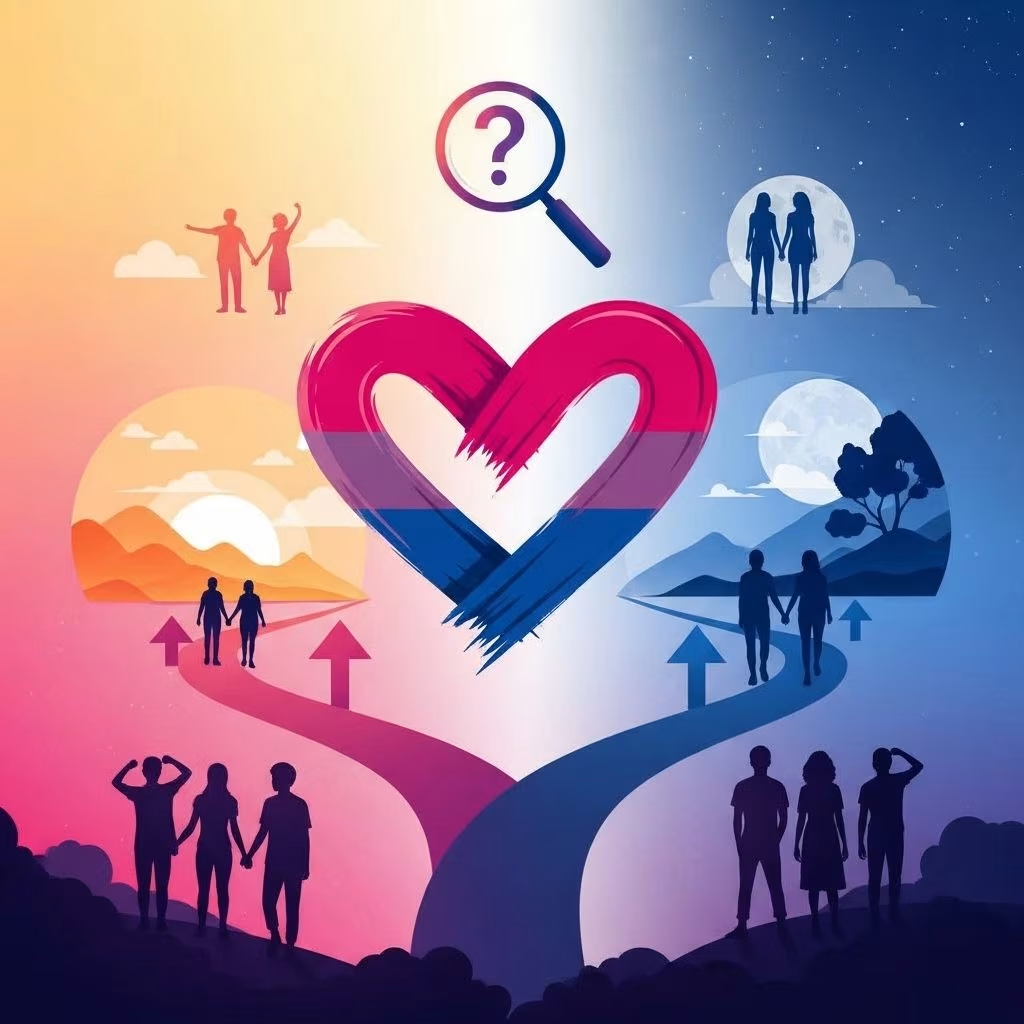
Am I Bisexual? Understanding the Signs, Experiences, and Myths
Discovering and understanding your sexuality is a deeply personal journey. Many people find themselves asking: “Am I bisexual?” This question is valid and can be complex, but learning to recognize the signs, reading others’ experiences, and busting common misconceptions can be incredibly empowering. This guide will help you explore bisexuality, including what it means, indications you might be bisexual, lived experiences, reasons you may feel confused, and honest answers to frequently asked questions.
What is Bisexuality?
Bisexuality is a sexual orientation characterized by the capacity to feel romantic and/or sexual attraction to people of more than one gender. Unlike some stereotypes, being bisexual isn’t just about physical attraction or “splitting love equally” between men and women. Rather, it is about the potential to be attracted to people regardless of whether their gender matches your own or not.
- Bisexuality exists on a spectrum. You do not have to be equally attracted to different genders. Some bisexual people have stronger preferences for one gender at times, and that can fluctuate.
- Attraction can be emotional, romantic, sexual—or any combination thereof. Being bisexual doesn’t mean you have to act on all attractions.
- Bisexuality is distinct from pansexuality, which typically is defined as attraction to people regardless of gender. Many people in both communities feel there is overlap, and the label you use is yours to choose.
Key Definition
Robyn Ochs, a prominent bisexual advocate, defines bisexuality as: “The potential to be attracted—romantically and/or sexually—to people of more than one sex and/or gender, not necessarily at the same time, not necessarily in the same way, and not necessarily to the same degree.”
Signs You Might Be Bisexual
There is no test or checklist that can definitively tell you your sexual orientation—it’s all about your feelings, attractions, and how you identify. However, if you’re questioning, here are some common signs that you may be bisexual:
- You’ve felt romantically or sexually attracted to more than one gender at different times in your life.
- You fantasize about or have crushes on people across the gender spectrum, or you notice yourself daydreaming about people of more than one gender.
- Your feelings or desires don’t fit neatly into “straight” or “gay” categories.
- You find that both men and women (including non-binary or gender-diverse people) can make your heart race.
- You’re uncomfortable with labels but recognize your feelings don’t match a strictly heterosexual or homosexual identity.
- When consuming media (movies, music, etc.), you find yourself equally invested in characters or celebrities of different genders.
- You question or reflect on your sexuality, perhaps feeling “caught in-between.” This uncertainty is incredibly common in bisexual experience.
Important Notes
- Feeling attracted to one gender more often than another doesn’t invalidate a bisexual identity.
- You do not have to have had relationships or sexual experiences with more than one gender to be bisexual. Attraction alone is valid.
- Biphobia (prejudice against bisexuality) and bi-erasure (the tendency for society to ignore or invalidate bisexual people) can make recognizing and embracing bisexuality especially hard.
Bisexuality: Real-Life Experiences
Personal experiences vary widely. Here are some perspectives on bisexuality and coming out, illustrating the diversity within the bi+ community:
“I’ve always known”
Some realize their bisexuality early in life, feeling attraction to people of different genders even as children. However, societal pressure often makes it hard to claim the label. It’s common to fear judgment or to feel undeserving of the bisexual identity if you’re in a relationship with someone of the opposite sex.
“I realized later”
Others identify as bisexual after years of dismissing or not understanding their own feelings. Sometimes being in a same-sex or different-gender relationship is the moment of realization—sometimes it’s not until you fall for someone unexpected that the truth emerges.
Stories from the Community
- Childhood Crushes: It’s common to think back and remember having crushes on friends of any gender, even before knowing what sexuality meant.
- Drawn to Representation: When bisexuality is mentioned in TV or movies, some report feeling that unusual sense of being directly spoken to.
- Coming Out Journeys: For many, claiming the word “bisexual” brings relief and clarity, even if coming out to others is difficult or feels risky.
Why Might You Feel Confused?
Feeling confused or uncertain is entirely normal when it comes to sexuality and self-discovery. Several factors may contribute to this uncertainty:
- Societal Norms: Most cultures assume heterosexuality by default. From a young age, people are expected to be straight unless proven otherwise, which can make other attractions confusing or seem out of place.
- Media Representation: Media often presents only two options: gay or straight. When there’s little representation of bisexuality, people may not recognize their own feelings in what they see around them.
- Biphobia and Bi-Erasure: Negative stereotypes and the tendency to ignore or deny bisexuality can make people internalize confusion, shame, or self-doubt.
- Stereotypes: Myths such as “bisexuality is just a phase” or “bi people are confused/experimenting” can directly contribute to genuine emotional confusion.
- Fluidity: Attraction is not always static, and it’s possible for people to feel their attractions change over time. This can feel disorienting but is also normal.
- Personal Experience: If you haven’t dated or slept with someone of each gender, you may doubt your bisexuality. However, experience is not a requirement to know or validate your identity.
Common Misconceptions About Bisexuality
Unfortunately, bisexuality is surrounded by myths and stereotypes that can make it difficult for people to come out or accept their own identity. Let’s address a few of the most common misconceptions:
- Myth 1: Bisexuality is just a phase
Fact: For many, bisexuality is a stable, lifelong orientation. Discovering it later or having changing attractions doesn’t mean it’s not valid. - Myth 2: Bisexual people are promiscuous or unfaithful
Fact: Bisexuality is about attraction, not behavior. It does not make someone more or less likely to cheat than anyone else. - Myth 3: Bisexuality means equal attraction to all genders
Fact: Most bisexual people don’t feel “equally” about all genders, and that’s perfectly normal. - Myth 4: Bisexual people reinforce the gender binary
Fact: Many bisexual people are attracted to non-binary, genderfluid, and trans people as well—bi does not mean “only two genders.” The language has evolved alongside our understanding of gender diversity. - Myth 5: Bisexuality is transphobic or exclusive
Fact: The bisexual community overwhelmingly supports trans and non-binary people; bi+ attraction includes people of diverse genders. - Myth 6: Bisexuality doesn’t exist once you’re in a ‘straight’ or ‘gay’ relationship
Fact: Regardless of your partner’s gender, your bisexual identity remains valid. - Myth 7: You need to have dated or been intimate with all genders to be bisexual
Fact: Labels are about your internal sense of self—not a checklist of past behaviors.
Embracing Your Identity
If you’re questioning, it’s important to remember that your feelings are real and valid. Here are some ways to help you understand and embrace your bisexual identity:
- Give Yourself Time: It’s perfectly okay to take time figuring things out. Sexuality can be fluid and evolve.
- Connect with Community: Seek out LGBTQ+ spaces online or in person, where you can hear from and talk to other bisexual people.
- Speak to Trusted People: Consider talking to friends, mentors, or counselors who are affirming and supportive.
- Consume Inclusive Media: Books, movies, and podcasts that feature bisexual characters and voices can help contextualize your experiences.
- Use Labels You Feel Comfortable With: Whether you choose “bisexual,” “pansexual,” “queer,” or no label at all, the decision is yours. You can change it as your understanding grows.
- Don’t Rush to Come Out: Only come out if and when you feel ready and safe. You do not owe anyone an explanation or timeline.
Frequently Asked Questions (FAQs)
Q1: Do I have to be equally attracted to all genders to be bisexual?
No. Bisexual people may prefer one gender or experience shifting attractions over time. The core of bisexuality is the capacity for attraction to more than one gender, not equal distribution.
Q2: Can I be bisexual if I have never acted on my feelings?
Absolutely. Sexual orientation is about attraction, not just behavior. You do not need to date, kiss, or sleep with people of more than one gender to be bisexual.
Q3: Is there a difference between bisexual and pansexual?
Some people distinguish the two terms—”bisexual” often means attraction to more than one gender, and “pansexual” can mean attraction regardless of gender. Many see overlap and use the terms interchangeably. The label you use should be the one that feels right to you.
Q4: Is being bisexual just a phase or experimentation?
No. While some people may go through phases of questioning, for many, bisexuality is a legitimate and lifelong identity.
Q5: Does being in a relationship with someone of one gender make me ‘not bisexual’?
No. Your identity is not based on your current partner’s gender. Bisexual people remain bisexual regardless of the gender of their partner.
Q6: How do I come out as bisexual?
There’s no single right way. Consider your own safety and comfort. You might choose to tell a close friend first, write a letter, post online, or simply start living as your authentic self without a formal announcement. Remember: you’re in charge.
Additional Resources
- The Trevor Project: support and resources for LGBTQ+ youth and questioning individuals
- Bisexual Resource Center: education, advocacy, and support for the bi+ community
- GLAAD: Information, guides, and media representation of bisexuality
- LGBTQ+ Affirmative Therapists: Seek out professionals specialized in sexuality topics
Takeaway
Exploring your sexuality is a personal and sometimes challenging process, but it’s also an opportunity for self-acceptance and growth. Bisexuality is real, diverse, and valid. Trust your experiences, seek supportive spaces and resources, and remember, your journey belongs to you alone. No matter where you are in your process, you are never alone.
References
- https://www.cosmopolitan.com/uk/love-sex/relationships/a19419311/how-to-know-if-youre-bisexual/
- https://sarahkreece.com/2013/01/05/what-bisexuality-is-and-9-things-it-isnt/
- https://www.thetrevorproject.org/resources/article/understanding-bisexuality/
- https://www.momjunction.com/articles/signs-of-a-bisexual-husband-wife_00418233/
- https://www.youtube.com/watch?v=v6VHeU5wkGY
- https://ppimhs.org/newspost/bisexuality-and-mental-health/


