Is Venice Sinking? Unraveling the Fate of the City of Canals
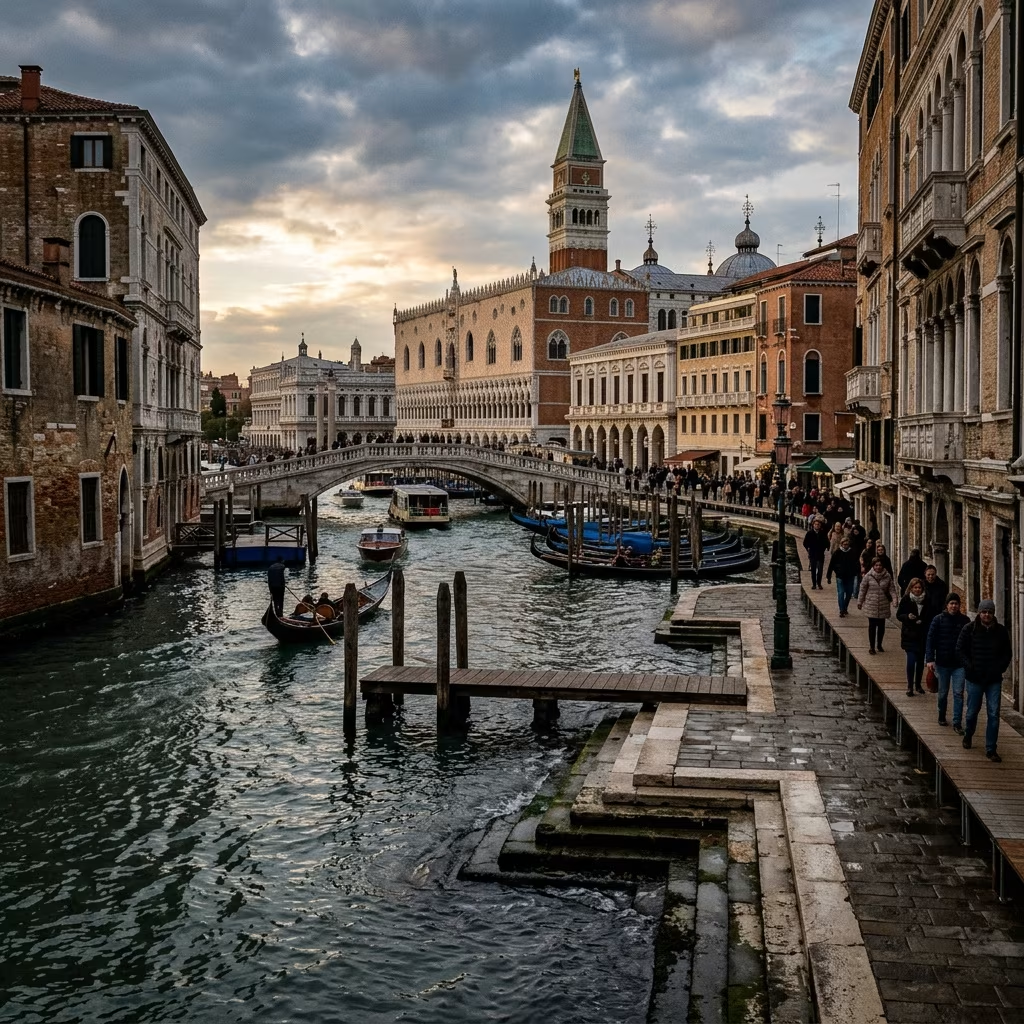
Venice has long captured the world’s imagination—its web of canals, graceful bridges, and mesmerizing architecture have defined it as one of the most beloved destinations in Italy and across the globe. But beneath this enchanting façade, Venice faces a crisis familiar to every Venetian and an increasing number of travelers: the city is sinking, battered by floods, climate change, and the challenges of overtourism. This article explores Venice’s precarious predicament, drawing on expert observations, scientific explanations, and the lived experience of residents and tourists alike.
The City on Water: Venice’s Unique Foundations
Venice is spread across a series of over 100 small islands located in the Venetian Lagoon, set in the northern Adriatic Sea. Unlike other cities, its foundations are an ingenious marvel: wooden piles drive deep into soft lagoon sediment, supporting a cityscape that seems to float between sky and water. Over time, however, the very elements that make Venice unique have contributed to its vulnerability.
How Fast is Venice Sinking?
The gradual submergence of Venice isn’t a recent phenomenon. The city has been sinking for centuries, but the process has sharply accelerated in modern times. According to geological studies, Venice is subsiding at a rate of approximately 2 mm per year. Over the past century, the city has sunk by nearly 23 centimeters (about 9 inches). This descent is primarily driven by natural settling of the sediment, compounded by human activity such as aggressive groundwater extraction in the 20th century and tectonic movements of the underlying Adriatic plate.
- Human activities like groundwater pumping once accelerated subsidence. Though extraction ceased decades ago, the ground has not rebounded.
- The immense weight of Venice’s stone structures pushes deeper into soft clay and silt.
- Seismic shifts below the Apennine Mountains contribute further instability.
The ‘sinking’ is compounded by rising sea levels due to climate change, increasing the frequency and severity of flooding events.
Acqua Alta: Venice’s Rising Floods
Each year, particularly from fall through winter, Venice experiences acqua alta—literally ‘high water.’ During these periods, tidal surges push water from the lagoon into the city’s low-lying areas, turning landmarks like St. Mark’s Square into temporary lakes. Acqua alta is now both a seasonal expectation and an urgent symbol of Venice’s vulnerability.
- Floodwaters can rise to knee- or even waist-height in key areas.
- Businesses and homes are disrupted; costly repairs and protective measures are routine.
- 2019 saw some of the worst flooding in decades, with water levels reaching historic highs.
Scientists have noted that seasonal flooding is happening not only more frequently, but also outside the traditional peak months. In recent years, extreme tides have occurred earlier, sometimes impacting the summer tourist season and intensifying disruption.
What Causes Venice to Sink?
Venice’s predicament is the result of a complex interplay between natural processes and human influences:
- Subsidence: The city’s weight compresses the underlying clay and silt, causing gradual sinking.
- Groundwater Extraction: Intense pumping from deep aquifers, especially during the 20th century, led to a pronounced collapse in the ground level. Although this practice has stopped, the loss is largely irreversible.
- Rising Sea Levels: Climate change is causing global sea levels to rise, which affects Venice acutely because of its low elevation and flat, lagoon environment.
- Altered Lagoon Hydrodynamics: Deepening of underwater channels to accommodate ships has intensified tidal flows, potentially exacerbating flooding and sediment erosion. Experts suggest that mismanagement of the lagoon is a significant factor in the city’s decline.
- Heavy Construction: Some studies have linked large building projects to localized subsidence, though natural processes remain the main drivers.
Climate Change: Escalating the Crisis
Venice now finds itself on the frontline of climate change. Higher temperatures are melting glaciers worldwide, causing ocean levels to rise and amplifying tidal surges into the lagoon. Climate models predict an ongoing increase in both sea level and the severity of weather events, threatening to make parts of the city uninhabitable unless major interventions succeed.
Rick Steves, travel writer and frequent visitor, has observed these changes firsthand, describing how climate change is visible in every high tide, every anxious business owner, and every local wondering what the next decade will bring.
Venetians: A City Losing Its People
Venice’s beauty continues to draw more than 20 million tourists annually, but its own population has been steadily declining. Today, fewer than 60,000 residents live in the historic core—a fraction of its population a century ago. Some key factors behind this exodus include:
- Skyrocketing living costs fueled by short-term rentals and tourist demand.
- Flooding and property damage, which make daily life challenging.
- Scarcity of traditional jobs and a service economy dominated by tourism and hospitality.
- Loss of community life as neighborhoods empty out and cultural spaces transform into tourist venues.
For every true Venetian resident, there are more than 140 visitors at any given time. This imbalance threatens the city’s soul, sparking debate about the tradeoffs between economic vitality and preserving authentic life.
Should You Still Visit Venice?
The sight of raised walkways snaking through flooded squares and the challenge of navigating crowds might lead would-be tourists to ask: is it ethical or even pleasant to visit a city in peril? Rick Steves and most experts say yes—with thoughtful consideration. Venice remains astonishingly beautiful, especially in quieter seasons and corners away from the crowds. There are compelling reasons to go:
- Supporting Local Economy: Tourism is the lifeblood of Venice’s economy. Hotels, restaurants, artisans, markets, and cultural institutions would falter without visitors.
- Promoting Sustainable Travel: Longer stays, mindful sightseeing, and support for local businesses counteract some of tourism’s pressures.
- Advocacy and Awareness: Being present, learning about Venice’s struggles, and sharing these stories can build global support for protective policies and solutions.
Travel Tips: For a more meaningful visit—
- Stay overnight: Venice is especially magical after day-trippers have left.
- Pack waterproof shoes in fall and winter.
- Respect local customs and conserve resources; water and space are precious.
Saving Venice: Innovative Solutions and Ongoing Controversy
Italy and the international community have mounted efforts to rescue Venice from its fate. Two major strategies dominate public and scientific debate:
The MOSE Project: Engineering a Barrier to the Sea
Launched in the early 2000s, MOSE (Modulo Sperimentale Elettromeccanico) is a system of large, retractable floodgates installed at the lagoon’s three inlets. When tides threaten to overwhelm the city, the gates rise to block the incoming water.
- Pros: MOSE has proven effective in blocking some of the highest tides and offers a measure of security.
- Cons: The system is expensive (costing several billion euros), has experienced delays and cost overruns, and faces criticism for long-term environmental effects and sustainability.
While MOSE mitigates extreme tides, it is not a permanent fix. The barriers are not activated for every Acqua Alta, and their ability to keep pace with future sea level rise is uncertain. Maintenance and adaptation will be required as circumstances evolve.
Raising Venice: Geotechnical Innovation
A newer, more experimental solution has also emerged. Some scientists advocate injecting freshwater into the deep clay beneath Venice. This technique can cause the ground beneath the city to expand, incrementally lifting structures without harming heritage buildings.
- Proponents estimate this could raise Venice by up to 30 centimeters over three decades.
- It’s a gradual process, intended to offset both past sinking and projected sea level rise.
- The approach remains under review, with specialists weighing costs, risks, and the need for extensive monitoring.
Cultural and Community Responses
Beyond engineering, protecting Venice means investing in its social fabric and cultural heritage:
- Restricting the size and type of visiting cruise ships to limit harm to the fragile lagoon and reduce carbon emissions.
- Encouraging long-term city residency, local businesses, and sustainable tourism practices.
- International UNESCO advocacy, raising global awareness of Venice’s World Heritage Site status and the need for its protection.
Venice’s Future: A Question of Will, Policy, and Perseverance
Venice’s story is not just about buildings and bridges; it’s a window into humanity’s struggle with the natural world and our responsibility to future generations. The city’s fate will be determined by the boldness of its engineering, the wisdom of its policies, the commitment of its residents, and the conscious choices of millions of travelers who come each year.
| Challenge | Impact | Response |
|---|---|---|
| Sinking ground | Lower elevation, recurrent floods, foundation instability | MOSE Project, ground-lifting studies |
| Rising sea level | Increased flood frequency, threatened heritage sites | Lagoon barriers, climate change mitigation |
| Overtourism | Loss of residents, crowding, strain on infrastructure | Visitor restrictions, sustainable tourism planning |
| Climate change | Extreme weather, unpredictability, higher costs | Global climate action, municipal adaptation funds |
Frequently Asked Questions (FAQs)
Is Venice really sinking, or is it just a myth?
Venice is sinking at a rate of about 2 millimeters per year, primarily due to the weight of its buildings, subsiding soils, and previous groundwater extraction. This is compounded by rising sea levels caused by climate change.
How often does Venice flood from acqua alta?
Venice typically experiences acqua alta during the fall and winter, with several significant tidal floods each year. Extreme events are increasing in frequency and severity as the sea level rises.
What is being done to save Venice?
Major projects include the MOSE flood barrier system, experimental ground-lifting techniques, stricter management of the lagoon, and efforts to encourage sustainable tourism and residency.
Does tourism harm or help Venice?
Tourism is both vital and problematic: it sustains the local economy but also drives up living costs, crowds the city, and threatens its cultural identity. Future strategies aim to balance benefits with responsible, sustainable practices.
What can visitors do to support Venice?
Travelers can make a positive impact by staying overnight, visiting respectfully, supporting local enterprises, minimizing waste, and learning about Venice’s challenges. Advocacy and spreading awareness are also key.
The Enduring Magic of Venice
Despite its challenges, Venice retains an almost otherworldly magic. As Rick Steves notes, in every shimmering reflection and hidden lane, the soul of Venice endures—and each visitor, thoughtful resident, and innovative mind has a part to play in keeping this remarkable city afloat for centuries to come.
References
- https://www.islands.com/1597958/is-venice-sinking-should-visit-climate-change-rick-steves-says/
- https://www.ricksteves.com/watch-read-listen/video/tv-show/venice-and-its-lagoon
- https://greenly.earth/en-us/blog/industries/is-venice-threatened-by-climate-change-or-tourism
- https://blog.ricksteves.com/blog/acqua-alta/
- https://community.ricksteves.com/travel-forum/italy/saving-venice-a8f83a86-c6cd-4c59-a10f-573fd043f7d9
- https://www.ricksteves.com/watch-read-listen/audio/radio/programs/program-594