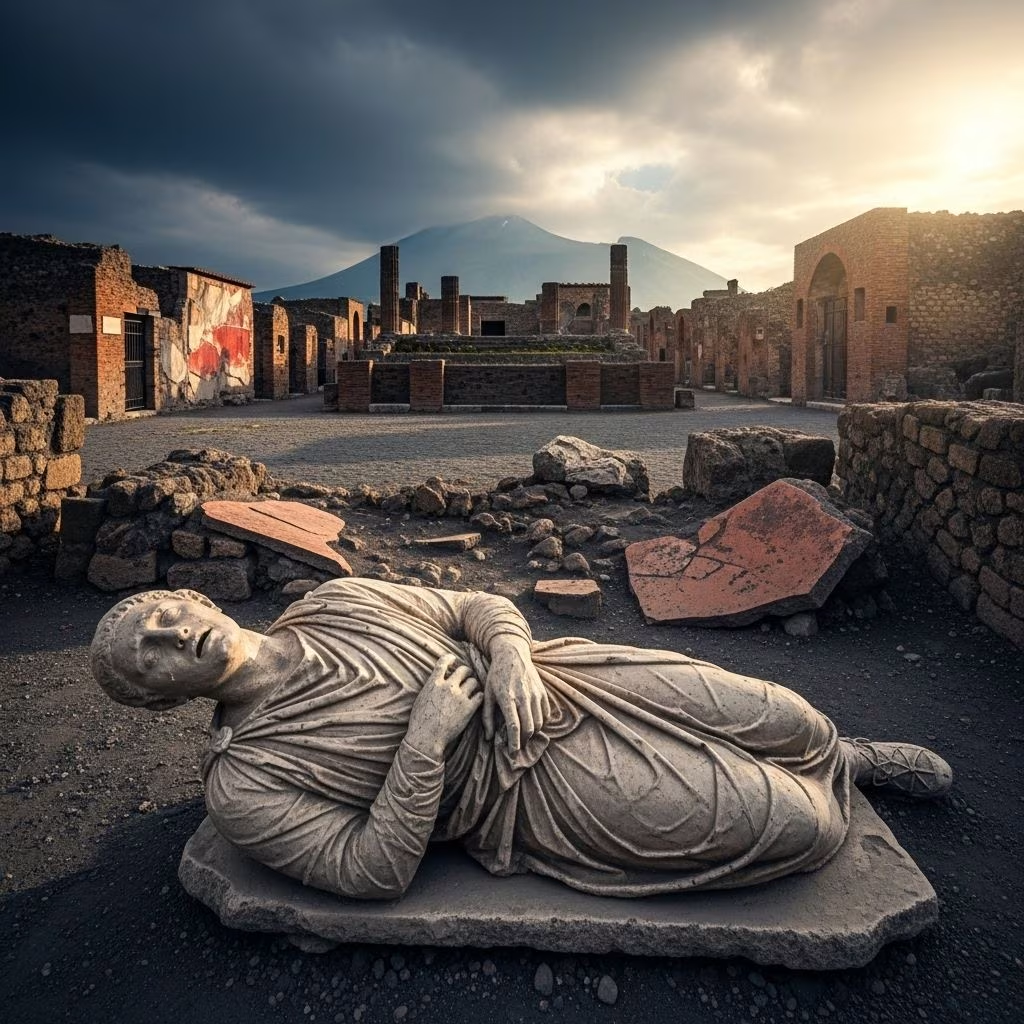
Pompeii: The City Frozen in Ash
Pompeii was a prosperous Roman city that was abruptly silenced in AD 79, when Mount Vesuvius erupted cataclysmically and buried it under tons of volcanic ash and pumice. Today, its remarkably preserved ruins serve as one of Italy’s most evocative archaeological sites and offer a tangible window into the daily life of the ancient Romans. From vibrant streets and public baths to haunting casts of victims, Pompeii’s story is one of tragedy, resilience, and archaeological wonder.
The Shadow of Mount Vesuvius
Rising from the Bay of Naples, Mount Vesuvius has always dominated the horizon and imagination of those living in its proximity. But in late summer AD 79, the volcano erupted with devastating force, sending a cloud of ash, dust, and rock twelve miles into the sky for 18 hours. Carried by the wind, hot ash blanketed the city, while a subsequent surge of superheated gas and rock descended at terrifying speed, sealing Pompeii’s fate and that of thousands who remained behind.
- Initial eruption: Ash and pumice fell on Pompeii like a heavy, choking snow, prompting most of the estimated 20,000 residents to flee.
- Pyroclastic surge: A fiery avalanche of rock and gas buried the city and its unlucky remaining inhabitants. Around 2,000 people were encased in volcanic debris, their final moments preserved in haunting detail.
- Modern reminders: At the summit of Vesuvius, wisps of steam remind us that Italy’s most famous volcano remains active — its last major eruption was in 1944, and authorities sometimes close access when volcanic activity increases.
Archaeological Discovery
The city lay hidden for over 1,600 years until its accidental rediscovery in the late 18th century. Systematic excavations began under the local Neapolitan monarchy, with the best finds originally demanded for royal collections. As a result, much of Pompeii’s finest art and artifacts are now housed in Naples’ renowned National Archaeological Museum.
- Excavation origins: Large-scale digs began in the 1700s, spurred by royal patronage and scholarly curiosity.
- Preservation through destruction: Ironically, it was the same volcanic ash that destroyed Pompeii that also preserved its buildings, mosaics, frescoes, and even foodstuffs, providing archaeologists an unrivaled record of ancient Roman urban life.
- Artifacts in Naples: To see the pinnacle of Pompeian art and daily items, a visit to Naples’ National Archaeological Museum is essential.
Daily Life in a Roman Port City
Pompeii was not a city of emperors, but a bustling middle-class port on the edge of the Roman world. Its residents enjoyed a vibrant social life, catered to sailors and travelers, and took advantage of Roman innovations and luxuries. Archaeological remains reveal details of their public and private routines, offering glimpses into the cosmopolitan character of the ancient Mediterranean.
- Public amenities: Bath complexes (thermae), bars (thermopolia), restaurants, inns, and brothels lined the streets, reflecting a society that valued hygiene, sociability, and entertainment.
- Entertainment: Theaters hosted performances, while amphitheaters delighted crowds with gladiatorial games and spectacles.
- Shopping and commerce: Bakeries, markets, and shops bustled with daily trade, supplying fresh bread, produce, wine, and luxury goods.
- Urban infrastructure: Ingenious engineering included aqueduct-fed fountains, tiled sidewalks, and raised stepping stones which allowed pedestrians to cross water-flushed streets without getting their feet wet.
The Streets and Homes of Pompeii
Wandering Pompeii’s streets today, visitors encounter a landscape frozen in time. Much of the city’s original layout, architecture, and even structural details remain discernible, providing tangible context for the ancient world.
- Streets: Distinctive stepping stones helped residents navigate streets regularly flooded to clean away refuse — an ancient precursor to modern sanitation.
- Homes: Houses ranged from modest dwellings to grand villas, often centered around open atriums filled with light, mosaics, and fountains.
- Wall paintings: Exquisite frescoes depict mythological scenes, landscapes, and daily activities, decorating reception rooms and courtyards.
- Mosaics: Intricate floor mosaics reveal tastes and stories of the time; a famous example shows a dog with the warning “Cave Canem” (“Beware of the Dog”).
- Gardens and fountains: Archaeologists have recreated garden layouts and water features inside the villas, underscoring Roman appreciation of beauty and leisure.
The People of Pompeii: Plaster Casts and Human Stories
Perhaps the most haunting legacy of Pompeii is found in the forms of its citizens: the “pompeian victims.” When archaeologists discovered hollow spaces in the hardened ash, they realized these were the imprints left by decomposed bodies.
- Plaster casts: By pouring liquid plaster into these voids, researchers created detailed casts of men, women, children, and animals at the moment of their deaths, sometimes still clutching precious items or shielding loved ones.
- Everyday tragedy: The positions and expressions of these casts evoke the suddenness and terror of the catastrophe, serving as a stark reminder of nature’s power.
- Ongoing excavation: New areas and further preserved individuals are still being discovered today, continuing to shed light on the city’s final hours.
Cultural Life and Artifacts
Pompeii’s mosaics, frescoes, statues, and personal objects demonstrate the city’s vibrant cultural life and aesthetic sophistication. Many of these treasures now reside in Naples, but important examples remain in situ and accessible to visitors wandering the ancient streets.
- Statuary: Many statues, such as finely cast bronzes, once graced private villas and public spaces. Some, like the statue of Resting Hermes, are Greek originals or Roman copies made for elite Romans’ holiday homes.
- Epicurean influences: Several works reflect the philosophical and literary currents of the era, with Epicurean ideals of living for pleasure (as seen in the “Drunken Faun”) expressed through art.
- Mosaics and frescoes: Artistic depictions offer insight into religion, entertainment, and daily customs. Scenes from theater, dining, and even explicit imagery in bathhouses present a society that was, in some ways, startlingly modern in its attitudes.
- Artifacts of daily life: Everyday tools, kitchenware, jewelry, and even loaves of carbonized bread paint a vivid picture of ancient routines.
The National Archaeological Museum of Naples
To understand the full splendor of Pompeii, a visit to the National Archaeological Museum of Naples is indispensable. Here, the finest mosaics, statues, frescoes, and household objects tell the story of a city that was both ordinary and extraordinary in its time.
- Comprehensive collections: Grand marble and bronze statues, exquisitely detailed mosaics, and delicate glassware are featured.
- Intimate glimpses: Artifacts range from public monuments to the most personal effects, revealing aspects of fashion, religion, and eroticism rarely discussed in history books.
- Legacy of preservation: The museum’s trove is a testament to Vesuvius’ double-edged legacy — devastation coupled with preservation.
Visiting Pompeii Today
Modern travelers can explore much of the ancient city, wandering along paved roads, peering into homes, bakeries, and shops, and standing in the shade of colonnades that have survived nearly two millennia. The site continues to yield new discoveries, and ongoing conservation ensures that the legacy of Pompeii endures.
- Getting there: The site is easily accessible by train from Naples or Sorrento via the Circumvesuviana line. Buses and shuttles connect to Mount Vesuvius, with the option of hiking to the crater’s spectacular summit.
- Exploring the ruins: It can take half a day or more to see the main highlights. Notable sites include the Forum, Temple of Apollo, theaters, amphitheater, House of the Faun, Villa of the Mysteries, and numerous fresco-adorned homes.
- Essential tips: Wear sturdy shoes for rough terrain, bring water, and check for any reservation requirements, especially for excursions to the Vesuvius crater.
For many, the experience is not only a historical lesson but also a sobering meditation on impermanence and the unpredictable force of nature.
Frequently Asked Questions (FAQs)
Q: What caused the destruction of Pompeii?
A: Mount Vesuvius erupted in AD 79, burying the city under volcanic ash and pumice and preserving it for centuries.
Q: How were the human bodies in Pompeii preserved?
A: As bodies decomposed in the ash, they left voids which archaeologists later filled with plaster, creating detailed casts of the victims’ final moments.
Q: What can visitors see at Pompeii today?
A: Visitors can explore ancient streets, homes, public buildings, frescoes, mosaics, and haunting plaster casts, providing a vivid snapshot of Roman life.
Q: Where are the best artifacts from Pompeii now located?
A: Many of the finest mosaics, statues, and household items are in the National Archaeological Museum of Naples.
Q: Is Mount Vesuvius still active, and can it be visited?
A: Yes, Vesuvius is an active volcano. Visitors can hike to its summit, but the area is occasionally closed due to volcanic activity.
Travel Tips for Pompeii and Vesuvius
- Allocate at least half a day for Pompeii; full-day trips allow for deeper exploration.
- Combine your visit with the National Archaeological Museum in Naples for the complete Pompeii experience.
- Consider adding a hike to Mount Vesuvius’ crater for panoramic views and geological insights.
- Check local regulations and opening times, especially for access to the volcano and its trails.
- Guided tours and audio guides can enhance understanding of the site and its history.
Pompeii’s Enduring Legacy
The tragedy that befell Pompeii nearly two millennia ago transformed it into an archaeological treasure trove. While the city’s people perished in a single day, their stories, captured in stone, art, and ash, continue to resonate. Pompeii offers a timeless lesson on the fragility of civilization and the enduring power of historical memory, attracting millions of visitors and inspiring wonder in every generation.
References
- https://tribunecontentagency.com/article/rick-steves-europe-reflecting-on-ruin-at-vesuvius-and-pompeii/
- https://www.ricksteves.com/watch-read-listen/video/tv-show/naples-and-pompeii
- https://www.youtube.com/watch?v=dn14wkg0mhM
- https://www.ricksteves.com/europe/italy/pompeii-herculaneum
- https://community.ricksteves.com/travel-forum/italy/nyt-article-about-pompeii
- https://www.pbssocal.org/shows/rick-steves-europe/episodes/rick-steves-europe-naples-and-pompeii