European Toilet Tricks to Know Before You Go
Every seasoned traveler soon learns that adventures abroad are as much about navigating new bathroom customs as they are about sightseeing. From puzzling public restrooms to coin-operated toilets and quirky flushing mechanisms, knowing what to expect can make your experience far less stressful and more hygienic. This comprehensive guide covers the essential tricks, etiquette, and survival tips you need for using toilets throughout Europe.
Finding a Public Restroom
Locating a public toilet in Europe can become a quest of its own, particularly when urgency strikes. Here are proven strategies for quick relief:
- Restaurants and Cafés: Walk confidently into nearly any restaurant or café and search for a bathroom, typically found in the back or down a level. In large places with outdoor seating, staff often assume you are a customer. Politeness helps—smile and ask, “Toilet?” if you’re unsure. In most cases, you’re rarely turned down, and it’s seldom necessary to make a purchase just to use the facilities.
- Fast-Food Chains: International fast-food outlets usually have accessible, reasonably clean bathrooms. These are good fallback options in busy city centers.
- Department Stores and Shopping Malls: Major shopping destinations almost always have restrooms, sometimes tucked away on upper or lower floors.
- Public Buildings: Train stations, libraries, large museums, and even some post offices offer toilets, though the quality and cleanliness may vary dramatically.
- Automated Toilets: Many European cities have automaats or self-cleaning toilet pods on the street. These modern cubicles charge a small fee and clean themselves between each use. They’re very common in cities like Paris.
- Know the Lingo: Look for signs such as “WC” (water closet), “Toiletten,” “Toilettes,” “Toalett,” or “Servicios.” In the UK and Ireland, “loo” is commonly used. Even with language barriers, the universal need often translates easily.
Pay-To-Pee and Bathroom Attendants
Unlike in North America, most public restrooms in Europe aren’t free. Here’s what to expect and how to avoid awkward moments:
- Always Carry Coins: Many public facilities require payment for entry, ranging from €0.20 to €1.50, or local equivalents. Some have turnstiles or doors that unlock after inserting the proper change.
- Attendants and Tip Trays: Other toilets have bathroom attendants who maintain cleanliness and, in some cases, sell toilet paper. They often have a tray or dish for tips. It’s typical to leave about 50 cents, though attendants may try to confuse tourists by displaying only bills or large coins. Don’t be intimidated; paying the standard amount is sufficient.
- Bills and Change: Bills are usually not accepted by machines, and attendants prefer coins. Plan to keep a stash of small change, which is invaluable in these situations.
- Airport and Train Station Toilets: Even in major transit hubs, expect to pay for the privilege. However, some airport restrooms, particularly beyond security, are free and notably cleaner than those on the public side.
- Shopping Centers: Restrooms in malls and department stores are sometimes free but often require payment or a token from a cashier.
Toilet Paper, Soap, and Hygiene Challenges
Sanitation may not meet the standards you’re accustomed to. Overcome these hurdles by preparing for unpredictability:
- Bring Your Own Toilet Paper: Restrooms might have no toilet paper, or only a single communal roll at the entrance—if it’s present at all. Pocket packs of tissues or a small travel roll are essential supplies.
- Soap and Towels Rare: Many public facilities lack soap and hand-drying options. Carry a travel-sized hand sanitizer and some napkins or a pack of wet wipes for cleanliness.
- “Charmin-to-Go” and Travel Tissue: Compact, tube-free toilet rolls designed for travel are widely available and highly recommended. They fit easily into a bag or large pocket.
- Plan Bathroom Breaks: Use toilets when you find them, not when it’s urgent. A “never pass up a WC” rule can save considerable discomfort.
Encountering Squat Toilets and Odd Setups
Europe offers an eclectic mix of toilet types—some might surprise or even alarm travelers unfamiliar with local setups.
- Squat Toilets: In Southern Europe and select Eastern European countries, squat toilets are still found in many public restrooms. These are porcelain holes in the ground requiring a different posture, but they’re straightforward once you get the hang of it. There is no need to remove your clothing entirely.
- No Toilet Seat: Italian and Greek toilets sometimes lack seats, partly as a way to discourage standing on the rim or prevent damage. Sit or squat as needed, or hover if you prefer.
- Odd Flushing Mechanisms: Flushing is not always intuitive. You may find:
- Pull cords overhead in older toilets.
- Foot-operated pedals.
- Wall-mounted buttons, either push or large levers.
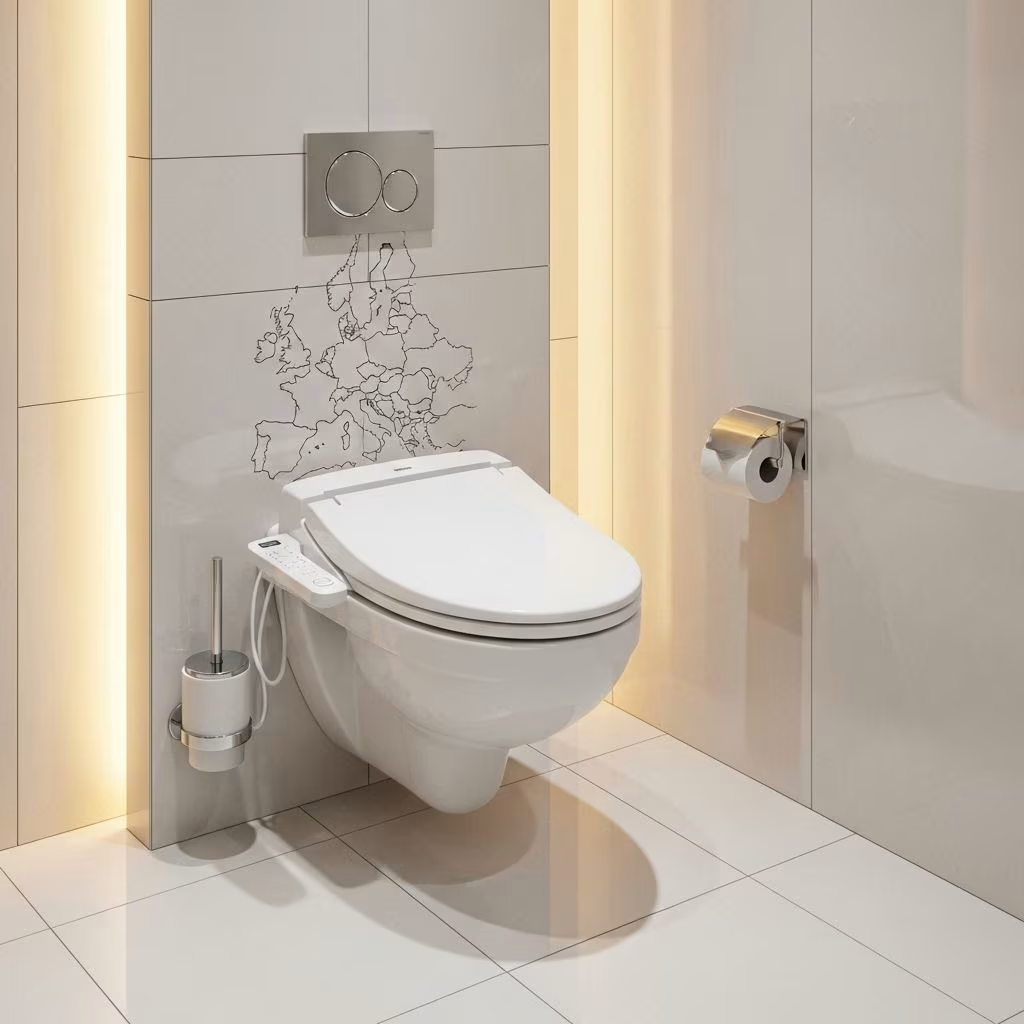
- Dual flush options: one button for light flush, another for a heavier flush, conserving water.
- Disposal Habits: In Greece and parts of southern Europe, never flush toilet paper. Wastebaskets are placed beside the toilet for used paper, as plumbing cannot handle paper and will clog. When in doubt, observe the signage or emulate the locals.
Local Customs and Toilet Etiquette
Proper bathroom behavior depends on the country and the facility. Maintain a low profile and follow these universal guidelines:
- Don’t Wait Until Desperate: Take advantage of every clean, available toilet; you may not find another for hours.
- Don’t Make a Mess: Be courteous. If a toilet requires you to squat, keep your shoes off the seat and your aim true.
- Public, Not Private: European restrooms are less private than American ones. Stalls may have gaps or lack full doors. In some places, unisex facilities or urinals open to view are common.
- Sound and Silence: Keep conversation to a minimum and maintain the quiet tone set by those around you, especially on trains or in busy stations.
- Flush and Wash: Always flush after use and attempt to clean up. Wash hands even if the facilities are spartan.
Building Your Restroom Survival Kit
Smart travelers plan ahead. Build your own compact “WC survival kit” for hassle-free bathroom breaks:
- Pocket Tissues / Travel TP: Small, dense rolls or flat tissue packs occupy minimal space and are invaluable for emergencies.
- Hand Sanitizer: Alcohol-based gels are crucial when soap is missing.
- Wet Wipes / Napkins: Useful for both hands and surfaces.
- Small Change: An assortment of €0.20, €0.50, and €1 coins for entry and tips.
- Disposable Glove (optional): For particularly grimy situations.
Quick Tips and Common Blunders
- Never count on finding a free toilet when you need it most, especially in busy cities and touristy areas.
- Restroom at train stations may not be easy to spot and often require payment. Use the onboard train toilets before or during your journey—these are free, and paper is more likely to be stocked at the beginning of a trip.
- Sneak a visit to the first-class train car’s restroom for improved cleanliness – you don’t need a first-class ticket, just use and return to your seat.
- Be wary of restrooms with time-limited locks – some automated stalls open their doors after a certain period. Don’t linger.
- Always monitor your fluid intake if you’re concerned about the next bathroom’s quality or existence — sip water rather than gulping large amounts at once.
- In case of long searches, remember that airport and major department store bathrooms are often the cleanest public options.
- When you find a decent, clean restroom, make use of it even if you don’t have an immediate need.
- Practice bathroom phrases in local languages — even a simple “Toilet?” or the word “WC” is usually enough.
Frequently Asked Questions (FAQs)
Q: What is a “WC” and how is it pronounced?
A: “WC” stands for “water closet,” a common European sign for “toilet.” It’s often pronounced by saying each letter individually: “double-u C.”
Q: Do I need to pay to use every European public toilet?
A: Not all, but many require a fee or expect a tip for attendants. Always carry some coins to avoid discomfort.
Q: Will I find soap and hand dryers in European toilets?
A: Soap and towels are inconsistent. Bring hand sanitizer and tissues as backup; some places provide nothing.
Q: Should I buy something at a café to use the restroom?
A: In most cases, confidently using the restroom is fine without a purchase, especially in large or busy venues. If the place is small or the staff seem strict, consider ordering a small item.
Q: How do I use a squat toilet?
A: Place feet on either side of the toilet, squat down, and aim. There’s no need to remove all your clothes. Keep your belongings off the floor—use hooks if present.
Q: Can I flush paper down all European toilets?
A: No. In parts of Greece and southern Europe, flushing paper is discouraged. Use provided waste bins when in doubt and always observe the local practice.
Q: What if I can’t find a public restroom?
A: Seek out department stores, fast-food chains, or busy cafés. Major tourist attractions and transport stations are also your best bet—but expect to pay.
Q: How do I say “bathroom” in other languages?
| Language | Common Term for Toilet |
|---|---|
| French | Toilettes |
| German | WC (Vay-tsay) / Toilette |
| Italian | Bagno / Toilette |
| Spanish | Baño / Servicios |
| Greek | Τοαλέτα (Toaleta) |
Final Thoughts
Every journey across Europe brings memorable sights—and memorable bathroom stories. With small preparations, patience, and a little humor, you’ll navigate the continent’s public restrooms confidently. Remember: when in doubt, follow the locals, keep coins handy, and never pass up a decent “WC” when you find one.
References
- https://www.islands.com/1840417/rick-steves-europe-train-bathroom-hack-save-time-money-tourists/
- https://www.islands.com/1698967/rick-steves-warns-tourists-about-bathroom-trick-in-europe/
- https://community.ricksteves.com/travel-forum/general-europe/restrooms-water-closets
- https://www.ricksteves.com/travel-tips/health/toilet-tricks
- https://www.youtube.com/watch?v=PGM-070kW-c
- https://www.ricksteves.com/travel-tips/health/hotel-bathrooms
- https://www.ricksteves.com/travel-tips/health
- https://www.ricksteves.com/watch-read-listen/video/tv-show/european-travel-skills-part-3