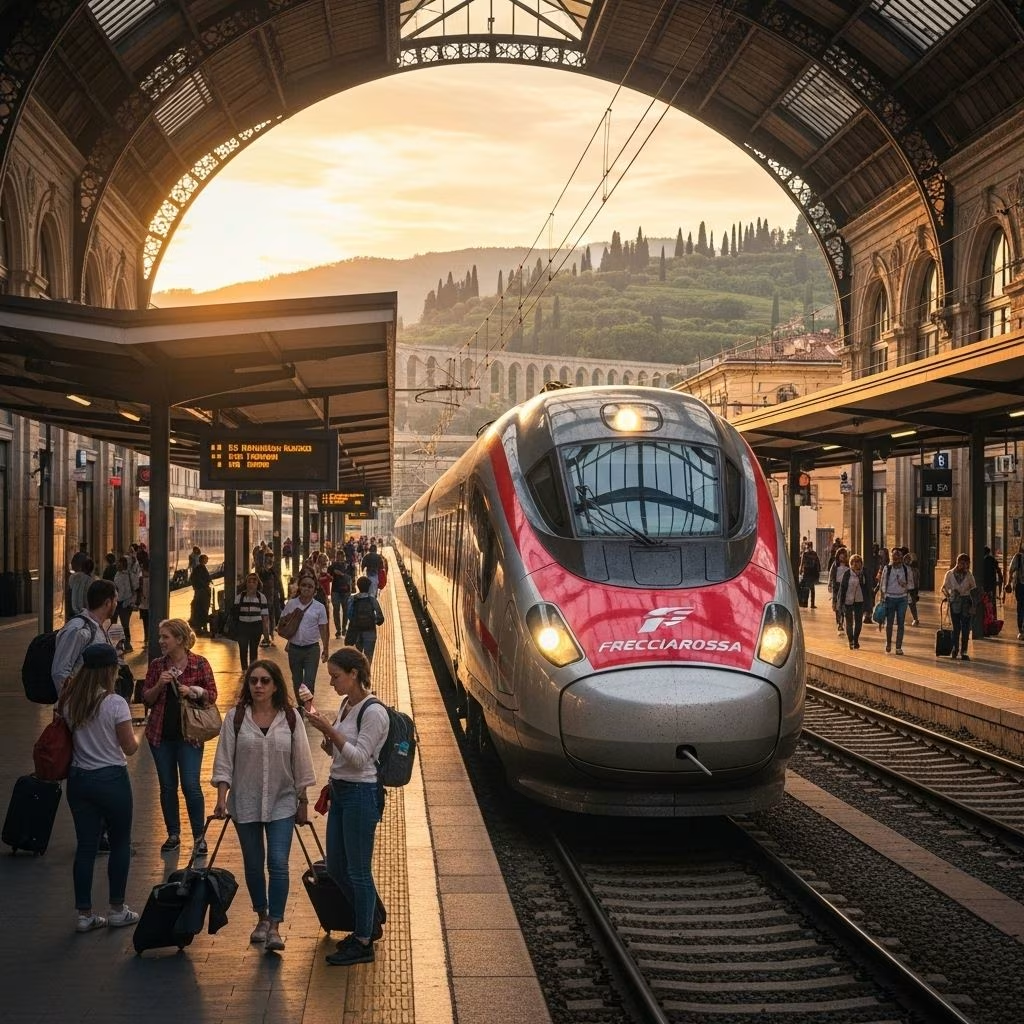
Italy Rail Passes and Train Travel: A Comprehensive Guide
Navigating the intricate world of Italian train travel involves choosing between rail passes, buying point-to-point tickets, and deciphering seat reservation requirements. This article demystifies each option, offering actionable guidance for every traveler concerned with value, convenience, and efficiency while exploring Italy by rail.
Rail Travel Options in Italy
Travelers in Italy can choose among several rail pass options or opt for point-to-point tickets. The correct choice depends on your itinerary, travel frequency, and budget priorities.
- Eurail Passes: These passes allow flexible travel throughout Italy for a set number of days within a month. They’re best suited to travelers who plan to visit a new city almost every day.
- Trenitalia Pass: Available to non-residents, offering similar coverage to the Eurail Italy pass but with journey-based pricing tiers instead of calendar days. Seat reservations are included, but the coverage can be restrictive and confusing for most travelers.
- Point-to-Point Tickets: For most trips costing less than $50 per segment, as Rick Steves advises, it’s usually cheaper and simpler to buy individual tickets between specific cities.
Should You Buy a Rail Pass in Italy?
Most travelers do not need a Eurail Pass if staying solely within Italy. The majority of single-segment tickets are less than $50 per journey, making individual ticket purchases more cost-effective. A pass may become valuable if:
- You plan to travel daily or nearly daily to new destinations.
- Your itinerary includes international trips or multiple countries.
- You value flexibility over the lowest price.
Before purchasing a rail pass, calculate the total cost of point-to-point tickets for your intended route and compare with pass options. Also consider extra fees and reservation requirements, which commonly apply to passes.
Understanding Seat Reservations in Italy
Unlike some European countries where a rail pass grants ‘hop-on, hop-off’ convenience, in Italy most major trains require paid seat reservations. Even with a rail pass, you must pay extra to reserve seats on high-speed and international trains:
- Le Frecce trains (high-speed): Require reservations, typically about $12 per segment with a rail pass.
- EuroCity, InterCity, and international trains: Reservations usually cost about $10 per segment.
- Regional trains: Most do not require reservations and operate on a first-come, first-served basis.
Reservations can be made close to departure; there is no fixed advance deadline in Italy, though booking early can help secure seats on popular routes.
High-Speed and Major Routes
Italy’s main north-south axis is served by frequent, fast trains:
- Turin
- Milan
- Venice
- Bologna
- Florence
- Rome
- Naples
- Bari
Le Frecce trains connect these cities with mandatory seat reservations even for pass holders.
What Do Rail Passes Cover?
Eurail rail passes cover travel on all trains run by the Italian State Railway (Ferrovie dello Stato Italiano), which includes:
- Le Frecce
- EuroCity
- InterCity
- Regional routes within the national network
However, passes do not cover most privately operated trains:
- Italo: High-speed trains connecting major cities, not covered by any rail pass.
- Circumvesuviana: The passenger line serving Naples, Pompei, and Sorrento. Tickets are cheap (about $5 per segment).
- Campania Express: A tourist-focused service between Naples and Sorrento/Pompei.
- Malpensa Express: Connects Milan’s Malpensa Airport to Milano Centrale. Approximately $15 per ride.
- Other regionals: Includes most TRENORD (operating in northern Italy), Gargano Railways, and Bari–Matera trains.
Rail passes also exclude most buses not operated by the national railway. Always check the pass coverage map before planning your route.
Exceptions and Special Notes
- Rome’s Fiumicino Airport Express train is covered only by first-class rail passes, since all seating is considered first class. Otherwise, expect to pay around $15 per ticket.
- Direct Italy–France services (all TGV trains on the Paris–Lyon–Turin–Milan line) require seat reservations, often selling out far in advance and costing roughly $35 to $65 per seat, depending on class.
Point-to-Point Tickets: When They Make Sense
For most Italian routes, buying individual tickets is generally preferable for travelers with short, infrequent journeys. Advantages include:
- Lower total cost for common itineraries, particularly those under $50 per segment.
- Convenience for spontaneous or short-distance travel.
- Tickets are widely available online and at stations; advance purchase can secure discounts and avoid sell-outs on popular trains.
- Flexibility for connections and stopovers, provided the journey is completed within the same day.
Advance online booking is recommended for set itineraries, especially during busy travel periods or for desirable times of day.
Comparison Table: Rail Passes vs. Point-to-Point Tickets
| Option | Main Advantages | Main Disadvantages | Best For |
|---|---|---|---|
| Eurail Italy Pass | Flexibility, frequent travel, covers national rail network | Extra reservation fees, not valid on private lines, higher total cost for less travel | Travelers visiting multiple cities in quick succession |
| Trenitalia Pass | Seat reservations included, journey-based pricing | Complex coverage limits, confusing restrictions | Occasionally useful for non-residents with fixed journeys |
| Point-to-Point Tickets | Lower cost for single trips, wide availability, suited for low-frequency travel | Less flexibility for spontaneous travel, advance booking recommended on busy routes | Most tourists, short or infrequent journeys |
Frequently Asked Questions (FAQ)
Do I need to make seat reservations in Italy?
Yes, for high-speed, InterCity, and most international trains a paid reservation is required. Most regional trains do not require reservations.
Can I use a rail pass on every train in Italy?
No. Rail passes cover national (Ferrovie dello Stato Italiano) trains but exclude most private lines such as Italo, Circumvesuviana, Campania Express, Malpensa Express, most TRENORD, and select other regionals.
If my trip only visits Italy, should I get a rail pass?
Probably not. For typical journeys, point-to-point tickets are usually cheaper unless you travel daily or cover long distances very frequently.
Is the Trenitalia pass a good alternative?
Rarely. While reservations are included, confusing restrictions and limited train coverage make it less effective for most travelers.
How do I book trains between France and Italy?
Direct TGV and Frecciarossa trains are covered by rail passes, but require expensive reservations and popular routes often sell out early. Consider slower connections or book well in advance.
Are buses in Italy covered by rail passes?
Only buses operated directly by the national rail company are covered. Most others, especially urban and regional buses, are not.
What is the advantage of buying tickets at the station?
Immediate access and easy purchase for spontaneous trips, but advance online booking secures lower prices and guarantees a seat during busy travel times.
Can I make multiple stops on a point-to-point ticket?
Yes, provided your journey is completed the same calendar day (or within a few hours in Italy), even with stops and connections along the direct route.
Essential Train Tips for Italy
- Research route pricing and travel times with Italian train company websites before purchasing passes or tickets.
- Calculate reservation fees and coverage gaps that apply to your route.
- For trips involving private train lines, buy separate tickets as passes are not valid.
- Always check whether a mandatory reservation is needed for your specific train.
- If traveling from airports, double check pass validity (not all airport trains are covered, or may require first-class passes).
- Plan early for international connections, especially Italy–France TGV trains, which sell out quickly and incur premium reservation fees.
Tips for Calculating Costs
- Estimate individual ticket prices using official train schedules and fare calculators.
- Factor in reservation fees for passes, particularly for high-speed trains ($10–$12 per segment).
- Check for discounted advance purchase fares on point-to-point tickets, sometimes significantly cheaper than walk-up fares.
Popular Train Routes in Italy
- Rome–Florence–Venice: Served by frequent high-speed Le Frecce trains. Reservations required.
- Milan–Lake Como: TRENORD trains, not covered by passes; buy tickets individually.
- Naples–Pompei–Sorrento: Circumvesuviana or Campania Express; buy tickets at the station.
- Milan–Malpensa Airport: Malpensa Express; $15 per trip, not covered by passes.
Additional Resources for Italian Train Travel
- Consult official Trenitalia and Italo websites for up-to-date schedules.
- Use rail pass comparison tools to analyze best-value options based on your itinerary.
- For detailed information on specific train lines, refer to traveler forums, official railway maps, and travel websites.
Summary: Choosing Your Best Fit
Determining the most cost-effective and convenient strategy for Italian rail travel requires careful itinerary planning. For most tourists, point-to-point tickets trump passes due to lower cost and broader coverage. Passes may fit those with intensive, repetitive travel across the national network. Always factor in required seat reservations, excluded private lines, and advance booking opportunities for popular or international journeys.
Italy Train Travel: Quick FAQs
Q: How do seat reservations work with a rail pass?
A: Even with a pass, seat reservations for major routes must be purchased separately, at $10–$12 per segment for domestic high-speed and international trains.
Q: Are overnight trains available between France and Italy?
A: No; overnight services have been discontinued. Only daytime TGV and Frecciarossa trains run on the Paris–Lyon–Turin–Milan axis.
Q: Which airport trains are covered by passes?
A: Only the Fiumicino Airport Express (Rome) is covered, and only with a first-class rail pass. Malpensa Express (Milan) is never covered.
Q: Do rail passes save time, or just money?
A: Passes mainly offer flexibility for frequent travelers, but can complicate journeys due to reservation requirements and exclusions. For many, point-to-point tickets are easier and cheaper.
Plan Smart, Travel Better
Italian train systems are well-developed, and understanding the nuances of passes, tickets, and reservations improves both travel experience and budget planning. Start with a clear itinerary, verify the lines and trains covered by passes, and use official resources for current prices and schedules.
References
- https://www.islands.com/1706597/rick-steves-rail-pass-train-ticket-in-italy-disadvantages/
- https://www.ricksteves.com/travel-tips/transportation/trains/italy-rail-passes
- https://www.ricksteves.com/travel-tips/transportation/trains/buying-tickets
- https://www.ricksteves.com/travel-help/rail-faq
- https://www.ricksteves.com/travel-tips/transportation/trains
- https://www.ricksteves.com/travel-tips/transportation/trains/how-to-choose-rail-passes
- https://community.ricksteves.com/travel-forum/italy/train-pass-in-italy
- https://www.ricksteves.com/watch-read-listen/video/travel-talks/european-trains